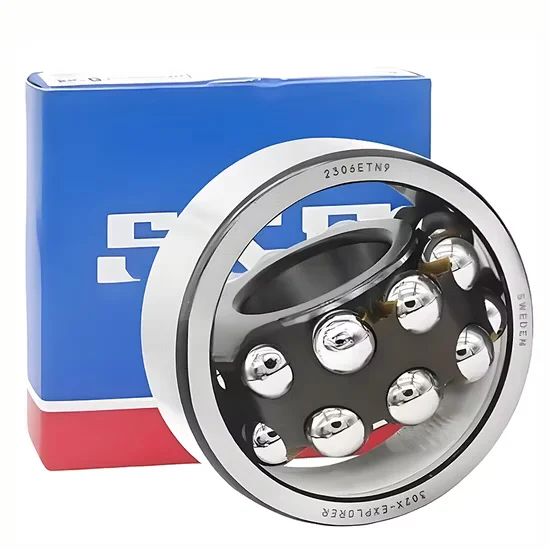
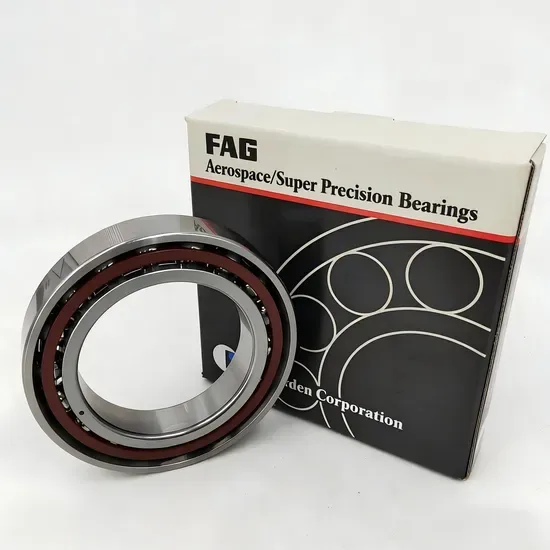
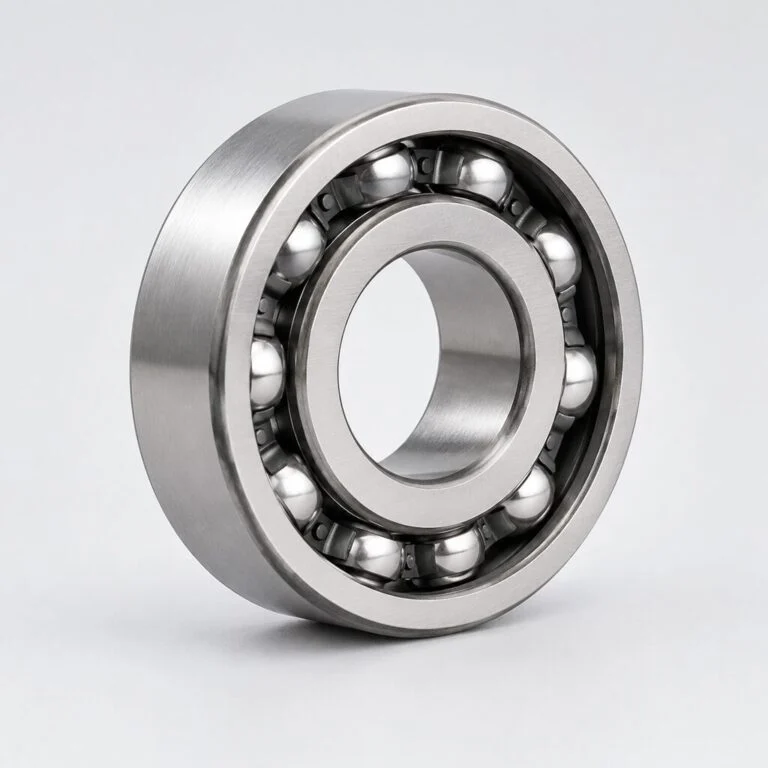
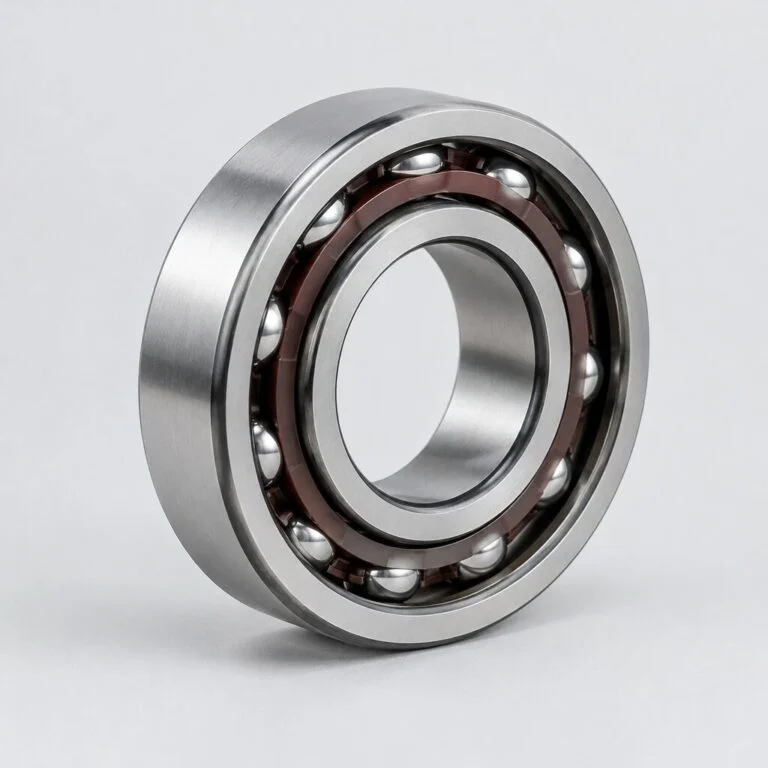
Listed data for this SKF designation; confirm the execution and dimensions against your drawing or application before ordering.
Authenticity QR Verification — Every BDL 2308K-2RS self aligning ball bearing ships with a scannable QR code linking directly to the manufacturer's official validation portal.
Technical Specifications
| Parameter | Value |
| Designation | BDL 2308K-2RS |
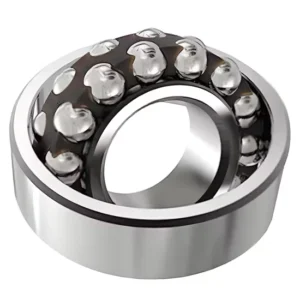
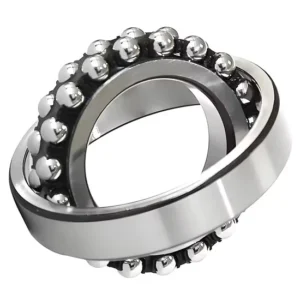
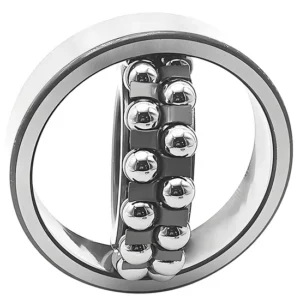
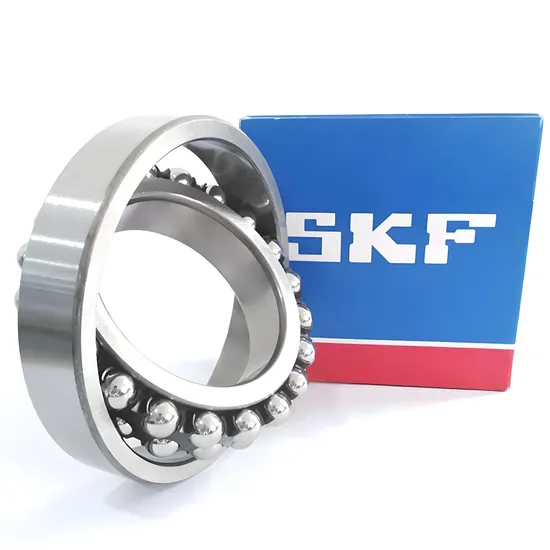
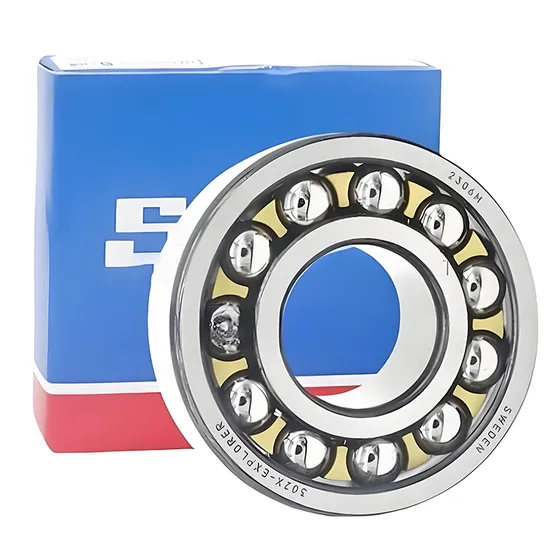
| Bearing Type | Self Aligning Ball Bearing |
| Bore Diameter (d) | 40 mm |
| Outside Diameter (D) | 90 mm |
| Width (B) | 33 mm |
| Bore Type | Tapered 1:12 (K suffix) |
| Seal Type | Double-side contact seals (2RS suffix - pending catalog verification) |
| Cage Material | Available in steel or brass variants |
| Lubrication | Grease or Oil |
| Precision Class | Available in P0, P6, P5, P4, P2 (subject to catalog confirmation) |
| Clearance Class | Available in C0, C3, C4 (subject to catalog confirmation) |
| Origin | China |
Application Suitability
| Industry | Typical Applications |
| Material Handling | Conveyor belt pulley shafts and idler rollers |
| Textile Manufacturing | Spinning frame drafting rollers and yarn guides |
| Fluid Management | Centrifugal pump shafts and agitator drives |
| Power Transmission | Gearbox intermediate shafts and electric motor mounts |
Why Ignoring Suffix Details Destroys Conveyor Uptime
A mismatched bore or missing seal turns a simple replacement into a catastrophic line stoppage.
In my early days doing failure analysis in the Middle East, I saw a client in Riyadh force a similar tapered bore bearing into a straight bore housing without an adapter sleeve. The desert sand bypassed the compromised seal and seized the shaft entirely, halting the entire production line for days. When sourcing a BDL 2308K-2RS self aligning ball bearing, treating the K and sealing suffixes as mere suggestions guarantees unplanned downtime. Many maintenance crews overlook the precise interference fit required for tapered bores, assuming any tight fit will suffice. This fundamental misunderstanding of mounting mechanics leads to inner ring cracking or excessive residual clearance, both of which accelerate fatigue spalling. Procurement teams must recognize that a consolidated sourcing solution is only effective if the technical specifications are rigorously validated against the actual field conditions before the components ever reach the site.

Aligning Capacity for Misaligned Conveyor Shafts
Conveyor systems and textile machinery rarely maintain perfect shaft alignment under heavy, uneven loads or thermal growth. The BDL 2308K-2RS self aligning ball bearing accommodates these static and dynamic angular misalignments, preventing destructive edge loading on the raceways. Our engineering team cross-checks your specific housing tolerances to ensure the selected clearance class handles the thermal expansion typical in continuous material handling operations. By analyzing the exact deflection characteristics of your shaft, we can recommend the optimal internal geometry that distributes the load evenly across the rolling elements, thereby extending the operational lifespan and reducing the frequency of unexpected maintenance interventions.
Managing Dust Ingress and Thermal Expansion
Textile and conveyor environments generate immense particulate contamination that rapidly degrades unprotected rolling elements. The double-side sealing configuration aims to block fibrous dust and abrasive grit from penetrating the internal grease cavity. However, high-speed operation generates friction heat at the seal lips, which can degrade standard elastomers and alter the internal clearance. Selecting the correct clearance class and verifying the seal material compatibility is critical to maintaining lubrication integrity over extended service intervals. If the operating temperature exceeds the thermal limit of standard bearing steel or the specific seal elastomer, the grease will oxidize rapidly, leaving the rolling elements unprotected. Understanding the precise boundary between acceptable friction heat and destructive thermal runaway is essential for maximizing component reliability in harsh, dusty facilities.
Decoding the K Suffix and Sealing Implications
The K suffix dictates a 1:12 tapered bore, meaning this component must be mounted using an adapter sleeve to achieve the correct interference fit and residual clearance. Forcing it onto a straight shaft or ignoring the sleeve lock nut torque will cause inner ring expansion and premature failure. The double-side sealing configuration indicates contact seals on both sides, which provide excellent contamination exclusion but introduce friction limits compared to open or shielded variants. Understanding the trade-off between seal protection and speed limitation ensures the BDL 2308K-2RS self aligning ball bearing operates within its designated thermal envelope. Furthermore, the choice between steel and brass cage options dictates how the bearing handles high-speed vibrations and sudden shock loads. A brass cage offers superior structural integrity under heavy radial loads, while a steel cage provides a lighter, more cost-effective solution for standard electric motor applications.
The Financial Drain of Improper Adapter Sleeve Torque
Failing to achieve the correct drive-in distance on a tapered bore leads to either a loose fit that causes fretting corrosion or an overly tight fit that eliminates internal clearance. Both scenarios result in catastrophic damage to the shaft and housing, voiding standard warranty terms. According to failure mode classifications, improper mounting practices account for a significant share of premature bearing failures, turning a minor component replacement into a major structural repair. When the internal clearance is entirely consumed by excessive mounting force, the rolling elements skid rather than roll, generating massive amounts of localized heat. This thermal damage quickly compromises the raceway hardness, leading to smearing and eventual seizure. Avoiding these hidden costs requires strict adherence to manufacturer mounting guidelines and the use of calibrated hydraulic or mechanical tools.
Securing Traceability for Critical Rotating Equipment
Sourcing genuine components requires more than just matching part numbers; it demands rigorous verification of manufacturing origins and material certifications. We provide complete batch traceability for every BDL 2308K-2RS self aligning ball bearing, ensuring the steel metallurgy and dimensional tolerances meet exact specifications. Our technical support team actively reviews your cross-brand equivalent requirements, preventing the common mistake of substituting a straight-bore variant when a tapered design is strictly required by the OEM housing. Unlike standard distributors who simply process order lists, we conduct deep-dive failure analyses on returned units to identify root causes, ensuring your next bulk project order features corrected specifications. This proactive approach to mixed-brand consolidation shipments guarantees that every unit deployed in your facility is perfectly matched to its specific mechanical and environmental demands.
Documentation & Authenticity
- Official QR code verification linking to the manufacturer's authenticity database for this specific batch.
- Material certification confirming the metallurgical composition of the inner and outer rings.
- Dimensional inspection report validating the 1:12 tapered bore geometry before dispatch.
- Certificate of Conformity detailing the specific precision and clearance class variant.
Storage, Handling & Mounting
- Retain original VCI packaging until mounting to prevent humidity corrosion on the 1:12 tapered bore surface.
- Use a hook spanner and feeler gauge to measure residual clearance during adapter sleeve tightening.
- Avoid carbon steel wire brushes on exterior surfaces to prevent cross-contamination and localized rusting.
- Store in a climate-controlled environment away from direct UV exposure to preserve the elastomeric seal lips.
Preparing Your Technical Data for Selection Review
To ensure the selected variant matches your operational demands, please provide the exact radial and axial load profiles alongside the maximum operating speed and ambient temperature range. Sharing the OEM equipment designation or existing housing dimensions allows our engineering team to verify the adapter sleeve compatibility and confirm the optimal clearance class. This technical review prevents costly installation delays and ensures long-term reliability in your specific application environment. Additionally, detailing the specific contamination risks, such as textile fibers or abrasive mining dust, helps us validate the necessity of the double-side contact seals versus alternative shielding solutions. Supplying comprehensive operational data enables our specialists to deliver a fully optimized, ready-to-install package that minimizes on-site troubleshooting and maximizes equipment availability.
Frequently Asked Questions
Q: What does the K suffix mean for installation and adapter sleeve selection?
A: The K suffix indicates a 1:12 tapered bore, requiring an adapter sleeve for secure mounting on a straight shaft. Proper installation demands measuring the drive-in distance and checking residual clearance with feeler gauges. Ignoring the sleeve lock nut torque specifications will cause inner ring expansion, leading to immediate operational failure and potential shaft damage.
Q: How to choose between steel and brass cages for self aligning ball bearings?
A: Steel stamped cages are typically lighter and suitable for standard speeds and moderate loads, offering cost-effective performance. Brass machined cages provide superior strength, better heat dissipation, and enhanced stability under heavy loads or high-vibration conditions. The final selection depends on your specific operational speed, load magnitude, and the thermal environment of the application.
Q: How to verify the authenticity of BDL bearings upon delivery?
A: Every genuine unit features a scannable QR code on the packaging that links directly to the manufacturer's official validation portal. You should also cross-check the physical dimensions, specifically the 40x90x33 mm profile and the tapered bore geometry, against the official catalog. Requesting the batch-specific material and dimensional inspection reports provides an additional layer of verification.
Q: What are the recommended lubrication intervals for grease-lubricated sealed bearings?
A: Bearings equipped with double-side contact seals are typically pre-lubricated and designed to be maintenance-free for their calculated service life under normal conditions. However, if operating in extreme temperatures or high-contamination environments, the grease may degrade faster. In such cases, replacing the entire bearing is usually recommended, as the sealed design prevents effective external relubrication without damaging the seal lips.