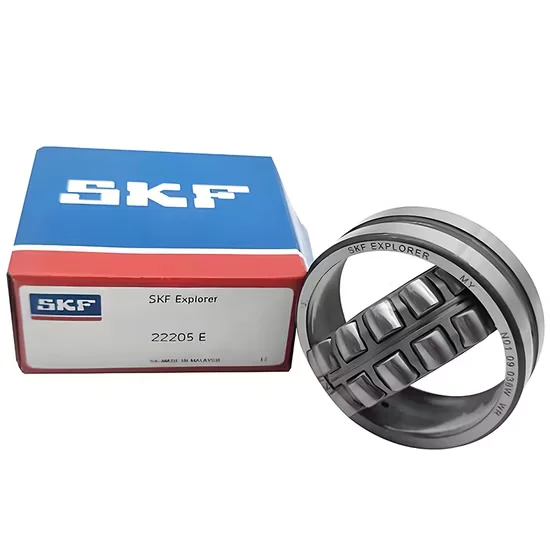
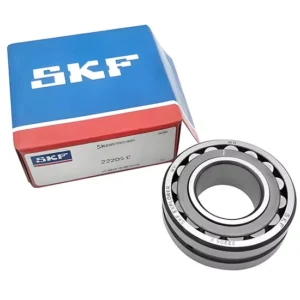
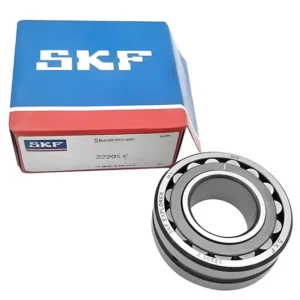
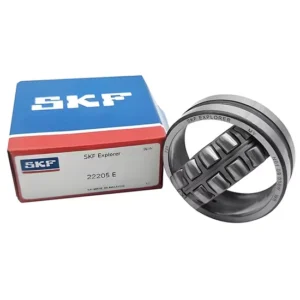
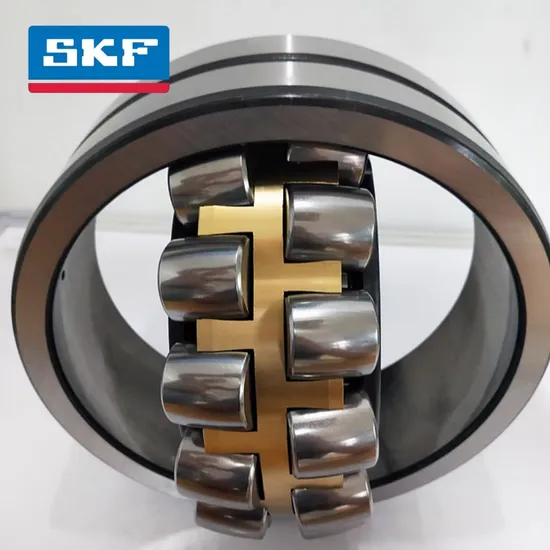
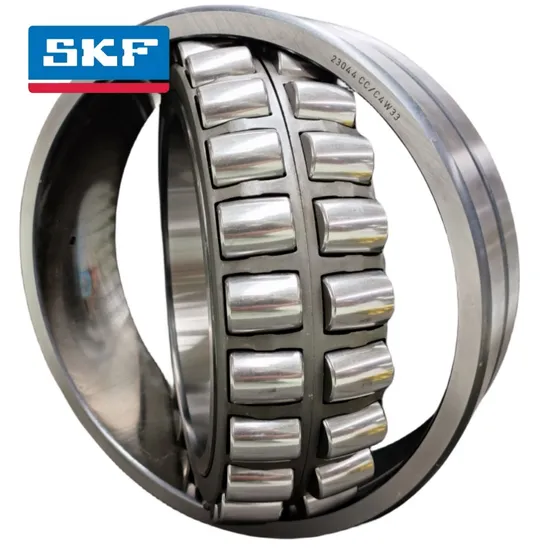
Listed data for this SKF designation; confirm the execution and dimensions against your drawing or application before ordering.
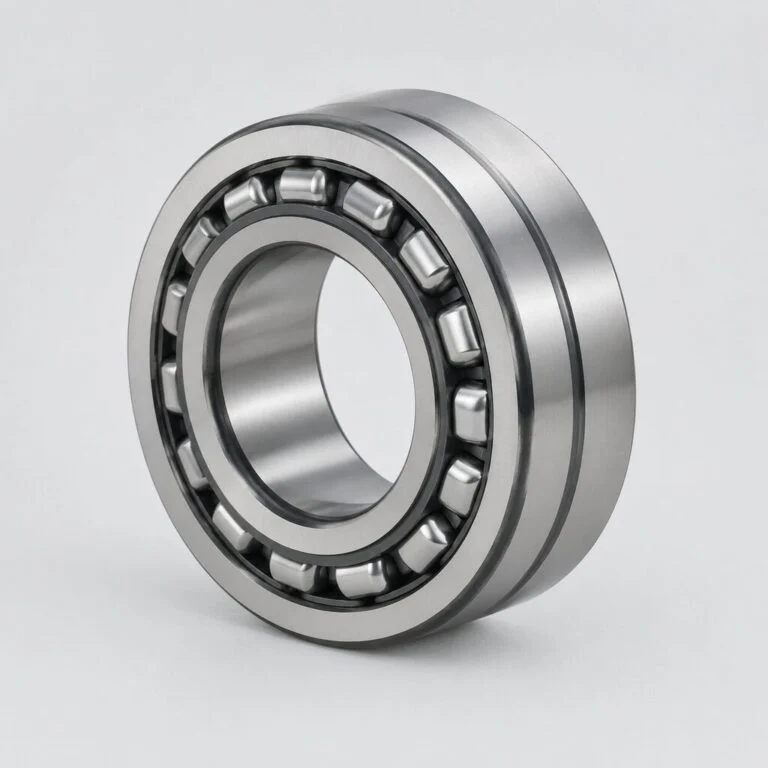
Original Batch Traceability — Every SKF 22205 spherical roller bearing we dispatch includes verifiable factory lot records linking back to the Swedish production facility.
Technical Specifications
| Parameter | Value |
| Designation | SKF 22205 |
| Bearing Type | Spherical Roller Bearing |
| Bore Diameter (d) | 25 mm |
| Outside Diameter (D) | 52 mm |
| Width (B) | 18 mm |
| Number of Rows | Double |
| Material | Bearing Steel |
| Load Direction | Radial |
| Lubrication | Grease or Oil |
| Clearance Class | C0, C3, C4 |
| Precision Class | P0, P6, P5, P4, P2 |
| Bore Type | 1:12 taper bore (K suffix) |
| Lubrication Feature | Groove and holes in outer ring (W33 suffix) |
| Origin | Sweden |
Application Suitability
| Industry | Typical Applications |
| Mining & Construction | Crusher eccentric shafts and vibrating screen drive mechanisms |
| Pulp & Paper | Paper machine dryer section felt rolls |
| Metallurgy | Steel mill continuous caster guide rolls |
Why Crusher Vibrating Screens Destroy the SKF 22205 Spherical Roller Bearing Before the Steel Yields
Misalignment and thermal expansion cause internal binding long before structural fatigue sets in.
In Chilean mining sites, I have seen heavy-duty vibrating equipment tear through standard clearance bearings in months. When the shaft deflects under extreme radial loads, the rolling elements skew and generate excessive friction heat. The resulting thermal expansion eliminates the internal gap, causing the rollers to skid rather than roll. Selecting the right configuration with adequate internal clearance prevents this catastrophic binding and keeps the crushing circuit running continuously.

Matching Self-Aligning Geometry to Heavy Radial Shock Loads
When crusher jaws process hard rock, the resulting shock loads demand a double-row spherical design that accommodates shaft deflection. The SKF 22205 spherical roller bearing distributes these intense radial forces across a larger contact area, reducing localized stress on the raceway. Our engineering team cross-references your specific equipment vibration frequencies to ensure the selected cage and clearance combination handles the dynamic shock without premature spalling, ensuring reliable operation in the harshest extraction environments.
Navigating Thermal Expansion and Contamination in Harsh Environments
Crushing and screening environments introduce severe particulate contamination alongside fluctuating operational temperatures. Standard grease purging often fails when dust infiltrates the raceway, accelerating abrasive wear on the rolling elements. Furthermore, high ambient heat combined with friction expands the inner ring, reducing internal clearance to dangerous levels. Proper lubrication routing and thermal expansion accommodation are critical to maintaining a stable hydrodynamic film and preventing metal-to-metal contact under heavy radial loads.
Decoding the K, W33, and C3 Suffixes for Optimal Performance
The K designation indicates a 1:12 taper bore, allowing secure mounting on adapter sleeves for precise radial internal clearance adjustment during installation. The W33 feature provides an annular lubrication groove with three holes in the outer ring, enabling efficient relubrication directly into the load zone without disassembly. Finally, the C3 radial internal clearance provides the necessary thermal expansion gap, preventing the rolling elements from binding when the shaft heats up during continuous vibrating screen operation.
The Downtime Multiplier of Ignoring Suffix Specifications
Installing a standard cylindrical bore or normal clearance variant in a high-heat vibrating application leads to rapid internal preload and catastrophic cage failure. This unplanned downtime halts the entire crushing circuit, costing far more than the component itself. According to ISO 281 fatigue life calculations, operating with insufficient clearance drastically reduces the calculated lifespan and accelerates raceway spalling.
Securing Genuine Components and Technical Alignment
Counterfeit bearings often lack the precise W33 groove depth or correct C3 clearance tolerances, leading to early field failures that halt production. We supply fully traceable units with original packaging, ensuring the metallurgical integrity strictly matches Swedish manufacturing standards. Our technical team verifies the K taper bore dimensions against your specific adapter sleeve specifications before dispatch. This proactive validation prevents the exact mounting mismatches and residual clearance errors I frequently witnessed causing early spalling in South American mines.
Documentation & Authenticity
- Certificate of Conformity validating the Swedish origin and specific production batch.
- Official app QR code verification confirming the genuine identity.
- Dimensional inspection report verifying the 1:12 taper bore angle and C3 clearance limits.
- Material traceability documents linking the bearing steel to the original mill heat number.
Storage, Handling & Mounting
- Keep the W33 lubrication groove protected from dust ingress by retaining the original wrapping until mounting.
- Use induction heaters for the inner ring; open-flame heating destroys the bearing steel microstructure and causes early spalling.
- Measure the drive-up distance on the 1:12 taper bore to achieve the precise C3 residual clearance reduction.
- Pump grease through the outer ring W33 holes until fresh lubricant purges to expel mining dust.
Preparing Your Technical Parameters for Selection Review
To ensure the selected configuration matches your exact machinery requirements, please provide the radial and axial load profiles, operating speeds, and ambient temperature ranges. Sharing the OEM equipment model number allows our team to perform a cross-reference check and verify the adapter sleeve compatibility for the tapered bore. This technical review guarantees the L10 life calculation aligns with your maintenance schedules.
Frequently Asked Questions
Q: How can I verify the authenticity of the received units on site?
A: You can scan the QR code on the packaging using the official manufacturer application to confirm the genuine origin. Additionally, inspect the physical W33 lubrication groove and the laser-etched designation on the outer ring to ensure they match the provided Certificate of Conformity and batch documentation.
Q: What is the practical difference between standard and C3 clearance in this application?
A: Standard clearance is suited for stable temperature environments, whereas C3 provides extra internal space. This additional gap accommodates the thermal expansion of the inner ring when the shaft heats up during heavy vibrating screen operation, preventing the rolling elements from binding and generating excessive friction.
Q: How does the W33 feature improve maintenance in dusty crushing environments?
A: The annular groove and holes allow maintenance crews to inject fresh grease directly into the load zone without disassembling the housing. This continuous purging action pushes out contaminated lubricant and abrasive mining dust, significantly extending the service interval and protecting the raceway from premature wear.
Q: What are the correct mounting procedures for the 1:12 taper bore?
A: The tapered inner ring must be driven onto an adapter sleeve using a locknut and hydraulic tools to measure the exact drive-up distance. This precise reduction in internal clearance ensures the bearing operates with the correct residual preload, avoiding both excessive looseness and dangerous thermal binding during operation.
Q: How do I select the right precision class for heavy-duty vibrating equipment?
A: Vibrating screens primarily require high structural durability and proper internal clearance rather than ultra-high rotational precision. Standard P0 or P6 precision classes are typically sufficient for these heavy radial shock load applications, allowing you to allocate budget toward robust cage designs and verified C3 clearance tolerances instead of unnecessary precision grades.