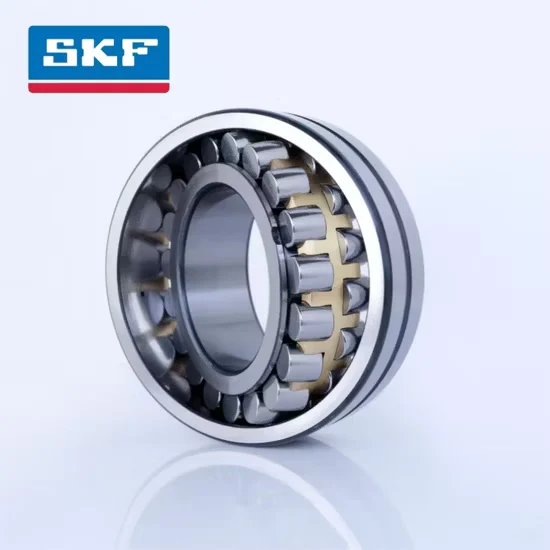
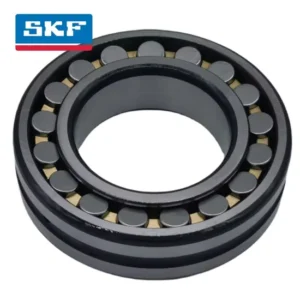
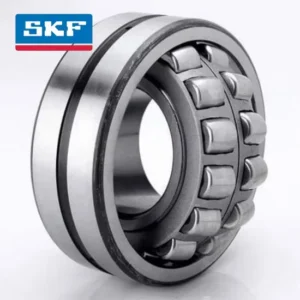
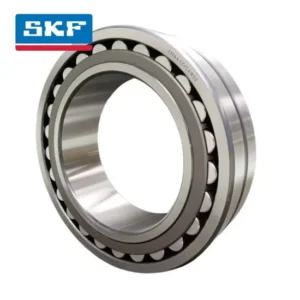
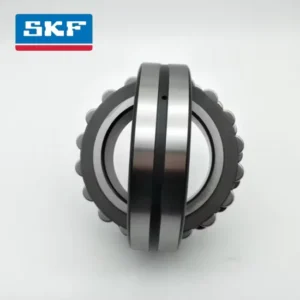
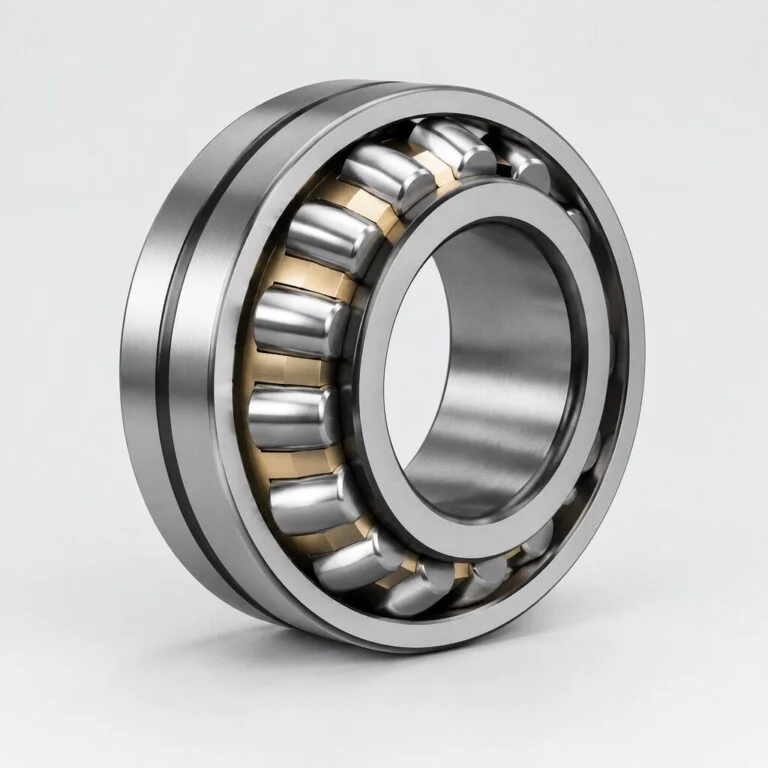
Listed data for this SKF designation; confirm the execution and dimensions against your drawing or application before ordering.
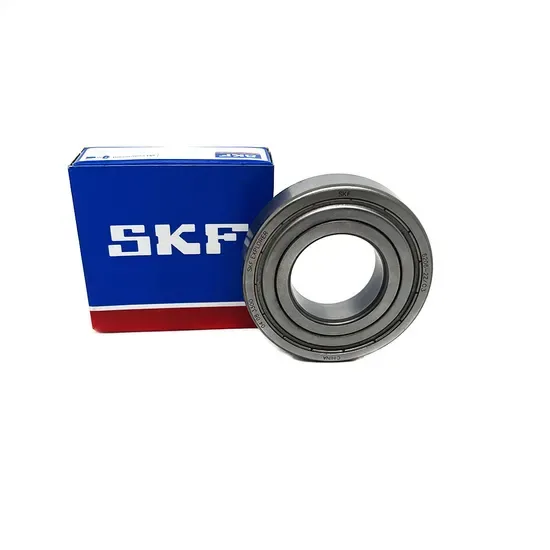
Verified via SKF app — Every SKF 22320 E-K/C4 spherical roller bearing we dispatch carries an intact QR label for instant digital authentication.
Technical Specifications
| Parameter | Value |
| Designation | SKF 22320 E-K/C4 |
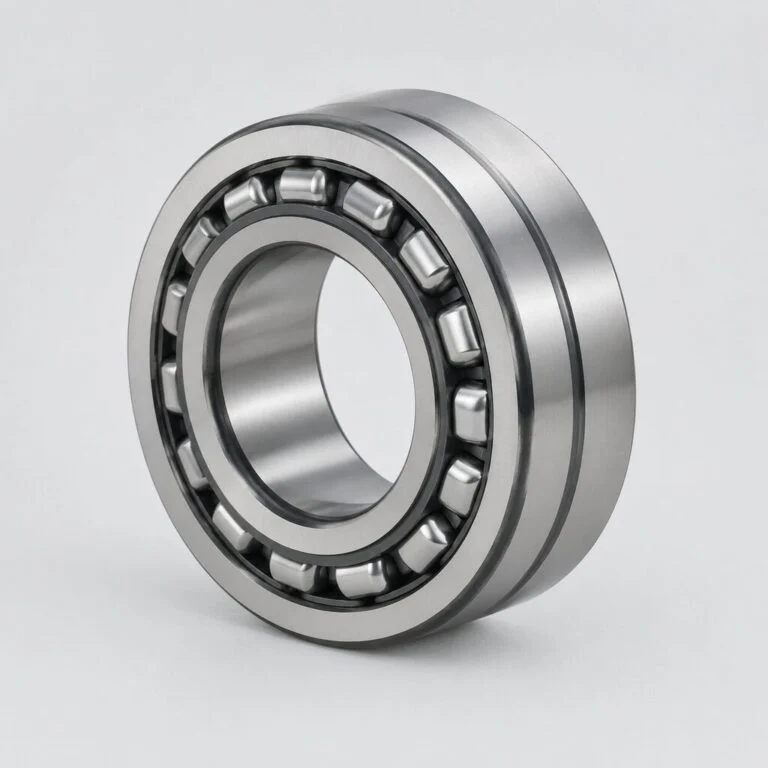
| Bearing Type | Spherical Roller Bearing |
| Arrangement | Double Row |
| Alignment Type | Self-Aligning |
| Bore Type | Tapered 1:12 (K suffix) |
| Clearance Class | C4 |
| Internal Design | Enhanced (E suffix) |
| Material | Available in Gcr15 chrome steel or specialized variants |
| Origin | Jiangsu China |
Application Suitability
| Industry | Typical Applications |
| Mining & Construction | Vibrating screens, heavy-duty conveyors, crushers |
| Metallurgy | Steel mill equipment, continuous casters |
| Pulp & Paper | Paper machine dryer cylinders |
Why Misreading the Clearance Suffix Destroys Conveyor Gearboxes
Installing a standard clearance unit where a C4 is specified guarantees thermal seizure under heavy continuous loads.
In heavy material handling, ambient heat and friction rapidly expand the inner ring. When procurement teams overlook the C4 designation on a SKF 22320 E-K/C4 spherical roller bearing, the resulting preload wipes out the lubricant film. I have seen entire belt drive systems lock up simply because a standard clearance part was substituted during an emergency MRO swap. The friction generated by the zero-clearance condition quickly degrades the grease, leading to severe smearing on the raceways. Maintenance crews often blame the lubricant or the seal, completely missing the fact that the fundamental internal geometry was wrong from the start. This single suffix error cascades into destroyed shafts and ruined housings.

Matching the Enhanced Design to High-Vibration Environments
Vibrating screens and crushers subject rotating elements to severe shock loads and constant oscillation. The enhanced internal geometry of this SKF 22320 E-K/C4 spherical roller bearing optimizes stress distribution across the roller paths, significantly reducing the risk of surface spalling. Our sourcing network ensures you receive the exact E-suffix configuration needed to withstand these punishing dynamic forces. Without this optimized roller complement, the localized contact stresses would quickly exceed the material's fatigue limit, causing micro-cracks to propagate beneath the surface. By securing the precise enhanced design, plant engineers can confidently push the equipment through its most demanding operational cycles without fearing unexpected structural degradation.
Managing Thermal Growth and Shaft Misalignment
Heavy-duty conveyors operate under combined radial and axial loads while experiencing significant thermal growth. The C4 radial internal clearance compensates for this expansion, preventing the rollers from binding against the raceways as the shaft temperature rises. Furthermore, the self-aligning capability accommodates shaft deflections and housing misalignments inherent in large-scale structural steelwork, ensuring the load remains evenly distributed. Proper lubrication intervals are critical here, as dust ingress can rapidly degrade the grease and accelerate wear. When the housing settles or the foundation shifts over time, the outer ring can pivot slightly within the spherical raceway, absorbing the misalignment without transferring destructive edge loads to the rollers.
Decoding the E, K, and C4 Suffixes
The E suffix indicates an optimized internal design with a maximized roller complement, directly increasing the dynamic load rating and extending the theoretical service life. The K designation specifies a 1:12 tapered bore, which requires precise mounting on an adapter sleeve to achieve the correct residual clearance. If the lock nut is over-tightened, the C4 clearance can be entirely eliminated, leading to immediate operational failure and severe thermal damage. The C4 class itself provides greater internal space than standard or C3 variants, specifically engineered for applications where the inner ring runs considerably hotter than the outer ring. Understanding these exact suffix interactions is critical for reliability, as substituting even one character fundamentally alters the behavior under load. Maintenance teams must respect the precise engineering intent behind every stamped letter.
The Downtime Penalty of Suffix Substitution
Substituting a standard bore or normal clearance unit might seem like a harmless shortcut during a critical breakdown. However, this mismatch inevitably leads to unplanned downtime and catastrophic damage to adjacent gearbox components. According to failure analysis frameworks like ISO 15243, incorrect internal clearance is a primary driver of smearing, thermal discoloration, and eventual seizure. The true cost extends far beyond the replacement part, encompassing lost production hours, secondary mechanical repairs, and compromised safety margins. When a conveyor halts unexpectedly due to a seized unit, the financial impact ripples through the entire supply chain, highlighting why exact specification adherence is non-negotiable in heavy industry.
Securing Exact Suffix Configurations for Critical MRO
Sourcing the exact SKF 22320 E-K/C4 spherical roller bearing requires rigorous verification, as the C4 and K suffixes are frequently counterfeited or mislabeled in the secondary market. We cross-check the physical ring stampings against the original manufacturer batch traceability documentation before any shipment leaves our facility. Our inventory covers thousands of specialized part numbers, eliminating the need to compromise on clearance or bore type during urgent maintenance windows. Furthermore, we provide cross-brand equivalent model consultation if lead times demand an immediate alternative, ensuring you never have to install an incorrect substitute. Every unit ships with complete traceability to guarantee authenticity, giving plant managers the confidence that their critical machinery is protected by genuine components.
Documentation & Authenticity
- Original manufacturer batch traceability documentation verifying the C4 clearance and K bore stampings.
- Official app QR code labels intact on the packaging for instant digital authentication.
- Material inspection reports confirming the specified steel composition and heat treatment.
- Dimensional and running accuracy inspection reports validating the 1:12 taper geometry.
- Certificate of Conformity matching the specific production batch to the purchase order.
Storage, Handling & Mounting
- Keep the adapter sleeve and lock nut sealed until mounting to prevent thread contamination on this K-bore setup.
- Measure the residual C4 clearance continuously during the drive-up procedure to avoid eliminating the internal gap.
- Store the double-row unit horizontally in its original packaging to prevent cage deformation under its own weight.
- Use clean gloves when handling the exposed steel surfaces to prevent corrosive sweat marks before installation.
- Apply the recommended anti-seize compound on the 1:12 tapered shaft seat to ensure uniform clamping force.
Preparing Your Technical Parameters for Review
To ensure the selected configuration perfectly matches your machinery, please share the operating radial and axial loads, rotational speed, and ambient temperature profiles. Providing the OEM equipment serial number allows our engineering team to perform a precise cross-reference verification and confirm the original factory specification. We will then conduct a customized L10 life calculation to confirm the C4 clearance is optimal for your specific thermal gradient and load distribution. Sharing details about the housing design and sealing arrangement also helps us recommend the most appropriate relubrication strategy, ensuring the enhanced internal geometry performs reliably throughout its intended service life.
Frequently Asked Questions
Q: How to verify the authenticity of SKF bearings using official digital tools?
A: Every genuine unit features a unique QR code on the packaging label. By scanning this code with the official manufacturer application on your smartphone, you can instantly verify the product's origin, part number, and production batch. This digital check ensures the physical stampings on the rings match the factory records, protecting your operation from counterfeit components.
Q: What is the operational difference between C3 and C4 clearance for spherical roller bearings?
A: The C4 class provides a larger radial internal gap compared to C3, specifically accommodating greater thermal expansion between the inner and outer rings. In heavy-duty conveyors where the shaft heats up significantly more than the housing, a C3 unit might seize, whereas the C4 variant maintains the necessary operating clearance. Selecting the correct class prevents thermal binding and premature fatigue.
Q: How to properly mount a tapered bore bearing using adapter sleeves?
A: Mounting a K-suffix unit requires driving it up the 1:12 tapered sleeve until the specified residual internal clearance is achieved. You must measure the clearance reduction continuously using feeler gauges or dial indicators during the tightening process. Over-tightening the lock nut will eliminate the internal gap entirely, causing immediate thermal seizure once the equipment reaches its normal operating temperature.
Q: When should you choose an E-suffix enhanced design over standard internal designs?
A: The E designation indicates an optimized internal geometry with a maximized roller complement, which substantially increases the dynamic load rating. This enhanced design is highly recommended for applications involving heavy shock loads, such as vibrating screens and crushers, where standard designs would suffer from accelerated surface fatigue. It provides superior load distribution without altering the external envelope dimensions.
Q: What are the recommended lubrication practices for conveyor bearings in dusty environments?
A: In high-dust environments, establishing a strict relubrication schedule is critical to purge contaminated grease from the raceways. You should use a high-quality lithium-complex or polyurea grease that matches the original fill, applying it through the housing fittings while the shaft is rotating. This continuous purging action prevents abrasive particles from entering the sealing gaps and accelerating wear on the roller paths.