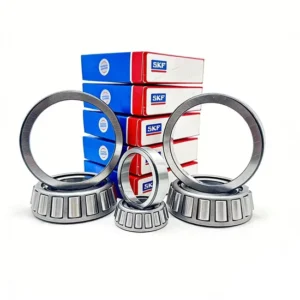
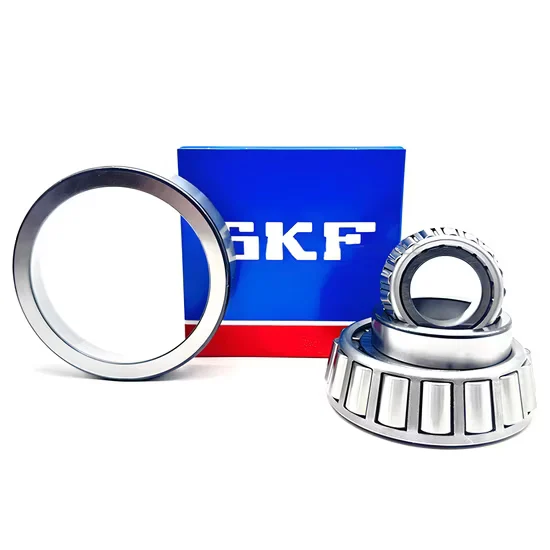
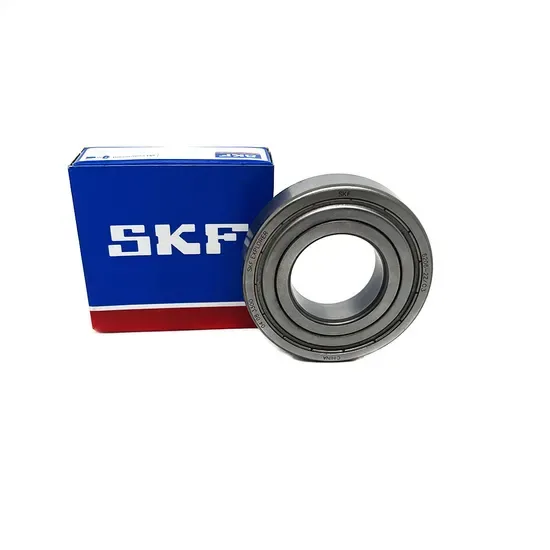
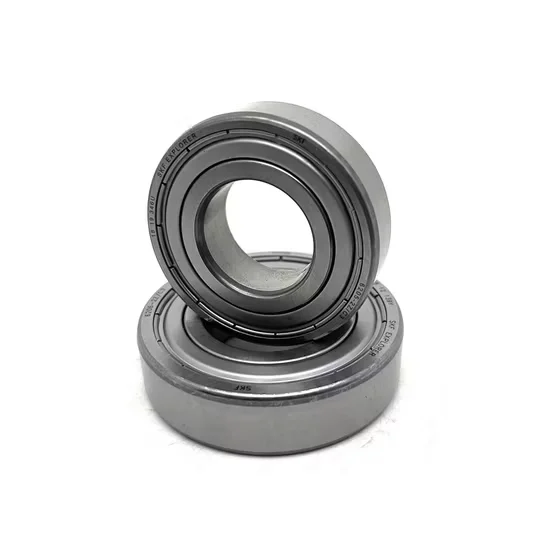
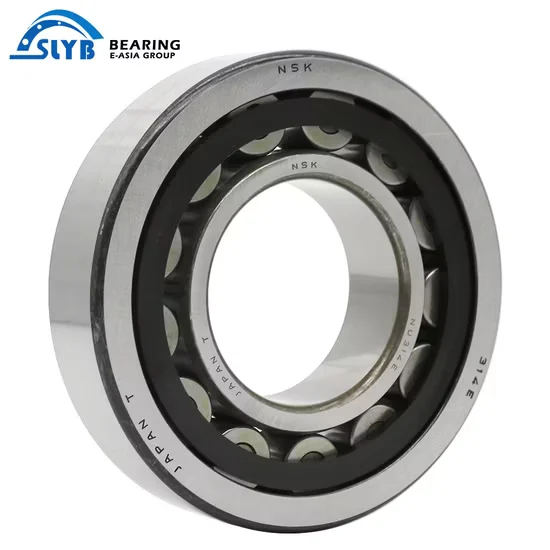
Listed data for this SKF designation; confirm the execution and dimensions against your drawing or application before ordering.
Original Batch Traceability — Every SKF 30204 tapered roller bearing shipped includes factory lot documentation to verify Swedish manufacturing origins.
Technical Specifications
| Parameter | Value |
| Designation | SKF 30204 |
| Bearing Type | Tapered Roller Bearing |
| Bore Diameter (d) | 20 mm |
| Outside Diameter (D) | 47 mm |
| Material | Bearing Steel |
| Origin | Sweden |
Application Suitability
| Industry | Typical Applications |
| Automotive | Wheel hub assemblies for light commercial vehicles |
| Industrial | High-rigidity shafts in reduction gearboxes |
Why Open Tapered Roller Bearings Fail in Hub Assemblies
Improper thermal mounting destroys the metallurgical structure long before fatigue sets in.
I have seen maintenance crews in Chilean mining camps use open flames to heat bearings for wheel hubs, completely ruining the heat-treated microstructure. When an SKF 30204 tapered roller bearing is subjected to direct torch heating, the localized temperature spikes soften the raceways, leading to catastrophic hub lockups within a few thousand kilometers. The martensitic core relies on precise tempering, and uncontrolled heat completely reverses this factory engineering. Proper induction heating with controlled temperature ramps is absolutely non-negotiable for preserving the structural integrity of the rings and rollers during installation.

Matching Hub Loads with Tapered Geometry
Automotive wheel hubs endure intense combined loading, requiring components that handle both radial vehicle weight and axial cornering forces simultaneously. The internal geometry of this SKF 30204 tapered roller bearing distributes these multi-directional stresses across the roller contact lines, minimizing edge stress concentrations. Our supply chain ensures you receive genuine Swedish-manufactured units capable of sustaining these rigorous dynamic profiles without premature spalling. The precise angle of the cup and cone allows the assembly to manage heavy shock loads encountered on uneven terrain, making it a reliable choice for light commercial vehicles operating in demanding conditions.
Navigating Contamination and Thermal Expansion in Drivetrains
Wheel hub environments expose components to severe moisture, road salt, and particulate ingress, demanding robust external sealing solutions since this open design requires precise external seal integration. Furthermore, operational friction generates significant heat, making the initial mounting clearance critical to accommodate thermal expansion without inducing excessive preload on the rollers. Lubrication intervals must be strictly managed to prevent grease degradation under high-speed rotation. If the external seals fail or the initial grease volume is insufficient, abrasive particles will quickly score the raceways, drastically reducing the operational lifespan of the entire hub assembly.
Decoding the Baseline Dimensions and Material Properties
The 20 mm bore and 47 mm outside diameter define the physical envelope for standard light-duty hub applications. Manufactured from high-purity bearing steel, the rings and rollers achieve the necessary surface hardness to resist abrasive wear and surface fatigue. Since this designation carries no internal clearance or cage material suffixes, it defaults to standard pressed steel cages and normal clearance, which suits typical automotive operating temperatures. Buyers must verify the exact width dimension against the latest manufacturer catalog, as minor profile updates occasionally occur across production batches. Understanding these baseline parameters ensures the component fits precisely within the existing hub housing without requiring extensive machining modifications.
The Financial Impact of Microstructural Degradation
Ignoring proper assembly protocols transforms a precision component into a massive operational liability. When installation errors compromise the raceway integrity, the resulting unplanned downtime, secondary suspension damage, and warranty voidance far exceed the initial procurement savings. ISO 15243 classifies such thermal and mechanical installation damage as distinct failure modes that bypass standard fatigue life calculations. A single hub failure on a commercial fleet vehicle can strand the asset in remote locations, multiplying recovery costs and disrupting delivery schedules. Investing in proper tooling and training is essential to protect the metallurgical investment.
Securing Authentic Components for Critical Rotating Assemblies
Sourcing genuine replacement parts requires more than just matching the part number; it demands verifying the manufacturing origin and lot consistency. We maintain massive spot inventory of these specific hub units, eliminating typical multi-week lead times for urgent maintenance scenarios. Our technical team provides cross-reference consultation to ensure exact specification alignment when upgrading or replacing adjacent drivetrain components like the 30205 across mixed fleets. Every shipment includes complete traceability documentation, protecting your fleet from the catastrophic risks of counterfeit metallurgy. By securing original Swedish-manufactured units, you guarantee the predictable performance required for high-mileage commercial operations.
Documentation & Authenticity
- Certificate of Conformity validating Swedish origin for this specific lot
- Factory batch traceability linking the physical unit to original production records
- Official app QR verification confirming authentic packaging and labeling
- Material inspection reports proving bearing steel chemical composition compliance
- Dimensional inspection records verifying the 20 mm bore and 47 mm OD tolerances
Storage, Handling & Mounting
- Store in original packaging to prevent humidity ingress on the open bearing steel surfaces
- Use induction heaters for mounting; never apply open flames to avoid microstructural softening
- Apply clean gloves during handling to prevent acidic sweat from corroding the precision raceways
- Verify external seal compatibility before pressing the hub assembly together
- Maintain strict cleanliness to prevent particulate contamination in the open roller pathways
Engineering Review for Hub Integration
To ensure optimal lifecycle performance, provide your specific radial and axial load profiles along with operational speed ranges. Sharing the exact OEM equipment numbers allows our engineering team to perform cross-reference verification and confirm dimensional interchangeability. Detailed environmental parameters help us recommend the most suitable external sealing and lubrication strategies for your specific fleet.
Frequently Asked Questions
Q: How do I verify the authenticity of the received components?
A: Authenticity is confirmed by scanning the QR code on the packaging using the official manufacturer application. Additionally, we provide original factory batch traceability documents and a Certificate of Conformity. These records link the specific lot to the Swedish production facility, ensuring you receive genuine metallurgy rather than substandard counterfeits.
Q: What cross-reference considerations apply when replacing adjacent hub bearings?
A: When replacing paired components, you must verify the exact dimensional envelope and load ratings. While cross-referencing to adjacent sizes like the 30205 or equivalent models from other premium brands is possible, mixing different manufacturers on the same axle can cause uneven load distribution. Always consult our technical team to ensure exact specification alignment before finalizing bulk orders.
Q: What assembly methods are recommended to prevent premature failure?
A: Induction heating is strictly required for mounting; open flames or torches will destroy the heat-treated microstructure, leading to rapid raceway softening and hub lockups. The component must be heated evenly to the specified temperature, pressed squarely onto the shaft, and allowed to cool naturally while maintaining axial pressure to ensure proper seating.
Q: How should lubrication be managed for this open design?
A: Since this designation lacks integrated seals, external sealing and initial grease packing are critical. You must select a high-quality automotive wheel bearing grease capable of withstanding operational thermal expansion. Regular relubrication intervals should be established based on your specific driving conditions, particularly if the vehicle operates in high-moisture or heavy-contamination environments.