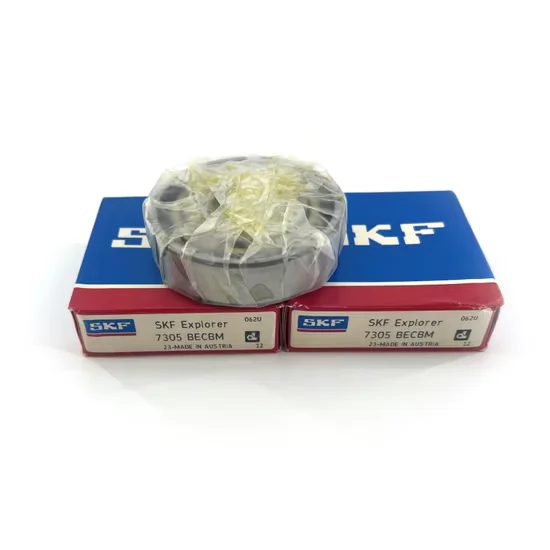
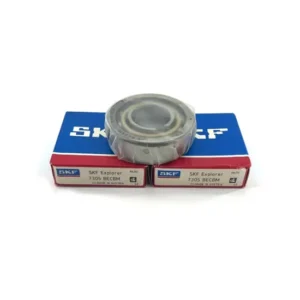
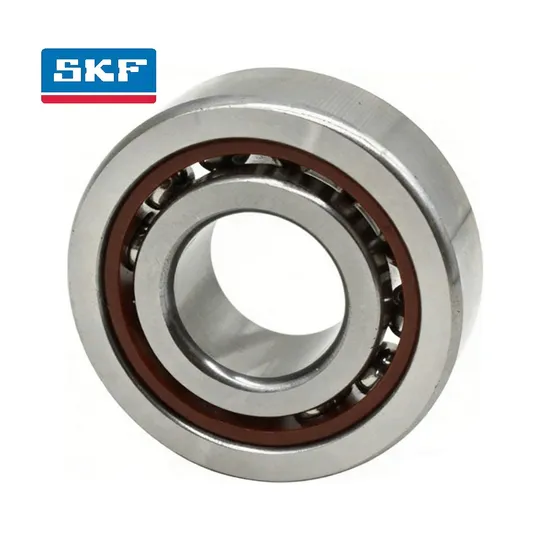
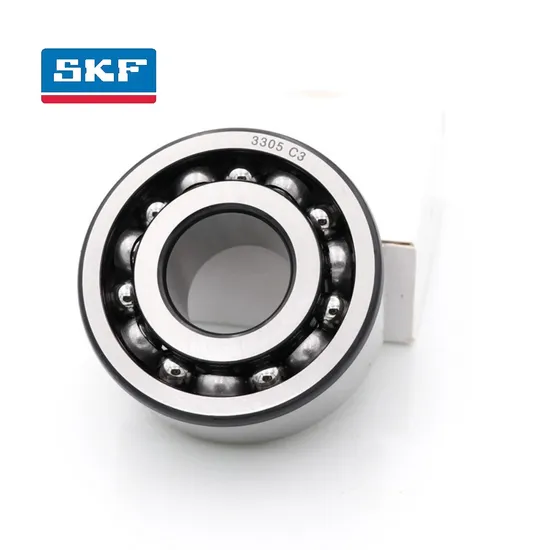
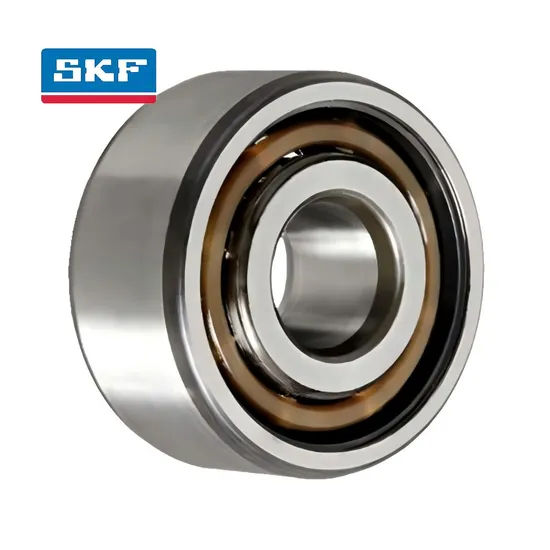
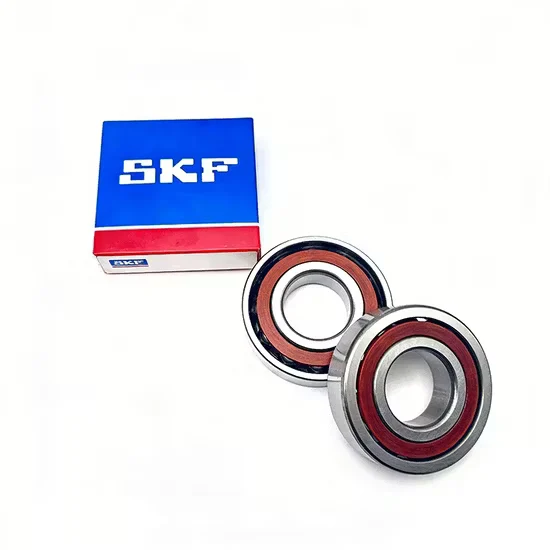
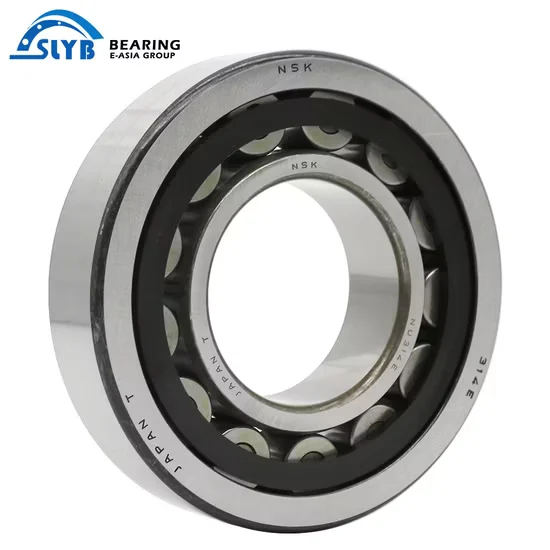
Listed data for this SKF designation; confirm the execution and dimensions against your drawing or application before ordering.
Original Batch Traceability — Every SKF 3304A angular contact ball bearing ships with verifiable factory lot documentation to ensure authentic Swedish manufacturing origin.
Technical Specifications
| Parameter | Value |
| Designation | SKF 3304A |
| Bearing Type | Angular Contact Ball Bearing |
| Bore Diameter (d) | 20 mm |
| Outside Diameter (D) | 52 mm |
| Width (B) | 22.25 mm |
| Material | Bearing Steel |
| Seal or Shield Type | Open |
| Lubrication | Grease or Oil |
| Origin | Sweden |
The 'A' suffix remains unverified and requires official manufacturer catalog confirmation for exact design implications.
Application Suitability
| Industry | Typical Applications |
| Hydraulic Systems | Pump drive shafts and high-pressure valve actuators |
| Machine Tools | Spindle orientation mechanisms and precision feed drives |
| Industrial Robotics | Joint articulation pivots and servo motor mounts |
Why Hydraulic Pump Cavitation Destroys Bearings Before the Steel Fails
Micro-vibrations from fluid cavitation cause localized raceway spalling long before macroscopic structural fatigue occurs.
In high-pressure hydraulic circuits, pressure spikes and fluid aeration generate high-frequency axial shocks that penetrate deep into the housing. Standard deep groove alternatives simply cannot absorb these multidirectional forces, leading to premature raceway brinelling and catastrophic structural collapse. When sourcing an SKF 3304A angular contact ball bearing for these demanding environments, engineers often overlook the internal clearance shifts caused by thermal expansion. This thermal growth restricts the rolling elements, ultimately triggering catastrophic seizure during continuous duty cycles. Furthermore, the microscopic surface distress initiated by cavitation accelerates lubricant degradation, stripping the protective oil film from the contact zones.

Matching Open-Type Architectures to Hydraulic Fluid Environments
Hydraulic pump assemblies frequently rely on the system’s own filtered hydraulic fluid for lubrication, making sealed variants fundamentally counterproductive to the design intent. The open configuration of the SKF 3304A angular contact ball bearing allows unrestricted oil flow directly through the rolling elements, ensuring optimal heat dissipation and continuous particle flushing. This design philosophy perfectly aligns with our technical selection support, where we actively guide clients away from inappropriate sealed replacements that trap contaminated fluid inside the raceway. By facilitating direct fluid contact, the open architecture maintains a stable thermal equilibrium, preventing the localized hot spots that typically degrade synthetic hydraulic fluids and compromise the bearing steel integrity over extended operational shifts.
Navigating Axial Thrust and Thermal Gradients in Continuous Operation
Hydraulic pump shafts experience severe combined loading conditions, where continuous radial forces intersect violently with sudden axial thrust reversals during pressure relief events. Operating temperatures inside the pump housing fluctuate significantly depending on the duty cycle, demanding careful consideration of thermal expansion on internal clearance class selection. Without adequate oil film thickness maintained by the open design, boundary lubrication conditions rapidly accelerate wear and initiate subsurface cracking. Furthermore, misalignment from shaft deflection under peak loads requires the bearing to accommodate slight angular deviations without edge-loading the rolling elements. If the thermal gradient between the inner ring and outer housing is ignored, the resulting preload loss will cause the components to skid, generating excessive frictional heat and destroying the precision-ground raceways.
Decoding the Material and Dimensional Tolerances
The bearing steel construction provides the necessary core hardness and structural resilience to resist subsurface fatigue initiated by heavy dynamic loads and shock impacts. With a precise 20 mm bore and 52 mm outside diameter, the dimensional envelope fits standard hydraulic pump housings perfectly without requiring expensive custom machining or adapter sleeves. The 22.25 mm width offers a substantially broader contact footprint compared to narrower single-row alternatives, significantly enhancing moment stiffness and resisting shaft deflection. Open-type bearings lack the friction-inducing contact seals, allowing them to reach much higher limiting speeds when properly flood-lubricated by the host system. Precision grinding of the raceways ensures exceptionally smooth operation, minimizing vibration transmission to sensitive machine tool spindles or robotic joints. The complete absence of integrated seals also means maintenance teams can perform thorough ultrasonic cleaning and re-lubrication during scheduled overhauls, extending the overall service life of the assembly.
The Hidden Financial Drain of Incorrect Clearance Selection
Specifying standard clearance for an application that generates excessive heat inevitably leads to internal preload loss, causing the rolling elements to skid rather than roll smoothly. This destructive skidding action tears the microscopic asperities off the raceway surface, resulting in unplanned downtime and complete hydraulic system contamination with metallic debris. According to ISO 281 life calculation frameworks, ignoring the thermal gradient between the inner ring and outer housing drastically overestimates the operational lifespan and masks the true risk of failure. Ultimately, replacing a failed pump shaft bearing incurs massive secondary costs from damaged mechanical seals, scored shafts, and lost production hours that easily dwarf the initial component price.
Securing Authentic Components Through Rigorous Verification
Sourcing genuine components requires far more than just matching the part number; it demands verifying the exact internal geometry and metallurgical pedigree of the specific batch. We provide complete batch traceability documentation for every SKF 3304A angular contact ball bearing, ensuring buyers receive authentic Swedish-manufactured units rather than dangerously counterfeit substitutes. Our cross-brand equivalent model consultation helps maintenance teams identify suitable alternatives when lead times fluctuate, without compromising the hydraulic pump's operational integrity or voiding equipment warranties. By maintaining massive spot inventory, we effectively eliminate the typical multi-week lead times associated with direct official channels and keep critical machinery running. Furthermore, our technical selection support prevents the costly mistake of confusing contact angle variants, ensuring the exact load-carrying capacity is matched to the application's unique thrust requirements.
Documentation & Authenticity
- Certificate of Conformity validating the Swedish origin and specific manufacturing lot.
- Original batch traceability records linking the physical unit to the factory production run.
- Official app QR code verification confirming the authenticity of the packaging and component.
- Dimensional inspection reports verifying the 20 mm bore and 52 mm outside diameter tolerances.
- Material test certificates confirming the bearing steel metallurgical composition and hardness standards.
Storage, Handling & Mounting
- Retain the original anti-corrosion packaging until immediately before mounting to protect the open raceways from ambient humidity.
- Use induction heating for the inner ring installation to avoid mechanical damage to the 20 mm bore surface.
- Ensure the hydraulic fluid filtration system is flushed before introducing oil to the open-type bearing assembly.
- Wear lint-free cleanroom gloves during handling to prevent acidic skin residues from etching the precision-ground bearing steel.
- Store the components in a climate-controlled environment away from direct ultraviolet light to preserve the factory-applied rust preventative.
Engineering Data Required for Technical Validation
To accurately validate the suitability of this component for your specific hydraulic machinery, please provide the exact radial and axial load profiles alongside the continuous operating speed and duty cycle. Sharing the OEM equipment model number allows our engineering team to perform a comprehensive cross-reference check and verify the required internal clearance class against the original factory specifications. Additionally, detailing the operating temperature range and specific lubrication method ensures we recommend the optimal configuration for your preventative maintenance schedule.
Frequently Asked Questions
Q: What does the 'A' suffix indicate on this specific model?
A: The 'A' suffix typically denotes specific internal design variations, such as the absence of filling slots in certain double-row configurations. However, as an unverified suffix for this exact identifier, it requires direct manufacturer catalog confirmation. We strongly advise consulting our technical team to decode the precise geometric implications before finalizing your procurement.
Q: How do I verify the authenticity of the received components?
A: Authenticity verification begins with scanning the QR code on the packaging using the manufacturer's official mobile application. Additionally, you should cross-reference the batch number etched on the bearing ring with the provided Certificate of Conformity. Our team supplies complete traceability documentation to guarantee the origin and manufacturing pedigree of every unit.
Q: Can I use grease lubrication instead of oil for this open-type design?
A: While the open architecture allows for grease lubrication during initial assembly, continuous high-speed hydraulic applications typically demand oil mist or flood lubrication. Grease may suffice for low-speed or intermittent duty cycles, provided the operating temperature remains within acceptable limits. We recommend sharing your exact speed and thermal parameters so we can advise on the optimal lubrication strategy.
Q: What assembly tools are recommended for mounting this bearing?
A: For a 20 mm bore, induction heaters are the preferred method to expand the inner ring uniformly without damaging the raceway. Mechanical pressing tools with appropriately sized sleeves can also be used, provided the force is applied strictly to the inner ring. Never apply mounting force through the rolling elements or the outer ring, as this will cause immediate brinelling and premature failure.
Q: How should I handle cross-referencing to alternative brands?
A: When cross-referencing to alternative manufacturers, you must verify not only the basic dimensions but also the internal clearance, contact angle, and cage material. Slight deviations in internal geometry can drastically alter the load distribution and thermal behavior inside the hydraulic pump housing. Our technical team provides comprehensive cross-brand equivalent consultations to ensure functional parity without compromising system reliability.