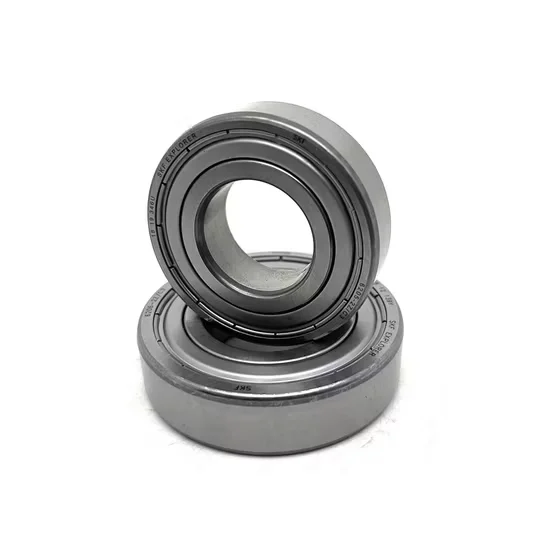
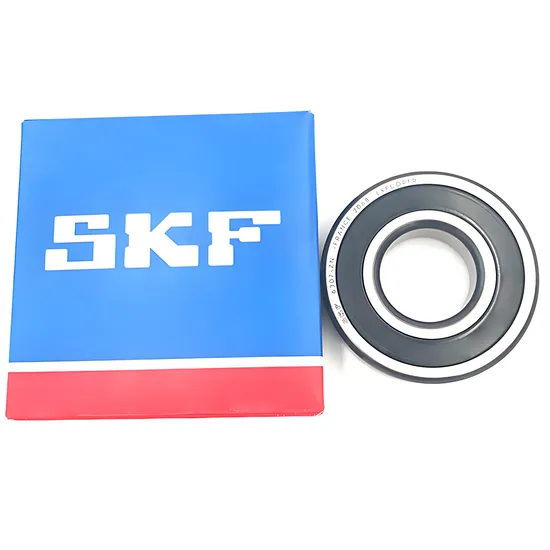
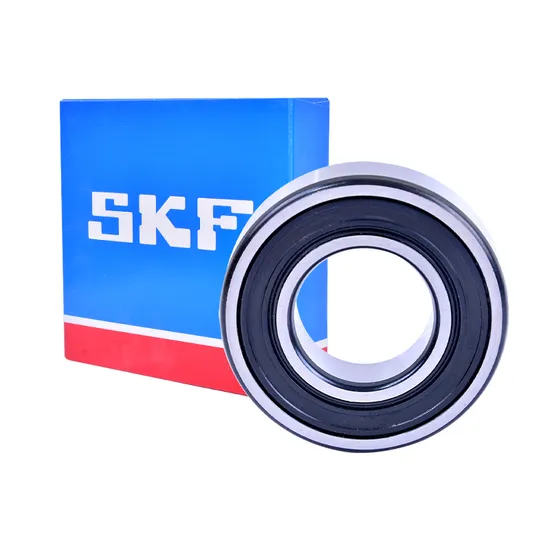
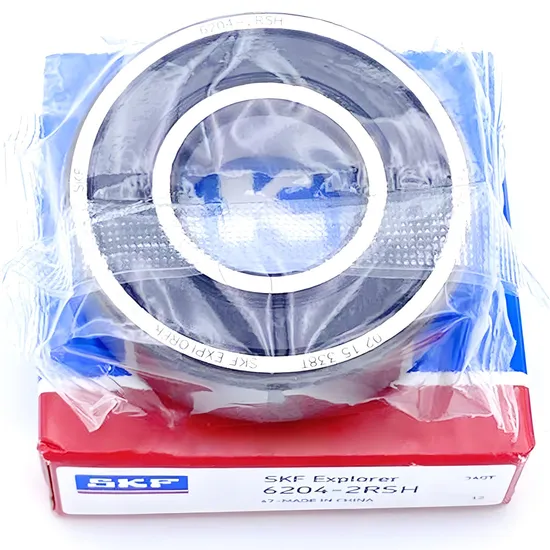
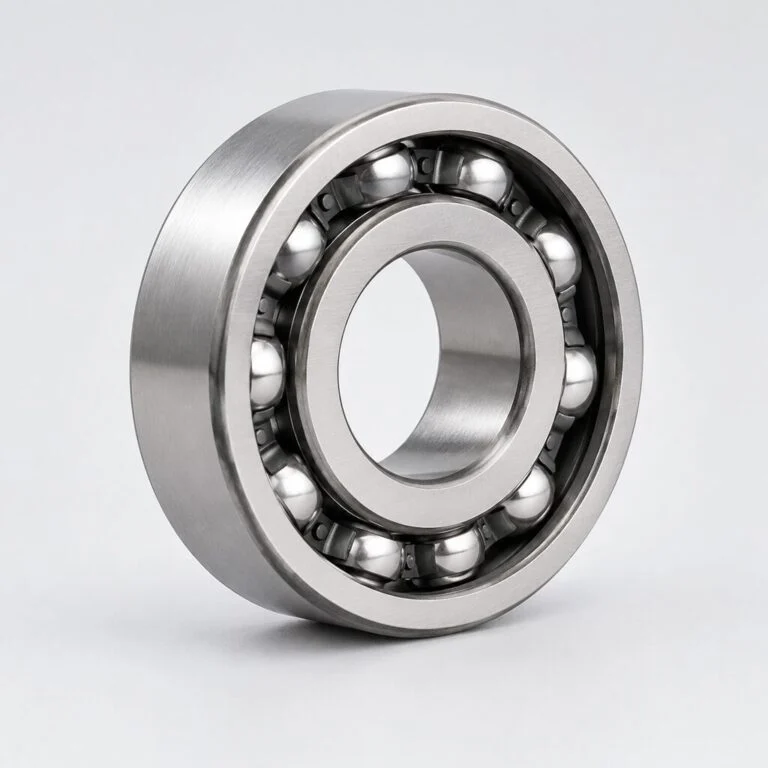
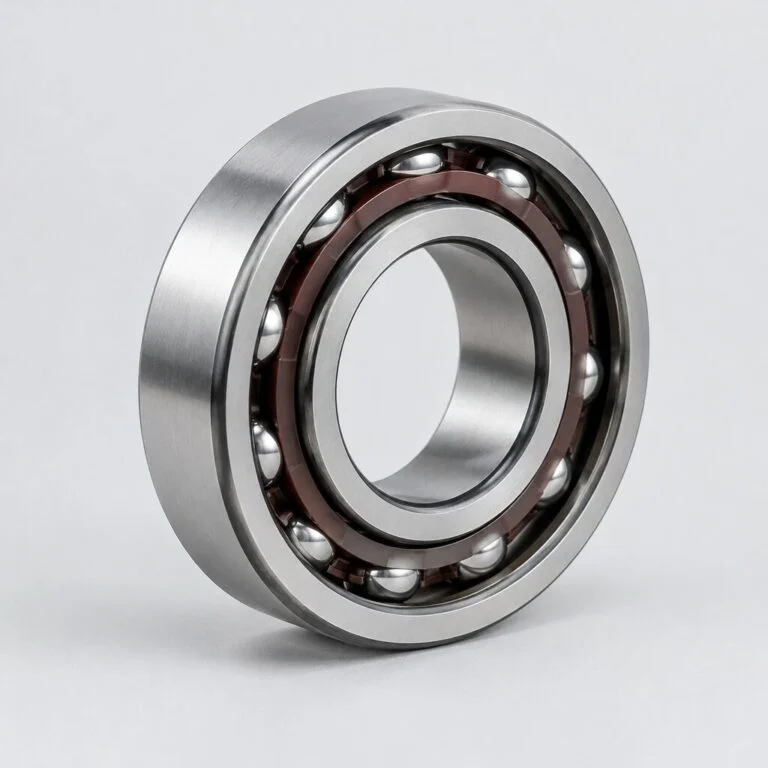
Listed data for this SKF designation; confirm the execution and dimensions against your drawing or application before ordering.
Verified Authenticity Scans — Every X&S 6204 6205 6206 deep groove ball bearing ships with a scannable QR code linking directly to the manufacturer's original batch traceability database.
Technical Specifications
| Parameter | Value |
| Designation | 6204 6205 6206 |
| Bearing Type | Deep Groove Ball Bearing |
| Rows Number | Single Row |
| Seal or Shield Type | ZZ, 2RS, Open |
| Precision Class | P0, P6, P5, P4 |
| Material | Bearing Steel |
| Lubrication | Grease or Oil |
| Vibration Grade | Z1V1, Z2V2, Z3V3, Z4V4 |
| Load Direction | Radial |
| Performance | High Speed, Low Noise, Long Life |
| Origin | Shandong, China |
| HS Code | 8482102000 |
Application Suitability
| Industry | Typical Applications |
| Electric Motors | Rotor shaft support requiring low-noise, high-speed deep groove ball bearings |
| Pumps & Conveyors | Radial load support in fluid handling and material transport systems |
| Gearboxes | High-speed shaft positioning with optimized vibration grades |
| Household Appliances | Quiet operation in washing machine drums and HVAC fan motors |
| After-market MRO | Direct replacement for standard radial load machinery components |
Why Seal Suffix Errors Destroy the X&S 6204 6205 6206 Deep Groove Ball Bearing
Matching the exact seal configuration to the ambient moisture level prevents catastrophic internal rust long before the fatigue limit is reached.
Sourcing reliable spare parts for urgent maintenance requires bearings that match exact precision and sealing specifications without compromising on lead times. In high-humidity environments across Southeast Asia, specifying a non-contact shield instead of a contact seal allows microscopic water vapor to infiltrate the raceway. During my early years conducting failure analysis on returned motor batches in Vietnam, I frequently encountered deep groove ball bearings that had seized completely. The local high temperature and high humidity allowed water vapor to bypass standard shields, resulting in severe red rust across the entire raceway. Switching to contact seals completely eliminated this recurring downtime nightmare, proving that suffix accuracy dictates survival.

Aligning Precision and Vibration Grades with Motor Requirements
When retrofitting electric motors, the X&S 6204 6205 6206 deep groove ball bearing must align with the specific vibration and precision demands of the rotor assembly. Selecting a P5 or P4 precision class paired with a Z3V3 or Z4V4 vibration grade ensures the smooth, quiet operation expected in sensitive HVAC or appliance applications. Lower precision variants might introduce unacceptable acoustic noise or cause micro-vibrations that degrade adjacent sensitive electronics over time. Our technical team routinely cross-references these specific grade combinations against OEM motor blueprints to eliminate resonance issues during high-speed rotation, ensuring the final assembly meets strict acoustic and performance benchmarks without requiring costly secondary balancing procedures.
Navigating Humidity and Contamination in Tropical Climates
Operating in tropical climates exposes radial bearings to extreme humidity and airborne particulates that compromise standard lubrication. A ZZ shield provides excellent dust exclusion with minimal friction, but it cannot block water vapor ingress during temperature cycling when the internal air contracts. Conversely, a 2RS contact seal offers superior moisture defense by physically wiping the inner ring, though it introduces slightly higher frictional heat at peak RPMs. Choosing the correct seal type and verifying the grease fill formulation are critical to preventing raceway corrosion. I have seen countless MRO teams blindly swap 2RS for ZZ to save fractions of a cent, only to face massive warranty claims months later due to moisture-induced spalling.
Decoding the Suffix and Precision Matrix
The available seal configurations—ZZ, 2RS, and Open—dictate the bearing's contamination defense strategy and relubrication capability. Open designs require external lubrication systems and are ideal for enclosed gearboxes where oil splash is prevalent, while ZZ shields offer low-friction dust protection for high-speed electric motors. The 2RS contact seals provide the highest barrier against liquid and vapor intrusion, making them indispensable for washdown or high-humidity environments. Furthermore, the P0 to P4 precision ratings directly influence the running accuracy and noise output, where tighter P4 tolerances minimize vibration in precision spindle applications. Understanding how these suffixes interact with the specific operational environment prevents the common mistake of over-specifying precision while under-specifying environmental protection, which inevitably leads to premature field failures despite the high initial component cost.
The Hidden Downtime Cost of Suffix Mismatches
Installing a ZZ-shielded bearing in a high-moisture pump application inevitably leads to water ingress, washing out the grease and causing rapid raceway spalling. This premature failure triggers unplanned downtime, secondary damage to adjacent shaft components, and voided equipment warranties. According to failure analysis frameworks, misapplication of seal types accounts for a significant share of early-life bearing replacements. Correcting the suffix specification upfront avoids these cascading operational losses. When a motor seizes on a critical production line, the cost of the replacement bearing is negligible compared to the lost output, emergency labor rates, and potential penalties for delayed shipments, making accurate initial specification a vital financial safeguard.
Securing Traceable and Application-Specific Inventory
We maintain massive spot inventory covering thousands of standard part numbers, ensuring urgent MRO orders for the X&S 6204 6205 6206 deep groove ball bearing ship without typical multi-week lead times. Our cross-brand equivalent model consultation helps buyers verify dimensional interchangeability when replacing legacy OEM components. Every shipment includes complete traceability documentation, eliminating the risk of receiving counterfeit or substandard stock. Additionally, our technical selection support guides clients through the critical ZZ versus 2RS decision, preventing the exact moisture-induced failures frequently seen in tropical deployments. By focusing on genuine original bearings with verified metallurgical properties, we ensure that the high-speed and low-noise performance promised on the datasheet is actually delivered in the field, protecting your maintenance budget from repetitive replacement cycles.
Documentation & Authenticity
- Certificate of Conformity verifying the exact P0-P4 precision class for each batch
- Original batch traceability logs linking the 6204 6205 6206 production run to raw material heats
- Scannable QR authentication tags for immediate field verification of genuine X&S origin
- Dimensional and running accuracy inspection reports confirming Z1V1 to Z4V4 vibration grades
- Material test certificates validating the bearing steel chemical composition and hardness
Storage, Handling & Mounting
- Keep 2RS sealed units in original packaging until mounting to prevent humidity from degrading the factory grease fill
- Store open and ZZ variants in climate-controlled environments to protect the exposed bearing steel from condensation
- Use induction heaters for inner ring mounting to avoid mechanical damage to the P4 precision raceways
- Verify the Z3V3 or Z4V4 vibration grade markings before installation to ensure correct motor shaft pairing
- Avoid using carbon steel tools on the outer rings to prevent surface scoring that compromises the corrosion resistance
Engineering Data Required for Technical Validation
To ensure optimal selection, please share the specific radial loads, operating speeds, and ambient temperature ranges for your machinery. Providing the exact OEM equipment model numbers allows our engineering team to perform precise cross-reference checks and L10 life recalculations. Detailing the exposure to moisture or particulate contamination will help us confirm whether a ZZ or 2RS seal configuration is most appropriate for your application.
Frequently Asked Questions
Q: How do I choose between ZZ, 2RS, and Open seal types for my equipment?
A: The choice depends on your contamination and relubrication needs. ZZ shields offer low-friction dust protection for high-speed motors, while 2RS contact seals block moisture in humid environments. Open bearings are best for enclosed gearboxes with external lubrication systems. Evaluating the specific operating environment ensures the correct seal is selected to prevent premature failure.
Q: What are the practical differences between P0, P6, P5, and P4 precision ratings?
A: Higher precision classes like P5 and P4 offer tighter dimensional and running accuracy tolerances compared to standard P0. This reduces vibration and noise, which is critical for high-speed electric motors and precision spindles. Selecting the appropriate precision grade ensures smooth operation and extends the service life of the rotating assembly under demanding conditions.
Q: How do vibration grades like Z1V1 to Z4V4 impact electric motor performance?
A: Vibration grades define the acceptable limits for noise and mechanical oscillation during rotation. Higher grades such as Z3V3 and Z4V4 are essential for quiet, smooth operation in sensitive appliances and high-speed HVAC motors. Specifying the correct vibration level prevents resonance issues and ensures the motor meets strict acoustic performance standards.
Q: What lubrication is recommended for high-speed versus high-load applications?
A: High-speed applications typically require low-viscosity grease or oil to minimize frictional heat and churning losses. Conversely, high-load scenarios benefit from high-viscosity grease with extreme pressure additives to maintain a protective film. Matching the lubrication type to the specific speed and load profile is crucial for maximizing the bearing's operational lifespan.
Q: How can I ensure cross-reference compatibility when replacing OEM bearings?
A: Verify the exact bore, outside diameter, width, and seal suffix against the original equipment manufacturer's specifications. Utilizing cross-reference consultation services helps confirm dimensional interchangeability and load ratings. Providing the OEM equipment model number allows technical teams to validate the replacement part and avoid fitment or performance issues.