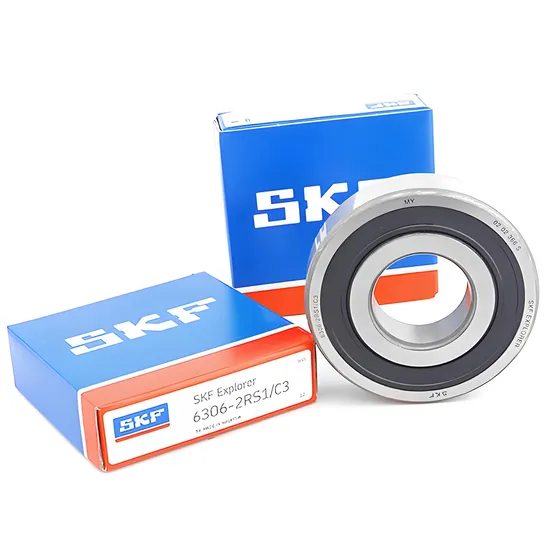
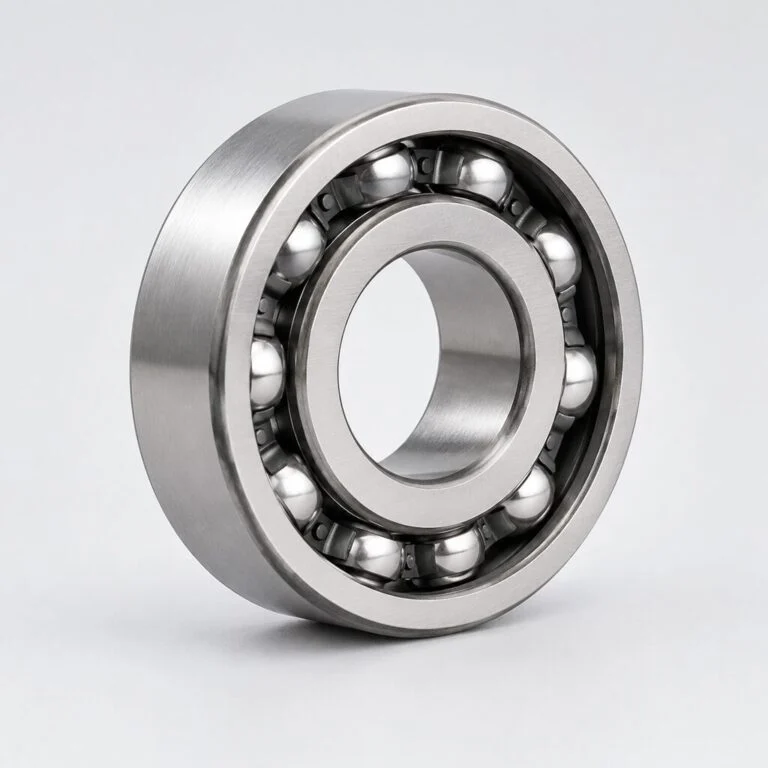
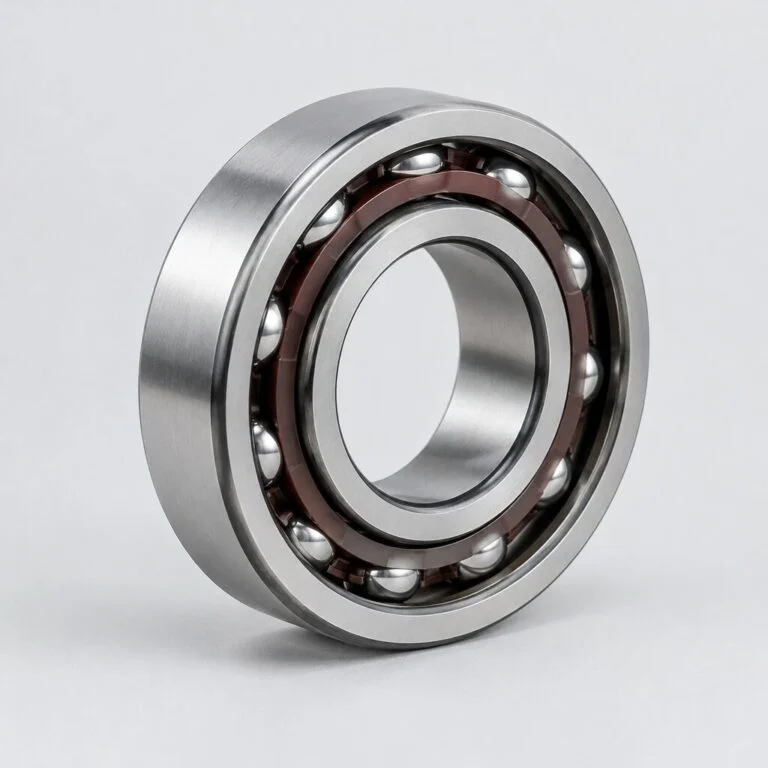
Listed data for this SKF designation; confirm the execution and dimensions against your drawing or application before ordering.
Consolidated Sourcing — Procure the SKF 6205 alongside mixed-brand MRO requirements through a single supply chain without juggling multiple vendors.
Technical Specifications
| Parameter | Value |
| Designation | SKF 6205 |
| Bearing Type | Deep Groove Ball Bearing |
| Bore Diameter (d) | 25 mm |
| Outside Diameter (D) | 52 mm |
| Width (B) | 15 mm |
| Lubrication | Grease or Oil |
| Origin | Sweden |
| HS Code | 8482102000 |
Application Suitability
| Industry | Typical Applications |
| Electric Motors | Rotor shaft support in standard AC/DC motors |
| Industrial Fans | Impeller shaft bearings in ventilation units |
| Gearboxes | High-speed intermediate shaft positioning |
| Pumps | Centrifugal pump drive shaft radial support |
Overlooking Thermal Expansion in Standard Clearance Bearings
A standard clearance bearing will seize when operating temperatures exceed normal ambient ranges.
Early in my career handling field installations for industrial motors, I watched a ventilation fan fail catastrophically because the standard clearance setup expanded under heat and locked the rotor. Selecting the right SKF 6205 deep groove ball bearing requires anticipating the actual thermal environment rather than assuming default factory settings will suffice. Many maintenance teams overlook how internal heat generation combined with external process temperatures fundamentally alters the operational geometry.

Matching the Component to the Operating Environment
When specifying a SKF 6205 deep groove ball bearing for general industrial machinery, the open design allows for flexible lubrication strategies adapted to the specific housing. Our engineering team cross-references your exact motor or pump model to ensure the default dimensions align perfectly with your existing seals and retainers. This proactive verification prevents costly installation delays caused by mismatched housing tolerances or incompatible lubrication pathways in complex mechanical assemblies.
Managing Load, Speed, and Thermal Variables
Radial loads dominate in typical electric motor and gearbox applications, but unexpected axial thrust from misalignment can accelerate raceway wear. High rotational speeds generate internal friction heat, which directly impacts the chosen lubrication method and interval. Without integrated seals, the housing must provide adequate contamination exclusion to prevent particulate ingress. Proper grease selection or oil bath levels become critical to maintaining the low-noise and high-speed performance characteristics. Monitoring these variables ensures the component survives the demanding daily operational cycles.
Decoding the Baseline Specifications
The 25x52x15 mm envelope ensures direct drop-in compatibility for standard housings across various mechanical assemblies. Lacking any suffix, this designation indicates an open bearing with standard internal clearance and a pressed steel cage. The open configuration demands that the external housing manages sealing and lubrication retention effectively. Standard clearance is optimal for normal operating temperatures, but if the application involves elevated heat from the motor windings or adjacent processes, a C3 clearance variant becomes mandatory to prevent internal preload and subsequent seizure. Understanding these baseline parameters is crucial for long-term reliability.
The Hidden Toll of Specification Mismatches
Installing a standard clearance component in a high-temperature zone inevitably leads to unplanned downtime as the internal gap vanishes. According to failure mode classifications outlined in ISO 15243, smearing and catastrophic seizure frequently trace back to improper clearance selection under thermal stress. This premature failure not only destroys the component but can cause severe secondary damage to the shaft and housing. The resulting production halts and emergency repair costs far exceed the initial procurement savings of ignoring thermal dynamics.
Securing Authentic Components for Critical Drives
Sourcing a genuine SKF 6205 deep groove ball bearing eliminates the risk of counterfeit metallurgy that plagues the industrial aftermarket. We verify the exact suffix requirements, ensuring you do not accidentally receive a sealed variant when your housing relies on oil splash lubrication. Every shipment includes complete batch traceability to confirm the Swedish origin. Our flexible consolidation allows you to add emergency single-unit spares to full-container project orders. Technical support extends beyond the sale, providing failure analysis if operating conditions shift unexpectedly, safeguarding your critical drive systems against avoidable disruptions.
Documentation & Authenticity
- Original batch traceability confirming Swedish manufacturing origin for every unit.
- Official brand app QR code verification to guarantee the authenticity of this Swedish-manufactured component upon receipt.
- Dimensional inspection reports validating the 25x52x15 mm tolerances before dispatch.
- Certificate of Conformity matching the specific HS Code for smooth customs clearance.
Storage, Handling & Mounting
- Store the open bearing in its original vapor-phase inhibitor packaging until the exact mounting moment.
- Use clean lint-free gloves to prevent skin moisture from corroding the exposed raceways of this open design.
- Apply the specified grease or oil immediately after unsealing to protect the unprotected 25mm bore steel surfaces.
- Heat the housing rather than the 52mm outer ring when mounting to preserve factory dimensional stability.
- Ensure external housing seals are fully functional since this open variant lacks integrated contamination shields.
Engineering Review and Selection Support
Share your precise radial and axial load profiles, operating temperatures, and rotational speeds so our team can verify the L10 life calculation. If your application involves elevated heat, provide the exact thermal parameters to determine if a C3 clearance alternative is necessary. Supplying the original equipment manufacturer part numbers allows us to execute precise cross-reference validations.
Frequently Asked Questions
Q: How can I verify the authenticity of the received components?
A: You can scan the QR code on the packaging using the official manufacturer application to instantly validate the product. We also provide complete original batch traceability documentation with every shipment, allowing you to cross-check the production details and confirm the genuine Swedish origin directly through authorized verification channels before installation.
Q: What cross-reference factors matter when replacing legacy units?
A: When replacing older units, you must verify the internal clearance and cage material, as legacy systems often used non-standard configurations. Providing the original equipment manufacturer part number allows our engineering team to map the exact dimensional and performance equivalents, ensuring the replacement integrates flawlessly without altering the existing housing or lubrication setup.
Q: How do I choose the correct clearance class for my application?
A: Standard clearance suits normal ambient temperatures, but if the bearing operates near heat sources like motor windings, thermal expansion will reduce the internal gap. In such elevated temperature scenarios, selecting a C3 clearance variant is essential to accommodate the expansion and prevent the rolling elements from binding and causing catastrophic seizure during operation.
Q: Which seal types are best if my environment is highly contaminated?
A: Since this specific designation represents an open bearing without integrated seals, the housing must provide the primary contamination barrier. If your environment contains heavy dust or moisture, you should rely on heavy-duty external labyrinth or lip seals within the housing design, or consult us regarding factory-sealed variants with rubber contact seals for direct particulate exclusion.
Q: What are the lubrication guidelines for this open configuration?
A: Open bearings require the housing to manage lubrication retention and replenishment continuously. You can utilize either grease or oil depending on the speed and cooling requirements of your specific machinery. Establish a regular relubrication schedule based on the operating hours and thermal load to maintain the high-speed, low-noise performance characteristics throughout the service lifecycle.