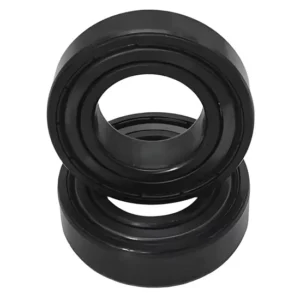
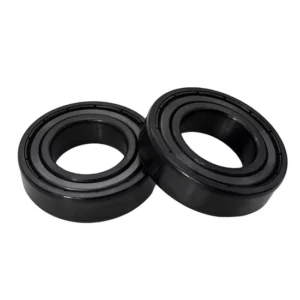
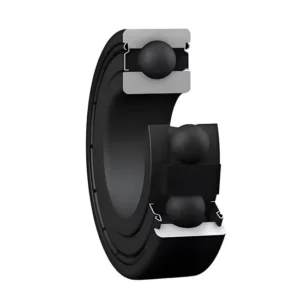
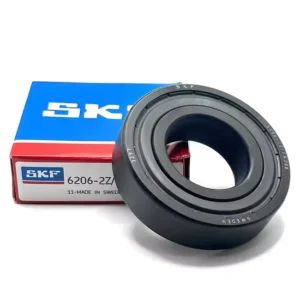
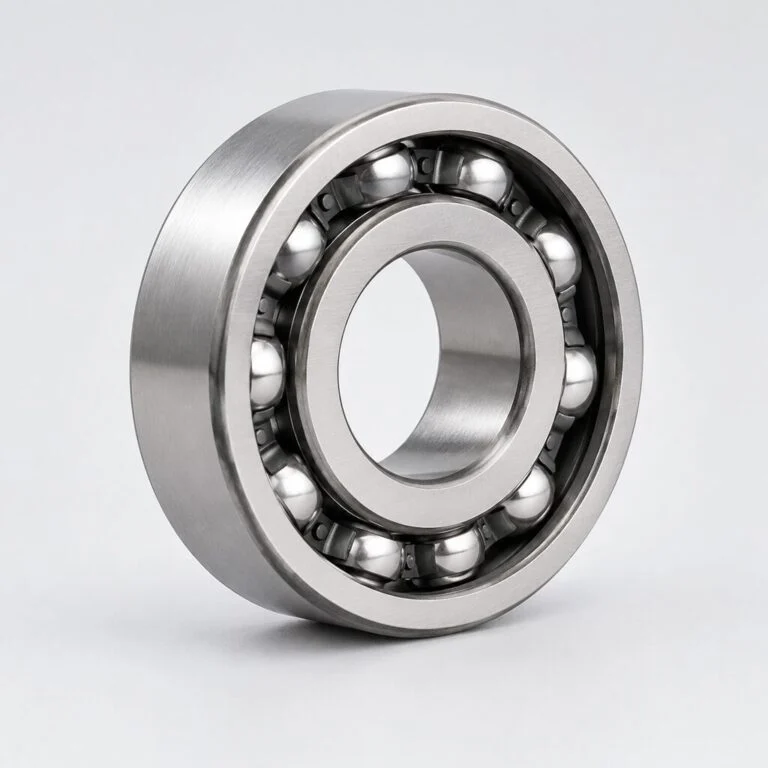
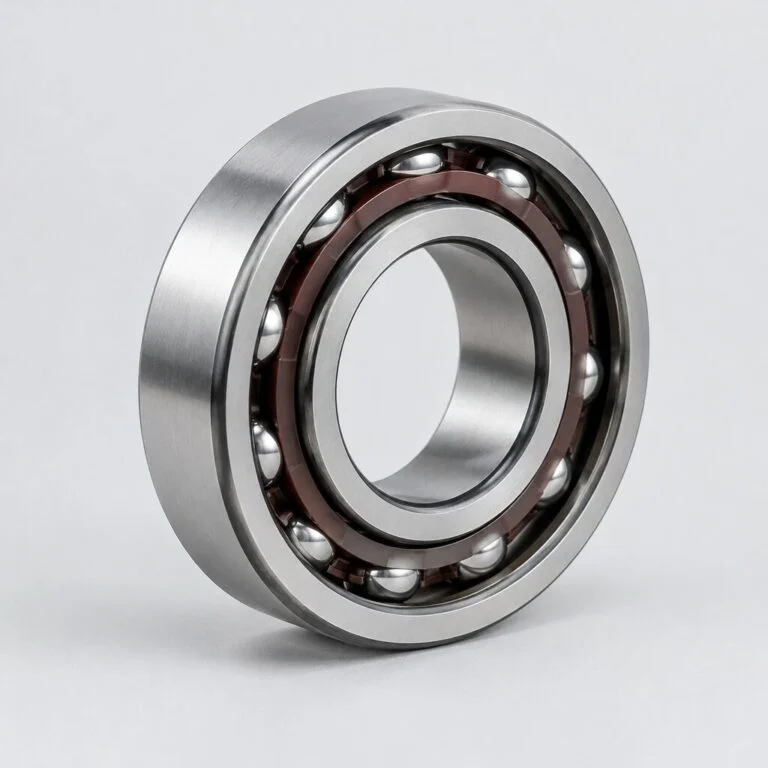
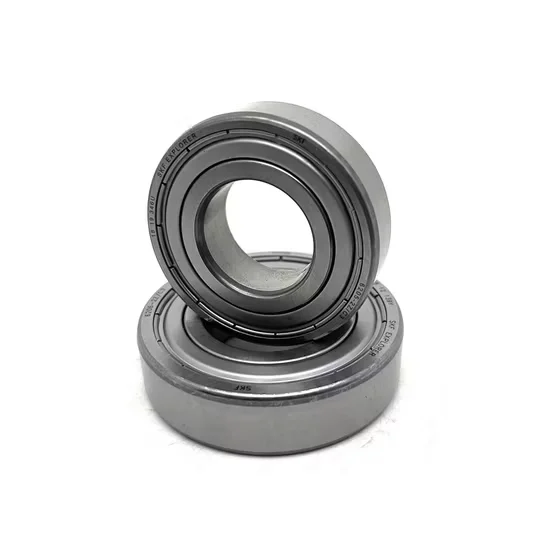
Listed data for this SKF designation; confirm the execution and dimensions against your drawing or application before ordering.
Scan To Verify Authenticity — Every SKF 6207-2Z/VA208 deep groove ball bearing we dispatch includes a scannable QR code linking directly to the manufacturer's official validation app, ensuring zero counterfeit risk for your high-temperature lines.
Technical Specifications
| Parameter | Value |
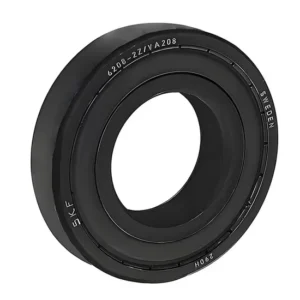
| Designation | 6207-2Z/VA208 |
| Bearing Type | Deep Groove Ball Bearing |
| Bore Diameter (d) | 35 mm |
| Outside Diameter (D) | 72 mm |
| Width (B) | 17 mm |
| Cage Material | Graphite Segmented High Temperature Cage |
| Seal or Shield Type | Double Shielded (2Z) |
| Origin | Sweden |
Application Suitability
| Industry | Typical Applications |
| Metallurgy & Steel Mills | Continuous caster roll guides and cooling bed transfer chains |
| Industrial Manufacturing | High-temperature conveyor drive motors and exhaust fan assemblies |
| General Machinery | Gearbox shaft supports exposed to elevated ambient heat |
Why Standard Bearings Seize in High-Heat Motor Applications
Thermal expansion of standard polymer or stamped steel cages inevitably leads to catastrophic jamming when ambient heat exceeds normal operational thresholds.
Early in my career troubleshooting motor failures in Suzhou, I watched a standard deep groove ball bearing lock up inside a drying oven motor because the cage expanded and seized the rolling elements. The entire production line halted. Upgrading to a specialized SKF 6207-2Z/VA208 deep groove ball bearing with a graphite segmented cage completely resolved the thermal binding issue.

Matching Thermal Stability to Demanding Oven Environments
Selecting the correct SKF 6207-2Z/VA208 deep groove ball bearing ensures continuous rotation without supplementary lubrication breaking down. Our engineering team routinely maps these specific high-temperature variants to client machinery, preventing the costly trial-and-error approach that often plagues MRO replacements. We secure genuine stock directly from authorized channels to guarantee the metallurgical integrity required for sustained thermal exposure.
Managing Extreme Heat and Contaminant Ingress
High-temperature zones introduce severe challenges, primarily the degradation of standard grease and the accelerated wear caused by airborne particulate matter. The double shielded configuration effectively blocks metallic dust and scale from penetrating the raceway, which is critical in steel mill or kiln-adjacent environments. Furthermore, elevated heat drastically alters internal clearance requirements, demanding specialized cage geometries that maintain structural stability without relying on liquid lubricants that would simply evaporate or carbonize.
Decoding the High-Temperature Suffix Architecture
The 2Z shield design provides non-contact protection, minimizing frictional heat generation while keeping out solid contaminants. Inside, the graphite segmented cage acts as a solid lubricant reservoir, releasing microscopic graphite particles to coat the rolling elements as temperatures rise. This eliminates the need for traditional grease, which would otherwise bake into a hard abrasive mass. The specialized internal clearance compensates for the differential thermal expansion between the shaft and housing, preventing the internal preload from spiking and causing premature fatigue.
The Hidden Financial Drain of Incorrect Thermal Specifications
Installing a standard bearing in a high-heat zone guarantees unplanned downtime and catastrophic damage to the motor shaft and housing. When a cage fails thermally, the resulting seizure often destroys the surrounding mechanical components, escalating a simple bearing swap into a major assembly rebuild. Adhering to ISO 281 lifecycle calculations requires acknowledging the severe derating factors introduced by extreme heat, making the initial premium for a correct high-temperature variant vastly cheaper than repeated line stoppages.
Securing Traceable High-Temperature Inventory
Sourcing authentic high-temperature variants requires strict supply chain control, as counterfeit cages fail rapidly under thermal stress. We maintain massive spot inventory of these specific thermal variants, eliminating the typical multi-week lead times associated with specialized suffixes. Our technical team provides cross-brand equivalent model consultation if immediate OEM replacements are unavailable, ensuring your maintenance schedule never stalls. Every shipment includes complete traceability documentation, and our flexible MOQ accommodates both single-unit emergency breakdowns and full container project consolidations.
Documentation & Authenticity
- Certificate of Conformity verifying Swedish origin for this specific high-temperature batch.
- Official app QR validation confirming the 2Z shield and graphite cage specifications.
- Material inspection reports proving the specialized heat-treated raceway metallurgy.
- Dimensional and running accuracy inspection confirming tolerances before dispatch.
Storage, Handling & Mounting
- Keep the 2Z shields intact and avoid dropping; impact can deform the thin steel covers and compromise the graphite cage alignment.
- Store in original moisture-barrier packaging until installation to prevent condensation from corroding the phosphated surfaces.
- Use induction heaters with strict temperature caps during mounting to avoid prematurely degrading the specialized high-temperature raceway treatments.
- Never wash these bearings with solvent before installation, as it will strip the factory-applied solid lubricant from the graphite segments.
Technical Data Required for Selection Verification
To ensure this specific designation matches your exact thermal profile, please share the maximum continuous operating temperature and the radial load profile. Providing the OEM equipment serial number allows our engineers to perform a precise cross-reference check and verify the required internal clearance compensation. Supplying these operational parameters enables us to validate the L10 lifecycle and confirm the suitability of the graphite cage for your specific rotational speed.
Frequently Asked Questions
Q: How does the graphite cage in this bearing provide lubrication at high temperatures?
A: The segmented graphite cage acts as a solid lubricant reservoir. As operating temperatures rise and traditional greases would evaporate or carbonize, the cage releases microscopic graphite particles that coat the rolling elements and raceways. This continuous transfer film ensures smooth rotation and prevents metal-to-metal contact without requiring any external re-lubrication schedule.
Q: Can I use standard grease to pre-lubricate this double shielded high-temperature bearing before mounting?
A: No, you must never introduce standard grease or solvents into this bearing. The 2Z shields are designed to retain the factory-applied solid lubricant and keep out contaminants. Adding conventional grease will cause it to bake into a hard, abrasive mass under high heat, leading to rapid cage failure and immediate seizure of the rolling elements.
Q: What specific internal clearance does the VA208 suffix indicate for thermal expansion compensation?
A: The suffix indicates a specialized internal clearance designed specifically to compensate for differential thermal expansion between the shaft and housing at elevated temperatures. While exact multiples require manufacturer catalog confirmation, this enlarged clearance prevents the internal preload from spiking as the metal components expand, thereby avoiding catastrophic jamming during continuous high-heat operation.
Q: How do I verify the authenticity of the high-temperature treatment on the received components?
A: Every genuine unit features a scannable QR code on the packaging that links directly to the manufacturer's official validation app. This digital verification confirms the exact suffix configuration, production batch, and origin. Additionally, the specialized phosphated surface treatment on the rings and rolling elements provides a distinct visual and textural indicator of authentic high-temperature preparation.