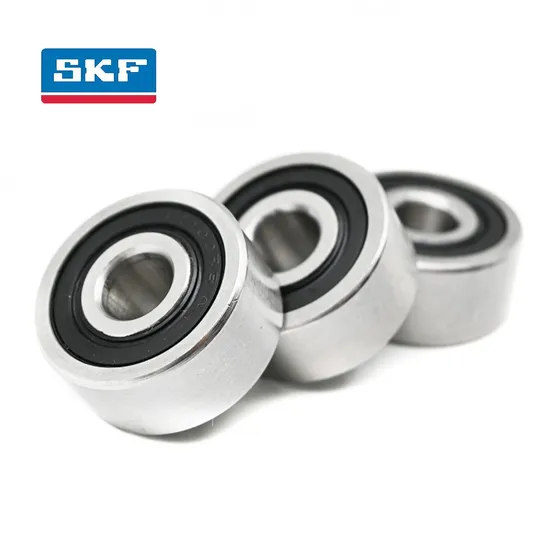
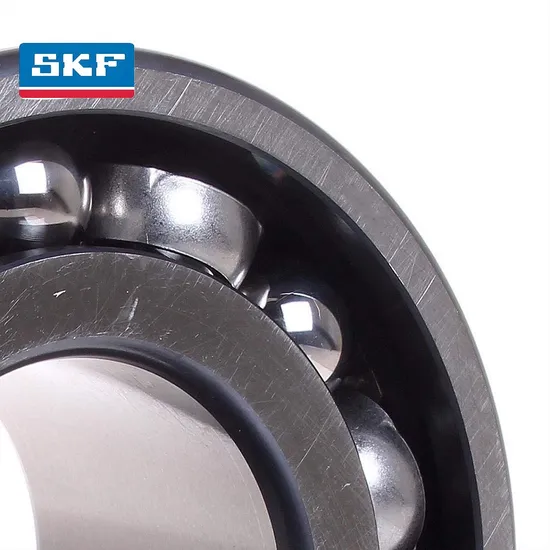
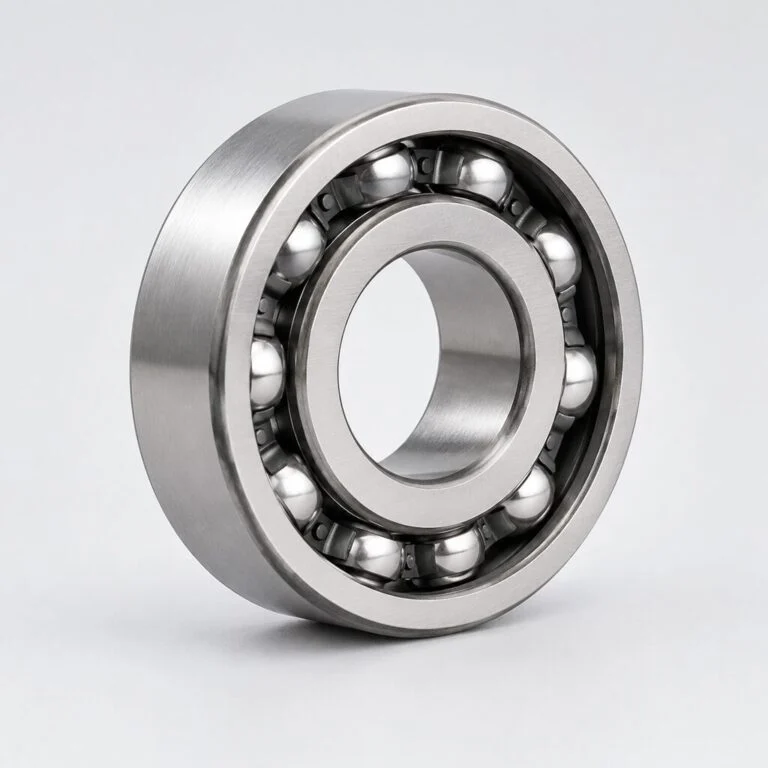
Listed data for this SKF designation; confirm the execution and dimensions against your drawing or application before ordering.
Traceable Channel Sourcing — Every SKF 7006 CD/HCP4ADBDBC leaving our warehouse ships with batch-level Certificate of Conformity and QR code verification pathway through the manufacturer's official app, so your spindle rebuild starts with a confirmed genuine component.
Technical Specifications
| Parameter | Value |
| Designation | SKF 7006 CD/HCP4ADBDBC |
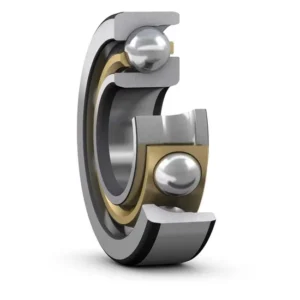
| Bearing Type | Angular Contact Ball Bearing |
| Number of Rows | Single Row |
| Bore Diameter (d) | 30 mm |
| Outside Diameter (D) | 55 mm |
| Weight | 0.100 kg |
| Precision Class | P4 (ISO tolerance class 4) |
| Contact Angle | 15° |
| Cage Material | Phenolic resin (fabric reinforced) |
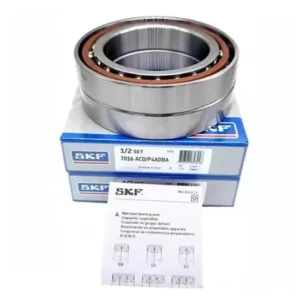
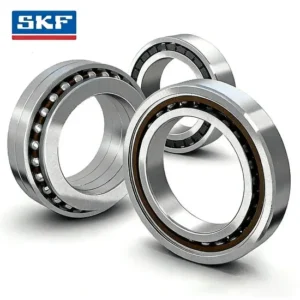
| Arrangement | Back-to-back paired set |
| Origin | China |
Note: The suffixes H, A, D, B, C within the HCP4ADBDBC string require confirmation against the current manufacturer catalog for exact configuration details. Please request full suffix decoding with your inquiry.
Application Suitability
| Industry | Typical Applications |
| Machine tool manufacturing | CNC lathe spindle front and rear support positions |
| Robotics | High-speed joint actuators requiring low runout |
| Precision equipment | Optical grinding head spindles, coordinate measuring machine rotary tables |
| General MRO | Replacement bearings for imported grinding and milling spindles |
Why a Suffix Mismatch Turns a ¥200,000 Spindle into Scrap
The letters after the base number determine whether your spindle runs for thousands of hours or seizes on first startup.
Procurement teams routinely match the base designation 7006 and assume compatibility, but angular contact bearings live or die by their suffix stack. A P0 precision grade installed where P4 was specified introduces runout that destroys surface finish within days. A wrong pairing configuration — DF face-to-face substituted for DB back-to-back — shifts the load center and overloads the bearing under axial thrust. Counterfeit components with soft inner rings and cloned QR codes pass visual inspection but fail catastrophically under spindle thermal cycling.

Matching Precision Spindle Demands with the SKF 7006 CD/HCP4ADBDBC
This paired set was built for the load profile you find inside a CNC spindle: predominantly radial forces from belt or direct-drive motors, with axial thrust from tool clamping and feed operations. The 15° contact angle keeps friction heat manageable at sustained high speeds while still providing adequate axial rigidity for light-to-medium cutting loads. When we cross-reference OEM equipment numbers against this designation, we verify not just the base number but the full suffix chain — contact angle, precision class, cage material, and pairing preload — because a partial match is functionally a wrong part.
Thermal Cycling, Speed Limits, and Preload Survival
Spindle environments cycle between cold start and operating temperatures exceeding 60°C within the bearing zone, and that thermal expansion directly compresses preload on a back-to-back arrangement. The phenolic resin cage handles the speed demands without the friction penalty of a brass cage, but it depends on oil-air or oil-jet lubrication to survive — grease-packed and sealed alternatives simply cannot keep up at the RPM ranges these spindles demand. Installation is equally critical: pressing the inner ring on without controlled axial displacement upsets the factory-matched preload, and induction heating above 120°C risks degrading the cage resin.
What the Core Suffixes Actually Do
Contact angle 15° (CD): A lower contact angle generates less friction heat under the predominantly radial loads typical in milling and turning spindles. Higher angles like 25° or 40° offer more axial stiffness but at the cost of temperature rise that shortens lubricant life.
P4 precision class: This reaches ISO tolerance class 4 dimensional and running accuracy, meaning tighter bore and OD tolerances and lower radial and axial runout than P5 or P6 — essential for achieving the surface finish tolerances on precision-ground components.
Phenolic resin cage: Fabric-reinforced phenolic offers low mass, low friction, and good damping at high rotational speeds, which is why it dominates spindle applications where brass cages would overheat and polyamide cages would lack rigidity.
Back-to-back pairing (DB): This arrangement places the load lines diverging outward, providing high rigidity against moment loads and allowing the bearing set to handle axial thrust from both directions — the standard choice for most machine tool spindle front bearing positions.
The Downtime Cost of Ignoring the Suffix Stack
Correct selection from a verified source protects against unplanned spindle shutdowns that cascade through an entire production cell. Wrong clearance or mismatched preload on a paired set causes either thermal runaway from overloading or chatter marks from under-preloading, both of which scrap workpieces before the bearing failure itself becomes obvious. Counterfeit bearings with case-hardened-only surfaces pass initial dimensional checks but spall under sustained load, sending debris through the lubrication circuit and destroying adjacent bearing positions.
How We Protect Your Spindle Investment
Every inquiry we receive goes through a technical review that checks the application parameters — speed, load, operating temperature, lubrication method — against the suffix stack, not just the base number. Our cross-brand interchange database aligns contact angle, precision grade, cage material, and preload class simultaneously, so if you need an NSK or FAG alternative with identical functional behavior, the substitution is validated across all critical dimensions. Batch-level traceability documentation ships with every order, and the QR verification pathway lets your receiving team confirm authenticity before the bearing reaches the assembly bench. We provide material certificates and dimensional inspection reports so your quality team can verify bore tolerances and running accuracy independently. Country-of-origin documentation and HS code support keep your import process clean when shipping across borders.
Documentation & Authenticity
- Supplier Certificate of Conformity tied to the specific production batch of your SKF 7006 CD/HCP4ADBDBC set
- Third-party dimensional and runout inspection confirming P4 class accuracy before dispatch
- Material certificate verifying cage and ring steel specifications
- Batch and lot traceability records linking your order back to the manufacturer's production facility
- Country-of-origin documentation and HS code classification for customs clearance
- QR code verification pathway through the brand's official mobile application for on-site authenticity confirmation
Storage, Handling & Mounting
- Keep the matched DB pair sealed in original packaging until the moment of installation — premature opening risks contaminating the phenolic cage and losing factory preload alignment marks
- Store flat in a temperature-stable environment below 25°C to protect the phenolic resin cage from moisture absorption and UV degradation
- Wear lint-free gloves when handling the P4 precision races; fingerprint residue on the 30 mm bore surface creates corrosion initiation points that compromise interference fit
- Use controlled axial displacement during mounting rather than brute-force pressing — the back-to-back preload setting is factory-calibrated and must not be disturbed by unmeasured assembly forces
- Confirm oil-air or oil-jet lubrication is flowing before first spindle startup; the open bearing design depends entirely on external lubrication at operational speeds
Request Technical Review
Share your spindle speed range, cutting load profile, and lubrication method so we can validate whether the SKF 7006 CD/HCP4ADBDBC suffix configuration matches your application — or identify the correct variant if it does not. If you are replacing a bearing from existing equipment, send us the OEM number or the markings on the removed bearing for cross-reference and preload verification.
Frequently Asked Questions
Q: How do I verify that my SKF 7006 CD/HCP4ADBDBC is genuine before installation?
A: Use the brand's official mobile app to scan the QR code on the packaging, which links to batch production records. We also provide a Certificate of Conformity with batch traceability, and our team can guide you through physical authenticity indicators specific to the P4 precision angular contact range.
Q: What does P4 precision class mean compared to P5 or P6?
A: P4 reaches ISO tolerance class 4, which specifies tighter dimensional tolerances on bore, outside diameter, and width, plus lower radial and axial runout values than P5 or P6. For spindle applications, this directly translates to better surface finish on machined workpieces and reduced vibration at high speeds.
Q: Can I substitute a different brand for this SKF bearing?
A: Cross-brand interchange is possible, but the replacement must match all suffix parameters — 15° contact angle, P4 precision, phenolic cage, and back-to-back pairing with equivalent preload class. We provide a full cross-reference comparison across SKF, NSK, FAG, TIMKEN, NTN, and KOYO that checks every one of these parameters, not just the base designation.
Q: Why does the 15° contact angle matter for my spindle?
A: A 15° contact angle balances radial load capacity with manageable friction heat at high rotational speeds. Higher contact angles increase axial stiffness but generate more heat, which shortens lubricant life and can lead to preload drift in spindle applications where thermal stability is critical.
Confirm Your Spindle Bearing Requirements
Send us your application parameters or the OEM equipment number — we will return a technical selection review with cross-reference validation, documentation package details, and current lead time.