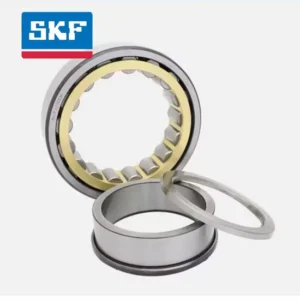
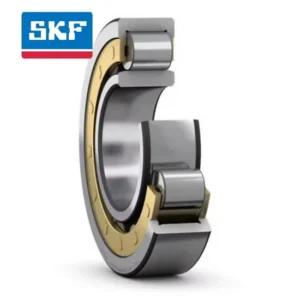
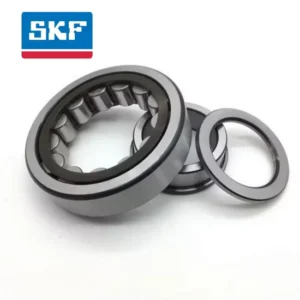
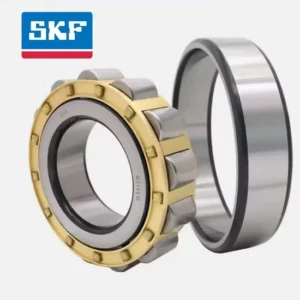
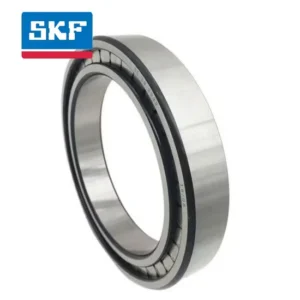
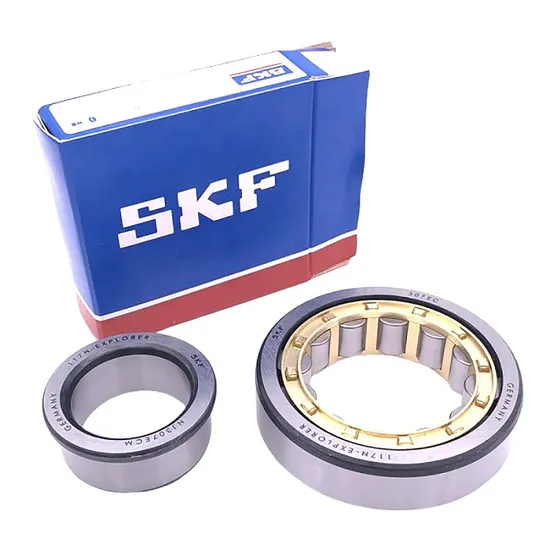
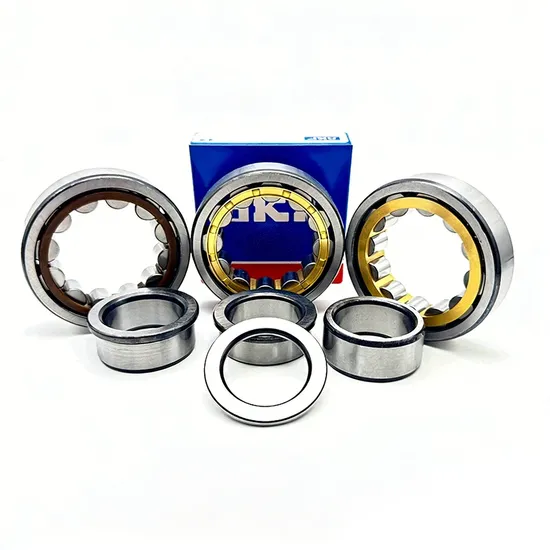
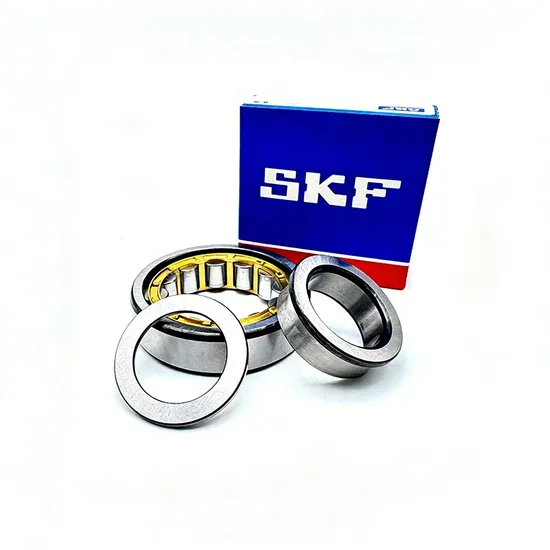
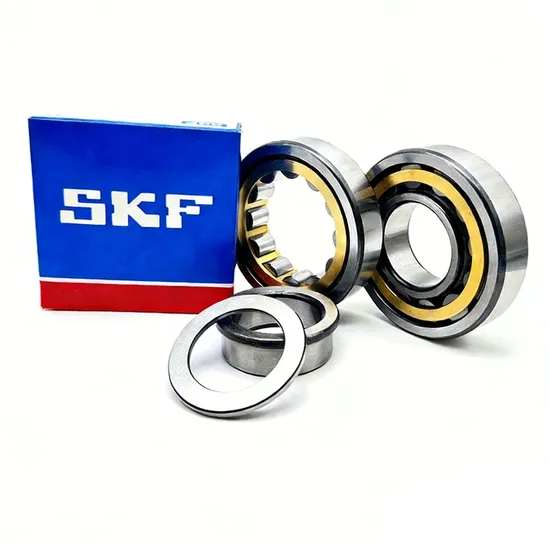
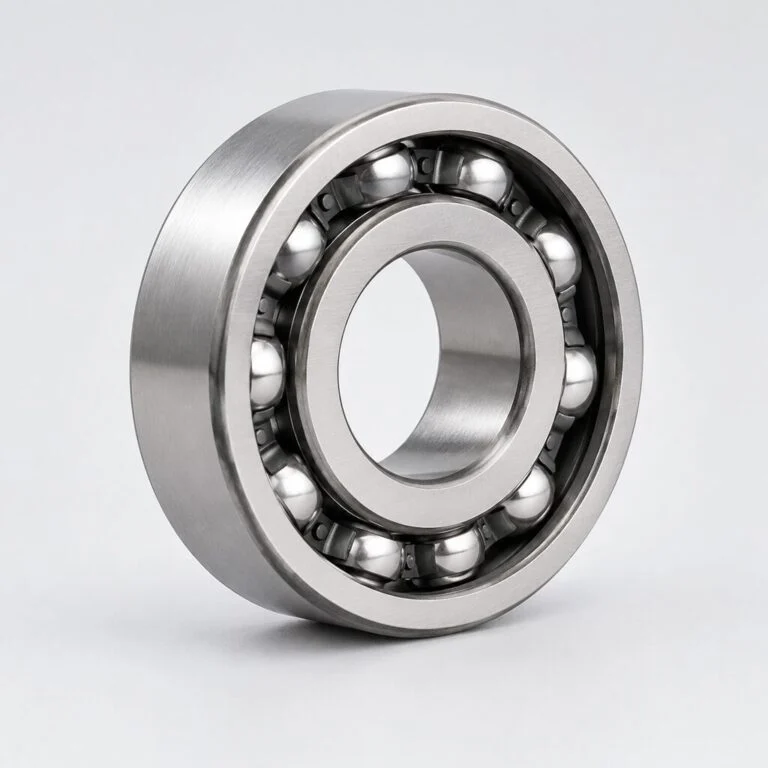
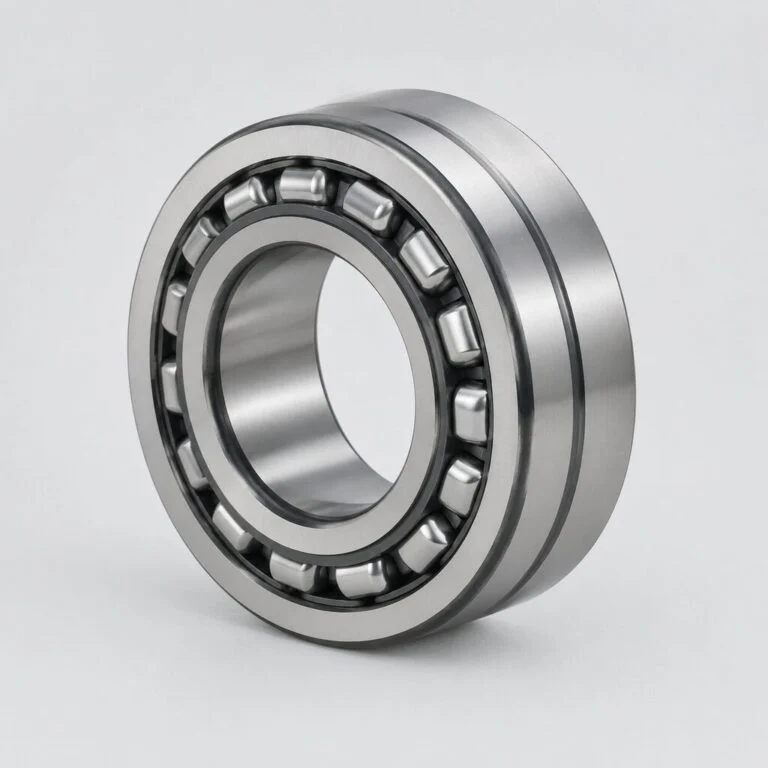
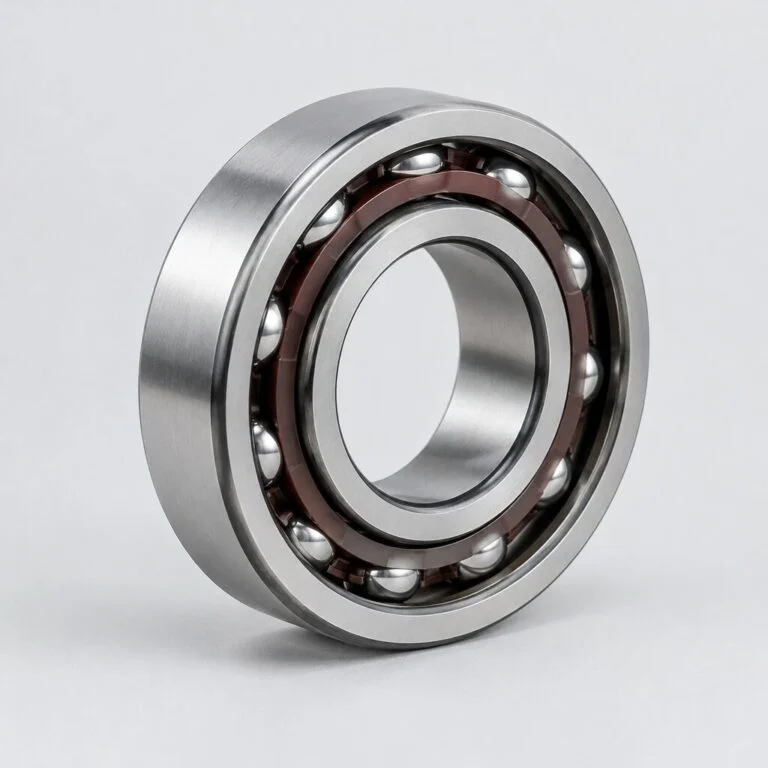
Listed data for this SKF designation; confirm the execution and dimensions against your drawing or application before ordering.
Official App QR Verification — Every SKF N324 Ec P/C3 cylindrical roller bearing ships with scannable traceability codes linked directly to the manufacturer's authentication database.
Technical Specifications
| Parameter | Value |
| Designation | SKF N324 Ec P/C3 |
| Bearing Type | Cylindrical Roller Bearing |
| Bore Diameter (d) | 120 mm |
| Outside Diameter (D) | 260 mm |
| Width (B) | 55 mm |
| Dynamic Load Rating (C) | 610 kN |
| Static Load Rating (C₀) | 620 kN |
| Limiting Speed | 3200 r/min |
| Cage Material | Polyamide |
| Clearance Class | C3 |
| Material | Bearing Steel |
| Separable Design | Separated |
Application Suitability
| Industry | Typical Applications |
| Marine & Shipbuilding | Propulsion shaft supports and deck crane slewing mechanisms |
| Heavy Machinery | Main drive gearboxes for mining conveyors and rolling mills |
| Rail & Transit | Traction motor axle boxes and suspension systems |
Why Suffix Errors Ruin the SKF N324 Ec P/C3 cylindrical roller bearing in Marine Drives
Mismatched clearance suffixes are the primary culprit behind sudden shaft seizure in heavy marine propulsion systems.
During my years handling on-site aftermarket support at a Ningbo shipyard, I witnessed a critical drive line halt completely. The maintenance crew replaced a cylindrical roller bearing but received a standard CN clearance instead of the specified C3 class. As the equipment ran and the shaft expanded under thermal load, the internal clearance vanished, leading to catastrophic seizure. The resulting unplanned downtime cost the vessel operator significant delays and expensive emergency repairs. When sourcing a SKF N324 Ec P/C3 cylindrical roller bearing, overlooking a single suffix character can turn a routine maintenance window into an unplanned dry-dock emergency. Procurement engineers must understand that the designation string is not just a part number, but a precise engineering instruction set.

Matching the SKF N324 Ec P/C3 cylindrical roller bearing to Marine Propulsion Loads
Marine propulsion environments demand components that handle immense radial forces while accommodating shaft deflection and hull flexing. The separable design of this model allows the inner ring and outer ring to be mounted independently, simplifying installation in confined engine rooms where space is severely restricted. This separation also means the inner ring can be press-fitted onto the shaft without forcing the rollers against the outer ring raceway, preventing brinelling during assembly. Our engineering team provides cross-brand equivalent model consultation to ensure the selected bearing aligns perfectly with your specific gearbox housing tolerances and operational load profiles, eliminating guesswork during critical overhaul periods.
Managing Thermal Expansion and Heavy Radial Loads in Shipboard Gearboxes
Heavy-duty marine gearboxes generate substantial heat during continuous operation, making thermal expansion a critical factor in bearing selection. A standard clearance bearing will bind under these elevated temperatures, whereas a C3 clearance class provides the necessary internal gap to accommodate shaft growth and maintain a functional lubricant film. Proper lubrication is equally vital; the polyamide cage requires compatible grease formulations to prevent chemical degradation over long maintenance intervals typical in maritime operations. Furthermore, the separated design facilitates easier inspection and re-lubrication without dismantling the entire drive train, significantly reducing the time required for routine condition monitoring.
Decoding the E, P, and C3 Suffixes for Optimal Performance
The internal geometry and material choices defined by the suffixes dictate the operational boundaries and fatigue life of the bearing. The 'E' designation indicates an enhanced internal design with optimized roller profiles and flange contact angles, significantly increasing the load-carrying capacity for heavy radial applications. The 'P' suffix specifies a polyamide cage, which offers lower friction, reduced weight, and quieter operation compared to pressed steel alternatives, making it highly effective for high-speed traction motors and precision gearboxes. Finally, the 'C3' clearance class ensures sufficient internal play to prevent binding when the inner ring is mounted with a tight interference fit or when operating at elevated temperatures, safeguarding against thermal runaway.
The Catastrophic Impact of Incorrect Clearance Selection
Installing a bearing with inadequate internal clearance in a high-temperature marine environment inevitably leads to premature failure and secondary equipment damage. The excessive friction generates a thermal runaway effect, rapidly degrading the lubricant, scoring the raceway surfaces, and ultimately fracturing the cage. According to standardized failure analysis frameworks, this specific mode of seizure often results in catastrophic damage to adjacent gearbox shafts and housings, voiding equipment warranties and causing extended operational downtime. Recognizing these hidden costs reinforces the necessity of strict adherence to the specified clearance class during the procurement process.
Securing Authentic Bearings for Critical Marine Infrastructure
Sourcing genuine components for marine applications requires strict verification protocols to avoid counterfeit parts that fail unpredictably under heavy loads. We procure directly from authorized channels, ensuring every unit comes with complete original factory batch traceability documentation that links back to the specific production facility. Because the C3 clearance and polyamide cage combination is frequently misquoted or substituted by inexperienced suppliers, our technical team double-checks the exact suffix requirements against your OEM manuals before dispatch. We also support flexible order quantities, accommodating everything from single-unit emergency replacements for urgent dry-dock repairs to full container consolidation shipments for fleet-wide overhaul projects.
Documentation & Authenticity
- Certificate of Conformity confirming C3 clearance and polyamide cage material.
- Original factory batch traceability linked to the specific SKF N324 Ec P/C3 production run.
- Official app QR authentication for verifying the enhanced internal design specifications.
- Dimensional inspection report validating the 120 mm bore and 260 mm outer diameter tolerances.
Storage, Handling & Mounting
- Store the separated inner and outer rings in original packaging to prevent polyamide cage moisture absorption.
- Use induction heating for the inner ring mounting to preserve the C3 radial clearance.
- Keep the bearing away from direct UV light to protect the polyamide cage from degradation.
- Apply clean gloves during handling to avoid contaminating the enhanced raceway surfaces before lubrication.
Preparing Your Technical Requirements for Verification
To ensure the selected bearing matches your exact operational needs, please share the specific radial and axial loads, operating speeds, and ambient temperature ranges of your marine gearbox. Providing the original equipment manufacturer part numbers allows our technical team to perform a precise cross-reference check and verify the L10 life calculations for your application.
Frequently Asked Questions
Q: What does the C3 clearance mean for this specific marine application?
A: The C3 clearance provides greater internal radial play than standard bearings. This extra space is crucial in marine gearboxes where shafts expand significantly under heavy thermal loads, preventing the bearing from binding and seizing during continuous high-speed operation and ensuring a stable lubricant film.
Q: How does the polyamide cage compare to brass in heavy-duty gearboxes?
A: Polyamide cages offer lower friction, reduced weight, and quieter operation, making them excellent for high-speed applications. However, they require careful lubricant selection and have lower temperature limits compared to machined brass cages, which are preferred for extreme heat or high-vibration environments where structural rigidity is paramount.
Q: Can I cross-reference this model with other premium brands?
A: Yes, we provide comprehensive cross-reference consultation for equivalent models from other major international brands. Our technical team will verify the dimensional boundaries, dynamic load ratings, and specific clearance classes to ensure the alternative bearing meets your exact marine propulsion requirements without compromising system reliability.
Q: Why is the lowercase 'c' suffix considered unverified in the designation?
A: The lowercase 'c' is not a standard recognized suffix in current manufacturer catalogs for this specific cylindrical series. It requires direct confirmation from the original manufacturer's technical documentation to determine if it denotes a specific internal geometric modification, a specialized heat treatment, or a legacy production code.