
Quote memo for this SKF bearing
State the exact execution (designation suffix), whether you need the complete assembly, and which housings or mounting accessories belong on the same line. Keep precision items separate, with accuracy class and arrangement.
Technical data
Specifications
Listed data for this SKF designation; confirm the execution and dimensions against your drawing or application before ordering.
Product details
Multi-Brand Sourcing Consolidated — Procure this diagnostic tool alongside mixed-brand bearing shipments without coordinating separate suppliers.
Technical Specifications
| Parameter | Value |
|---|---|
| Designation | SKF PHLFM 10/400 |
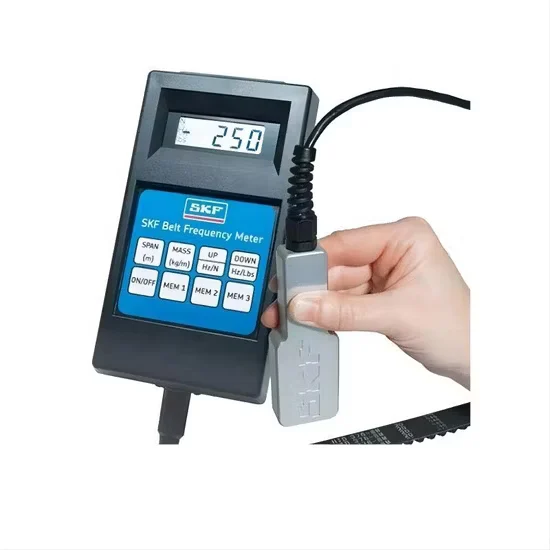
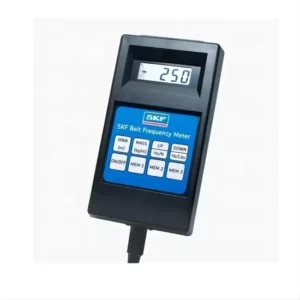
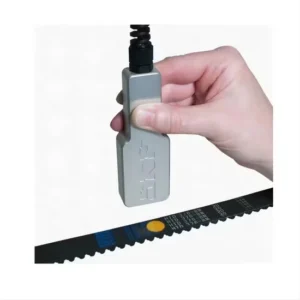
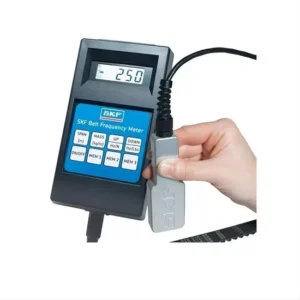
| Product Type | Belt Frequency Meter |
| Frequency Range | 10 to 400 Hz |
| Protection Class | IP54 |
| Warranty | 1 year |
| Origin | Netherlands |
Application Suitability
| Industry | Typical Applications |
|---|---|
| Mining & Construction | Conveyor drive belt tensioning and heavy-equipment power transmission maintenance |
| General Manufacturing | Preventive maintenance for industrial machinery MRO and motor drive systems |
| Automotive & Marine | Vibration frequency analysis for auxiliary drive belts and pump couplings |
Why Guesswork in Belt Tensioning Destroys Bearings Prematurely
Improper belt tension transfers destructive vibration directly into adjacent bearing housings.
During my field service years at a Nigerian mining site, equipment operators constantly blamed deep-groove ball bearings for frequent, unexplained failures. The real culprit was overlooked belt tensioning. When drive belts are too tight or too loose, the resulting vibration frequency exceeds acceptable thresholds, imposing severe radial loads on the shaft. Technicians often rely on acoustic guesswork or manual deflection tests, which are highly subjective and inaccurate. Using the SKF PHLFM 10/400 belt frequency meter to measure and adjust tension accurately eliminated these phantom bearing failures. By establishing a baseline optical frequency, maintenance crews stopped overtensioning belts and crushing the adjacent rolling elements.
Matching Diagnostic Precision to Heavy-Duty Power Transmission
Maintaining optimal tension across massive conveyor drives requires more than acoustic guesswork or simple thumb-press deflection tests. This SKF PHLFM 10/400 belt frequency meter provides exact frequency readings, allowing maintenance teams to set precise tension values based on manufacturer specifications. The optical sensor eliminates human error, ensuring that every drive belt in a complex multi-belt system shares the load evenly. Our global supply network ensures these traceable diagnostic instruments arrive alongside your bulk bearing orders, streamlining site-wide reliability programs without requiring separate procurement channels for tools and spare parts.
Overcoming Harsh Environmental Interference During Measurement
Industrial MRO environments expose diagnostic tools to extreme dust, moisture, and mechanical shocks on a daily basis. The IP54 protection class ensures the sensor and optical components remain fully functional even when deployed in damp underground mining shafts or dusty aggregate processing plants. Accurate frequency analysis demands a stable optical signal, which is easily disrupted by heavy particulate matter suspended in the air or accumulated on the belt surface. Proper cleaning of the belt surface and sensor lens before each reading guarantees reliable data collection and prevents false low-frequency readings caused by signal scattering.
Decoding the 10 to 400 Hz Measurement Envelope
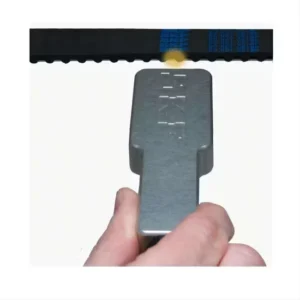
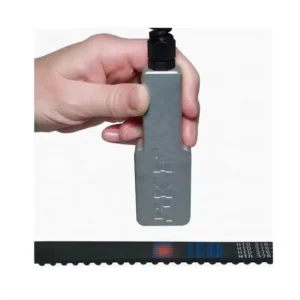
The specified frequency range covers the natural vibration spectrum of virtually all industrial V-belts, synchronous belts, and flat power transmission belts used in heavy machinery. Lower frequencies correspond to longer, heavier belts running at slower speeds, such as those found on primary crushers and large ventilation fans. The upper limit captures high-speed, short-span drives typical in machine tools, pumps, and automotive auxiliary systems. The optical sensor reads the belt's natural vibration frequency when plucked, translating the physical oscillation into a direct Hertz value. This eliminates the need for manual calculations, complex formulas, or subjective deflection force tests that vary from one technician to another.
The Financial Drain of Untuned Drive Systems
Running a belt drive without verifying tension leads to either continuous slippage or excessive radial loading on the pulley shafts. Slippage generates localized heat and accelerates belt wear, while overtensioning crushes bearing rolling elements against the raceway, destroying the lubricant film. Both scenarios result in unplanned downtime, increased energy consumption, and catastrophic damage to adjacent power transmission components. Aligning maintenance practices with standardized tension verification protocols significantly reduces premature failure rates across the entire drive train. Ignoring these diagnostic steps forces facilities into a reactive maintenance cycle, constantly replacing both belts and bearings instead of addressing the root cause.
Securing Genuine Diagnostic Tools Through Verified Channels
Counterfeit measurement devices provide false readings that silently destroy expensive machinery by convincing technicians that incorrect tension levels are optimal. We source every SKF PHLFM 10/400 belt frequency meter directly from authorized manufacturer channels, guaranteeing authentic Netherlands origin and full batch traceability. Unlike buying from fragmented local vendors, our consolidated shipping allows you to combine this diagnostic tool with emergency spare bearings and seals in a single freight container. Our technical team also provides cross-reference support to match specific belt profiles with correct tension formulas, ensuring your team knows exactly how to interpret the Hertz readings for your unique equipment configurations.
Documentation & Authenticity
- Certificate of Conformity verifying authentic Netherlands manufacturing origin for each unit.
- Official app QR code authentication to block counterfeit diagnostic tools from entering your site.
- Factory calibration certificate confirming sensor accuracy across the entire 10 to 400 Hz spectrum.
- Original batch traceability documentation linking the specific serial number to the production run.
Storage, Handling & Mounting
- Store the optical sensor in its original padded case to prevent lens scratches that distort frequency readings.
- Keep the device away from direct sunlight and extreme heat to protect the internal electronic calibration.
- Use clean, lint-free microfiber cloths when wiping the sensor lens before measuring dusty mining conveyor belts.
- Remove the protective battery isolation tab only immediately before the first tension measurement on site.
- Avoid dropping the unit on concrete floors, as severe mechanical shocks can misalign the internal optical emitter.
Providing Operational Data for Technical Verification
To ensure this diagnostic tool matches your specific maintenance protocols, please share the typical belt profiles, span lengths, and drive speeds encountered at your facility. Our engineering team can verify whether the 10 to 400 Hz range fully covers your high-speed auxiliary drives or heavy-duty crusher conveyors. Supplying your current preventive maintenance schedules and historical failure data allows us to recommend optimal calibration intervals and complementary alignment accessories. We focus on delivering actionable technical support rather than just shipping a box, ensuring your reliability engineers have the exact data needed to optimize power transmission efficiency.
Frequently Asked Questions
Q: How do I verify the authenticity of the received diagnostic equipment?
A: Every genuine unit includes a unique QR code that links directly to the official manufacturer authentication app. Scanning this code confirms the original Netherlands production batch and validates the warranty status. We also provide complete traceability documentation, ensuring your procurement team can verify the authorized supply chain from our warehouse to your site.
Q: What is the proper calibration cycle for this frequency measurement tool?
A: While the optical sensor maintains its baseline accuracy for extended periods under normal use, annual calibration is recommended for critical mining and heavy-equipment applications. Sending the unit back to an authorized service center ensures the internal microprocessor correctly translates optical pulses into precise Hertz values. We can assist in coordinating calibration logistics during your regular spare parts reorder cycles.
Q: How should I interpret the frequency readings for different belt types?
A: The raw Hertz value must be compared against the specific belt manufacturer's tensioning guidelines, which usually provide a target frequency range based on belt length and span. A reading below the target indicates dangerous slack that causes slippage, while a value above the target means excessive radial load on the pulley bearings. Always consult the drive design manual for exact parameters.
Q: Are there cross-reference equivalents from other diagnostic brands?
A: While this specific model is engineered to integrate seamlessly with the manufacturer's broader alignment and tensioning ecosystem, our technical team can cross-reference its measurement capabilities with other premium diagnostic brands. If your facility standardizes on a different brand for vibration analysis, we can source equivalent optical tension meters from our global network of authorized suppliers to maintain consistency.
Q: What are the best practices for storing IP54 rated diagnostic equipment?
A: Although the IP54 rating protects against dust ingress and water splashes during active use in harsh mining environments, the device should be stored in a dry, climate-controlled tool crib. Leaving the unit exposed to continuous high humidity or extreme temperature fluctuations can degrade the internal electronic components over time. Always wipe down the exterior before placing it back in its protective case.
Project buyers
Itemized SKF supply that keeps project schedules on track
"We submitted a long SKF list for a new project, mixing ball, roller, needle and thrust bearings. This supplier came back with itemized pricing, lead times and alternatives for two long-lead references. We could plan the procurement timeline without surprises."
 Daniel KimKim Engineering Project · South Korea
"When our project timeline shifted and we needed to split the delivery into three batches, the supplier worked with us on the schedule. Each batch arrived complete and on the agreed date. No holding costs, no rush shipping fees."
 Mohammed Al-AminAl-Amin Contracting · Saudi Arabia
Same series
Related SKF bearings
Comparable designations from the same category, ready to add to one itemized quote.

Combine this bearing, its housing and accessories in one written quote
Standard and precision lines listed separately, each with model, stock, lead time and validity — so your comparison is line by line, not guesswork.
FAQ
Questions about quoting this SKF bearing
What details turn a product selection into a quotation request?+
Send the selected SKF model, quantity per line, accuracy requirement, mounting accessories, destination country and postcode, and the date you need the goods. Confirm the exact execution and whether you need the complete assembly. With that, Project Purchasing Company returns a written itemized quote.
How should precision items be distinguished from standard bearings?+
List precision bearings on separate lines with their accuracy class and arrangement or configuration. Keeping them apart from standard bearings prevents wrong pricing and wrong shipments on mixed project lists.
The SKF reference on my old drawing is incomplete. Can you still quote?+
Yes. Send a photo of the nameplate or bearing markings, and we list the information that still needs confirming. Any technical change or alternative model is clearly marked and requires your approval.
Can a project order be delivered in batches?+
Yes. Shipping method and delivery schedule are confirmed before dispatch, so batches can follow your installation timeline. On receipt, check labels, quantity and condition; any mismatch is handled with your order number and photos.
Request a quote
Get a written quote for SKF PHLFM10 Belt Frequency Meter 10-400Hz Vibration Measurement
Project Purchasing Company quotes every line by SKF model, with price and currency, stock, estimated lead time, validity and freight or tax terms. Add related bearings and accessories to the same request.