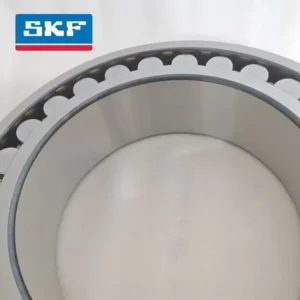
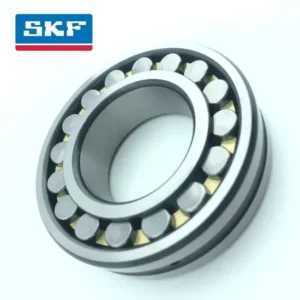
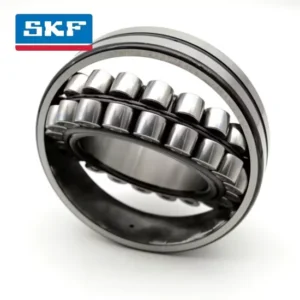
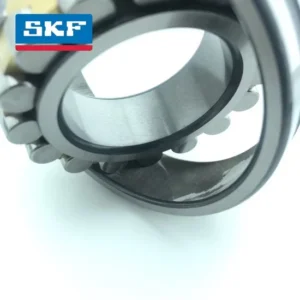
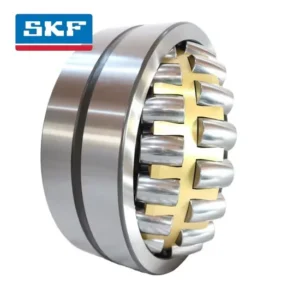
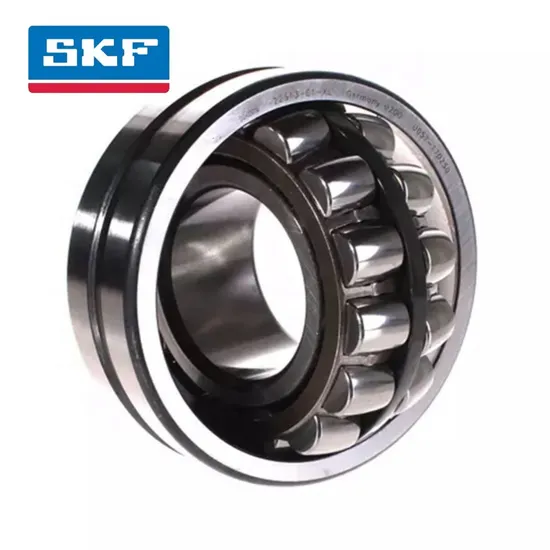
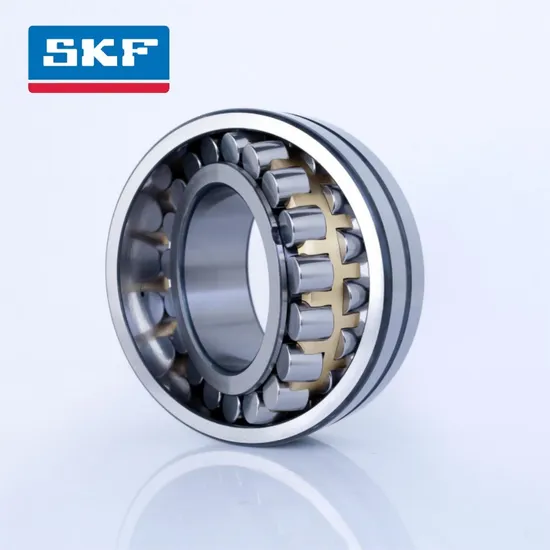
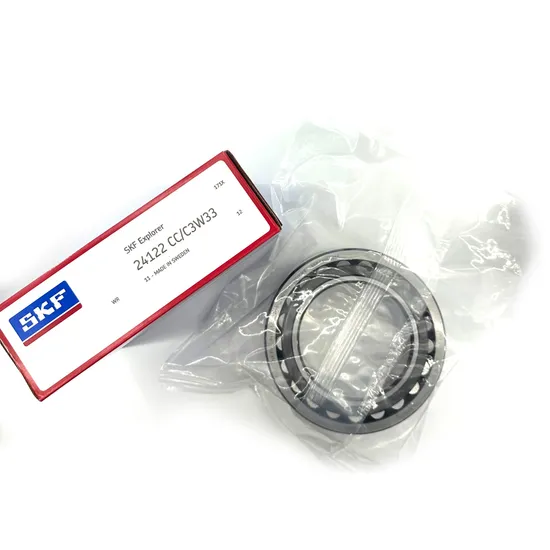
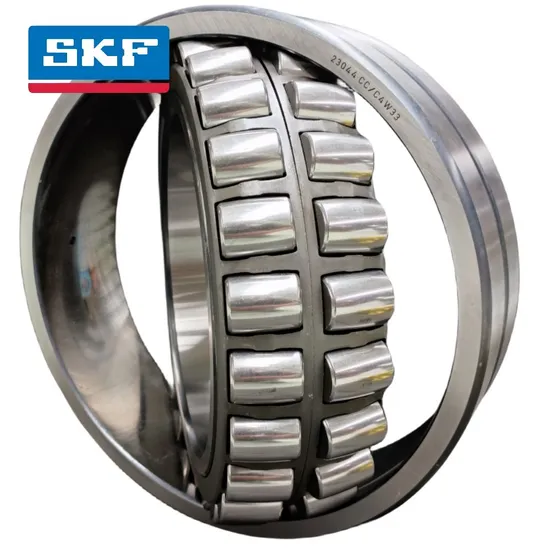
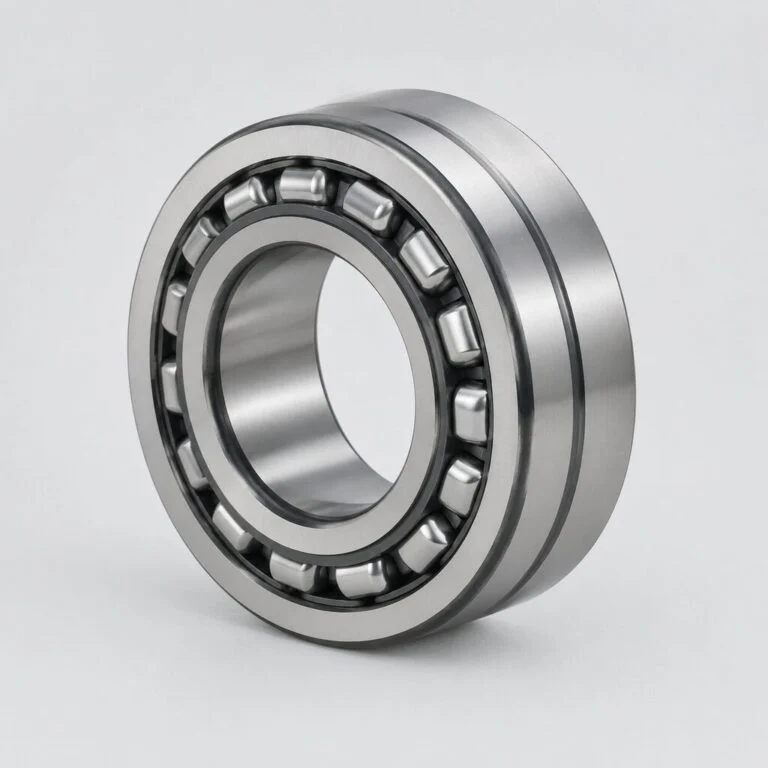
Listed data for this SKF designation; confirm the execution and dimensions against your drawing or application before ordering.
Scan to verify authenticity — Every genuine SKF 22222 E/C3 spherical roller bearing we supply includes a traceable QR code for instant validation via the official manufacturer app.
Technical Specifications
| Parameter | Value |
| Designation | SKF 22222 E/C3 |
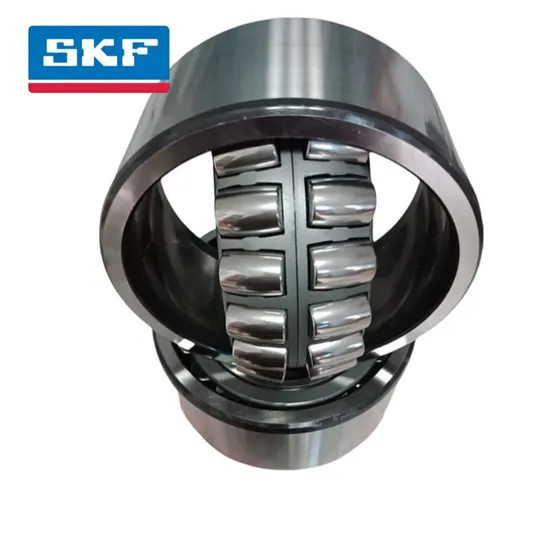
| Bearing Type | Spherical Roller Bearing |
| Arrangement | Double Row, Self-Aligning |
| Material | Chrome Steel GCr15 |
| Internal Design | E (Enhanced load carrying capacity) |
| Clearance Class | C3 |
| Bore Type | Cylindrical |
| Cage Material | Steel, Brass, or Nylon variants available |
Application Suitability
| Industry | Typical Applications |
| Wind Power | Yaw and pitch mechanisms, main shaft support |
| Mining & Construction | Vibrating screens, heavy-duty crushers |
| Metallurgy | Steel mill continuous casting equipment |
| Pulp & Paper | Paper machine dryer cylinders |
Thermal Expansion Traps: Why the SKF 22222 E/C3 Spherical Roller Bearing Outlasts Standard Alternatives
Heat buildup in enclosed nacelles demands extra internal room to prevent rotor lock-up.
During my fieldwork in Vietnam, I dissected a seized yaw bearing that failed simply because standard clearance was specified for a high-temperature environment. The thermal expansion left zero operational gap, causing catastrophic friction and completely halting the turbine. Specifying the correct clearance class is critical to avoiding unplanned downtime and protecting the drivetrain from secondary shock loads. Procurement teams often overlook these thermal dynamics when rushing emergency replacements.

Matching Internal Geometry to Nacelle Demands
The SKF 22222 E/C3 spherical roller bearing accommodates the heavy radial loads and shaft misalignments inherent in wind turbine yaw systems. Our sourcing network ensures these specific high-clearance units are readily available for urgent maintenance, bypassing the typical multi-week lead times of direct official channels. This rapid availability keeps critical energy infrastructure operational while maintaining strict OEM quality standards.
Navigating Heavy Loads and Thermal Shifts
Wind power applications subject yaw mechanisms to extreme combined loads and low-speed oscillation, which constantly disrupts hydrodynamic lubrication films. Temperature fluctuations inside the nacelle further complicate matters, as thermal expansion can rapidly consume standard internal gaps. Adequate internal clearance must be maintained to allow for proper lubricant flow and prevent edge loading on the rollers. Furthermore, the self-aligning capability compensates for structural deflections in the tower, while the robust outer ring resists deformation under peak wind gusts.
Decoding the E and C3 Suffixes
The "E" designation indicates an optimized internal geometry with enhanced load carrying capacity, utilizing larger and more rollers to distribute stress evenly across the raceway. Meanwhile, the "C3" suffix specifies a radial internal clearance greater than standard, which is absolutely essential when the inner ring operates at a higher temperature than the outer ring. This extra gap prevents the bearing from tightening up and seizing under thermal expansion. The double-row self-aligning structure inherently compensates for minor shaft misalignments without inducing excessive edge stresses. Depending on the specific vibration profile of your machinery, the cage material can be selected from steel, brass, or nylon variants to optimize fatigue resistance. Selecting the correct bore type and clearance combination ensures the assembly survives the rigorous demands of continuous operation.
The Cascading Impact of Incorrect Clearance Selection
Deploying a standard clearance bearing in a high-heat application inevitably leads to premature failure through excessive friction and localized overheating. This unplanned downtime triggers cascading logistical nightmares, especially when replacing massive components at the top of a wind turbine tower. The resulting warranty voidance and emergency crane mobilization costs far exceed the initial component investment, alongside severe safety risks for maintenance crews. Adhering to established failure analysis frameworks helps engineers recognize these destructive patterns early and specify the correct internal geometry.
Securing Traceable Inventory for Critical Replacements
We maintain massive spot inventory of high-clearance variants like this model, eliminating the wait times associated with factory backorders. Our cross-brand equivalent model consultation ensures you receive the exact technical match if a specific OEM part number is superseded or discontinued. Every unit ships with complete traceability documentation, providing absolute confidence in material authenticity and metallurgical integrity. We handle global shipping consolidation, allowing you to mix this spherical roller bearing with other MRO requirements in a single container. Our long-term after-sales technical support includes failure analysis guidance to prevent repeat breakdowns in your wind farm.
Documentation & Authenticity
- Official app QR code scanning to verify the genuine SKF origin of this specific yaw bearing.
- Original manufacturer batch traceability linking this C3 clearance unit to its exact production run.
- Material inspection certificates confirming the Chrome Steel GCr15 metallurgy meets wind power standards.
- Dimensional and running accuracy reports validating the internal clearance before dispatch.
Storage, Handling & Mounting
- Keep the C3 clearance unit in original packaging to prevent moisture from degrading the chrome steel raceways.
- Wear clean gloves when handling the exposed rollers to avoid contaminating the optimized E-design internal geometry.
- Utilize induction heating for the cylindrical bore inner ring to ensure controlled thermal expansion during mounting.
- Maintain strict storeroom temperature controls to preserve the factory-applied anti-corrosion coating on the self-aligning outer ring.
Preparing Your Technical Parameters for Review
To ensure this high-clearance configuration perfectly matches your yaw mechanism, please share the exact radial and axial loads alongside operating temperatures. Providing the OEM equipment number allows our engineering team to perform a rigorous cross-reference check. We will then calculate the theoretical L10 life to validate the selection before shipment.
Frequently Asked Questions
Q: How to verify the authenticity of SKF bearings using the official app?
A: Download the official manufacturer application and use your smartphone camera to scan the QR code printed on the product packaging. The app instantly cross-references the unique identifier against the global database, confirming whether the SKF 22222 E/C3 spherical roller bearing is a genuine factory release or a counterfeit.
Q: What is the difference between standard clearance and C3 clearance in spherical roller bearings?
A: Standard clearance is designed for normal operating temperatures and typical fits. The C3 designation provides greater internal radial space, which is essential when the inner ring runs hotter than the outer ring or when heavy interference fits are used, preventing the bearing from seizing under thermal expansion.
Q: How does the E suffix affect the load rating compared to standard designs?
A: The E suffix denotes an enhanced internal geometry featuring a larger number of optimally shaped rollers. This design modification significantly increases the dynamic load carrying capacity and extends the theoretical fatigue life, making it highly suitable for the heavy radial loads encountered in wind power yaw systems.
Q: When should a tapered bore (K suffix) be selected over a cylindrical bore?
A: A tapered bore is typically chosen when the bearing must be mounted directly onto a tapered shaft seat or using a withdrawal sleeve to precisely control internal clearance reduction. Since this specific model features a standard cylindrical bore, it requires heating or pressing for installation on a straight shaft.
Q: What are the recommended lubrication practices for wind power applications?
A: Wind turbine yaw bearings operate under heavy loads and low-speed oscillation, which challenges hydrodynamic film formation. We recommend using specialized synthetic greases with high base oil viscosity and extreme pressure additives. Regular relubrication intervals must be strictly followed to purge contaminants and replenish the protective film across the rollers.