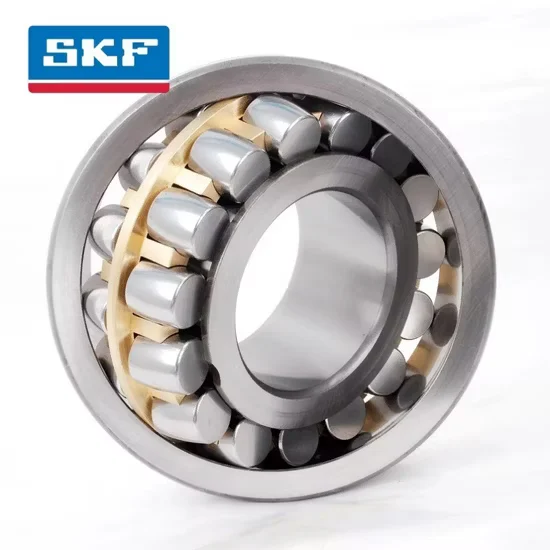
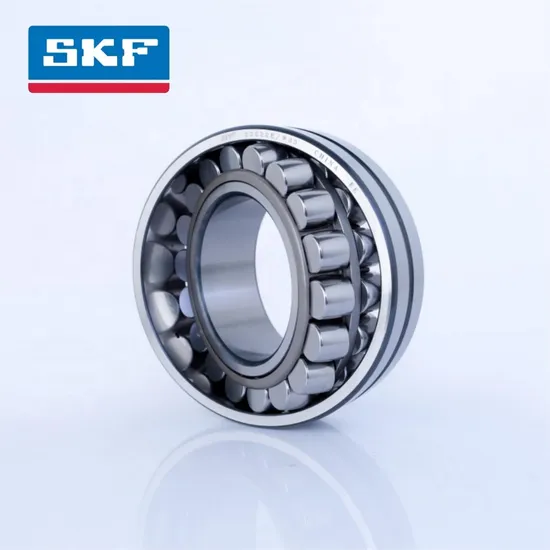
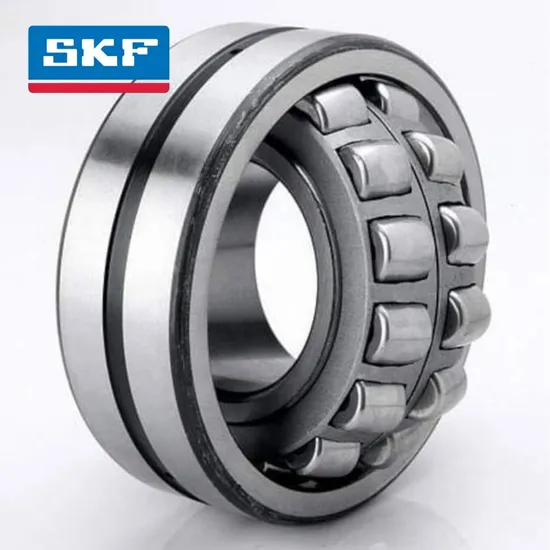
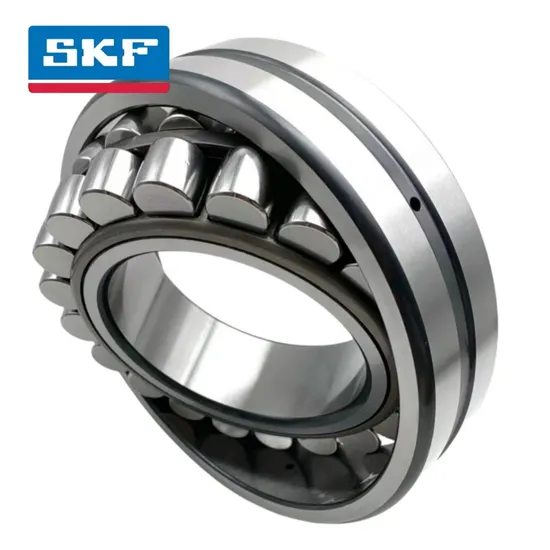
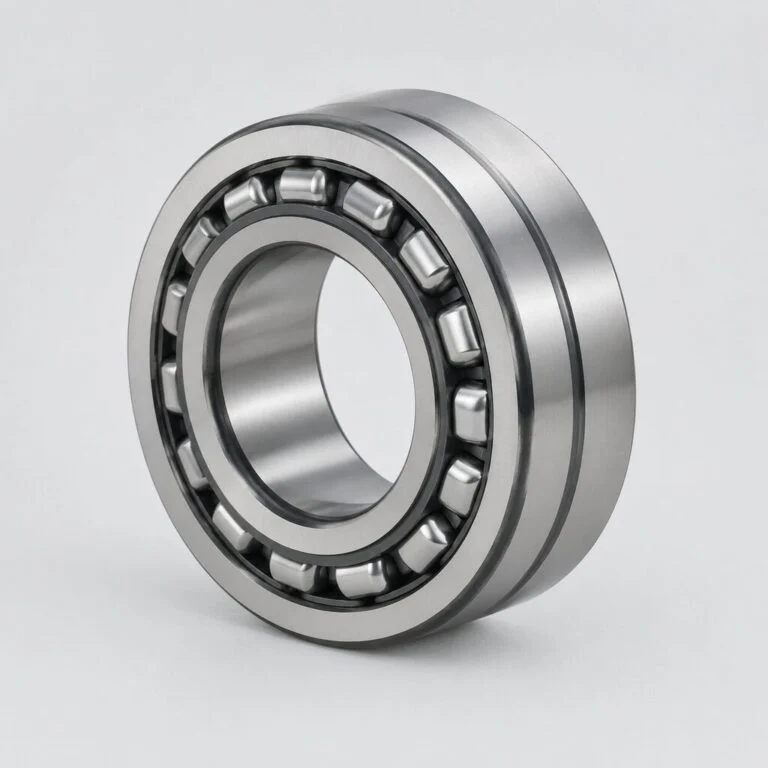
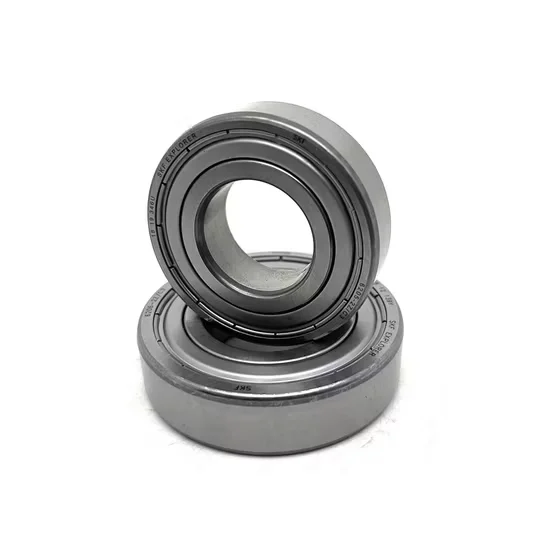
Listed data for this SKF designation; confirm the execution and dimensions against your drawing or application before ordering.
Mixed-Brand Sourcing — Consolidate this SKF 23124 Cc K/C3 W33 spherical roller bearing with other MRO spares in a single shipment without juggling multiple vendors.
Technical Specifications
| Parameter | Value |
| Designation | SKF 23124 Cc K/C3 W33 |
| Bearing Type | Spherical Roller Bearing |
| Bore Type | Tapered (1:12) |
| Clearance Class | C3 |
| Lubrication | Annular groove and holes in outer ring |
| Arrangement | Double Row |
| Cage Material | Steel Cage / Brass Cage / Nylon Cage |
| Material | Chrome Steel Gcr15 |
| Precision Class | P0 / P2 / P4 / P5 / P6 |
| Origin | Jiangsu China |
Note: The "Cc" suffix in the designation requires manufacturer catalog confirmation for exact cage design specifics.
Application Suitability
| Industry | Typical Applications |
| Mining & Aggregates | Crusher eccentric shafts and vibrating screen mechanisms |
| Metallurgy | Steel mill continuous casting rollers and rolling stands |
| Power Transmission | Heavy-duty gearboxes and large industrial reducers |
| Pulp & Paper | Paper machine dryer cylinders and press sections |
Thermal Expansion Traps in Heavy-Duty Power Transmission
When sourcing a genuine SKF 23124 Cc K/C3 W33 spherical roller bearing for high-heat environments, ignoring internal clearance shifts leads to rapid seizure.
Matching the C3 clearance to the operational temperature delta prevents catastrophic thermal binding.
Early in my career at a Chilean copper mine, I watched a crusher halt completely because a standard clearance bearing was installed in a high-ambient-heat zone. The thermal expansion eliminated the internal gap, causing the rollers to skid and the cage to fracture. That failure mode remains a primary focus when evaluating heavy-duty power transmission setups today.

Aligning Suffix Codes with Crusher and Screen Demands
Selecting the correct configuration ensures the SKF 23124 Cc K/C3 W33 spherical roller bearing survives extreme shock loads. Our engineering team cross-references your specific equipment OEM requirements to verify that the tapered bore and lubrication groove align perfectly with your maintenance protocols, eliminating guesswork during critical MRO replacements.
Operational Challenges in High-Load Environments
Vibrating screens and crushers subject components to severe combined radial and axial shock loads. Elevated operating temperatures significantly reduce lubricant viscosity, demanding reliable relubrication pathways to flush out abrasive dust. Without an annular groove and outer ring holes, grease distribution becomes uneven, accelerating wear on the roller ends. Furthermore, shaft misalignment under heavy deflection requires a self-aligning double-row structure to prevent edge loading.
Decoding the Tapered Bore and Clearance Specifications
The K suffix indicates a 1:12 tapered bore, allowing secure mounting on adapter sleeves for precise radial internal clearance adjustment during installation. The C3 radial internal clearance provides the necessary operational gap to accommodate thermal expansion from the inner ring and heavy load deflections. Meanwhile, the W33 feature integrates an annular groove and three lubrication holes in the outer ring, enabling efficient grease purging without dismounting the housing. These specific suffix combinations are critical for maintaining film thickness in contaminated, high-vibration applications.
The Hidden Costs of Incorrect Suffix Selection
Installing a standard clearance variant instead of a C3 equivalent in a high-temperature gearbox inevitably leads to unplanned downtime. The resulting thermal binding generates excessive friction heat, ultimately causing catastrophic damage to the shaft and housing seats. Such premature failure not only voids equipment warranties but also triggers extensive secondary repairs across the drivetrain. Adhering to standardized failure analysis frameworks helps identify these root causes before they escalate.
Procurement Advantages for Critical MRO Spares
We maintain massive spot inventory covering thousands of standard and special part numbers, ensuring rapid dispatch for urgent crusher maintenance. Our technical selection support verifies exact suffix equivalency, preventing the costly mistake of accepting a standard bore when a tapered K variant is required. Every shipment includes complete traceability documentation, matching the rigorous demands of global mining and metallurgy clients. We also offer flexible consolidation, allowing you to mix this specific unit with other premium brand requirements in a single container.
Documentation & Authenticity
- Certificate of Conformity verifying the exact SKF 23124 Cc K/C3 W33 spherical roller bearing designation and origin.
- Original manufacturer batch traceability records linking the physical bearing to its production run.
- Dimensional inspection reports confirming the 1:12 tapered bore geometry before dispatch.
- Material certification validating the chrome steel composition and heat treatment quality.
Storage, Handling & Mounting
- Keep the W33 lubrication holes covered with clean tape during storage to prevent moisture ingress.
- Use induction heaters for the tapered K bore inner ring, monitoring temperature to avoid annealing.
- Measure the drive-up distance on the adapter sleeve to achieve the specified C3 residual clearance.
- Apply clean gloves when handling the outer ring annular groove to prevent contaminating the lubrication path.
- Store horizontally in original packaging to prevent deformation of the double-row brass or steel cage.
Engineering Review and Inquiry Guidelines
To ensure precise technical validation, please share your operational parameters including radial and axial loads, rotational speed, and ambient temperature ranges. Providing the OEM equipment model number allows our team to perform a thorough cross-reference check and L10 life recalculation. This data enables us to confirm whether the tapered bore and C3 clearance perfectly match your specific power transmission application.
Frequently Asked Questions
Q: How to verify the authenticity of this specific spherical roller bearing?
A: Authenticity verification involves checking the laser-marked designation on the outer ring and scanning the official manufacturer QR code on the packaging. We supply complete batch traceability documentation and certificates of conformity. Buyers should also cross-check the physical dimensions of the 1:12 tapered bore and the presence of the W33 annular groove against official catalog specifications to ensure no counterfeit substitutions have occurred.
Q: What does the W33 suffix mean for lubrication maintenance?
A: The W33 suffix indicates an annular groove and three lubrication holes positioned in the outer ring. This design allows maintenance crews to inject fresh grease directly into the bearing center, forcing old, contaminated lubricant out through the sides. For vibrating screens and crushers operating in dusty environments, this feature significantly simplifies relubrication intervals and prevents abrasive particle buildup inside the roller paths.
Q: Difference between C3 and standard clearance in heavy-duty applications.
A: Standard clearance is suited for normal temperature and load conditions, whereas C3 provides a larger radial internal gap. In high-heat environments like steel mills or heavy power transmission gearboxes, the inner ring expands more than the outer ring. The C3 clearance compensates for this thermal growth, preventing the rollers from binding and skidding, which ultimately protects the bearing from premature thermal seizure and catastrophic failure.
Q: Installation guidelines for bearings with a 1:12 tapered bore.
A: Bearings with a K suffix require mounting on a tapered shaft or an adapter sleeve. Installers must carefully measure the drive-up distance or use hydraulic nuts to achieve the correct reduction in internal clearance. Over-tightening eliminates the C3 gap, causing immediate operational failure, while under-tightening leads to excessive vibration and fretting corrosion on the shaft seat during heavy load cycles.