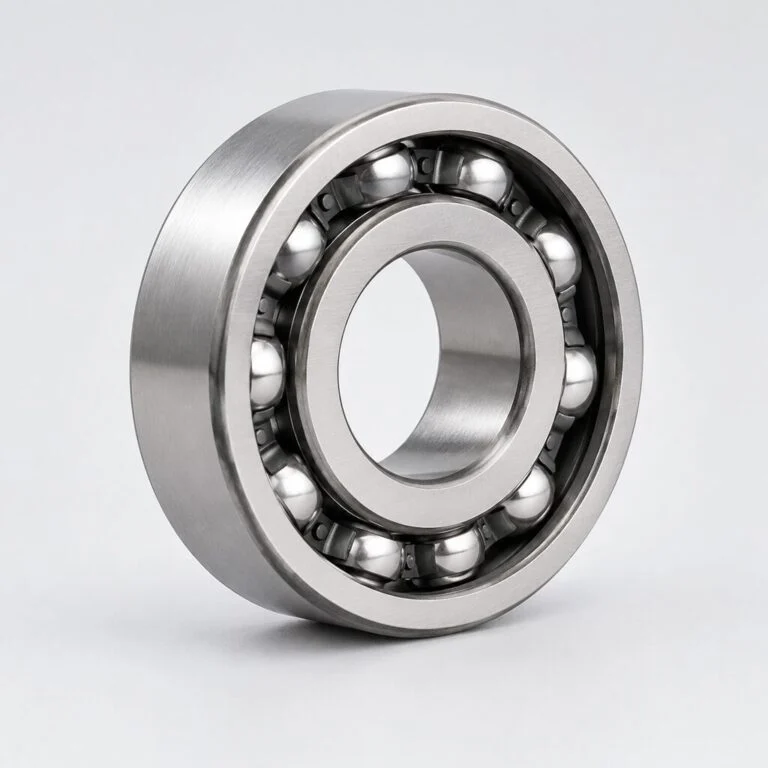
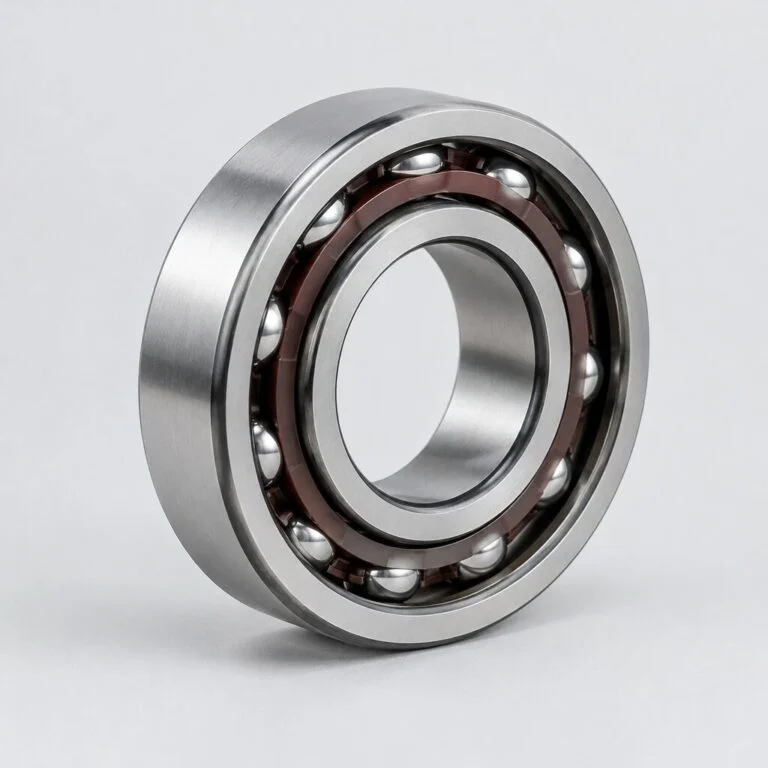
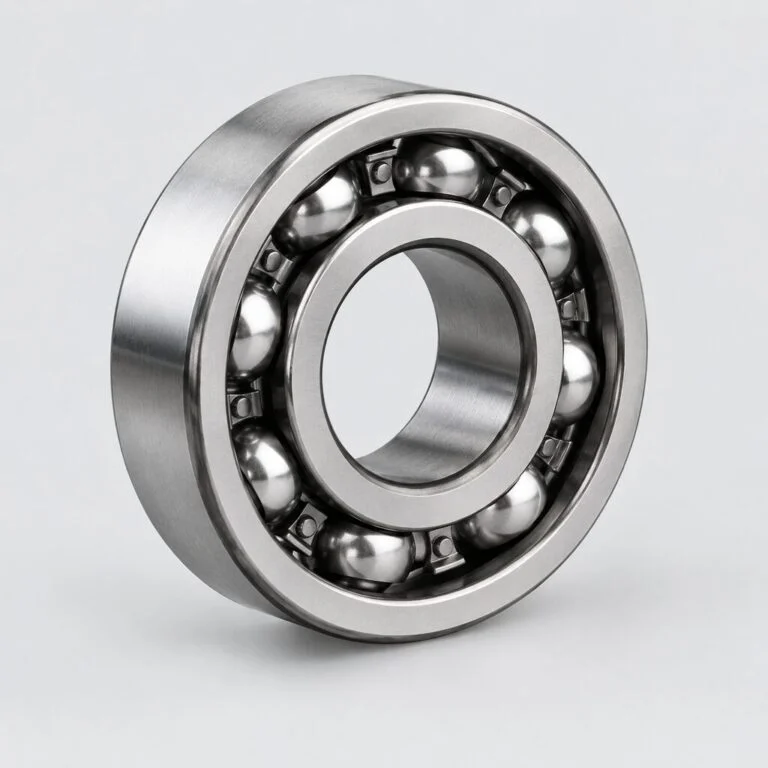
Listed data for this SKF designation; confirm the execution and dimensions against your drawing or application before ordering.
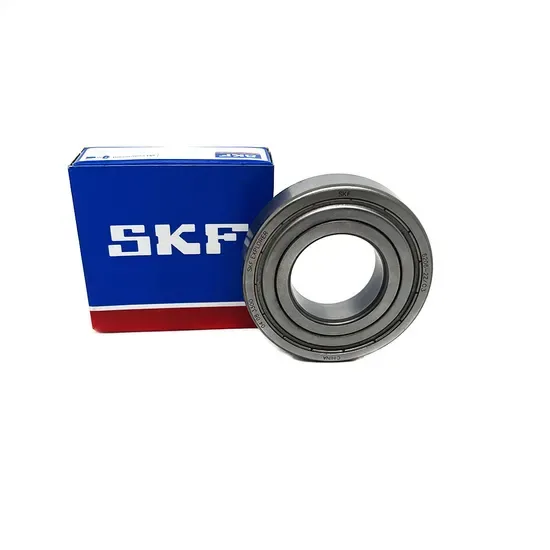
Mixed-Brand Sourcing Consolidated — Procure the Xinsheng 61815 6217 6415 deep groove ball bearing alongside SKF or FAG equivalents in a single shipment without juggling multiple vendors.
Technical Specifications
| Parameter | Value |
| Designation | 61815 6217 6415 |
| Bearing Type | Deep Groove Ball Bearing |
| Rows Number | Single |
| Lubrication | Oil or Grease |
| Precision Rating | P0, P4, P5, P6 |
| Radial Clearance | C2, C0, C3, C4, C5 |
| Vibration Acceleration | Z, Z1, Z2, Z3, Z4 |
| Vibration Tolerance | VV1, V2, V3, V4 |
| Material | Bearing Steel |
| Design | Bainite Quenching |
| Origin | Shandong |
Application Suitability
| Industry | Typical Applications |
| Industrial Motors | High-speed rotor supports requiring low vibration |
| Packaging Equipment | Spindle assemblies demanding strict radial runout limits |
| Automobiles | Alternator and tensioner pulley shafts |
| Pumps & Conveyors | Continuous duty drive shafts with moderate radial loads |
Why Packaging Spindles Reject Standard Tolerances in the Xinsheng 61815 6217 6415 deep groove ball bearing
Vibration at high RPMs amplifies microscopic raceway deviations into catastrophic surface finish defects on the final packaged goods.
I learned this the hard way on a Shenzhen shop floor years ago when a batch of P0-rated units caused excessive noise and chatter in a wrapper spindle, nearly triggering a full line rejection from a major client. Sourcing teams often overlook how precision classes interact with bainite quenching structures under continuous cyclic loading. When the internal geometry lacks the strict runout limits of P5 or P4 grades, the resulting harmonic vibration transfers directly to the packaging film, causing uneven tension and material waste. This is not just a minor acoustic annoyance; it fundamentally compromises the mechanical stability of the entire automated assembly line, leading to premature fatigue in adjacent shaft components.

Aligning Clearance and Precision for Wrapper Shafts
When specifying the Xinsheng 61815 6217 6415 deep groove ball bearing for packaging spindles, matching the radial clearance to the operational thermal expansion is absolutely critical. Our engineering team cross-references your exact RPM, ambient temperature, and housing material to recommend either C3 or C4 clearance, ensuring the internal geometry remains stable once the shaft reaches operating heat. If the clearance is too tight, the thermal expansion will induce excessive preload, generating friction and rapid lubricant degradation. Conversely, excessive clearance in a high-precision application will cause the shaft to float, creating unacceptable runout that ruins the surface finish of the packaged product. By analyzing the specific kinematic demands of your wrapper or conveyor drive, we align the precision rating and internal gap to guarantee smooth, predictable rotation under load.
Managing High-Speed Thermal and Vibration Demands
Packaging spindles operate at elevated speeds where standard grease can degrade rapidly, making oil or specialized high-temperature grease lubrication essential for sustained performance. The cyclic radial loads inherent in these systems demand a bainite quenching design to absorb shock without micro-cracking the raceway surface. Furthermore, strict vibration acceleration limits like Z3 or Z4 are mandatory to prevent chatter marks on the packaged film or cardboard, which directly impacts product quality. Contamination is another silent killer in these environments; fine paper dust or adhesive particulates can infiltrate the bearing if the sealing arrangement is inadequate, accelerating wear and increasing acoustic emissions. Managing the balance between contact seal friction and non-contact shield protection requires a nuanced understanding of the specific environmental hazards present on your production floor.
Decoding the Precision and Vibration Classes
Selecting between P0 and P6 precision directly dictates the spindle's runout and acoustic signature throughout its operational lifespan. While P0 suffices for general conveyor pulleys or low-speed gearboxes, high-speed packaging spindles require P5 or P4 to maintain tight film tension and prevent harmonic resonance. The vibration tolerance classes, ranging from VV1 to V4, correlate directly with the surface finish of the rolling elements and raceways; a higher class guarantees smoother rolling contact, which is non-negotiable for noise-sensitive automated assembly lines. Additionally, the choice between oil and grease lubrication must align with the speed factor and thermal dissipation capabilities of the housing. Understanding how these specifications interact ensures that the selected unit, supplied in bearing steel, can withstand the rigorous demands of continuous, high-speed industrial manufacturing without succumbing to premature surface fatigue.
The Financial Drain of Mismatched Internal Geometry
Deploying a standard clearance unit in a high-speed spindle leads to excessive preload as the shaft expands, causing premature fatigue and unplanned downtime that disrupts the entire production schedule. According to established failure analysis frameworks, incorrect internal geometry alignment and improper precision matching account for a significant share of early spindle seizures and catastrophic raceway spalling. This cascades into warranty voidance, costly emergency air-freight for replacements, and extensive labor hours required to tear down and rebuild the affected machinery. The initial savings from purchasing a lower-grade or incorrectly specified component are rapidly eclipsed by the financial drain of halted packaging lines and damaged brand reputation due to defective end products.
Securing Traceability and Exact Spec Matching
We verify the exact precision class and vibration grade of every Xinsheng 61815 6217 6415 deep groove ball bearing before dispatch, actively preventing the P0-for-P5 substitution errors that frequently plague the spot market. Our consolidation service allows you to mix these specific Shandong-manufactured units with premium global brands in a single container, simplifying your MRO procurement without juggling multiple freight forwarders. We also provide cross-brand equivalent model consultation if your maintenance schedule requires an immediate alternative due to unexpected supply chain disruptions. By demanding original factory batch traceability and rigorous dimensional inspections, we ensure that the bainite quenching structures and surface finishes meet the exact tolerances your packaging spindles require to operate flawlessly.
Documentation & Authenticity
- Certificate of Conformity verifying the exact P4 or P5 precision grade for spindle applications.
- Original factory batch traceability linking the bainite quenching heat treatment to specific production dates.
- Material inspection reports validating the bearing steel composition and structural toughness.
- Dimensional and running accuracy inspection reports confirming Z3 or Z4 vibration limits prior to shipment.
Storage, Handling & Mounting
- Keep the original packaging sealed until mounting to protect the precise Z3/Z4 raceway finish from ambient humidity.
- Use induction heating for the inner ring to preserve the bainite quenching structural integrity during interference fits.
- Apply clean lint-free gloves when handling P4 or P5 precision units to prevent skin oils from etching the steel.
- Ensure the selected C3 or C4 clearance is not compromised by excessive shaft tolerances during press-fitting.
Engineering Review for Spindle Integration
To ensure an accurate L10 life calculation and optimal performance, please provide your exact radial and axial loads, maximum continuous RPM, and the expected operating temperature range. Share the OEM equipment model number so our technical team can verify cross-reference equivalents and confirm the required precision class and vibration limits. Detailing the housing tolerances and shaft material allows us to validate the appropriate radial clearance and recommend the most effective lubrication strategy for your specific environment. This collaborative technical review ensures that the selected configuration perfectly aligns with your operational demands, eliminating the guesswork and preventing costly field failures.
Frequently Asked Questions
Q: How do I select the correct radial clearance for high-speed packaging spindles?
A: High-speed spindles generate significant friction heat, causing the inner ring to expand more than the outer ring. We typically recommend C3 or C4 clearance for these applications to prevent the bearing from seizing under thermal preload. Provide your exact operating temperature and RPM so we can calculate the optimal internal geometry.
Q: What are the specific benefits of bainite quenching in these deep groove models?
A: Bainite quenching enhances the structural toughness of the bearing steel, making it more resilient to shock loads and micro-cracking compared to standard martensite structures. This is particularly advantageous in packaging equipment where sudden tension spikes occur, ensuring the raceway maintains its integrity and surface finish over extended operational cycles.
Q: How can I verify the authenticity and precision grade upon delivery?
A: Every shipment includes a Certificate of Conformity and original factory batch traceability documentation. You can cross-check the physical markings against the provided dimensional and running accuracy inspection reports, which explicitly confirm whether the units meet the specified P4, P5, or P6 tolerance and Z3/Z4 vibration limits before they left the facility.
Q: What vibration class is appropriate for noise-sensitive industrial motor applications?
A: For noise-sensitive environments, we recommend specifying Z3 or Z4 vibration acceleration limits alongside V3 or V4 velocity tolerances. These stricter classes ensure the rolling elements and raceways have superior surface finishes, significantly reducing acoustic emissions and preventing harmonic resonance that could otherwise disturb sensitive automated manufacturing processes.