
Factory-Direct OEM Bearings for OE Diesel Generator Set Programs
Matching the OE part number is only half the job—bearing clearance, lubrication cycle, and load profile must be re-verified against the actual installation site before any diesel generator bearing is shipped.
The core answer to "how to select OEM bearings for diesel generator sets" is simple in principle but frequently ignored in practice: you must treat the bearing as a system component whose internal clearance, grease fill, and cage design need to be recalculated for ambient temperature, altitude, and duty cycle—not merely copied from the original equipment manufacturer’s drawing.
I still remember a shipment of 22320 self-aligning roller bearings we sent to a tropical diesel power station project a few years back. The OE drawing called for standard clearance, but within weeks the end-caps were running hot, vibration alarms were tripping, and when the site team cracked the housing open the cage had already fractured. Post-mortem analysis showed the C3 clearance we had spec’d for the region was still insufficient for sustained ambient temperatures above 45 °C combined with heavy radial load. The replacement freight, the on-site technician flights, and the reputational hit cost several times the original bearing invoice. That single episode reshaped how I approach every OEM bearings for diesel generator sets inquiry: site data first, part number second.
From that point forward, every technical conversation about OEM bearings for diesel generator sets in our workshop starts with the same three questions: what is the highest ambient temperature the unit will see, what is the typical load profile, and how often can the site realistically relubricate.
Why Do Diesel Generator Bearings Fail in the Field?
The majority of field failures in diesel generator bearings are not quality defects—they are selection mismatches disguised as manufacturing problems.
Industry-wide damage analysis consistently shows that premature bearing failure in rotating electrical equipment is dominated by lubrication issues, contamination ingress, and incorrect internal clearance rather than material fatigue. When I review warranty claims coming back from OEM bearings for diesel generator sets programs across multiple regions, the pattern repeats: the bearing was the correct outer dimension and bore, but the internal geometry was never matched to the thermal and mechanical reality of the installation.
Take a recent case from a high-altitude mining operation in Central Asia. The generator set used 6206 deep groove ball bearings at the non-drive end. The OE specification called for a standard grease fill suitable for sea-level, temperate-climate operation. At the actual site—elevated terrain with low atmospheric pressure and wide diurnal temperature swings—the grease oxidized and dried out well before the scheduled relubrication interval. The result was cage wear, increased noise, and eventually a locked rotor. The bearing itself was dimensionally perfect; the lubrication strategy was not.
A different pattern shows up in distributor channels. A Middle East distributor once placed a full order of OEM bearings for diesel generator sets covering several popular models—6205, 6305, 22320, 32218—intended for resale to end-users running standby gensets. Every model number matched the OE cross-reference exactly. Yet within months, return requests piled up because the end-users were installing C3-clearance bearings in lightly loaded, low-temperature standby units where C3 created excessive internal play and measurable vibration at startup. Conversely, standard-clearance units shipped to tropical continuous-duty sites seized within weeks. The part numbers were right; the clearance logic was absent.
The underlying lesson is that OEM bearings for diesel generator sets cannot be selected by drawing number alone. The bearing must be treated as a thermal-mechanical interface whose clearance class, cage material, and grease chemistry must be validated against three site variables: ambient temperature range, load factor, and relubrication accessibility.
How to Match Bearing Clearance to Site Conditions?
Internal clearance is the single most overlooked parameter when specifying OEM bearings for diesel generator sets—and it is the parameter most likely to cause field failure if chosen from a catalog rather than from site data.
Bearing internal clearance determines how much the rolling elements are preloaded or loosened once the inner ring, outer ring, and rolling elements reach operating temperature. If clearance is too tight, the bearing runs hot, friction rises, and grease degrades rapidly. If clearance is too loose, vibration increases, load distribution becomes uneven, and fatigue life drops sharply.
The standard clearance classes—C2, CN, C3, C4, C5—form a ladder from tight to loose. For diesel generator sets, the selection logic follows a recognizable pattern:
| Site Condition | Typical Clearance Class | Rationale |
|---|---|---|
| Temperate climate, standby duty, light load | CN (standard) | Minimal thermal expansion; tight clearance improves rigidity |
| Tropical climate, continuous duty, heavy load | C3 or C4 | Accommodates shaft and housing thermal growth |
| High ambient temperature with poor ventilation | C4 | Extra clearance margin for sustained heat |
| Cold climate with infrequent starts | C2 or CN | Avoids excessive play at low operating temperature |
| High-speed alternator end | C3 | Balances thermal growth and centrifugal effects |
The critical point is that the OE drawing was created for the manufacturer’s test-bench conditions, not for the buyer’s site. A 22320 self-aligning roller bearing specified with C3 clearance on paper may still be marginal if the actual ambient temperature consistently exceeds 40 °C and the generator runs at rated load for extended hours. In such cases, stepping up to C4—or requesting a special clearance range within C4—can be the difference between reliable operation and a repeat failure.
We routinely receive inquiries from buyers who want to "just match the OE number." Our technical team responds by requesting the site’s maximum ambient temperature, the generator’s rated hours per year, and the housing material (cast iron versus steel, which affects thermal expansion differently). Only then do we confirm or adjust the clearance class. This is not upselling—it is the minimum due diligence required for OEM bearings for diesel generator sets to survive in the field.
What Lubrication Specs Should You Verify Before Ordering?
Lubrication is where most OE drawings fall silent—and where most field failures in OEM bearings for diesel generator sets actually originate.
The OE bearing specification typically states the bearing type, size, and clearance class. It rarely specifies the grease chemistry, fill quantity, or relubrication interval in terms the site maintenance team can execute. This gap is the root cause of a large share of premature bearing replacements in diesel generator programs worldwide.
Three lubrication parameters must be verified before any order for OEM bearings for diesel generator sets is finalized:
Grease type and base oil viscosity. The grease must be compatible with the operating temperature range and the bearing’s cage material. A lithium-complex grease with a mineral base oil may work perfectly at sea level in a temperate zone, but the same grease will oxidize rapidly at high altitude or in tropical heat, leaving the bearing effectively dry. For high-temperature sites, a synthetic base oil with a polyurea or clay thickener is often necessary.
Fill quantity. Standard factory fill is typically 25–30% of the bearing’s free space. In high-temperature or high-speed applications, overfilling causes churning and additional heat generation; underfilling leaves the rolling elements starved. The correct fill level depends on the bearing’s operating speed (expressed as the speed factor n·dm) and the ambient temperature.
Relubrication interval. This is the parameter most often ignored. The OE drawing may assume relubrication every 4,000 hours—but if the site’s maintenance contract only covers visits every 8,000 hours, the bearing will run dry long before the next service call. The relubrication interval must be calculated from the actual operating temperature, the grease type, and the bearing size, then compared against the site’s realistic maintenance schedule.
A practical example: a West African industrial client running a fleet of standby diesel gensets specified OEM bearings for diesel generator sets including 22308 and 30206 models. The OE relubrication interval was 4,000 hours. The site’s maintenance reality was 6,000 hours between visits. By switching to a high-temperature synthetic grease and adjusting the fill quantity, we extended the effective relubrication window to match the site’s schedule—without changing the bearing model or clearance class. The result was a noticeable drop in unplanned downtime across the fleet.
How to Build a Reliable OE Bearing Supply Program?
A reliable supply program for OEM bearings for diesel generator sets requires more than a price list—it requires cross-reference accuracy, documentation discipline, and technical support that can bridge the gap between OE drawing and field reality.
Distributors and MRO purchasers sourcing OEM bearings for diesel generator sets face three recurring challenges:
Cross-reference accuracy. The OE part number on a diesel generator drawing may reference a bearing from a specific manufacturer’s legacy catalog. That exact number may no longer be produced, or it may have been superseded by an updated design. A reliable supplier must maintain a complete cross-reference database covering all mainstream brands—SKF, NSK, FAG, TIMKEN, NTN, KOYO—and be able to confirm dimensional equivalence, clearance class, and cage material for every substitution.
Documentation discipline. Industrial buyers in regulated sectors—power generation, mining, marine—require ISO 9001 certification, material traceability, and batch-level inspection reports. A supplier who cannot provide standard quality documentation on request is not a viable partner for OEM bearings for diesel generator sets, regardless of how competitive the price may be. Our factory maintains ISO 9001 certification and provides complete standard documentation with every shipment, ensuring compliance with international quality requirements and simplifying the buyer’s incoming inspection process.
Technical support at the point of selection. The most effective way to reduce field failures is to catch the mismatch before the order is placed. A supplier who simply ships against the OE number without asking about site conditions is transferring risk to the buyer. A supplier who requests ambient temperature, load profile, and maintenance interval data before confirming the clearance class and grease specification is acting as a technical partner—not just a logistics channel.
We structure our OEM bearings for diesel generator sets programs around these three pillars. Every inquiry is reviewed by our technical team, who cross-reference the OE number against our full-category catalog—covering deep groove ball bearings, self-aligning ball bearings, cylindrical roller bearings, self-aligning roller bearings, tapered roller bearings, angular contact ball bearings, and thrust bearings. Popular models such as 6205, 6206, 6305, 22320, 32218, 30206, NU205, and 22308 are held in stock for same-day dispatch, with DHL and FedEx express options available for urgent downtime situations. For distributors requiring private-label packaging or territory arrangements, we offer flexible cooperation modes including bulk-order discounts and regional protection.
The result is a supply program that reduces the buyer’s risk at every stage: correct specification at the point of order, verifiable quality at the point of receipt, and reliable delivery at the point of need.
Conclusion
Selecting OEM bearings for diesel generator sets is a site-specific engineering task, not a catalog-copying exercise. Internal clearance must be matched to ambient temperature and duty cycle; lubrication type and relubrication interval must be validated against the site’s maintenance reality; and the supply partner must provide cross-reference accuracy, ISO-certified documentation, and technical support that bridges the gap between OE drawing and field condition. When these three elements are in place, bearing-related downtime drops noticeably—and the total cost of ownership reflects the difference.
Products in this article
SKF bearings mentioned above
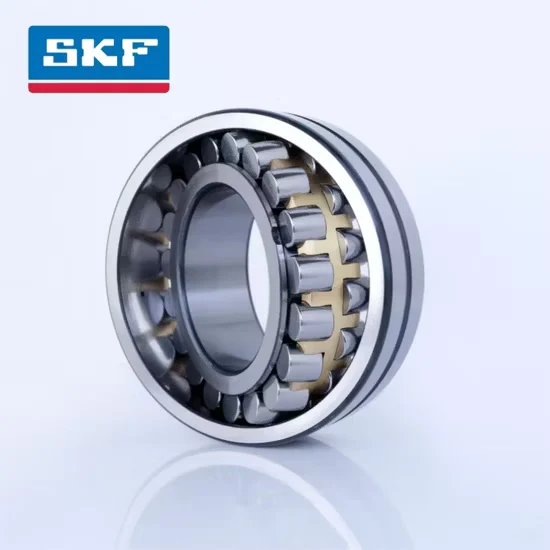 01 Mining and Vibrating Screen Bearings SKF 22320 E-K/C4 Spherical Roller Bearing Genuine Supplier View model details
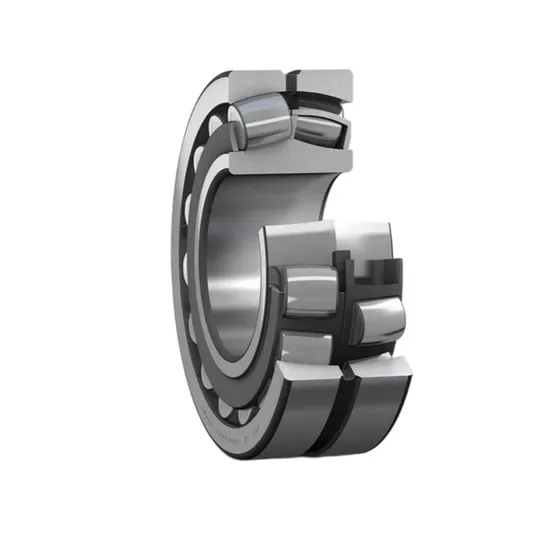 02 Car Bearing 22320E Spherical Roller Bearing Wholesale Supplier View model details
 03 Spherical Roller Bearing 22320EK Spherical Roller Bearing 73mm Width for Heavy-Duty Industrial Applications View model details
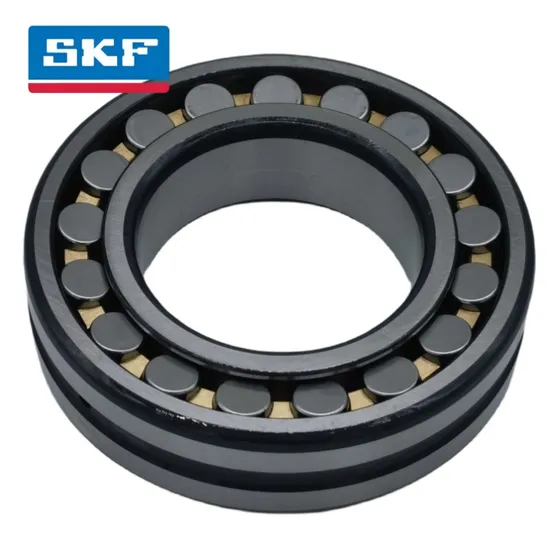 04 Spherical Roller Bearing High Precision SKF Spherical Roller Bearing 22320 E-K/C4 for Conveyor Systems Chrome Steel Gcr15 View model details
Applications
Where these SKF bearings are used
Keep reading
Related SKF bearing selection guides
More practical notes on SKF designations, precision items and project bearing lists from Project Purchasing Company.
 Applications & Industries · · 7 min read Ball Bearings for Model Engines: Wholesale Supplier & Bulk Orders Standard industrial bearings fail in model engines due to incorrect clearances and cage materials. Ball Bearings in Model Engines require specific tight tolerances, machined… Read the guide Applications & Industries · · 7 min read Ball Bearings for Garden Tillers: Genuine Wholesale Supplier Genuine Ball Bearings in Garden Tillers prevent costly field failures caused by mud ingress and shock loads. Discover critical selection criteria for sealing and… Read the guide Applications & Industries · · 7 min read Ball Bearings for Pressure Washers Wholesale Supplier Stop premature pump failures by prioritizing seal integrity over basic dimensions for Ball Bearings in Pressure Washers. Learn why high-temperature contact seals and synthetic… Read the guide

Request a quote
Send your SKF list. Get one itemized written quote.
Project Purchasing Company supplies SKF ball, roller, precision and housed bearing units to distributors, repair workshops and project buyers worldwide. Standard and precision items are priced line by line, with accessories kept on the same quote.