
OEM SKF-Grade Bearings for Baler & Mower Programs | Wholesale Supplier
Most buyers assume matching the bearing model number is enough to fit a baler or mower. The real failure point is almost never the model—it is the missing inspection records and incomplete customs paperwork that turn a correct order into a useless shipment.
OEM SKF-grade bearings for baler and mower programs demand a verified quality chain—from factory dimensional reports to destination-port certification documents—to prevent harvest-season field seizures that cost distributors multiples of the bearing price itself.
I started out handling customs declarations and shipping documents, staring at bills of lading and certificates of origin every day. It was only after moving into sales that I began traveling to assembly sites across Africa. One harvest season, a baler assembler in Nigeria received a batch of 6206 and 6305 bearings from another source. Within weeks of installation, the bearings seized on multiple machines during peak baling operations. When emergency replacements were rushed out, the shipment sat at the destination port for days because SONCAP compliance documentation was incomplete. That experience cemented one principle: supplying bearings for agricultural machinery means controlling the entire chain from inspection reports to clearance files, not just shipping the right model number.
Agricultural machinery assemblers and regional distributors need more than a price list—they need a supply partner who understands that a single missing test certificate can idle an entire assembly line during the narrow harvest window.
Why OEM Assemblers Specify SKF-Grade Bearings for Balers and Mowers?
Baler and mower drivetrains operate under extreme radial loads, heavy dust contamination, and continuous vibration—conditions where SKF-grade dimensional precision and material cleanliness directly determine field survival through harvest season.
The agricultural equipment market has steadily tightened its bearing specifications over recent years. OEM assemblers producing balers and mowers for export to Africa, the Middle East, and Latin America increasingly reference SKF-grade performance benchmarks in their procurement specifications. This is not brand loyalty—it is field economics. A bearing that seizes during peak baling forces the distributor to dispatch technicians across rural terrain, replace units in the field, and absorb reputational damage with end-user farmers.
From my visits to assembly workshops in Ethiopia and South Africa, the pattern is consistent: assemblers who switched from unverified generic bearings to SKF-grade equivalents reported noticeably fewer warranty claims during the first harvest cycle. The difference is not visible on a spec sheet alone—it shows up in internal clearance consistency, seal integrity under dust ingress, and raceway surface finish that resists early spalling. SKF-grade manufacturing controls controlled nitrogen infusion during steel production, substantially lower non-metallic inclusion density, and micron-level raceway roundness that generic workshops simply cannot replicate at scale.
The specification pressure flows downward from end-user expectations. Farmers in Nigeria’s northern states or Kenya’s highlands operate machinery for extended daily hours during narrow seasonal windows. When a baler gearbox bearing fails at hour two hundred instead of hour two thousand, the assembler’s brand reputation in that region takes years to recover. This is why OEM SKF-grade bearings for baler and mower programs have become the baseline requirement rather than a premium option.
Which Bearing Types Fit Baler and Mower Applications?
Deep groove ball bearings handle general shaft support in baler and mower gearboxes, while tapered roller bearings carry the combined radial-axial loads in heavy-duty PTO drivelines—selection depends on load direction, speed range, and contamination exposure at each position.
Walking through a baler assembly line, you will find bearings serving distinctly different roles. The main driveline shafts that transfer power from the tractor PTO to the plunger mechanism typically require tapered roller bearings such as the 32218 or 30206 series, because they must support both the radial force of chain drive tension and the axial thrust from helical gear engagement. Meanwhile, the pickup reel shafts and feeder mechanism supports usually run on deep groove ball bearings like the 6205, 6206, and 6305—these positions see high rotational speed, moderate radial load, and heavy crop dust ingress, making double-sealed (2RS) variants essential.
Mower applications follow a similar logic. Rotary mower gearboxes rely on tapered roller bearings to handle the shock loads from hitting hidden obstacles in the field, while the spindle bearings that hold the cutting blade shaft demand deep groove ball bearings with robust contact seals to prevent grass sap and soil moisture from reaching the raceway.
| Application Position | Typical Load Type | Preferred Bearing Category | Common Models | Seal Requirement |
|---|---|---|---|---|
| Baler main driveline | Combined radial-axial, shock | Tapered roller | 32218, 30206 | Open or single shield |
| Baler pickup reel | High-speed radial, dust | Deep groove ball | 6206-2RS, 6305-2RS | Double contact seal |
| Mower gearbox | Heavy radial, axial shock | Tapered roller | 32215, 30207 | Open or single shield |
| Mower spindle | Radial, contamination | Deep groove ball | 6205-2RS, 6206-2RS | Double contact seal |
The critical selection mistake I have seen repeatedly is specifying open bearings for contaminated positions to save cost, then facing field failures within weeks. The seal type is not an accessory—it is a functional requirement. For baler and mower positions exposed to crop residue and soil, the 2RS configuration with nitrile rubber contact seals provides substantially extended contamination resistance compared to ZZ metal shields.
When sourcing OEM SKF-grade bearings for baler and mower programs, the assembler must match not only the bore diameter and outside dimension but also the internal clearance class. A C3 clearance bearing running in a low-temperature morning startup will behave differently from a standard CN clearance unit—wrong clearance selection accelerates fatigue or causes excessive play depending on the operating temperature range.
How to Verify Quality When Sourcing OEM Bearings Wholesale?
Request ISO 9001 certification, dimensional inspection reports per batch, and material traceability documentation before placing any wholesale order—suppliers who cannot produce this paper chain should be disqualified immediately.
The verification process starts well before the first sample arrives. A legitimate manufacturer of OEM SKF-grade bearings for baler and mower programs will maintain ISO 9001 certification with auditable scope covering the specific bearing categories in question. This is not a decorative certificate—it means the factory operates documented procedures for incoming material inspection, in-process dimensional checks, and final audit sampling.
When I evaluate a new supply source for agricultural bearing programs, I follow a structured documentation checklist:
- ISO 9001 certificate: Verify the certificate scope explicitly covers deep groove ball bearings and tapered roller bearings, not just a generic "mechanical components" description. Check the certification body’s accreditation status.
- Dimensional inspection report: Request a per-batch report covering bore diameter, outside diameter, width, and running accuracy. The report should reference actual measured values, not just "within tolerance" statements.
- Material traceability: The supplier should provide steel grade certification linking the bearing rings and rolling elements to specific heat numbers. This enables trace-back if any field failure requires root-cause metallurgical analysis.
- Hardness test records: Raceway and rolling element hardness should fall within the standard HRC range for through-hardened bearing steel, verified by sample testing per batch.
A West African distributor once received a bulk order of baler bearings where the supplier provided only a generic "quality certificate" without batch-specific dimensional data. When several units showed excessive internal clearance during assembly line inspection, there was no inspection report to cross-reference—forcing the entire batch to be sorted manually at the distributor’s warehouse, delaying the assembly program by weeks.
The verification discipline extends to packaging and marking. Genuine SKF-grade bearings carry part numbers, brand markings, and country-of-origin labels that match the documentation. Counterfeit or substandard units often show blurred printing, incorrect font styles, or missing origin markings. A simple visual audit upon receipt catches a significant portion of supply problems before they reach the assembly line.
What Supply Chain Pitfalls Cause Harvest-Season Downtime?
Field failures from non-genuine bearings and port delays from incomplete customs documentation are the two dominant causes of harvest-season assembly disruption—and both are preventable through full-chain supply management.
The agricultural bearing supply chain faces a unique time pressure: the harvest window waits for no one. A baler assembler in East Africa preparing for the rainy-season harvest has a fixed assembly schedule. If bearings arrive late or fail during installation, the downstream consequences cascade through dealer networks, farmer planting schedules, and the assembler’s contractual delivery commitments.
The first major pitfall is field failure from bearings that meet the model number but not the quality standard. I have seen multiple cases where distributors sourced bearings based on model number alone, only to discover during harvest that the raceway surface finish was rough, the grease fill was insufficient, or the seal lip geometry allowed dust ingress. The bearing may have passed a basic visual check at the warehouse, but it could not survive the actual operating environment. The cost of replacing a seized bearing in a baler gearbox at a remote farm site—counting technician travel, machine downtime, and lost baling capacity—reaches multiples of the original bearing price.
The second pitfall is customs and documentation failure. Agricultural bearing shipments to regulated markets require specific compliance documentation. For West African destinations, SONCAP certification is mandatory for imported mechanical components. For Middle Eastern markets, SASO or equivalent conformity assessment may apply. If the supplier ships bearings without preparing these documents in advance, the container sits at the port—even if the bearings themselves are perfectly good. I recall one shipment where the bearings arrived on time but the certificate of conformity had an incorrect HS code classification, causing the clearance hold to extend well into the assembly preparation period.
| Pitfall Category | Root Cause | Impact on Assembly Program | Prevention Method |
|---|---|---|---|
| Field failure | Substandard material or workmanship | Machine seizure during harvest, warranty claims | Batch-level inspection reports, material traceability |
| Port delay | Missing or incorrect compliance documents | Shipment held at destination port, assembly schedule disrupted | Pre-shipment document review, certified supplier selection |
| Wrong specification | Incomplete cross-reference data | Incorrect bearing installed, premature failure | Full brand interchange charts, application-based selection support |
The common thread is that both pitfalls stem from treating the bearing purchase as a simple model-number transaction rather than a managed supply process. OEM SKF-grade bearings for baler and mower programs require the supplier to take responsibility for the documentation chain as rigorously as the product quality itself.
How to Source SKF-Grade Bearings with Cross-Reference Support?
Work with suppliers who provide complete brand interchange charts mapping OEM part numbers to standardized bearing codes with verified tolerance equivalence—this eliminates selection errors and ensures assembly line continuity across multiple baler and mower models.
Agricultural machinery OEMs often specify bearings using original equipment part numbers rather than standard bearing codes. A baler manufacturer might call out a proprietary part number for a plunger shaft bearing that corresponds to a standard 6305-2RS deep groove ball bearing—but with specific internal clearance or grease fill requirements. Without accurate cross-reference data, the assembler risks ordering the wrong variant or spending excessive time manually verifying equivalence.
Our factory maintains comprehensive cross-reference interchange charts covering all major international brands, enabling direct mapping from SKF, NSK, FAG, TIMKEN, NTN, and KOYO part numbers to our production equivalents. This is not a simple model-number lookup table—each cross-reference entry is verified against the original specification for bore tolerance, outside diameter tolerance, width tolerance, internal clearance class, and seal type. The interchange is validated through dimensional inspection to confirm that the replacement bearing meets the same tolerance grade as the original.
For distributors managing multiple baler and mower assembly programs simultaneously, this cross-reference capability dramatically reduces selection time. Instead of contacting each bearing brand’s technical department for equivalence confirmation, the assembler can reference a single interchange chart and place a consolidated order. We support this process with application-based selection guidance—when an assembler provides the operating parameters (shaft speed, load type, contamination level, temperature range), our technical team recommends the appropriate bearing category, model, and seal configuration.
The sourcing model we offer combines this technical support with wholesale pricing structures designed for regional distributors. Bulk-order discounts apply across the full product range, and private-label options allow distributors to build their own brand identity for the African, Middle Eastern, and Latin American markets. Territory protection arrangements are available for distributors committing to volume targets, ensuring that their market development investment is safeguarded.
Stock availability on popular agricultural bearing models enables same-day dispatch for urgent orders, with express courier options for time-critical replacement requirements during harvest season. This responsiveness is built on maintaining inventory depth across the full range of deep groove ball bearings, tapered roller bearings, and other categories commonly specified in baler and mower programs.
Conclusion
Reliable bearing supply for agricultural machinery is a documentation and verification discipline, not just a model-number matching exercise. OEM SKF-grade bearings for baler and mower programs require controlled quality chains from factory inspection through customs clearance, correct application-based selection using verified cross-reference data, and supply partners who understand that harvest-season downtime costs far exceed the bearing unit price. Assemblers and distributors who treat bearing procurement as a managed supply process—rather than a commodity purchase—protect their assembly schedules, their field reputation, and their end-user relationships across every harvest cycle.
Products in this article
SKF bearings mentioned above
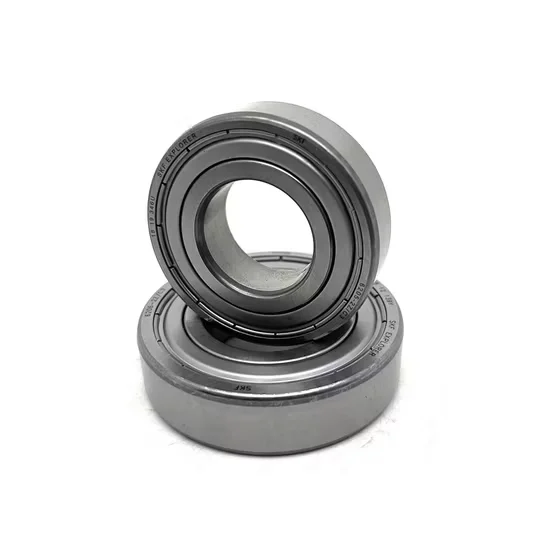 01 Deep Groove Ball Bearings SKF 6204 6205 6206 Deep Groove Ball Bearing Spare Parts View model details
 02 Deep Groove Ball Bearings Original SKF Deep Groove Ball Bearing 6000 6001 6308 6309 6204 6205 6206 for Auto Parts View model details
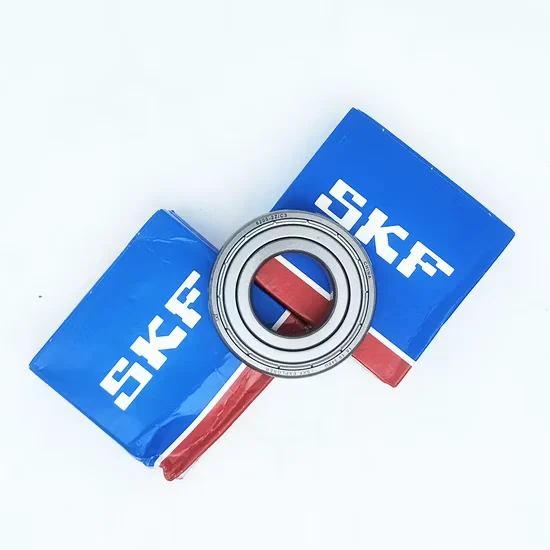 03 Agricultural Machinery Bearings X&S 80607kt 6301-2RS 6205-2Z 6206-2Z Deep Groove Ball Bearing View model details
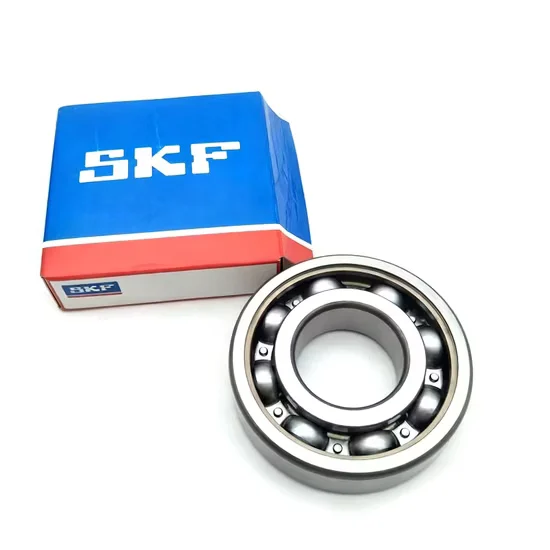 04 Deep Groove Ball Bearings SKF 6205 6206 ZZ C3 Deep Groove Ball Bearing for Automobile Industry View model details
Applications
Where these SKF bearings are used
Keep reading
Related SKF bearing selection guides
More practical notes on SKF designations, precision items and project bearing lists from Project Purchasing Company.
 Applications & Industries · · 7 min read Ball Bearings for Model Engines: Wholesale Supplier & Bulk Orders Standard industrial bearings fail in model engines due to incorrect clearances and cage materials. Ball Bearings in Model Engines require specific tight tolerances, machined… Read the guide Applications & Industries · · 7 min read Ball Bearings for Garden Tillers: Genuine Wholesale Supplier Genuine Ball Bearings in Garden Tillers prevent costly field failures caused by mud ingress and shock loads. Discover critical selection criteria for sealing and… Read the guide Applications & Industries · · 7 min read Ball Bearings for Pressure Washers Wholesale Supplier Stop premature pump failures by prioritizing seal integrity over basic dimensions for Ball Bearings in Pressure Washers. Learn why high-temperature contact seals and synthetic… Read the guide

Request a quote
Send your SKF list. Get one itemized written quote.
Project Purchasing Company supplies SKF ball, roller, precision and housed bearing units to distributors, repair workshops and project buyers worldwide. Standard and precision items are priced line by line, with accessories kept on the same quote.