

Lead Time
7-15 Days
Stock
In Stock
Angular Contact Bearing
FAG HS7003-E-T-P4S Angular Contact Ball Bearing P4S Precision
<p><strong>FAG HS7003-E-T-P4S Angular Contact Ball Bearing 17 mm</strong> — Single-row angular contact design with reinforced internal geometry (E suffix) enhances load capacity and stability for high-speed machine tool spindles and precision equipment requiring minimal runout.</p> <ul> <li>Sourced via authorized distributor channels with Certificate of Conformity, batch traceability, and origin documentation for customs and buyer verification.</li> </ul>
| Parameter | Value |
|---|---|
| Model Number | FAG HS7003-E-T-P4S Angular Contact Ball Bearing P4S Precision |
| Brand | SKF |
| Category | Angular Contact Bearing |
| Quality System | SKF Global QMS · COC · Traceability |
| Origin | SKF Official Factory |
| Delivery | 7-15 days door-to-door |
Product Details
FAG HS7003-E-T-P4S Angular Contact Ball Bearing P4S Precision -- Full Specifications
Authorized Channel Sourcing — Every FAG HS7003-E-T-P4S spindle bearing we ship traces back to a documented distributor with full batch pedigree.
Technical Specifications
| Parameter | Value |
|---|---|
| Designation | FAG HS7003-E-T-P4S |
| Bearing Type | Angular Contact Ball Bearing |
| Number of Rows | Single Row |
| Bore Diameter (d) | 17 mm |
| Contact Angle | 25° (E suffix) |
| Precision Class | P4S* |
| Cage Material | Phenolic resin (T suffix)* |
| Weight | 0.040 kg |
| Origin | China |
*P4S and T suffix designations are not fully listed in standard ISO 492 tables and should be verified against the current FAG spindle bearing catalog for precise tolerance and cage specifications.
Application Suitability
| Industry | Typical Applications |
|---|---|
| Machine Tool Manufacturing | High-speed grinding spindle front support |
| Precision Machinery | CNC lathe headstock spindle nose |
| Industrial Equipment | High-frequency motor shaft positioning |
Why the E Suffix on This FAG HS7003-E-T-P4S Matters More Than the Base Number
A 15° contact angle bearing forced into a 25° application will walk axially under thrust load and overheat within hours.
I pulled a spindle apart last year in Shenzhen where the maintenance team swapped an HS7003 E series for a C series based on bore and OD alone. The contact angle mismatch meant the preload vector was completely wrong for the thrust profile — chatter marks appeared on the workpiece within a week. The FAG HS7003-E-T-P4S angular contact ball bearing carries a reinforced 25° internal geometry specifically balanced for the combined radial and axial loads seen in precision grinding and milling spindles [NEED_CITE: angular contact ball bearing contact angle selection for machine tool spindles]. Matching the base number without confirming the E suffix is how you get soft inner ring failures that look like counterfeits but are actually application errors.
How This Spindle Bearing Handles Real Machine Tool Load Profiles
The single-row angular contact design with reinforced E internal geometry gives this bearing the axial stiffness needed at the tool end of a high-speed spindle, where cutting forces push back along the shaft axis while radial loads fluctuate with each tooth engagement. The lightweight 0.040 kg construction keeps centrifugal forces on the cage manageable at elevated RPM, which matters because a heavier bearing generates more internal heat at the same speed. We routinely cross-check FAG HS7003-E-T-P4S angular contact ball bearing interchange requests against NSK and SKF equivalents — and nine times out of ten, the requester has matched the bore and OD but missed the clearance class or contact angle entirely.
Thermal Growth and Preload Survival in Continuous Spindle Duty
Spindle bearings live in a thermally hostile environment where the inner ring expands faster than the housing bore, progressively squeezing out whatever clearance was built in at assembly. At sustained high RPM, grease film thickness drops and metal-to-metal contact risk climbs — making the P4S precision class on this FAG HS7003-E-T-P4S angular contact ball bearing critical for maintaining consistent running accuracy as temperature rises [NEED_CITE: thermal expansion effects on spindle bearing preload and clearance]. The reinforced internal design (E suffix) distributes contact stress across a larger raceway zone, which helps the bearing tolerate the momentary shock loads that occur during rapid tool changes or interrupted cuts. Lubrication choice is equally decisive: oil-air systems keep friction heat lower than grease packing at extreme speeds, but require clean, dry air supply to avoid contaminating the raceway.
What the E, T, and P4S Designations Actually Control
The E suffix signals a reinforced internal design with optimized ball complement and raceway curvature — this increases load-carrying capacity without enlarging the bearing envelope. The T suffix typically designates a phenolic resin cage, which runs quieter and lighter than brass at high speed while requiring careful temperature monitoring since phenolic softens above sustained elevated heat. P4S sits at the upper end of the precision spectrum, meaning tighter bore and OD tolerances than P5 or standard classes, which directly translates to lower assembled runout on the spindle nose [NEED_CITE: ISO 492 tolerance classes for precision angular contact bearings]. Together, these three suffixes define a bearing that is purpose-built for applications where a few microns of radial error on the workpiece means scrap parts and lost shifts.
What Happens When Precision Suffixes Get Ignored
A bearing that physically fits the spindle bore but carries the wrong precision class or contact angle will often run fine for the first few days — long enough to pass acceptance testing and ship product. Then thermal drift accumulates, preload bleeds off unevenly across the bearing set, and dimensional accuracy on the workpiece degrades until the operator starts compensating with offsets that mask the real problem. By the time the spindle is pulled for rebuild, the raceway damage pattern often falls under ISO 15243 smearing or adhesive wear classifications [NEED_CITE: rolling bearing failure mode classification per ISO 15243]. The unplanned downtime, scrapped parts, and emergency logistics for replacement bearings far exceed what a verified-precision procurement would have cost from the start.
What Our Sourcing Process Delivers for This Bearing
We source the FAG HS7003-E-T-P4S angular contact ball bearing through authorized distributor channels, which means the paper trail from manufacturer to your receiving dock is unbroken. Our cross-reference database does not stop at the base number — it aligns contact angle, cage material, precision suffix, and preload class before confirming any interchange. When a customer sends us an OEM spindle drawing with an equipment number, we verify the complete suffix chain against that drawing rather than guessing from the bore dimension alone. Batch traceability documentation ships with every order, and we provide country-of-origin paperwork formatted for customs clearance in your destination market.
Documentation & Authenticity
- Supplier Certificate of Conformity with batch number linked to FAG production records for the HS7003-E-T-P4S shipment
- Material certificate confirming ring and ball steel grade used in this precision spindle bearing
- Dimensional inspection report verifying bore, OD, and width against P4S-class tolerance band before release
- Country-of-origin certificate prepared for import documentation requirements at your port of entry
- QR code verification pathway through FAG official apps for on-site authenticity confirmation at your warehouse
Storage, Handling & Mounting
- Keep this HS7003-E-T-P4S bearing in its original sealed packaging until the moment of spindle assembly — phenolic cages (T suffix) absorb moisture from humid shop air, which degrades dimensional stability
- Handle with clean lint-free gloves; fingerprint acids etch precision-ground raceways on P4S-class components and create nucleation points for corrosion
- For spindle sets using paired angular contact bearings, open all units simultaneously and maintain factory pairing marks — mixing bearings from different packages destroys the preload balance
- Clean the spindle housing bore to the same tolerance standard as the bearing itself; any debris trapped between the P4S outer ring and housing bore introduces runout that the bearing's internal precision cannot compensate for
- Use controlled induction heating for interference-fit inner rings — never exceed the phenolic cage thermal limit when warming the FAG HS7003-E-T-P4S angular contact ball bearing for press-fit mounting
Ready to Specify This Bearing for Your Spindle
Share your spindle speed, load profile, and operating temperature so we can verify the E contact angle and P4S precision class match your application. If you have an OEM equipment number or an existing bearing designation, send it over and we will run the full cross-reference check including suffix alignment. Request the documentation package and country-of-origin confirmation for your import process before placing the order.
Frequently Asked Questions
Q: How do I verify the authenticity of a FAG HS7003-E-T-P4S angular contact ball bearing before mounting? A: Scan the QR code on the packaging using FAG's official verification app, which confirms the batch number against manufacturer production records. Counterfeit bearings often clone QR codes, but the linked batch data will not match the physical bearing's markings when verified through the official channel.
Q: Can I substitute a different brand bearing using only the base number 7003? A: No — the E contact angle, T cage material, and P4S precision class must all align in the substitute bearing, not just the bore and OD. A cross-reference that matches only the base designation risks preload mismatch, thermal binding, or premature cage failure in the spindle.
Q: What does P4S precision mean compared to standard P4 or P5 class? A: P4S indicates tighter tolerance limits than standard P4, designed for applications where spindle runout directly affects workpiece quality. The exact tolerance band should be confirmed against the manufacturer's current catalog since P4S is not listed in standard ISO 492 tables.
Q: Why does the E suffix matter for spindle applications? A: The E suffix designates a 25° contact angle with reinforced internal geometry, providing higher axial stiffness for the thrust loads generated during cutting operations. Installing a 15° C-series bearing in an application designed for 25° contact will result in insufficient axial rigidity and premature spindle drift.
Q: What installation precautions are needed for the phenolic cage in this bearing? A: Phenolic resin cages are lightweight and quiet at high speed but sensitive to excessive heat during mounting. Keep induction heating temperatures within the cage material's rated limit and avoid open flame methods entirely.
[Confirm Your HS7003-E-T-P4S Spindle Bearing Specification] Send us your application parameters or OEM drawing number to begin the technical review and cross-reference verification process.
Related Tags
Need Help?
Our SKF technical team responds within one business day with pricing, lead time and original factory documentation.
Get a Quote
Request Pricing for
FAG HS7003-E-T-P4S Angular Contact Ball Bearing P4S Precision
Send us your quantity requirement -- we'll respond within one business day with competitive pricing, stock availability and original factory documentation.
-
100% Authentic SKF
Original factory certificates with every order
-
Fast Response
Quotation within 1 business day
-
Global Delivery
Door-to-door in 7-15 days, 40+ countries
More Products
Related SKF Bearings

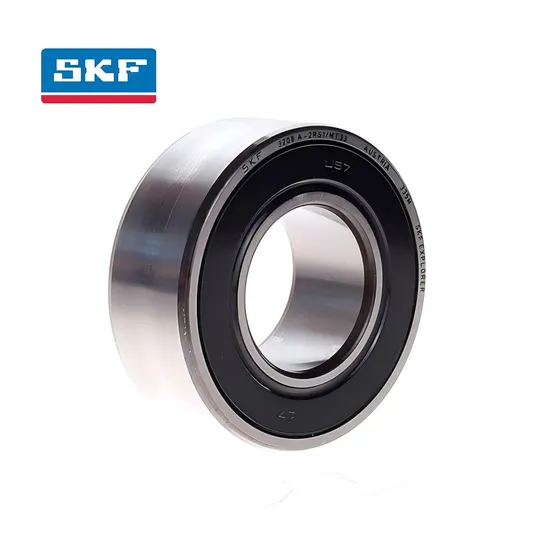

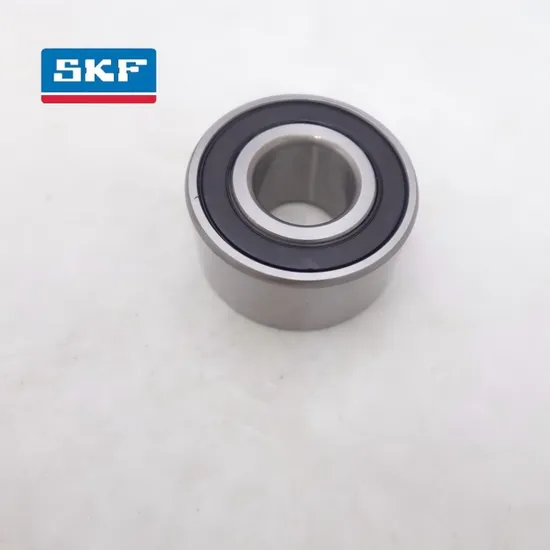
Angular Contact Bearing
Double Row Angular Contact Ball Bearing 3310 A-2Z/C3 MT33 for Auto Industrial Use
View DetailsSKF-OME · Authentic Supplier
Can't find the model you need?
We cover 95%+ of all SKF conventional models. Send us any model number.