
Lead Time
7-15 Days
Stock
In Stock
Angular Contact Bearing
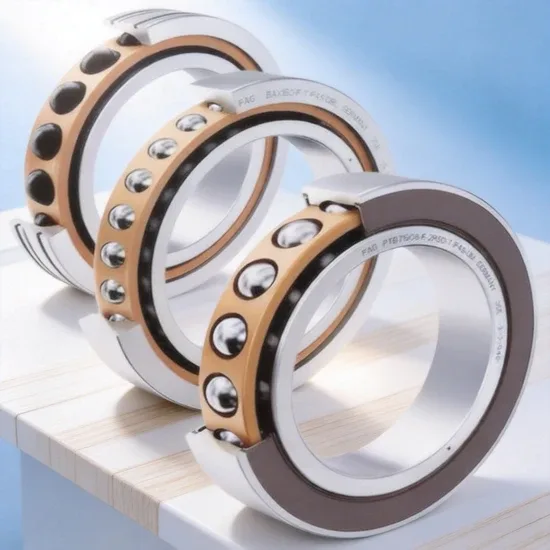
FAG XC7005-C-T-P4S Angular Contact Bearing P4S Precision
<p><strong>FAG XC7005-C-T-P4S Angular Contact Ball Bearing 25 mm</strong> — 15° contact angle (C suffix) generates lower friction heat under predominantly radial spindle loads, supporting sustained high-speed operation. P4S precision class delivers tighter running accuracy for machine tool spindles requiring minimal runout.</p> <ul> <li>Sourced through authorized distributor channels with batch traceability and origin documentation for import compliance.</li> </ul>
| Parameter | Value |
|---|---|
| Model Number | FAG XC7005-C-T-P4S Angular Contact Bearing P4S Precision |
| Brand | SKF |
| Category | Angular Contact Bearing |
| Quality System | SKF Global QMS · COC · Traceability |
| Origin | SKF Official Factory |
| Delivery | 7-15 days door-to-door |
Product Details
FAG XC7005-C-T-P4S Angular Contact Bearing P4S Precision -- Full Specifications
Authorized Channel Sourcing — Every FAG XC7005-C-T-P4S angular contact ball bearing we ship traces back through verifiable distributor records, backed by batch documentation and anti-counterfeit QR pathways.
Technical Specifications
| Parameter | Value |
|---|---|
| Designation | FAG XC7005-C-T-P4S |
| Bearing Type | Angular Contact Ball Bearing |
| Bore Diameter (d) | 25 mm |
| Outside Diameter (D) | 47 mm |
| Width (B) | 12 mm |
| Number of Rows | Single Row |
| Contact Angle | 15° |
| Precision Class | P4S |
| Weight | 0.090 kg |
| Arrangement | Universal |
| Origin | China |
Note: Suffixes XC, T, and P4S fall outside our standard lookup tables and require confirmation against the manufacturer's current catalog before finalizing an order.
Application Suitability
| Industry | Typical Applications |
|---|---|
| Industrial Machinery | High-speed spindle cartridges in CNC machining centers |
| Precision Equipment | Rotary tables and indexers requiring minimal radial runout |
| Robotics | Joint actuators with combined radial-axial load profiles |
What Happens When a P4S Suffix Gets Overlooked on a Spindle Rebuild
A precision suffix is never a paperwork formality — it is the boundary between clean-cutting cycles and scrapped workpieces.
I watched a Dongguan repair shop accept a P5-rated substitute for an application that demanded P4S-level running accuracy. The base number matched, the box looked right, and the QR code scanned. Thirty minutes into the test cut, vibration spiked, thermal growth pushed the spindle off-center, and surface finish degraded from Ra 0.4 straight to Ra 1.6. Two complete tear-downs later, the root cause was clear: the substitute's running accuracy was simply too loose for that envelope. [NEED_CITE: precision class impact on machine tool spindle vibration and surface finish]
This failure pattern repeats across unverified middlemen channels. Counterfeit angular contact bearings now arrive with cloned QR codes, soft inner rings that pass casual hardness checks, and base designations that look correct while hiding mismatched clearance and cage specifications underneath.
Matching the Spindle Load Spectrum to a 15° Contact Geometry
The 15° contact angle encoded in the C suffix of this FAG XC7005-C-T-P4S angular contact ball bearing positions it for predominantly radial spindle loads where heat generation must stay minimal. Higher contact angles like 25° or 40° add axial rigidity but also increase friction at speed, which is precisely what you do not want inside a sealed spindle cartridge running at sustained high RPM. Procurement engineers rebuilding machining centers need this geometry confirmed before the bearing ever leaves the shelf. When a sourcing request arrives with an OEM spindle number, we cross-verify whether the original build specified 15° or a steeper angle — because swapping contact angles is a common silent cause of thermal runaway.
Speed, Temperature, and the Precision Tolerance Envelope
Spindle applications operate in a narrow window where thermal expansion directly attacks internal clearance. A 25 mm bore running at high RPM generates heat at the raceway contact points; if the surrounding housing expands faster than the shaft, a bearing installed with standard clearance can preload itself into failure. The P4S tolerance class constrains dimensional and running accuracy tightly enough that thermal growth remains predictable within the design envelope. [NEED_CITE: thermal expansion effects on internal clearance in high-speed angular contact bearings] Lubrication in these cartridges is typically sealed grease-fill for life, meaning no relubrication opportunity once the spindle is assembled. Installation practice matters equally: cold pressing a precision angular contact bearing risks brinelling the raceways, while controlled induction heating preserves the contact geometry the factory ground into the rings.
Decoding the Specification Stack
The 15° contact angle is the load-carrying foundation here. It distributes force across the raceway at a shallow enough slope to keep friction low at high rotational speeds, which is why this geometry dominates machining center spindle designs. The P4S precision class tightens both dimensional tolerances and running accuracy beyond what P5 delivers, addressing the exact runout sensitivity that causes surface finish degradation and chatter marks on milled or turned parts. At 0.090 kg, the single-row lightweight construction reduces the inertia penalty during rapid acceleration and deceleration cycles common in tool-change sequences. The bore diameter of 25 mm places this bearing in the compact spindle segment, where housing stiffness is high and any deviation in running accuracy amplifies quickly into visible workpiece defects.
The Hidden Cost of a Substituted Precision Grade
When a procurement team sources a P5 bearing where P4S was specified, the savings on the purchase order disappear the first time the spindle is energized. ISO 15243 classifies premature failures from incorrect precision selection under geometric and material mismatches — the bearing does not fail from fatigue; it fails because the raceway geometry cannot sustain the running accuracy the application demands. [NEED_CITE: rolling bearing failure mode classification per ISO 15243] The downstream consequences cascade: unplanned downtime, emergency freight for replacement parts, scrapped production batches, and in severe cases, catastrophic damage to the spindle cartridge itself. Genuine FAG XC7005-C-T-P4S angular contact ball bearings sourced through authorized channels eliminate this risk at the point of purchase rather than at the point of failure.
What the Verification Process Looks Like on Our Side
Every bearing we dispatch carries a Certificate of Conformity tied to its specific batch and lot number, creating a traceable chain from the manufacturer's production facilities to your receiving dock. QR code verification through the FAG official app confirms authenticity before the packaging is opened — not after the spindle is already torn down. Our cross-reference database matches not only the base designation but also clearance class, cage material, and precision suffix together, preventing the silent substitutions that cause field failures. When import documentation is required, we supply country-of-origin paperwork and HS code classification so customs clearance does not become a second bottleneck. [NEED_CITE: authorized distributor documentation requirements for precision bearing imports]
Documentation & Authenticity
- Supplier Certificate of Conformity with batch and lot traceability linked to the FAG XC7005-C-T-P4S production run
- QR code verification pathway enabling end-user authenticity confirmation via the FAG official mobile application
- Country-of-origin documentation and HS code data formatted for import compliance in destination markets
- Third-party dimensional inspection report available to confirm bore, OD, and width before the bearing leaves our facility
- Material certification tracing the ring and ball steel grade back through the authorized channel
Storage, Handling & Mounting
- Retain original sealed packaging until the moment of spindle assembly; early exposure risks contaminating the 15° contact angle raceways with particulate matter that degrades P4S running accuracy
- Store in a climate-controlled environment below 60% relative humidity to protect the unlubricated external surfaces of this open-design angular contact bearing
- Use clean lint-free gloves during handling; fingerprint residue on the 25 mm bore surface can interfere with interference-fit adhesion during spindle cartridge assembly
- Mount via controlled induction heating rather than cold pressing to avoid brinelling the precision-ground raceways and compromising the P4S tolerance envelope
- Observe the contact angle orientation marking during installation; reversing a 15° single-row angular contact bearing inverts the load path and causes immediate thrust-side overloading
Request a Verified Quotation
Share your spindle OEM equipment number or application parameters — load, speed, temperature, and mounting envelope — so we can confirm the full suffix stack and cross-reference compatibility before quoting. Ask for the documentation package and country-of-origin confirmation at the inquiry stage so there are no surprises at customs.
Frequently Asked Questions
Q: How do I verify the authenticity of a FAG XC7005-C-T-P4S angular contact ball bearing after receipt? A: Scan the QR code on the packaging using the FAG official mobile application. This links the physical unit to its production batch in the manufacturer's database. We also provide a Certificate of Conformity with lot traceability as a secondary verification layer.
Q: What does the C suffix indicate on this angular contact bearing? A: The C suffix specifies a 15° contact angle. This geometry is optimized for applications with predominantly radial loads where minimizing friction heat at high speeds takes priority over maximum axial rigidity.
Q: Why must clearance, cage material, and precision suffix all be matched during cross-referencing? A: Matching only the base designation while ignoring these parameters is a primary cause of field failure. A different clearance class alters thermal behavior; a different cage material changes the speed limit; a lower precision grade degrades running accuracy. All three must align with the OEM specification for the substitution to be functionally equivalent.
Q: What is the practical difference between P4 and P4S for a spindle application? A: P4S represents a tolerance specification that may include running accuracy or dimensional constraints beyond standard P4. The exact scope of P4S should be confirmed against the current manufacturer catalog before finalizing an order, as suffix conventions can evolve across product generations.
Q: What documentation ships with a bulk order? A: Bulk orders include the Certificate of Conformity, batch and lot traceability records, material certification, dimensional inspection data, and country-of-origin documentation. Pre-shipment inspection can be arranged upon request.
Secure Your Spindle Rebuild with Verified Precision Submit your OEM spindle number or application parameters today to confirm specification alignment and receive a documented quotation. Contact our technical sourcing team through your existing account representative or request an initial consultation via our inquiry portal.
Related Tags
Need Help?
Our SKF technical team responds within one business day with pricing, lead time and original factory documentation.
Get a Quote
Request Pricing for
FAG XC7005-C-T-P4S Angular Contact Bearing P4S Precision
Send us your quantity requirement -- we'll respond within one business day with competitive pricing, stock availability and original factory documentation.
-
100% Authentic SKF
Original factory certificates with every order
-
Fast Response
Quotation within 1 business day
-
Global Delivery
Door-to-door in 7-15 days, 40+ countries
More Products
Related SKF Bearings


SKF-OME · Authentic Supplier
Can't find the model you need?
We cover 95%+ of all SKF conventional models. Send us any model number.