
Lead Time
7-15 Days
Stock
In Stock
Angular Contact Bearing
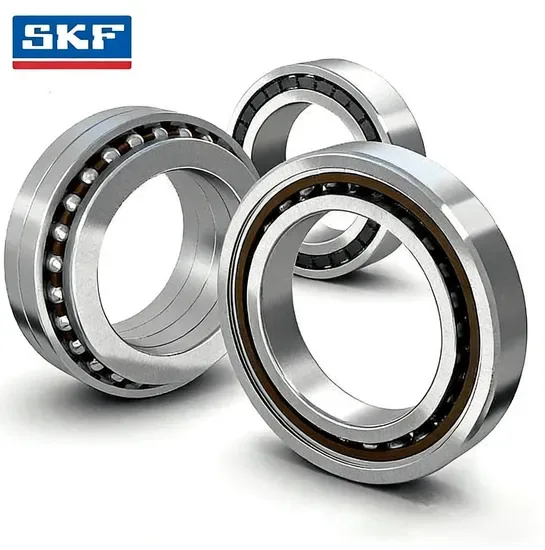
SKF 7015 CD/P4ADBD Angular Contact Ball Bearing P4 Precision
<p><strong>SKF 7015 CD/P4ADBD Angular Contact Ball Bearing 75×115 mm P4</strong> — 15° contact angle with optimized internal geometry for reduced friction heat at high spindle speeds, paired back-to-back for rigid combined load capacity in precision machinery.</p> <ul> <li>Supplied through authorized channels with full batch traceability and certificate of conformity for every shipment.</li> </ul>
| Parameter | Value |
|---|---|
| Model Number | SKF 7015 CD/P4ADBD Angular Contact Ball Bearing P4 Precision |
| Brand | SKF |
| Category | Angular Contact Bearing |
| Quality System | SKF Global QMS · COC · Traceability |
| Origin | SKF Official Factory |
| Delivery | 7-15 days door-to-door |
Product Details
SKF 7015 CD/P4ADBD Angular Contact Ball Bearing P4 Precision -- Full Specifications
Authorized-Channel Sourcing — Every SKF 7015 CD/P4ADBD we supply ships with traceable batch documentation tied to an authorized distributor invoice.
Technical Specifications
| Parameter | Value |
|---|---|
| Designation | SKF 7015 CD/P4ADBD |
| Bearing Type | Angular Contact Ball Bearing |
| Bore Diameter (d) | 75 mm |
| Outside Diameter (D) | 115 mm |
| Precision Class | P4 (ISO 492 Class 4) |
| Contact Angle | 15° |
| Number of Rows | Single Row |
| Internal Design | CD — Optimized geometry |
| Arrangement | DB (Back-to-Back pair, matched set) |
| Origin | China |
| Weight | 0.100 kg |
The ADBD suffix combination includes elements whose full pairing and preload classification should be verified against the current SKF super-precision catalog before final order confirmation.
Application Suitability
| Industry | Typical Applications |
|---|---|
| Machine Tool Manufacturing | High-speed spindle nose and rear bearing positions |
| Precision Equipment | Coordinate measuring machine rotary axes |
| Industrial Robotics | Joint actuators requiring low runout |
| High-Speed Pump Assembly | Impeller shaft support under combined loading |
What Spindle Builders Overlook When Matching a 7-Series by Base Number Alone
A 15° contact angle paired to P4 tolerance only delivers precision if preload class and arrangement suffixes survive cross-reference translation intact.
On a Riyadh spindle rebuild years back, a matched angular contact set was swapped based on the bore and OD alone. The replacement went in as a DBD arrangement where the original spec called for a different preload pairing. Within hours the spindle housing ran hot, vibration alarms tripped, and the line sat idle for three days. That kind of mismatch does not show up in a catalog search limited to the first four characters of a designation. It lives in the suffixes — contact angle, cage, preload, and pairing — and those are exactly where most substitution errors hide [NEED_CITE: angular contact bearing preload class impact on spindle thermal behavior]. The SKF 7015 CD/P4ADBD angular contact ball bearing demands the same discipline: every suffix must cross cleanly, or the assembly pays the price on the shop floor.
Matching the 7015 to Spindle Load Spectra
High-speed spindle shafts see predominantly radial loading with moderate axial thrust from cutting forces. The 15° contact angle in the CD design keeps friction heat low under those radial-dominant conditions while still providing the axial stiffness a precision envelope requires. When a maintenance team requests a cross-brand substitute for this SKF 7015 CD/P4ADBD angular contact ball bearing, we pull the full suffix string — not just the base number — and verify that the replacement's contact angle, preload, and cage material align with the original spindle builder's specification. A 25° substitute would generate measurably more heat at the same rpm, shortening grease life and shifting the thermal equilibrium the spindle was designed around.
Thermal Growth and Mounting Envelope Constraints
Spindle housings expand unevenly as operating temperature climbs. A P4 bearing installed with the wrong internal clearance will bind once the shaft and housing reach thermal steady state, turning a precision component into a drag brake. The 75 mm bore and 115 mm OD define the mounting envelope, but the real constraint is the fit tolerance on both shaft and housing seats — typically ground to tolerances tighter than standard machining grades allow [NEED_CITE: spindle shaft seat tolerance requirements for P4 class bearings]. Oil-air or oil-mist lubrication must reach the cage at volume and pressure the bearing's internal geometry expects. If the lubrication circuit was designed for a different cage type, starvation at high rpm becomes a matter of hours rather than weeks. Mounting pressure must be applied through the correct ring to avoid brinelling the raceway before the spindle ever turns.
Reading the Suffix Chain
The CD suffix signals SKF's optimized internal geometry for the 15° contact angle variant — refined raceway curvature that spreads contact stress over a wider ellipse, reducing subsurface fatigue initiation under sustained high-speed operation. P4 precision places dimensional and running accuracy within ISO 492 Class 4 boundaries, meaning bore and OD tolerances plus radial and axial runout are held to levels that support the tight film thicknesses found in high-speed spindles. The DB back-to-back arrangement provides moment rigidity: when the cutting tool encounters interrupted cuts or asymmetric radial forces, the bearing pair resists angular deflection better than a face-to-face layout would. This stiffness is what keeps chatter marks off finished surfaces and maintains dimensional accuracy on machined parts.
The Hidden Invoice Behind a Wrong Suffix
Selecting a P5 substitute for a P4 seat, or fitting a 40° contact angle where 15° was specified, rarely triggers an immediate failure. Instead it produces a slow accumulation of problems: gradually increasing vibration signatures, slowly rising housing temperatures, slightly degraded surface finish on workpieces. By the time the spindle needs intervention, the bearing has already contaminated the lubricant with wear debris and damaged the shaft seat through micro-fretting [NEED_CITE: rolling bearing failure mode classification per ISO 15243]. The replacement cost then extends beyond the bearing itself to include shaft regrinding, housing bore sleeving, and unplanned downtime across every downstream operation the spindle serves. ISO 281 life calculations assume correct selection; when the fundamental geometry is wrong, the calculated L10 life becomes meaningless.
Sourcing Confidence Beyond the Part Number
Our supply chain for the SKF 7015 CD/P4ADBD angular contact ball bearing runs through authorized distributor channels, which means every shipment carries documentation traceable back to the manufacturer's production lot. We maintain a cross-reference database that matches not just bore and OD but clearance, cage, precision suffix, and pairing arrangement across all six brands we cover — so when a substitute is needed, it substitutes completely. Origin identification is confirmed before dispatch because import compliance depends on accurate country-of-origin paperwork matching the commercial invoice. For buyers managing multi-site spindle fleets, we provide batch-consistent supply so that maintenance records stay coherent across installations.
Documentation & Authenticity
- Supplier Certificate of Conformity tied to the specific SKF 7015 CD/P4ADBD batch and lot number shipped
- Third-party runout inspection report confirming P4 running accuracy before the matched set leaves our facility
- Country-of-origin documentation aligned with HS code for import clearance in destination markets
- QR code verification pathway enabling your receiving team to authenticate each bearing via SKF's official application
- Material certificate covering the bearing steel grade and heat treatment condition for quality system traceability
Storage, Handling & Mounting
- Keep the matched DB pair sealed in original packaging until the moment of mounting; early opening risks contamination of the P4-grade raceways and loss of factory preload alignment marks
- Store in climate-controlled conditions to prevent condensation inside the packaging — even micro-corrosion on a 15° contact angle raceway compromises the optimized CD geometry
- Handle with clean lint-free gloves; fingerprint acids on the 75 mm bore surface can initiate corrosion pits that propagate under spindle operating loads
- Apply mounting force exclusively through the ring being press-fitted — transmitting load through the balls into the opposite raceway will permanently damage the P4-tolerance surfaces
- For oil-air lubricated spindle installations, confirm the lubrication circuit is primed before first rotation; dry starts on a matched angular contact set cause immediate cage and raceway distress
- Record the lot number from the packaging at installation time to maintain traceability linkage between the SKF 7015 CD/P4ADBD and the specific spindle asset in your maintenance system
Request the Right Data Before Committing
Share your spindle's operating speed, expected axial thrust from cutting parameters, and housing material so we can confirm the P4 class and 15° arrangement suit the actual thermal environment. If you are replacing an existing bearing, provide the full designation string from the original nameplate — including every suffix — so we can verify interchange compatibility on clearance, preload, and pairing. Ask for the documentation package and country-of-origin confirmation up front so import paperwork proceeds without delays.
Frequently Asked Questions
Q: What does the CD suffix mean compared to a plain C designation on a 7015 angular contact bearing? A: Both indicate a 15° contact angle, but the CD suffix specifies SKF's optimized internal geometry with refined raceway curvature designed for improved load distribution and high-speed stability over the standard C design.
Q: How does a P4 precision class differ from P5 for spindle applications? A: P4 imposes tighter limits on bore diameter, outside diameter, and running accuracy per ISO 492 Class 4. In spindle applications this translates to lower radial and axial runout, which directly affects workpiece surface finish and dimensional holding capability at speed.
Q: Why does contact angle matter when substituting angular contact bearings? A: A 15° angle favors radial load capacity with lower friction heat generation, while 25° or 40° angles shift capacity toward axial stiffness at the cost of higher operating temperature under radial-dominant loads. Substituting the wrong angle changes the thermal equilibrium the spindle was designed around.
Q: What should I verify when cross-referencing this bearing to another brand? A: Confirm that the substitute matches on four axes simultaneously: contact angle, precision class, internal design optimization, and pairing arrangement including preload class. Matching only the base number and dimensions leaves critical performance variables unchecked.
Q: How can I verify the authenticity of the SKF 7015 CD/P4ADBD I receive? A: Each bearing can be authenticated through SKF's official mobile application using the QR code on the product packaging. We additionally supply batch-traceable documentation linking your specific units to their authorized distribution chain origin.
Confirm Your Spindle Requirements Send us your application parameters or the existing bearing designation — we will return a verified interchange match with full documentation and lead time.
Related Tags
Need Help?
Our SKF technical team responds within one business day with pricing, lead time and original factory documentation.
Get a Quote
Request Pricing for
SKF 7015 CD/P4ADBD Angular Contact Ball Bearing P4 Precision
Send us your quantity requirement -- we'll respond within one business day with competitive pricing, stock availability and original factory documentation.
-
100% Authentic SKF
Original factory certificates with every order
-
Fast Response
Quotation within 1 business day
-
Global Delivery
Door-to-door in 7-15 days, 40+ countries
More Products
Related SKF Bearings

Angular Contact Bearing
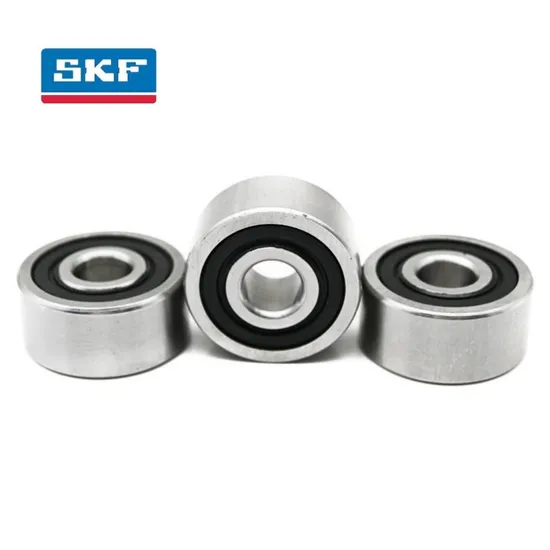
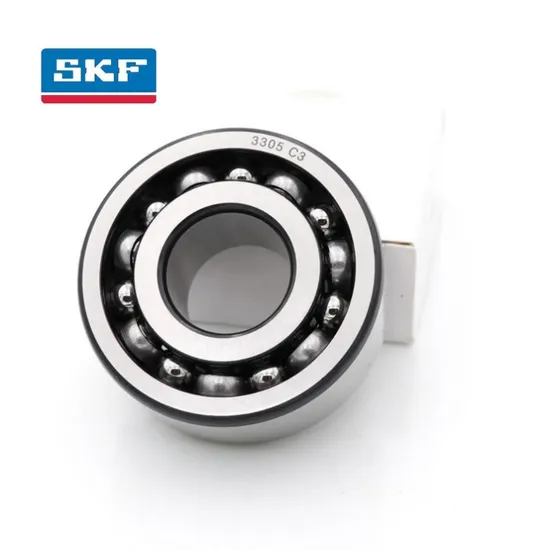
Double Row Angular Contact Ball Bearing 3310-A TN9 Nylon Cage for Machinery Applications
View DetailsSKF-OME · Authentic Supplier
Can't find the model you need?
We cover 95%+ of all SKF conventional models. Send us any model number.