
Custom OEM Bearings Built to SKF ISO Certification Level
An ISO certificate on the wall does not mean the bearings inside the box meet SKF-level tolerances.
Custom OEM bearings built to genuine SKF ISO certification level are defined by three verifiable elements: dimensional tolerance control aligned with ISO 492, full material traceability from melt batch to finished part, and complete shipment documentation including certificates, material test reports, and dimensional inspection records — not by a framed certificate alone.
I once spent three days at a water pump repair workshop in Riyadh because a batch of deep groove ball bearings, marketed as "SKF-equivalent," had all failed within a couple of months. When we pulled them apart, the inner and outer ring tolerances were off by a couple of threads, the cage material was wrong, and the ISO certificate turned out to be borrowed from another factory. That was the moment I moved from the inspection bench into trade — I simply could not let that kind of product leave our factory again. Over the years, supplying OEM custom bearings to distributors across the Middle East and Africa, the question I dread most is "Are you the same as SKF?" The honest answer is: sameness is not spoken, it is measured with a micrometer and backed by test reports.
Let me walk you through what "SKF-level ISO certification" actually means on the shop floor, how to verify it, and what you should expect from a serious supplier of custom OEM bearings.
What Does "SKF-Level ISO Certification" Actually Mean for OEM Bearings?
It means the bearing’s dimensional accuracy, internal clearance, and material quality are controlled to the same ISO standard classes that SKF uses — specifically ISO 492 for tolerances and ISO 5753 for internal clearance — and that every claim is backed by traceable documentation.
Many buyers assume that holding an ISO 9001 certificate automatically means the bearings are equivalent to SKF quality. That is a dangerous shortcut. ISO 9001 certifies the quality management system, not the dimensional accuracy of a specific bearing batch. A factory can run a perfectly documented quality system and still produce bearings with P0-level tolerances while claiming P6.
The real benchmark lies in three technical dimensions:
| Verification Dimension | SKF-Level Standard | Basic OEM Claim | Unverified Supplier |
|---|---|---|---|
| Radial Tolerance (ISO 492) | P6 / P5 class available | P0 only, self-reported | Not specified |
| Internal Clearance (ISO 5753) | C2 / C0 / C3 controlled per order | C0 generic, no per-batch data | Not provided |
| Material Traceability | Full melt-to-finished chain | Sample-level only | None |
| Dimensional Inspection Report | Full batch-level, per part number | Spot-check report | Not provided |
| ISO 9001 Certificate | Verifiable on IAF database | Self-printed document | Not verifiable |
The key takeaway: when a supplier of custom OEM bearings tells you they match SKF quality, ask them to show you the tolerance class on the inspection report — not just the certificate on the wall.
How to Verify an OEM Bearing Factory’s ISO Claims?
Request three documents for every shipment and cross-check them against each other: the ISO 9001 certificate verified on the IAF database, the material test report with melt batch numbers, and the dimensional inspection report matching the exact part numbers shipped.
Here is the verification workflow I use when evaluating a new factory or auditing an existing supplier of custom OEM bearings:
-
Certificate Verification — Take the ISO 9001 certificate number and check it against the IAF (International Accreditation Forum) member database. A legitimate certificate will show the issuing body, scope of certification, and validity period. If the number does not appear, or the scope does not include bearing manufacturing, the certificate is either expired or fabricated.
-
Material Traceability Check — Ask for the material test report linked to the melt batch number. A proper report should trace from the steel melt batch through forging, heat treatment, and final machining. The report must include chemical composition and hardness values. If the supplier can only provide a generic material certificate without batch linkage, the traceability chain is broken.
-
Dimensional Report Matching — The inspection report must list the exact bearing part numbers shipped, with measured values for bore diameter, outside diameter, width, and running accuracy. Compare these values against the tolerance limits defined in ISO 492 for the claimed class. If the report shows "within tolerance" without actual measured values, it is not a real inspection report.
A distributor in West Africa once received a full container of bearings with ISO certificates that looked perfect. But when customs requested the material test reports for clearance, the supplier could not produce them. The shipment was held for weeks, and the distributor lost a major contract. The lesson: certificates without supporting documentation are worthless at customs and with end users.
Which Bearing Types Can Be Customized to SKF-Equivalent Standards?
Every major bearing type — from deep groove ball bearings to spherical roller bearings — can be manufactured to SKF-equivalent ISO standards, provided the factory controls the critical processes: grinding accuracy, heat treatment consistency, and cage material selection.
In our production experience, the following categories are regularly produced to P6 or higher tolerance classes for OEM customers requiring SKF-level quality:
-
Deep Groove Ball Bearings (6200, 6300 series) — The most common type for electric motors, pumps, and fans. Critical parameters are bore and OD tolerances, radial internal clearance, and noise/vibration performance. Achieving SKF-equivalent quality here means controlling the grinding process to hold P6 tolerances consistently across the batch.
-
Spherical Roller Bearings (22300, 22200 series) — Used in heavy-duty applications like mining conveyors, vibrating screens, and gearboxes. The key quality indicators are the roller profile accuracy, cage strength, and internal clearance matching the application’s thermal expansion requirements.
-
Tapered Roller Bearings (30200, 32200 series) — Critical for wheel hubs, gearboxes, and heavy axial load applications. The matching of inner ring, outer ring, and roller set must be precise to avoid premature spalling. SKF-equivalent quality here means controlled assembly clearance and verified roller conformity.
-
Cylindrical Roller Bearings (NU200, NJ200 series) — Common in machine tool spindles and industrial gearboxes. The critical factor is the roller-to-raceway contact pattern, which requires precise grinding and matching.
The point is not that every factory can produce all these types at SKF level — many cannot. But a capable supplier of custom OEM bearings should be able to demonstrate P6 tolerance capability across multiple bearing families, backed by inspection data.
How Does Brand Cross-Reference Work for OEM Replacements?
A complete cross-reference matrix maps your current brand part number — whether SKF, NSK, FAG, TIMKEN, NTN, or KOYO — to the equivalent OEM bearing with identical boundary dimensions, tolerance class, and internal clearance, ensuring direct drop-in replacement.
This is where many MRO buyers and distributors get stuck. They have a machine running with an SKF 6205-2RS, and they need a cost-effective replacement that fits and performs identically. The cross-reference must account for more than just the basic dimensions.
Consider this real scenario: a maintenance team at a Latin American steel mill needed to replace FAG spherical roller bearings on a continuous caster. They sourced an OEM equivalent, but the bearings failed early. The root cause was not the bearing quality itself — it was the internal clearance. The original FAG bearings used C4 clearance for the high-temperature environment, but the OEM supplier shipped C0 clearance as standard. The bearings seized within weeks because the thermal expansion had no room.
A proper cross-reference system for custom OEM bearings must include:
- Boundary dimension matching — Bore, OD, and width per ISO 15
- Tolerance class alignment — P0, P6, P5 as required by the application
- Internal clearance specification — C2, C0, C3, C4 matched to the operating temperature and load conditions
- Seal and shield compatibility — 2RS, ZZ, or open type matching the original
- Cage material and design — Steel, brass, or polymer cage matching the original’s speed and temperature capability
When done correctly, the OEM bearing drops in without modification and performs to the same standard. When done poorly, you get a bearing that fits mechanically but fails prematurely because a critical parameter was ignored.
What Documentation Should You Expect with Every Shipment?
Every shipment of custom OEM bearings should include four documents as a minimum: the ISO 9001 certificate, the material test report with melt batch traceability, the dimensional inspection report with actual measured values, and a detailed packing list matching the shipped quantities and part numbers.
This is the non-negotiable baseline for any serious supplier. Let me break down what each document should contain:
ISO 9001 Certificate — Must be verifiable on the IAF database, with the scope explicitly including bearing manufacturing. The certificate should be current and issued by an accredited body.
Material Test Report — Must trace from the steel melt batch through to the finished bearing. Should include chemical composition (carbon, chromium, manganese content within standard ranges for bearing steel), hardness values (typically HRC 58-62 for through-hardened bearing steel), and the heat treatment batch number.
Dimensional Inspection Report — Must list actual measured values for each critical dimension (bore, OD, width, chamfer) against the ISO 492 tolerance limits for the claimed class. A report that only says "within tolerance" without showing the measured values is not a real inspection report.
Packing List — Must match the physical shipment exactly, with part numbers, quantities, batch numbers, and net/gross weights. This document is critical for customs clearance and inventory management.
I have seen distributors lose contracts because they could not provide end users with the material traceability documentation. In regulated industries — mining, energy, food processing — the absence of proper documentation is not just an inconvenience; it is a deal-breaker.
Conclusion
Genuine SKF-level quality in custom OEM bearings is verified through tolerance control, material traceability, and complete documentation — not through certificate claims alone. The difference between a reliable supplier and a risky one lies in the willingness to provide verifiable data at every step. When you demand inspection reports with actual measured values, material traceability from melt to finished part, and proper cross-reference matching, you separate the serious manufacturers from the certificate collectors.
Products in this article
SKF bearings mentioned above
 01 Deep Groove Ball Bearings SKF Original Deep Groove Ball Bearing 636-6901 6000 6200 6300 Series View model details
 02 Deep Groove Ball Bearings SKF 6000 6200 6300 Series Deep Groove Ball Bearing for General Industrial Machinery View model details
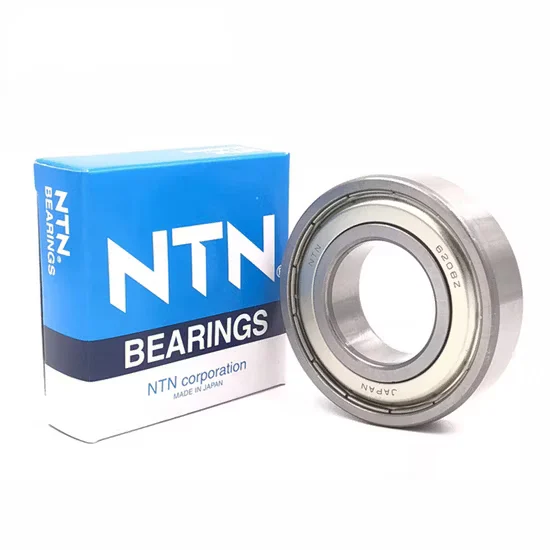 03 Deep Groove Ball Bearings 6000/6200/6300 Series Metric Deep Groove Ball Bearing China Factory Price View model details
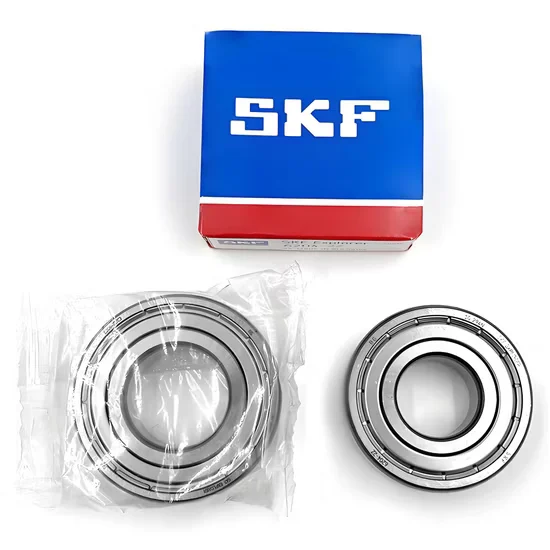 04 Deep Groove Ball Bearings SKF 6200 6300 Deep Groove Ball Bearing Genuine Wholesale Supplier View model details
Applications
Where these SKF bearings are used
Keep reading
Related SKF bearing selection guides
More practical notes on SKF designations, precision items and project bearing lists from Project Purchasing Company.
Buying Guide · · 6 min read SKF Ball Bearings Quote: Wholesale Supplier for Bulk & MRO Orders Request a Quote for SKF Ball Bearings that reveals true landed costs beyond unit price. Avoid hidden logistics and customs fees by integrating freight,… Read the guide  Buying Guide · · 8 min read Spot Fake SKF Ball Bearings: Neutral Buyer Checks & Wholesale Supplier Spotting Fake SKF Ball Bearings requires inspecting physical components, not just packaging. Genuine units feature deep stamped markings and consistent weight, while counterfeits use… Read the guide Buying Guide · · 7 min read SKF Ball Bearing Prices: Wholesale Supplier for Bulk Orders SKF ball bearing prices vary by series and channel, making lowest quotes a risky choice for bulk orders. Genuine units ensure traceability and lower… Read the guide

Request a quote
Send your SKF list. Get one itemized written quote.
Project Purchasing Company supplies SKF ball, roller, precision and housed bearing units to distributors, repair workshops and project buyers worldwide. Standard and precision items are priced line by line, with accessories kept on the same quote.