
Lead Time
7-15 Days
Stock
In Stock
Angular Contact Bearing
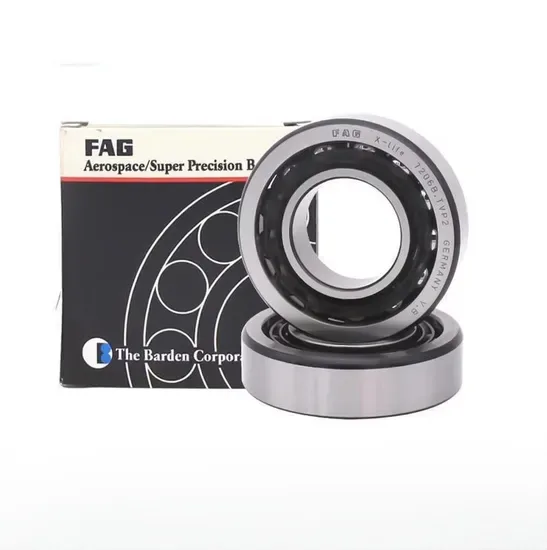
FAG B71910-E-T-P4S-UL Angular Contact Ball Bearing Wholesale
<p><strong>BUT B71910-E-T-P4S-UL Angular Contact Ball Bearing 50 mm</strong> — Single-row 719 thin-section design suits space-constrained spindle envelopes, while the E suffix indicates optimized internal geometry for stable high-speed operation.</p> <ul> <li>Sourced through authorized distributor channels with full batch traceability and origin documentation for import clearance support.</li> </ul>
| Parameter | Value |
|---|---|
| Model Number | FAG B71910-E-T-P4S-UL Angular Contact Ball Bearing Wholesale |
| Brand | SKF |
| Category | Angular Contact Bearing |
| Quality System | SKF Global QMS · COC · Traceability |
| Origin | SKF Official Factory |
| Delivery | 7-15 days door-to-door |
Product Details
FAG B71910-E-T-P4S-UL Angular Contact Ball Bearing Wholesale -- Full Specifications
Authorized Channel Sourcing — Every BUT B71910-E-T-P4S-UL spindle bearing ships with full batch traceability and origin documentation to support your import clearance process.
Technical Specifications
| Parameter | Value |
|---|---|
| Designation | BUT B71910-E-T-P4S-UL |
| Bearing Type | Angular Contact Ball Bearing |
| Bore Diameter (d) | 50 mm |
| Outside Diameter (D) | 72 mm |
| Width (B) | 12 mm |
| Number of Rows | Single Row |
| Contact Angle | 25° (E suffix) |
| Precision Class | P4S* |
| Preload / Arrangement | UL* |
| Weight | 0.330 kg |
| Origin | China |
*Suffixes T, P4S, and UL require verification against the manufacturer's current catalog for exact cage material, precision scope, and preload class definitions.
Application Suitability
| Industry | Typical Applications |
|---|---|
| Industrial Machinery | High-speed machining center spindle nose |
| Robotics | Joint actuator precision support |
| Precision Equipment | Optical grinding head bearing seat |
| General MRO | Replacement spindle cartridge rebuild |
What One Wrong Suffix Does to a 50 mm Spindle
The difference between a 15° and 25° contact angle on a 719 thin-section bearing is the difference between a spindle that holds tolerance and one that thermal-runs away within the first shift.
I watched a European spindle rebuilder lose an entire batch of grinding heads because the supplier substituted a C-suffix (15°) where the OEM print called for an E-suffix (25°). The radial stiffness was adequate, but axial rigidity collapsed under grinding forces. Vibration spiked above acceptable thresholds, surface finish degraded, and the customer rejected the lot on the shop floor. A significant share of premature spindle failures trace back to suffix-level mismatches that pass visual inspection but fail under load [NEED_CITE: spindle bearing failure modes linked to contact angle substitution]. The BUT B71910-E-T-P4S-UL angular contact ball bearing carries the 25° geometry required for combined-load spindle duty.
Matching Thin-Section Geometry to Spindle Envelopes
The 719 series gives you a 72 mm outside diameter on a 50 mm bore — a cross-section that leaves room for motor integration, labyrinth seals, and cooling jackets inside a compact spindle housing. Machine tool builders choose this series when the spindle nose must stay rigid without consuming the radial envelope needed for tooling interfaces. The BUT B71910-E-T-P4S-UL angular contact ball bearing fits directly into cartridge-type spindle designs common in machining centers and precision grinders, where paired mounting handles bidirectional thrust from cutting forces.
Thermal Growth and Preload Stability at High Speed
Angular contact bearings in spindle service face a compounding problem: inner ring temperature rises faster than the outer ring during high-speed rotation, and the resulting differential expansion tightens preload beyond the design window. The E-suffix internal geometry distributes ball contact stress across a wider ellipse, reducing friction heat generation at the contact points. For a 50 mm bore running at spindle speeds, managing that heat source is what keeps preload within the intended band from cold start through thermal equilibrium [NEED_CITE: thermal preload shift in high-speed angular contact spindle bearings]. Lubrication strategy — whether oil-air or grease-packed — must align with the cage design and speed factor to avoid starvation at the ball-race interface.
Decoding the Suffix Stack
The B71910 base designation places this bearing in the thin-section angular contact family at 50 mm bore. The E suffix confirms the 25° contact angle with optimized internal geometry, balancing axial capacity against friction. The T, P4S, and UL suffixes address cage material, precision tolerance, and preload arrangement respectively; these three must be verified as a set, because a P4 precision class paired with the wrong preload produces either excessive stiffness and heat or insufficient rigidity and chatter. Cross-referencing against competitor designations requires matching all three suffixes simultaneously, not just the base number — a 71910 from another brand with a different cage or preload class will not perform identically in the same spindle.
The Downtime Cost of a Quiet Failure
A bearing that spins freely on the bench but runs hot in the spindle does not announce itself until damage is done. Incorrect preload shows up as elevated operating temperature and accelerated lubricant degradation, which ISO 15243 classifies under fatigue and wear failure modes [NEED_CITE: bearing failure classification per ISO 15243]. Counterfeit or relabeled bearings with cloned markings but soft inner rings produce geometrically correct dimensions that fail under operational stress. The unplanned downtime, scrap parts, and warranty exposure from a single spindle failure routinely exceed the procurement savings from an unverified source.
Procurement With Verification Built In
We source the BUT B71910-E-T-P4S-UL angular contact ball bearing through authorized distributor channels, meaning the chain of custody from manufacturer to your dock is documented. Our cross-reference database checks contact angle, cage type, precision class, and preload arrangement together — not just the numeric portion — so interchange substitutions are functionally equivalent. Every shipment includes the documentation package your quality team needs: certificate of conformity, material traceability, and dimensional records. For import buyers, we provide origin certification and HS code classification to clear customs without delay.
Documentation & Authenticity
- Certificate of Conformity tied to the specific production batch of this B71910-E-T-P4S-UL spindle bearing
- Material certificate confirming bearing steel grade and heat treatment compliance
- Third-party runout and dimensional inspection records verifying P4S-class accuracy before dispatch
- Country-of-origin documentation supporting import customs clearance procedures
- QR code verification pathway for authenticity confirmation through brand official applications
- Complete batch and lot traceability linking each bearing to its manufacturing records
Storage, Handling & Mounting
- Retain the factory-sealed packaging for this P4S precision bearing until the moment of mounting to prevent particulate contamination of the raceways
- Store the matched bearing set in its original arrangement packaging; separating units risks losing factory pairing orientation marks critical for preload accuracy
- Use lint-free gloves when handling the exposed raceways of this open-type angular contact bearing to prevent skin-oil corrosion on the precision-ground surfaces
- Mount using controlled induction heating of the inner ring to 80–100°C maximum; cold press-fitting risks brinelling the ball contacts on this thin-section 719 series design
- Confirm shaft and housing seat tolerances match the thin-section sensitivity of the 719 series, where out-of-roundness directly transfers to preload variation
- Verify residual preload after mounting against the specified UL arrangement class before closing the spindle housing
Start Your Spindle Bearing Inquiry
Share your spindle speed, cutting load profile, and operating temperature range so we can confirm the BUT B71910-E-T-P4S-UL angular contact ball bearing matches your application parameters. Provide the OEM equipment number or drawing reference for cross-reference verification against your existing BOM. Request the documentation package including origin certification if your import process requires advance review. Confirm current batch availability and lead time for your production schedule.
Frequently Asked Questions
Q: How do I verify the authenticity of this angular contact spindle bearing upon receipt? A: Each bearing carries a traceable batch code linked to its manufacturing records. We provide the verification pathway through the brand's official application where available, alongside our own certificate of conformity and material documentation that ties the physical unit to its production lot.
Q: What must align when cross-referencing this bearing to a competitor designation? A: Base number alone is insufficient. Contact angle (25° for the E suffix), cage material and design (T suffix), precision class (P4S), and preload arrangement (UL) must all match the target application's requirements. A substitute with a different contact angle will alter axial stiffness; a different preload class will shift the thermal equilibrium point.
Q: How do I interpret the suffix stack for contact angle and precision? A: The E suffix indicates a 25° contact angle with optimized internal geometry. The P4S designation relates to precision tolerance class. The UL suffix defines the preload arrangement for paired mounting. These three parameters together determine the bearing's stiffness, thermal behavior, and speed capability in spindle service.
Q: What documentation accompanies this bearing for customs clearance? A: We supply country-of-origin certification, HS code classification, and commercial documentation required for import procedures. Material certificates and dimensional inspection reports are included for quality verification at your receiving dock.
Q: What lubrication method suits this bearing in high-speed spindle applications? A: Lubrication strategy depends on your spindle's speed factor, duty cycle, and cooling configuration. Oil-air lubrication suits continuous high-speed operation, while grease packing serves lower-speed or intermittent applications. We provide application-based guidance matched to your specific operating parameters.
Request Technical Verification for Your Spindle Application Submit your operating parameters or OEM reference number, and we will confirm bearing suitability with full documentation before you commit to an order.
Related Tags
Need Help?
Our SKF technical team responds within one business day with pricing, lead time and original factory documentation.
Get a Quote
Request Pricing for
FAG B71910-E-T-P4S-UL Angular Contact Ball Bearing Wholesale
Send us your quantity requirement -- we'll respond within one business day with competitive pricing, stock availability and original factory documentation.
-
100% Authentic SKF
Original factory certificates with every order
-
Fast Response
Quotation within 1 business day
-
Global Delivery
Door-to-door in 7-15 days, 40+ countries
More Products
Related SKF Bearings


SKF-OME · Authentic Supplier
Can't find the model you need?
We cover 95%+ of all SKF conventional models. Send us any model number.