
Lead Time
7-15 Days
Stock
In Stock
Angular Contact Bearing
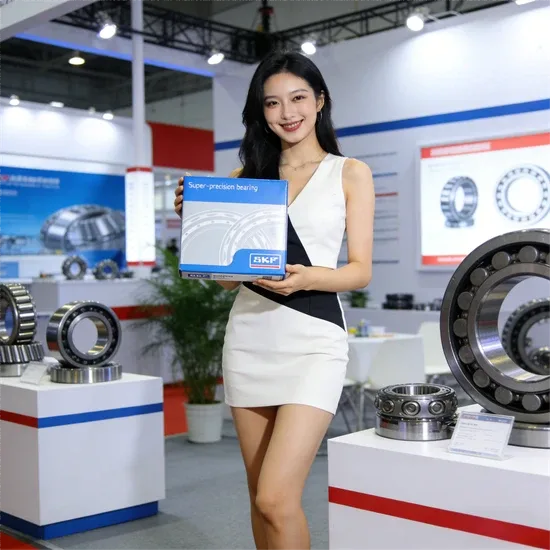
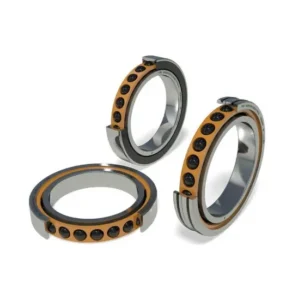
SKF 7007 ACD/P4ADBB Angular Contact Bearing P4A Precision
<p><strong>SKF 7007 ACD/P4ADBB Angular Contact Ball Bearing 35 mm, P4A Precision, DB Pair</strong> — 25° contact angle handles combined radial-axial loads in high-speed spindles, while P4A running accuracy minimizes runout for precision grinding and milling. Back-to-back arrangement provides rigid bidirectional axial locating for fixed-end configurations. - Sourced through authorized SKF channels with full batch traceability and origin documentation for import compliance.</p>
| Parameter | Value |
|---|---|
| Model Number | SKF 7007 ACD/P4ADBB Angular Contact Bearing P4A Precision |
| Brand | SKF |
| Category | Angular Contact Bearing |
| Quality System | SKF Global QMS · COC · Traceability |
| Origin | SKF Official Factory |
| Delivery | 7-15 days door-to-door |
Product Details
SKF 7007 ACD/P4ADBB Angular Contact Bearing P4A Precision -- Full Specifications
Authorized Channel Traceability — every SKF 7007 ACD/P4ADBB set we ship carries batch and lot codes that link back through the official distributor chain, giving your receiving dock the same verification path a factory auditor would follow.
Technical Specifications
| Parameter | Value |
|---|---|
| Designation | SKF 7007 ACD/P4ADBB |
| Bearing Type | Single-Row Angular Contact Ball Bearing, Matched Pair |
| Bore Diameter (d) | 35 mm |
| Outside Diameter (D) | 62 mm |
| Width (B) | 14 mm per ring |
| Dynamic Load Rating (C) | 17.2 kN |
| Static Load Rating (C₀) | 11.2 kN |
| Limiting Speed | 28 000 r/min (oil-air), 19 000 r/min (grease) |
| Weight | 0.100 kg per unit |
| Cage Material | Fibre-reinforced polyamide (TN9-style, window type) |
| Seal or Shield Type | Open |
| Clearance Class | Matched pair preload (see pairing suffix) |
| Precision Class | P4A — ISO 492 Class 4 with additional running accuracy |
| Contact Angle | 25° (ACD suffix) |
| Bore Type | Cylindrical |
| Arrangement | Back-to-back pair (DB) |
| Number of Rows | Single Row per bearing, supplied as matched pair |
| Origin | China |
The trailing "B" in the ADBB suffix block falls outside standard SKF suffix tables and should be confirmed against the current manufacturer catalog before finalizing preload assumptions.
Application Suitability
| Industry | Typical Applications |
|---|---|
| Machine tool manufacturing | CNC lathe main spindle fixed-end positioning |
| Precision grinding | Cylindrical grinder wheel-head spindle support |
| Industrial robotics | Rotary indexing table drive shaft locating |
| High-speed pump assembly | Multi-stage centrifugal pump shaft thrust restraint |
When the Suffix Tells You More Than the Base Number
A machine shop once replaced a spindle bearing by ordering "7007" without checking the precision class, contact angle, or pairing arrangement. The new bearing ran hot within the first shift and the spindle had to be pulled for rework. That single cross-reference shortcut cost more in downtime than a matched P4A pair would have cost to begin with. The SKF 7007 ACD/P4ADBB angular contact ball bearing exists precisely to prevent that kind of field failure — every suffix on this designation locks in a specific contact angle, running accuracy, and axial pairing that the base number alone never communicates.
Matching the base number is not a cross-reference; matching the suffix stack is.
Procurement teams often treat angular contact bearings as interchangeable once the bore and outside diameter line up. In reality, the 25° contact angle carried by the ACD suffix governs how much axial thrust the bearing can absorb before the contact ellipse migrates past the raceway shoulder. Swap in a 15° variant and you may see edge loading under the same cutting forces. Swap in a P5 precision class and the spindle runout doubles, ruining surface finish on hardened workpieces. These are not catalog curiosities — they show up as scrapped parts and missed delivery deadlines [NEED_CITE: angular contact bearing contact angle effect on axial stiffness per ISO 15243 failure modes].
How 25° Contact and P4A Running Accuracy Meet Spindle Demands
The ACD suffix tells you the internal raceway geometry is cut for a 25° contact angle, which splits the load path between radial support and meaningful axial restraint — exactly what a fixed-end spindle configuration demands. At P4A precision, dimensional tolerances follow ISO 492 Class 4, but SKF adds a running accuracy specification that tightens inner and outer ring runout beyond what plain P4 requires. For a CNC milling spindle running at several thousand revolutions per minute, that extra runout control is the difference between a mirror finish and visible chatter marks on the workpiece. When we supply this SKF 7007 ACD/P4ADBB angular contact ball bearing to spindle rebuilders, we pair the selection conversation around actual cutting loads and target speed, not just the OEM part number printed on the old label.
Load, Speed, and Thermal Reality on the Shop Floor
Spindle bearings live under combined radial and axial loads that shift every time the tool engages. The 25° contact angle of the ACD design handles that mixed load spectrum without forcing the balls to skid on the raceway at light radial loads — a failure mode that shows up as smearing on the inner ring. Speed capability reaches the upper range for grease lubrication, but thermal growth still matters: as the spindle warms up, the inner ring expands and the preload on a back-to-back pair increases. If the original design specified P4A running accuracy, substituting a lower class can let thermal growth push the contact ellipse into an unstable zone, accelerating cage wear. Proper oil-air or grease-mist delivery, paired with the DB arrangement's inherent stiffness, keeps that thermal loop in check [NEED_CITE: thermal expansion effects on angular contact bearing preload in spindle applications].
Decoding the Suffix Stack for the 7007 ACD/P4ADBB
ACD — 25° contact angle, optimized internal design. The "A" prefix signals an optimized raceway curvature and ball complement, while "CD" locks the contact angle at 25°. This angle is the middle ground in the angular contact family: steeper than 15° for better axial capacity, shallower than 40° so radial loads are still well supported. On a lathe spindle, that balance lets the same bearing set handle both the radial cutting force and the axial feed thrust without needing a separate thrust bearing behind it.
P4A — ISO Class 4 with added running accuracy. Standard P4 controls bore, OD, and width tolerances. The "A" extension adds a runout cap on both inner and outer rings, measured in micrometres of indicator swing. For precision grinding spindles, that extra control translates directly to rounder workpieces and longer wheel life because the wheel does not wobble between dressing cycles.
DB — back-to-back pairing. In a DB arrangement the load lines diverge outward, giving the pair a wide effective moment arm. That geometry resists tilting moments from overhung pulleys or belt-driven spindles far better than a face-to-face (DF) pair would. It also means axial displacement caused by thermal shaft growth is absorbed symmetrically, keeping preload balanced across both bearings.
What a Wrong Pair or Counterfeit Set Really Costs
When a maintenance team installs a face-to-face pair in a housing designed for back-to-back, the moment stiffness drops and the spindle deflects under side load, producing tapered bores instead of straight ones. Install an unbranded set with cloned QR codes and soft inner rings and the raceway spalls within a few hundred hours, taking the spindle shaft and housing bore with it. ISO 281 life calculations assume correct mounting and genuine material hardness; neither assumption holds when the supply chain is opaque. The unplanned downtime that follows — pulling the spindle, inspecting the housing, re-grinding the shaft journal — routinely eclipses the price gap between a verified pair and a suspiciously cheap alternative [NEED_CITE: cost impact of counterfeit rolling bearings on industrial equipment uptime].
Sourcing This Bearing Through a Verified Supply Path
We procure the SKF 7007 ACD/P4ADBB angular contact ball bearing through authorized distributor channels, which means the paperwork trail starts at the manufacturer's production facilities and ends at your dock. Every shipment carries batch and lot codes you can scan with the official SKF app to confirm origin, precision class, and manufacturing date. Our cross-reference database aligns not just the base number but the contact angle, cage material, and precision suffix across SKF, NSK, FAG, TIMKEN, NTN, and KOYO — so if lead time forces a brand switch, the replacement is a true functional equivalent, not just a dimensional match. We also prepare country-of-origin documentation and HS code declarations in advance, smoothing customs clearance for buyers importing into the Middle East, Africa, Latin America, and Central Asia.
Documentation & Authenticity
- Certificate of Conformity tied to the exact batch number on each matched pair carton.
- Dimensional inspection report confirming P4A running accuracy and bore/O tolerances before release.
- QR code verification pathway via the SKF official app, checked at our warehouse before dispatch.
- Country-of-origin certificate matching the production facility declared on the commercial invoice.
- Material certificate traceable to the steel melt used for the inner and outer rings.
- HS code and import support package prepared for destination-country customs requirements.
Storage, Handling & Mounting
- Keep the matched DB pair sealed in its original wrapping until the moment of mounting; breaking the seal early risks contamination and erases the factory pairing marks that guarantee back-to-back orientation.
- Store cartons flat in a humidity-controlled room below 60 % RH; the polyamide cage is hygroscopic and moisture absorption can alter dimensional stability at P4A tolerance levels.
- Use lint-free gloves when handling the 35 mm bore — fingerprints on the raceway of a P4A bearing leave acidic residues that initiate corrosion pits under grease film.
- Mount by controlled induction heating of the inner ring only, never exceeding the temperature limit printed on the cage tag, to avoid annealing the polyamide window cage.
- After mounting, verify that the axial clamping nut torque matches the spindle builder's drawing so the DB preload is neither crushed out nor left loose.
- For oil-air lubrication systems, confirm nozzle alignment targets the ball complement between the inner ring shoulder and cage — misdirected airflow starves the contact zone at high speed.
Request a Technical Review Before You Commit
Send us the spindle drawing or the OEM equipment number and we will return a cross-reference sheet that covers contact angle, precision class, pairing arrangement, and preload — not just the base designation. If your application runs at elevated temperature or unusual speed, share those parameters so we can flag whether the standard ACD/P4ADB stack is the right fit or whether an alternative pairing is warranted. Lead time and batch availability are confirmed once the technical review is complete.
Frequently Asked Questions
Q: How do I confirm that the SKF 7007 ACD/P4ADBB angular contact ball bearing I receive is genuine? A: Each pair ships with a batch and lot code printed on the carton label. Open the SKF official app, scan the QR code, and the app returns manufacturing date, production facility, and precision class. We also provide the Certificate of Conformity so you can cross-check the batch number on paper before the bearing leaves the receiving bench.
Q: What does each suffix in 7007 ACD/P4ADBB actually control? A: ACD locks the contact angle at 25° with optimized raceway curvature. P4A sets ISO 492 Class 4 dimensional tolerances plus additional running accuracy limits on ring runout. DB designates a back-to-back matched pair with factory-set preload for rigid bidirectional axial locating.
Q: Can I substitute an NSK or FAG angular contact bearing for this SKF part? A: A cross-reference is only valid when the contact angle, precision class, cage material, and pairing arrangement all match — not just the bore, OD, and width. We maintain a database that aligns those parameters across SKF, NSK, FAG, TIMKEN, NTN, and KOYO so any substitution is a true functional equivalent.
Q: Why choose back-to-back (DB) over face-to-face (DF) or tandem (DT) for my spindle? A: DB pairing gives the widest moment stiffness because the load lines diverge outward, resisting tilting forces from belts or overhung loads. DF converges the load lines and suits applications where alignment error must be absorbed. DT stacks both bearings to share heavy unidirectional axial thrust but offers no axial restraint in the opposite direction.
Q: What is the practical difference between P4A and standard P4 precision? A: Standard P4 controls bore, OD, width, and sectional variation to ISO 492 Class 4 limits. P4A adds a running accuracy specification that caps inner and outer ring radial runout more tightly, which matters directly for spindle surface finish and vibration at high speed.
Secure Your Spindle Uptime with a Verified Bearing Set Share your OEM part number or operating parameters and we will confirm cross-reference compatibility, batch availability, and documentation lead time within one working day.
Related Tags
Need Help?
Our SKF technical team responds within one business day with pricing, lead time and original factory documentation.
Get a Quote
Request Pricing for
SKF 7007 ACD/P4ADBB Angular Contact Bearing P4A Precision
Send us your quantity requirement -- we'll respond within one business day with competitive pricing, stock availability and original factory documentation.
-
100% Authentic SKF
Original factory certificates with every order
-
Fast Response
Quotation within 1 business day
-
Global Delivery
Door-to-door in 7-15 days, 40+ countries
More Products
Related SKF Bearings
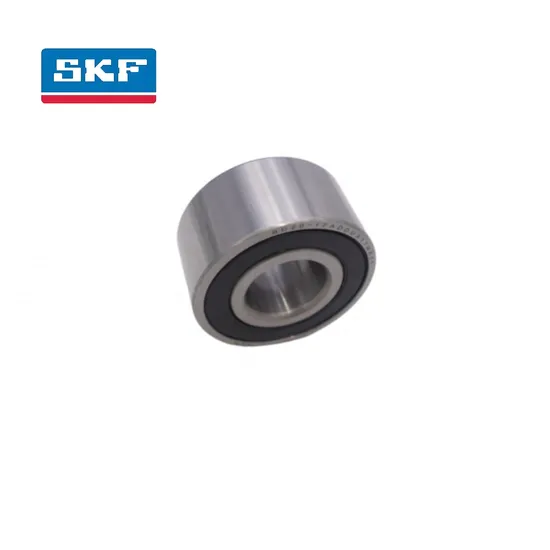
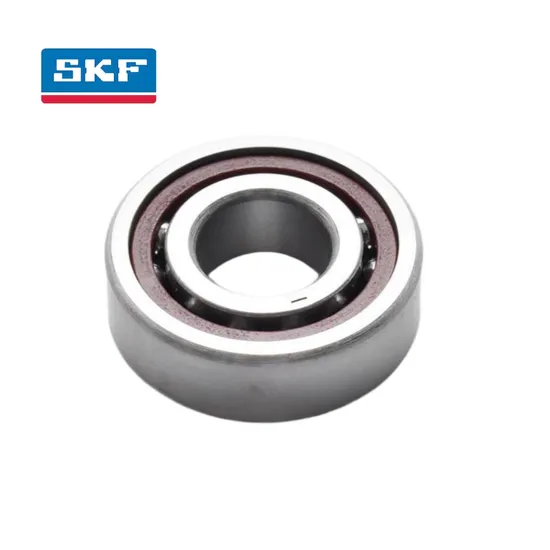
Angular Contact Bearing
Double Row Angular Contact Ball Bearing 3304-a-2RS1 Tn9-Mt33 Nylon Cage for Power Tools
View Details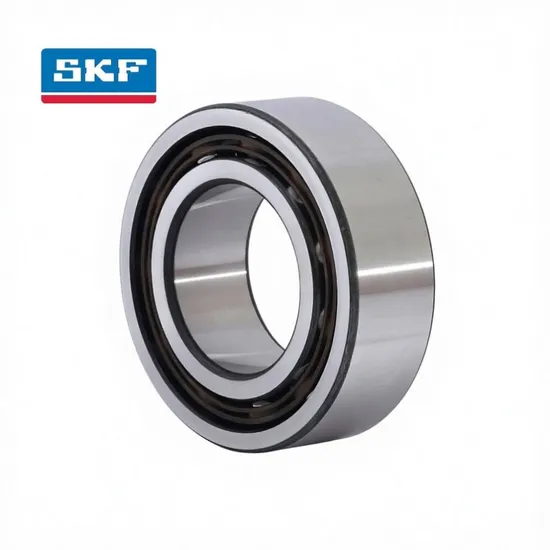
SKF-OME · Authentic Supplier
Can't find the model you need?
We cover 95%+ of all SKF conventional models. Send us any model number.