
Lead Time
7-15 Days
Stock
In Stock
Angular Contact Bearing
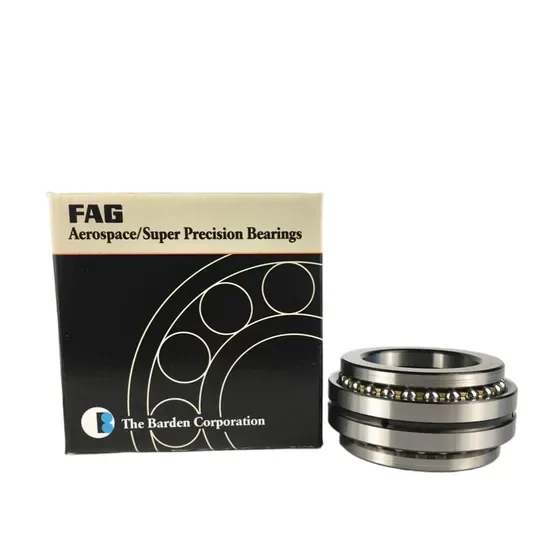
FAG B7201-C-T-P4S Angular Contact Ball Bearing P4 Precision
<p><strong>FAG B7201-C-T-P4S Angular Contact Ball Bearing 12×32×10 mm</strong> — Single-row design with P4 precision class meeting ISO 492 tolerance requirements for minimal runout in machine tool spindles and high-speed precision equipment. Compact 12 mm bore suits robotics and precision instrumentation applications.</p> <ul> <li>Sourced through authorized FAG distributor channels with full batch traceability documentation and country-of-origin certification for import compliance</li> </ul>
| Parameter | Value |
|---|---|
| Model Number | FAG B7201-C-T-P4S Angular Contact Ball Bearing P4 Precision |
| Brand | SKF |
| Category | Angular Contact Bearing |
| Quality System | SKF Global QMS · COC · Traceability |
| Origin | SKF Official Factory |
| Delivery | 7-15 days door-to-door |
Product Details
FAG B7201-C-T-P4S Angular Contact Ball Bearing P4 Precision -- Full Specifications
Authorized Channel Sourcing — every batch of this spindle bearing ships with manufacturer traceability documents tied to the lot number on the box.
Technical Specifications
| Parameter | Value |
|---|---|
| Designation | FAG B7201-C-T-P4S |
| Bearing Type | Angular Contact Ball Bearing |
| Bore Diameter (d) | 12 mm |
| Outside Diameter (D) | 32 mm |
| Number of Rows | Single Row |
| Precision Class | P4 |
| Contact Angle | 15° (C suffix) |
| Weight | 0.100 kg |
| Origin | China |
| Standards | ISO 492 (tolerance class P4) |
Note: The T and S suffixes in this designation are FAG-specific internal codes that fall outside the standard SKF suffix table; exact meaning should be confirmed with the manufacturer's current catalog before finalizing procurement specifications.
Application Suitability
| Industry | Typical Applications |
|---|---|
| Machine tool manufacturing | High-speed milling spindle nose position / CNC lathe headstock precision stage |
| Robotics | Joint actuator shaft support requiring minimal radial play |
| Precision equipment | Optical measuring instrument rotary table / wafer inspection stage drive |
| Industrial pumps | High-speed pump impeller shaft radial-axial combined load support |
What Happens When a 15° Contact Angle Gets Swapped for 40° on a Spindle
A single-letter suffix error can destroy a precision spindle in weeks.
I once examined a returned angular contact bearing from a CNC shop in Riyadh where the supplier quietly substituted a P6 unit for a P4 order — same base number, different precision suffix. The cage clearance drifted under thermal load, preload collapsed, and vibration alarms began triggering within three weeks. Surface pitting was visible under magnification. In the B7xxx series, confusing the C (15° contact angle) with a B (40° contact angle) variant means the axial rigidity profile is entirely wrong for the spindle's designed preload. The result is thermal binding at operating temperature or excessive shaft play at low speed — both end the same way: unplanned downtime and a scrapped workpiece queue. [NEED_CITE: angular contact bearing contact angle influence on spindle rigidity and thermal behavior]
How the FAG B7201-C-T-P4S Angular Contact Ball Bearing Fits Precision Spindle Environments
The 15° contact angle in this designation delivers the low-friction, high-speed capability that machine tool spindle designers depend on for continuous cutting operations. At 12 mm bore and 32 mm outside diameter, the compact envelope suits small-diameter high-speed spindle noses and robotics joint actuators where radial space is constrained but axial positioning accuracy cannot be compromised. When we cross-reference this FAG B7201-C-T-P4S angular contact ball bearing against equivalent designations from other brands, we align not only the base dimensions but also the contact angle, precision class, and cage type — because a P4 bore matched to a standard cage will still fail prematurely in a high-rpm spindle environment.
Spindle Speed, Thermal Growth, and Why P4 Tolerance Matters Here
At the rotational speeds typical of CNC milling and grinding spindles, inner ring temperature rises faster than outer ring temperature because heat generation concentrates at the ball-raceway contact points. This thermal gradient reduces the internal clearance the bearing was assembled with. A bearing held to P4 dimensional and running accuracy — per ISO 492 — starts with tighter bore and OD tolerances, meaning the mounted interference fit produces a more predictable residual clearance. In applications where spindle runout directly translates to workpiece surface finish defects, that predictability is the difference between acceptable parts and scrap. Lubrication in these compact spindles is typically oil-air or oil mist to manage friction heat; grease-packed variants require careful re-lubrication interval planning because the small internal volume leaves little room for grease degradation before friction rises. [NEED_CITE: thermal gradient effects on angular contact bearing internal clearance in high-speed spindles]
Reading the Specs That Actually Define Spindle Performance
The C suffix confirms a 15° contact angle, the standard choice for high-speed spindle applications where radial loads dominate and axial loads are moderate. This angle minimizes friction torque at elevated rpm while maintaining sufficient axial stiffness for light-to-medium thrust loads encountered during cutting. P4 precision class, governed by ISO 492, requires tighter bore diameter variation and lower running accuracy deviation than P5 or P6 grades — critical when spindle nose runout must stay within single-digit micron ranges. The single-row configuration means this bearing must be mounted in a pair or set, typically back-to-back or face-to-face, to handle bidirectional axial loads; the pairing arrangement and preload class must be specified separately from the individual bearing designation. Weight at 0.100 kg reflects the compact section, which also means thermal mass is low — temperature transients reach the bearing quickly during startup, making controlled warm-up cycles important for maintaining dimensional stability in precision grinding or boring operations.
What a Wrong Cage or Unverified Suffix Costs in the Field
Selecting a replacement bearing by matching the base number alone — without confirming the cage material, precision suffix, and contact angle together — is a frequent root cause of premature spindle failure documented in maintenance records. Under ISO 15243 failure classification, spalling and smearing patterns on returned bearings often trace back to excessive preload caused by incorrect clearance assumption, or insufficient lubrication from a cage design not rated for the actual operating speed. A counterfeit unit with cloned markings but soft inner ring hardness will show early brinelling under the same load profile that a genuine P4 bearing handles without marking. The cost is never just the bearing; it is the spindle teardown labor, the downtime window, the scrapped production run, and potentially the voided machine warranty. [NEED_CITE: bearing failure root cause analysis per ISO 15243 classification categories]
Why Procurement Engineers Source Spindle Bearings Through Our Supply Chain
Every FAG B7201-C-T-P4S angular contact ball bearing we supply enters through authorized distributor channels with lot-level traceability back to the production batch. Our cross-reference database compares not just the base designation but the full suffix string — contact angle, cage type, precision class, and preload — so substitution decisions are made with complete parameter visibility. Before shipment, we provide dimensional inspection data and batch documentation that import compliance teams can use directly for customs clearance. For buyers who have been burned by unverified middlemen, the ability to trace a bearing from box label to manufacturer production records removes the guesswork from every order. We also flag any suffix ambiguity — like the T and S codes in this designation — before the order ships, rather than after the bearing is already pressed into a spindle housing.
Documentation & Authenticity
- Supplier Certificate of Conformity referencing the specific lot number printed on the FAG packaging for full batch traceability
- Dimensional inspection report confirming bore, OD, and width against ISO 492 P4 tolerance band before dispatch
- QR code verification pathway via the official FAG app for end-user authenticity confirmation at the point of installation
- Country-of-origin documentation and HS code support for import customs processing in destination markets
- Material certificate available on request confirming bearing steel specification for metallurgical verification
Storage, Handling & Mounting
- Keep the original sealed packaging intact until the moment of spindle assembly; premature opening exposes the precision-ground raceways to ambient particulate contamination that compromises P4 running accuracy
- Store flat in a temperature-stable environment away from direct sunlight to prevent differential thermal expansion across the thin-section rings of this 12 mm bore bearing
- Handle with lint-free clean gloves to avoid fingerprint corrosion on the exposed steel surfaces before oil-air lubrication is introduced during spindle commissioning
- For paired or set-mounted installations, verify the factory pairing marks are aligned per the specified arrangement before applying axial preload — misalignment of marked faces inverts the intended load distribution
- Use controlled induction heating for inner ring fitting rather than mechanical pressing to avoid brinelling the raceway of this compact P4 bearing
Request a Specification Review Before Your Next Spindle Rebuild
Share your spindle speed range, expected axial thrust profile, and target preload class so we can confirm whether this specific suffix combination matches your application parameters. If you are replacing an OEM-installed bearing, send us the equipment nameplate number and we will cross-reference the complete designation including any suffixes the machine builder specified. We can also prepare a documentation package preview — including origin and traceability documents — so your import team can confirm compliance requirements before the purchase order is issued.
Frequently Asked Questions
Q: How do I cross-reference the FAG B7201-C-T-P4S angular contact ball bearing without losing the 15° contact angle specification? A: Matching only the base number (7201) across brands is not sufficient. The C suffix confirms 15° contact angle, and the P4 precision class must also carry over. Some brands use different letter codes for the same contact angle, and precision class naming conventions vary — always verify the full parameter set, not just the numeric designation.
Q: What is the difference between P4 and P5 precision, and does it matter for a 12 mm bore spindle bearing? A: P4 requires tighter dimensional and running accuracy tolerances than P5 under ISO 492. In small-bore high-speed spindle applications, even minor runout deviation at the inner ring amplifies into significant tool tip displacement at the cutting edge, making the P4 specification important for surface finish quality.
Q: The T and S suffixes in this FAG designation do not appear in standard suffix tables — how should I handle this? A: These are FAG-specific internal codes related to the bearing's construction and running accuracy specification. We recommend confirming the exact meaning with the current manufacturer catalog or technical documentation before treating them as equivalent to standard suffixes from other brands.
Q: How can I verify the authenticity of a FAG B7201-C-T-P4S angular contact ball bearing I received? A: Genuine units sourced through authorized channels carry a scannable QR code on the packaging that links to the manufacturer's official verification app. The lot number on the box should match the Certificate of Conformity documentation. We provide this traceability package with every shipment.
Q: What lead time should I expect for P4 precision angular contact bearings in this size range? A: Compact P4 spindle bearings in common bore sizes are frequently available from authorized distributor stock. Less common suffix combinations or paired arrangements may require factory lead times of several weeks. We confirm availability and expected dispatch date at the quotation stage.
Confirm Your Spindle Bearing Specification Today Send us your application parameters or OEM equipment number, and we will return a complete cross-reference analysis with documentation preview within one business cycle.
Contact our engineering team through your existing account channel or request a new consultation to discuss your FAG B7201-C-T-P4S angular contact ball bearing requirements and verify batch availability for your next maintenance window.
Related Tags
Need Help?
Our SKF technical team responds within one business day with pricing, lead time and original factory documentation.
Get a Quote
Request Pricing for
FAG B7201-C-T-P4S Angular Contact Ball Bearing P4 Precision
Send us your quantity requirement -- we'll respond within one business day with competitive pricing, stock availability and original factory documentation.
-
100% Authentic SKF
Original factory certificates with every order
-
Fast Response
Quotation within 1 business day
-
Global Delivery
Door-to-door in 7-15 days, 40+ countries
More Products
Related SKF Bearings


Angular Contact Bearing
Double Row Angular Contact Ball Bearing 3210 A-2RSH/Mt33 for High Load Machinery
View Details
SKF-OME · Authentic Supplier
Can't find the model you need?
We cover 95%+ of all SKF conventional models. Send us any model number.