
Factory-Direct OEM Bearings for OE Combine Harvester Programs
Most combine harvester bearing failures in OEM programs are not caused by overload—they stem from seal degradation allowing abrasive dust ingress, compounded by poor cross-reference matching during replacement.
Premature bearing failure in agricultural harvesting equipment is predominantly driven by contaminated lubrication and incorrect clearance selection for high-vibration field conditions, rather than pure radial load exceedance. Verifying ISO 9001 documentation, applying accurate cross-reference tables, and sourcing from full-category factory-direct programs can drastically reduce harvest-season downtime and warranty claims.
I still remember walking through a maize field in sub-Saharan Africa during peak harvest season, watching a combine sit idle because the drive shaft bearing had disintegrated overnight. The operator pointed to the scattered cage fragments and contaminated grease. The bearing housing was packed with fine red dust—clear evidence that the seal had failed long before the rolling elements showed fatigue spalling. This is not an isolated incident. Field data consistently shows that seal integrity and environmental protection rank as the leading failure modes in agricultural bearings, far exceeding classical fatigue or lubrication starvation. When MRO teams or OEM procurement specialists search for a combine harvester bearing failure OEM solution, they are often chasing the wrong symptom.
Let me walk you through what actually happens on the ground, how to select the right replacement, what documentation truly matters, and how to source reliably without paying unnecessary brand premiums.
Why Do OEM Combine Harvester Bearings Fail Prematurely?
The dominant failure mechanism is seal compromise under abrasive, high-moisture field conditions—not structural overload of the rolling elements.
In combine harvesters, bearings in the header, threshing drum, and drive shaft operate in environments saturated with crop residue, silica dust, chaff, and seasonal humidity. Standard rubber seals, if not specified for agricultural duty, harden under UV exposure and lose lip contact within a single season. Once the seal gap opens, fine particulate matter enters the raceway, acting as a three-body abrasive that accelerates wear on both balls and raceways. This is why you often see bearings that appear "lightly loaded" on paper yet fail within months.
Another layer of the problem is clearance misalignment. Agricultural machinery generates substantial vibration and thermal cycling during continuous operation. Selecting a standard C0 (normal) internal clearance bearing for a high-vibration header application leads to false brinelling and premature cage fatigue. Conversely, excessive C3 or C4 clearance in a low-speed, high-load drive shaft position can cause uneven load distribution and edge stresses on rollers.
A European distributor once reported a spike in warranty claims after switching to an unverified replacement supplier for header bearings. The root cause was not the steel quality per se, but inconsistent seal lip hardness and missing labyrinth features that allowed dust migration. The batch-to-batch variation in seal performance made the failure pattern unpredictable—some units lasted a full season, others failed within weeks. This is a classic case where the absence of verifiable quality documentation created hidden risk.
How to Select the Right Bearing for Harvester Headers and Drives?
Match the bearing type to the actual load vector and speed regime—deep groove ball bearings for high-speed, moderate-load header positions; self-aligning roller bearings for heavy radial load and misalignment tolerance in drive shafts.
The header assembly of a combine harvester typically runs at elevated RPM with moderate radial loads and occasional axial thrust from reel mechanisms. Deep groove ball bearings, such as the 6205 or 6305 series, handle this profile well—provided the correct seal variant (2RS agricultural-grade) and internal clearance are specified. These bearings offer low friction, high-speed capability, and adequate load capacity for reel shafts and auger drives.
The drive shaft and threshing drum positions, by contrast, carry heavy radial loads from crop mass and intermittent shock loads from uneven feeding. Self-aligning roller bearings, such as the 22308 or 22320 series, are the standard choice here. Their spherical outer ring accommodates shaft deflection and housing misalignment—common in field conditions where frame flex is unavoidable. The key selection parameter is dynamic load rating relative to the actual equivalent load, along with proper lubrication groove and seal configuration.
When cross-referencing against OEM numbers, always verify three parameters: bore diameter and tolerance class, outside diameter and fit class, and width tolerance. A mismatch of even a few microns in shaft fit can cause fretting corrosion or slippage under vibration. I have seen cases where a bearing with correct bore but incorrect chamfer geometry caused stress concentration at the shaft shoulder, leading to premature shaft fatigue—long before the bearing itself showed wear.
| Application Zone | Typical Bearing Type | Load Profile | Speed Range | Key Selection Factor |
|---|---|---|---|---|
| Header Reel Shaft | Deep Groove Ball (62xx/63xx) | Moderate radial + light axial | High | Seal type, C0/C3 clearance |
| Auger Drive | Deep Groove Ball / Tapered Roller | Radial + thrust | Medium-High | Axial load capacity |
| Threshing Drum | Self-Aligning Roller (223xx) | Heavy radial + shock | Low-Medium | Misalignment tolerance |
| Drive Shaft | Self-Aligning Roller (223xx/322xx) | Heavy radial + shock | Low | Dynamic load rating, seal |
What Documentation Proves Bearing Authenticity in OEM Programs?
ISO 9001 certification and traceable material test reports are the minimum verifiable baseline—anything less leaves you exposed to untraceable supply chain risk.
In the bearing supply chain, authenticity is not a marketing claim—it is a documentation chain. A legitimate factory-direct supplier operating under ISO 9001 quality management can provide: a valid certificate from an accredited registrar, heat number traceability on material test reports, dimensional inspection records per ISO 492 (rolling bearings—radial bearings—tolerances), and hardness test certificates confirming raceway and rolling element hardness within the HRC 58–62 range typical for through-hardened bearing steel.
When evaluating a combine harvester bearing failure OEM replacement source, request the following documents before placing a trial order:
- ISO 9001 certificate with scope explicitly covering bearing manufacturing (not just trading)
- Material test report showing chemical composition and inclusion cleanliness per ISO 4967
- Dimensional inspection report for the specific part number, including form tolerances
- Hardness test certificate for rings and rolling elements
- Seal material specification and aging test data if applicable
A Middle East-based agricultural equipment distributor once shared that their previous supplier could only provide a "quality assurance letter" on company letterhead—no ISO certificate, no heat numbers, no third-party test data. After switching to a factory with full documentation transparency, their return rate dropped noticeably, and they could finally trace each batch back to production records.
How to Source Reliable Replacements Without Brand Premiums?
Use complete cross-reference tables to match OEM part numbers to equivalent factory-direct bearings—verifying dimensional interchange, load ratings, and seal specifications—then source from ISO-certified full-category manufacturers.
The agricultural bearing market is heavily branded, and OEM part numbers often carry significant price premiums. However, the underlying bearing specifications are standardized. A 22320 CA/W33 from one brand is dimensionally and functionally interchangeable with the same specification from another qualified manufacturer—provided the internal design (cage type, ring curvature, seal configuration) meets the same performance envelope.
Cross-reference tables are the procurement engineer’s most valuable tool. They allow you to map an SKF, FAG, NSK, or Timken part number to its exact dimensional and performance equivalent from a factory-direct source. The critical verification points are:
- Bore, OD, and width match per ISO 15
- Cage material and design compatibility with operating speed
- Seal or shield type matching the environmental protection requirement
- Internal clearance class (C0, C3, C4) matching the original specification
- Lubrication groove and hole alignment if applicable
A South American farm cooperative was spending heavily on branded replacement bearings for their fleet of combine harvesters. By implementing a cross-reference program and sourcing from an ISO-certified factory-direct supplier, they achieved equivalent performance while reducing procurement costs substantially. The key was not just finding a cheaper alternative, but verifying that every parameter matched—including the seal lip material suited to their high-humidity, high-dust environment.
When sourcing a combine harvester bearing failure OEM solution, prioritize suppliers who offer:
- Complete cross-reference coverage across major brands
- Full-category inventory covering all common agricultural bearing types
- Same-day dispatch capability for urgent harvest-season replacements
- ISO 9001 certification with verifiable documentation
- Technical selection support based on application parameters
Conclusion
Combine harvester bearing failure in OEM programs is preventable through correct failure diagnosis, precise cross-reference selection, and verified supplier documentation.
Seal degradation and clearance misalignment—not overload—drive most premature failures in the field. Selecting the right bearing type for each position, verifying ISO 9001 documentation and material traceability, and using cross-reference tables to source factory-direct equivalents eliminate the root causes of downtime and warranty exposure. The path to reliable agricultural bearing procurement is technical rigor, not brand loyalty.
Products in this article
SKF bearings mentioned above
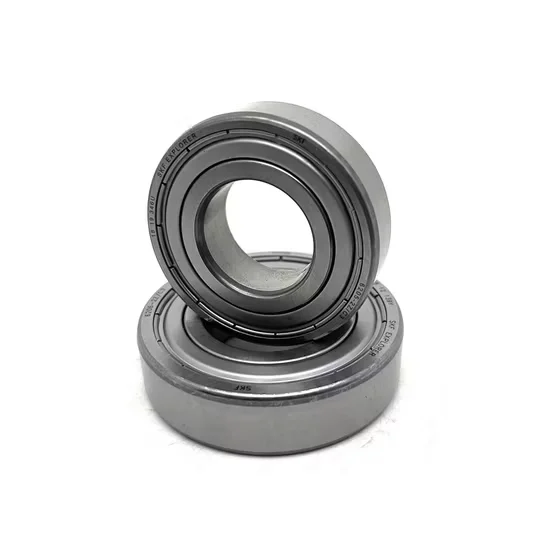 01 Deep Groove Ball Bearings SKF 6204 6205 6206 Deep Groove Ball Bearing Spare Parts View model details
 02 Deep Groove Ball Bearings Original SKF Deep Groove Ball Bearing 6000 6001 6308 6309 6204 6205 6206 for Auto Parts View model details
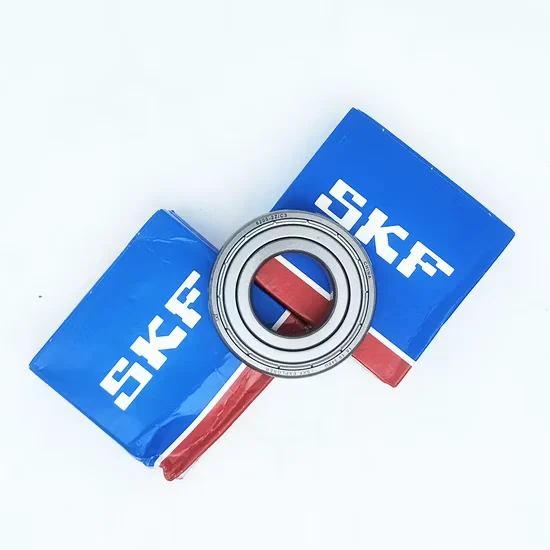 03 Agricultural Machinery Bearings X&S 80607kt 6301-2RS 6205-2Z 6206-2Z Deep Groove Ball Bearing View model details
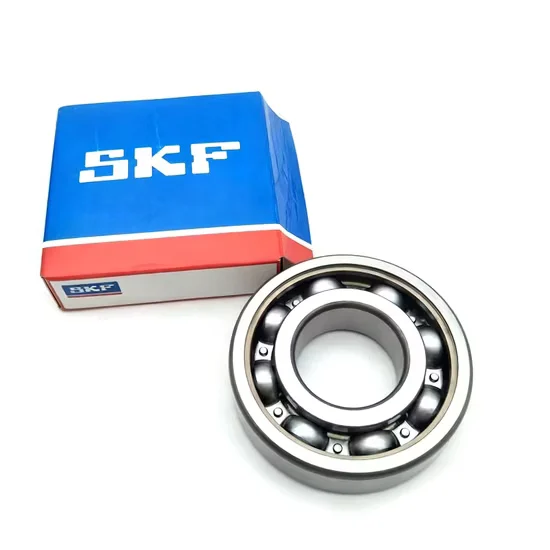 04 Deep Groove Ball Bearings SKF 6205 6206 ZZ C3 Deep Groove Ball Bearing for Automobile Industry View model details
Applications
Where these SKF bearings are used
Keep reading
Related SKF bearing selection guides
More practical notes on SKF designations, precision items and project bearing lists from Project Purchasing Company.
 Applications & Industries · · 7 min read Ball Bearings for Model Engines: Wholesale Supplier & Bulk Orders Standard industrial bearings fail in model engines due to incorrect clearances and cage materials. Ball Bearings in Model Engines require specific tight tolerances, machined… Read the guide Applications & Industries · · 7 min read Ball Bearings for Garden Tillers: Genuine Wholesale Supplier Genuine Ball Bearings in Garden Tillers prevent costly field failures caused by mud ingress and shock loads. Discover critical selection criteria for sealing and… Read the guide Applications & Industries · · 7 min read Ball Bearings for Pressure Washers Wholesale Supplier Stop premature pump failures by prioritizing seal integrity over basic dimensions for Ball Bearings in Pressure Washers. Learn why high-temperature contact seals and synthetic… Read the guide

Request a quote
Send your SKF list. Get one itemized written quote.
Project Purchasing Company supplies SKF ball, roller, precision and housed bearing units to distributors, repair workshops and project buyers worldwide. Standard and precision items are priced line by line, with accessories kept on the same quote.