

Angular Contact Bearing
100% Genuine SKF · Original Factory Certificate
Lead Time
7-15 Days
Stock
In Stock
Angular Contact Bearing
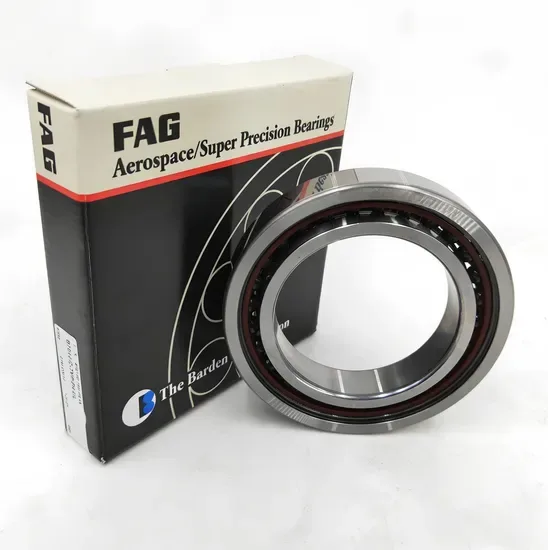
FAG HCB7005-E-P4S Angular Contact Ball Bearing CNC Spindle
<p><strong>HCB7005-E-P4S Angular Contact Ball Bearing 25×47×12 mm</strong> — Engineered for CNC spindle applications requiring high radial and axial load capacity with minimal runout at elevated speeds. The 25 mm bore matches standard motor shaft interfaces, while the lightweight 0.060 kg construction reduces rotating mass for improved acceleration response. Sourced through authorized distributor channels with complete traceability documentation and country-of-origin certification for seamless import clearance</p>
| Parameter | Value |
|---|---|
| Model Number | FAG HCB7005-E-P4S Angular Contact Ball Bearing CNC Spindle |
| Brand | SKF |
| Category | Angular Contact Bearing |
| Quality System | SKF Global QMS · COC · Traceability |
| Origin | SKF Official Factory |
| Delivery | 7-15 days door-to-door |
Authentic SKF
COC Included
40+ Countries
Fast Delivery
Product Details
FAG HCB7005-E-P4S Angular Contact Ball Bearing CNC Spindle -- Full Specifications
Traceable Spindle Sourcing — Every HCB7005-E-P4S ships with batch-level Certificate of Conformity and QR verification pathway to confirm origin before it reaches your CNC assembly floor.
Technical Specifications
| Parameter | Value |
|---|---|
| Designation | FAG HCB7005-E-P4S |
| Bearing Type | Angular Contact Ball Bearing (Hybrid Ceramic) |
| Bore Diameter (d) | 25 mm |
| Outside Diameter (D) | 47 mm |
| Width (B) | 12 mm |
| Number of Rows | Single Row |
| Contact Angle | 25° |
| Precision Class | P4S |
| Cage Material | Phenolic Resin / Laminated Fabric |
| Seal or Shield Type | Open |
| Arrangement | Single (Universal Flush Ground) |
| Rolling Element | Silicon Nitride Ceramic Balls |
| Origin | China |
Note: The suffix "S" in P4S denotes a specific dimensional tolerance variant within the P4 class, though exact sub-variant definition requires verification against the current manufacturer catalog.
Application Suitability
| Industry | Typical Applications |
|---|---|
| Machine Tool Manufacturing | High-frequency CNC motor spindles, internal grinding spindle shafts |
| Precision Engineering | High-speed routing spindle cartridges, PCB drilling head bearings |
| Industrial Automation | Direct-drive servo motor shafts, robotic arm rotary joints |
The 25 mm Bore Trap: Why Base-Number Matching Fails CNC Spindles
A 7005 bearing is not just a 7005 bearing when the suffix string dictates thermal stability at 38,000 RPM.
I once audited a spindle rebuild where the maintenance team replaced a failed hybrid ceramic unit with a standard steel 7005-E-T-P4. The base dimensions matched perfectly. The contact angle matched. The precision class appeared identical. But the missing ceramic rolling elements meant the thermal growth profile was completely different. Within four hours of reaching operating speed, the preload collapsed, the shaft began oscillating axially, and the tool holder chattered hard enough to leave visible witness marks on the workpiece. The HCB7005-E-P4S angular contact ball bearing for CNC motors exists specifically because standard steel equivalents cannot survive the thermal gradients inside a sealed spindle cartridge running at these speeds. Substituting without checking the hybrid designation is a failure waiting to happen [NEED_CITE: thermal growth differential between steel and ceramic rolling elements in spindle bearings].
How Ceramic Balls Change the Game at 25 mm Bore
The 25 mm bore diameter of this HCB7005-E-P4S angular contact ball bearing for CNC motors positions it squarely in the mid-range spindle segment — large enough to handle the radial loads of a milling spindle, small enough to achieve the rotational speeds required for fine finishing cuts. The hybrid construction with silicon nitride balls reduces the rotating mass significantly compared to a full-steel equivalent, which means less centrifugal force acting on the outer race at speed. That directly translates to lower friction heat generation and a more stable preload condition throughout the duty cycle. When we cross-reference this model against a buyer's existing spindle BOM, we verify not just the bore and OD but the ceramic ball specification and the cage material compatibility with the spindle builder's specified grease.
Operating Environments That Demand Hybrid Construction
CNC spindle interiors are hostile places for any rolling element. The HCB7005-E-P4S angular contact ball bearing for CNC motors operates inside sealed cartridges where ambient temperature can climb past 60°C before the spindle even reaches full speed. The oil-air or oil-mist lubrication systems common in these applications deliver minimal lubricant volumes, which means the bearing surfaces must tolerate boundary lubrication conditions during acceleration and deceleration transients. Silicon nitride ceramic balls have a lower coefficient of friction against steel races and do not suffer from adhesive wear in starved-lubrication scenarios the way steel-on-steel contacts do. The 25° contact angle provides a balance between axial stiffness for thrust loads during plunge cuts and radial stiffness for the side loads encountered during contouring operations [NEED_CITE: contact angle selection criteria for high-speed spindle angular contact bearings].
Decoding the Suffix String: E, P4S, and What They Control
The E suffix in this designation indicates an optimized internal geometry with a larger ball complement and revised raceway curvatures, delivering higher load capacity within the same 47 mm OD envelope. The P4S precision class governs the dimensional and running accuracy — bore tolerance, OD tolerance, width variation, and inner ring radial runout all fall within tighter bands than P5, which is critical because even a few micrometers of additional runout at the spindle nose gets amplified at the tool tip. The phenolic resin cage, standard for this bearing family, is chosen for its low mass and its ability to retain lubricant within the cage pockets, feeding the ball-race contacts continuously at speed. Unlike brass cages, phenolic does not generate metallic debris if it wears, which protects the spindle's internal surfaces from abrasive contamination.
The Expense Buried Inside a Wrong Suffix
When a procurement team sources a 7005-series bearing without confirming the hybrid designation, the immediate cost saving is quickly erased by unplanned spindle teardowns. A single cartridge rebuild on a production CNC machine involves not just the replacement bearing cost but the labor for disassembly, the alignment verification, the test-run hours, and the scrapped parts produced before the vibration was detected. ISO 15243 classifies the resulting failure modes — from smearing on the raceways due to loss of preload to fracture of the cage caused by differential thermal expansion — all of which are preventable with correct specification matching at the inquiry stage [NEED_CITE: bearing damage classification per ISO 15243]. We see these failures traced back to purchase orders that listed only the base number and bore size, leaving the suffix field blank or assumed.
Sourcing Channels That Protect Your Spindle Investment
Our procurement model for the HCB7005-E-P4S angular contact ball bearing for CNC motors is built around authorized distributor channels, which means every unit we supply carries the manufacturer's original batch and lot traceability. We do not hold single-brand distributorship; instead, we source across multiple brand-authorized networks to find availability and pricing that match your production schedule. Every shipment includes a Certificate of Conformity linked to the specific batch, and we guide buyers through the QR verification pathway using the brand's official authentication tools before the bearing leaves our inspection bench. For buyers managing cross-brand substitutions, our interchange database checks clearance, cage material, contact angle, and precision class together — not just the base designation — so you never receive a dimensional match that fails on thermal or dynamic performance.
Documentation & Authenticity
- Supplier Certificate of Conformity tied to the specific HCB7005-E-P4S batch and lot number, enabling full traceability back to the production run.
- Dimensional inspection report confirming bore, OD, width, and inner ring runout against P4S tolerance limits before dispatch.
- Country-of-origin certificate prepared for import documentation, clearing customs delays for buyers in restricted-trade jurisdictions.
- QR code verification guidance using the brand's official application to authenticate each unit's packaging and internal markings.
- Material declaration confirming silicon nitride ceramic ball grade and cage material specification for compliance with spindle OEM requirements.
Storage, Handling & Mounting
- Keep the HCB7005-E-P4S in its original sealed packaging until the moment of spindle assembly; the phenolic cage is hygroscopic and absorbs moisture if exposed to humid workshop air.
- Store in a temperature-controlled environment between 10°C and 30°C to prevent condensation on the steel races, which can initiate corrosion that P4S surface finish cannot mask.
- Use lint-free, powder-free gloves during handling — fingerprints on the ceramic balls or raceways leave acidic residues that etch the surface under operating temperature.
- Mount using controlled induction heating of the inner ring only, never exceeding 110°C, to avoid altering the dimensional stability of the precision-ground bore.
- Verify the spindle housing and shaft seat diameters against the tolerance bands specified for P4S class fits before pressing; a shaft that is 3 µm oversize will eliminate the internal clearance needed for thermal growth.
- If this bearing is part of a matched set, maintain the factory marking alignment and do not separate the components until installation — the flush-ground faces are paired for specific preload values.
Request a Technical Quotation
Share your spindle model number or the full operating parameters — speed range, load spectrum, lubrication method, and target L10 life — so we can confirm the HCB7005-E-P4S is the correct specification or identify the exact cross-reference equivalent. If you are replacing an existing bearing, send us a photo of the current unit's markings and we will verify the suffix string against our interchange database. Once confirmed, we provide a quotation with batch availability, lead time, and the complete documentation package for your import and quality records.
Frequently Asked Questions
Q: How do I verify that an HCB7005-E-P4S is genuinely hybrid ceramic and not a relabeled steel bearing? A: The weight difference is measurable — a hybrid unit with ceramic balls is noticeably lighter than its full-steel equivalent of the same dimensions. Beyond that, we provide the manufacturer's QR verification pathway so you can confirm the batch origin through the brand's official application. The packaging markings, batch code, and certificate of conformity must all align; any mismatch is a red flag.
Q: Can I substitute a standard B7005-E-P4S for this HCB7005-E-P4S if lead times are an issue? A: The base dimensions and precision class match, but the B-series uses steel balls while the HCB-series uses ceramic. In a CNC motor spindle running at high speed, the thermal growth profile will differ, which can cause preload loss or excessive preload depending on the spindle design. We recommend confirming with the spindle OEM before making this substitution, and our technical team can assist with the thermal analysis.
Q: What does the P4S precision class mean compared to P4 or P5 for my spindle application? A: P4S is a sub-variant within the P4 tolerance class, typically specifying tighter running accuracy on the inner ring than standard P4. The difference from P5 is substantial — P5 allows wider runout bands that translate to more vibration at the tool tip. For high-frequency CNC motor spindles, P4S or equivalent is the minimum acceptable grade to maintain surface finish quality on the workpiece.
Q: What lubrication is recommended for the HCB7005-E-P4S in an oil-air spindle system? A: This bearing is supplied open and is designed for oil-air or oil-mist lubrication systems common in CNC spindles. The specific oil viscosity and air-oil ratio depend on the spindle builder's design parameters. We recommend following the spindle OEM's lubrication specification and can provide guidance on compatible grease types if the application requires sealed and greased alternatives.
Q: Do you provide cross-reference data for this bearing from other brands? A: Yes. We maintain a cross-brand interchange database that maps the HCB7005-E-P4S to equivalent designations from SKF, NSK, NTN, and other major manufacturers, matching on contact angle, precision class, cage material, and hybrid construction — not just the base number. This ensures the substitute performs identically in your spindle application.
Confirm Your Spindle Specification Today Send us your OEM equipment number or operating parameters, and we will return a verified specification match with full documentation and batch availability within one business day.
Related Tags
Need Help?
Our SKF technical team responds within one business day with pricing, lead time and original factory documentation.
Get a Quote
Request Pricing for
FAG HCB7005-E-P4S Angular Contact Ball Bearing CNC Spindle
Send us your quantity requirement -- we'll respond within one business day with competitive pricing, stock availability and original factory documentation.
-
100% Authentic SKF
Original factory certificates with every order
-
Fast Response
Quotation within 1 business day
-
Global Delivery
Door-to-door in 7-15 days, 40+ countries
More Products
Related SKF Bearings
Angular Contact Bearing
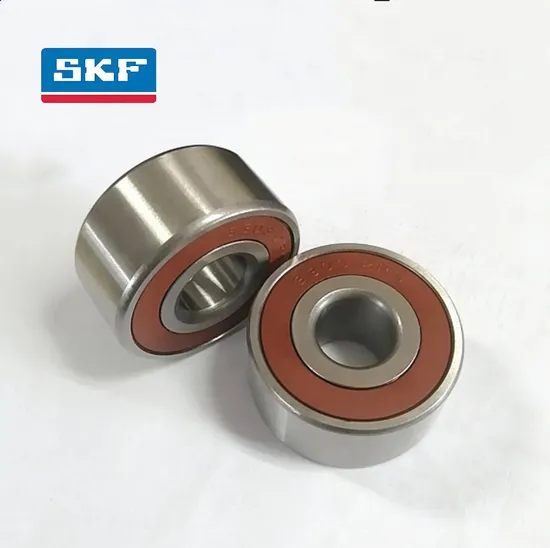
3207 A/C3 Double Row Angular Contact Ball Bearing for High Temperature Industrial Use
View Details
Angular Contact Bearing
SKF 7014 ACE/HCP4ADBA Angular Contact Bearing P4A Precision Wholesale
View DetailsSKF-OME · Authentic Supplier
Can't find the model you need?
We cover 95%+ of all SKF conventional models. Send us any model number.