

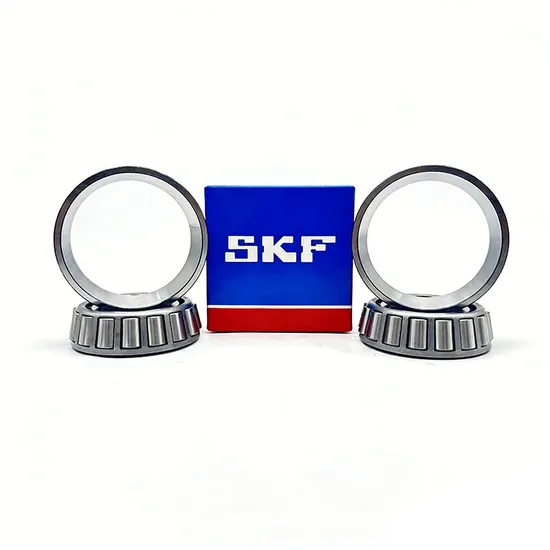
Tapered Roller Bearing

100% Genuine SKF · Original Factory Certificate
Lead Time
7-15 Days
Stock
In Stock
Tapered Roller Bearing
SKF NN3020KTN9/SPVR592 Cylindrical Roller Bearing Wholesale Supplier
<p><strong>SKF NN3020KTN9/SPVR592 Double Row Cylindrical Roller Bearing 100 mm</strong> — K suffix tapered bore (1:12) enables direct mounting on tapered shaft seats without locking devices, while TN9 polyamide cage supports high-speed spindle operation with reduced weight.</p> <ul> <li>Sourced through authorized distributor channels with full batch traceability and Certificate of Conformity for import documentation</li> </ul>
| Parameter | Value |
|---|---|
| Model Number | SKF NN3020KTN9/SPVR592 Cylindrical Roller Bearing Wholesale Supplier |
| Brand | SKF |
| Category | Tapered Roller Bearing |
| Quality System | SKF Global QMS · COC · Traceability |
| Origin | SKF Official Factory |
| Delivery | 7-15 days door-to-door |
Authentic SKF
COC Included
40+ Countries
Fast Delivery
Product Details
SKF NN3020KTN9/SPVR592 Cylindrical Roller Bearing Wholesale Supplier -- Full Specifications
Authorized Channel Sourcing — every SKF NN3020KTN9/SPVR592 leaving our warehouse carries batch-linked documentation back to the original distributor invoice, giving spindle rebuilders full material traceability before the box is opened.
Technical Specifications
| Parameter | Value |
|---|---|
| Designation | SKF NN3020KTN9/SPVR592 |
| Bearing Type | Double Row Cylindrical Roller Bearing |
| Bore Diameter (d) | 100 mm |
| Outside Diameter (D) | 150 mm |
| Width (B) | 37 mm |
| Bore Type | Tapered Bore (1:12) |
| Cage Material | Injection Molded Glass Fiber Reinforced Polyamide 6,6 (TN9) |
| Seal or Shield Type | Open |
| Number of Rows | Double Row |
| Arrangement | NN Design — Inner Ring with Three Integral Flanges, Outer Ring without Flanges |
| Origin | China |
Note: The suffixes /SP and /VR592 appear in the supplier-provided designation. Their exact meaning has not been independently verified against the current SKF super-precision catalog and should be confirmed with the manufacturer before final application sign-off.
Application Suitability
| Industry | Typical Applications |
|---|---|
| Machine Tool Manufacturing | High-speed spindle rear support, milling head quill bearing |
| Precision Gearbox Assembly | High-rigidity shaft support in planetary and helical reduction units |
| Industrial Rolling Equipment | Work roll and backup roll neck positioning in light-gauge rolling mills |
| High-Precision Rotating Assemblies | Rotary table centering, indexing head main shaft |
What Happens When a Spindle Bearing Fails at 12,000 rpm
A single mismatched clearance suffix can destroy a precision ground spindle in under a shift.
The SKF NN3020KTN9/SPVR592 double row cylindrical roller bearing is designed for applications where radial rigidity and rotational accuracy are non-negotiable. Yet procurement records across the industry show a pattern: buyers match the base number but overlook the precision class and internal clearance suffixes, installing a standard CN clearance unit where thermal expansion at sustained high speed demanded a C3 or a specific VR variant. The inner ring expands against the shaft seat, the residual clearance collapses, and within hours the cage pockets are scoring against the rollers [NEED_CITE: spindle bearing failure modes linked to clearance loss per ISO 15243]. On a CNC machining center, that kind of unplanned stop means scrapped workpieces, missed delivery windows, and a spindle cartridge rebuild that runs well into five figures.
Matching the Bearing to High-Speed Spindle Load Profiles
Spindle rear supports see predominantly radial loads with moderate axial displacement from thermal shaft growth. The NN design, with flanges on the inner ring and none on the outer, allows the outer ring to float axially inside the housing bore — accommodating that growth without binding. Pairing this SKF NN3020KTN9/SPVR592 double row cylindrical roller bearing with a matched angular contact set at the front of the spindle gives the assembly the radial stiffness it needs to resist cutting forces while letting the shaft expand freely rearward. In one retrofit case we supported, a gear manufacturer had been replacing spindle bearings every few months because the previous supplier provided an outer-flanged NNU variant that trapped axial displacement. Switching back to the correct NN arrangement ended the cycle.
Thermal Growth, Speed, and the Lubrication Window
At the speeds typical of machining spindles, the dominant challenge is heat. Friction at the roller-raceway contact generates temperature differentials between the inner ring (mounted on the rotating shaft, closer to the heat source) and the outer ring (seated in the stationary housing). If the initial radial clearance is too tight, thermal expansion closes the gap entirely — a condition cataloged as preload runaway. The tapered bore on the SKF NN3020KTN9/SPVR592 double row cylindrical roller bearing allows the installer to drive the inner ring up the tapered shaft seat, controlling residual clearance by measuring the reduction in internal clearance with a dial indicator as the locknut is tightened [NEED_CITE: SKF tapered bore mounting procedure and residual clearance measurement]. Open-type design means lubrication method — oil-air, oil mist, or grease — is selected to match the speed factor rather than being predetermined by a sealed bearing.
Decoding the Suffix Stack
The K suffix confirms a 1:12 tapered bore, which is the standard taper for cylindrical roller bearings on spindle shafts and differs from the 1:30 taper used on spherical roller bearings — mixing them up during cross-referencing leads to a shaft seat that cannot achieve the required interference fit. The TN9 cage is injection-molded glass fiber reinforced polyamide 6,6, chosen here because it is lightweight, keeps rolling element inertia low at high rotational speeds, and runs quietly compared to machined brass cages. Its operating temperature ceiling sits lower than brass, so it is the right choice only where the spindle cooling system keeps steady-state temperatures within the polyamide envelope. The NN prefix tells you the load-carrying flanges are on the inner ring, which is standard for spindle rear bearings where the outer ring must float. Each suffix interacts with the others: a TN9 cage paired with an SP precision class points directly at a machine tool spindle duty cycle.
The Hidden Expense of a Wrong Suffix or an Unverified Source
A bearing that looks correct on the purchase order but carries the wrong clearance or precision suffix fails differently than a simple wear-out. The cage can fracture from overload after thermal binding, sending fragments into the raceway. Under ISO 15243, this classifies as a fatigue-spalling or fracture failure mode — one that voids the machine tool builder's warranty and forces a full spindle teardown [NEED_CITE: ISO 15243 bearing damage classification and warranty implications]. Counterfeit units with soft inner rings and cloned packaging compound the risk: the ring material deforms under the same mounting force that a genuine hardened raceway would absorb, and the resulting loss of roundness destroys the spindle's TIR specification. Reputable sourcing through authorized distributor channels is not a premium — it is insurance against a failure mode that no amount of preventive maintenance scheduling can catch.
How We Reduce Procurement Risk on This Bearing
Our value on the SKF NN3020KTN9/SPVR592 double row cylindrical roller bearing starts before the order ships. We pull stock through authorized distributor networks where each batch is traceable to the original manufacturer invoice, and we provide a Certificate of Conformity tied to that specific lot number. For buyers substituting from another brand, we cross-reference not just the base designation but the clearance class, cage material, precision suffix, and bore type — catching mismatches that a simple number swap would miss. Our technical team reviews your spindle parameters (speed, load spectrum, operating temperature, lubrication method) to confirm the suffix stack fits before quotation. We also supply country-of-origin documentation and HS code details so your import paperwork clears customs without delays. Every shipment includes dimensional inspection data so you can verify bore taper and running accuracy on arrival.
Documentation & Authenticity
- Supplier Certificate of Conformity linked to the specific production batch and original distributor invoice
- Third-party dimensional inspection report confirming bore taper, radial runout, and width tolerance before dispatch
- Material certificate documenting steel grade and heat treatment condition of inner and outer rings
- Country-of-origin statement with HS code for customs classification and import duty determination
- QR code verification pathway via the SKF official mobile application for on-site authenticity confirmation at receiving
Storage, Handling & Mounting
- Retain the original sealed packaging until the moment of mounting; the tapered bore surface on this 100 mm bearing is factory-protected with a corrosion preventive that degrades once exposed to humid workshop air
- Drive the inner ring onto the tapered shaft seat using the locknut method, measuring residual clearance reduction with a dial indicator to avoid crushing the polyamide cage under excessive interference
- Do not induction-heat the TN9 cage variant above the polyamide temperature limit; use controlled warm-oil or induction methods on the inner ring only, keeping cage temperature within safe margins
- For the open-type design, flush the bearing with the intended spindle lubricant before first run to displace any preservative residue remaining from factory packaging
- Handle with lint-free gloves to prevent fingerprint acids from etching the precision-ground raceway surfaces of this super-precision class bearing
Start the Technical Conversation
Send us your spindle speed, radial load, operating temperature range, and current lubrication method, and our engineering team will confirm whether this suffix configuration matches your duty cycle — or recommend the correct variant if it does not. If you are cross-referencing from a competitor part number, share the full OEM equipment designation so we can verify clearance, cage, and precision alignment before quoting. We will reply with a complete documentation package outline and current batch availability from our authorized channel stock.
Frequently Asked Questions
Q: How do I verify the authenticity of an SKF bearing using the official QR code application? A: Download the SKF official authentication app on your mobile device. Scan the QR code printed on the bearing packaging — not a sticker applied by a third party. The app cross-references the code against the manufacturer's database and returns batch, production date, and distribution chain information. If the code does not resolve, or resolves to a different product, treat the unit as suspect and contact your supplier before mounting.
Q: What does the K suffix (tapered bore 1:12) require during mounting? A: The K suffix indicates a 1:12 tapered bore that must be driven onto a matching tapered shaft seat. The installer controls residual internal clearance by tightening a locknut and measuring clearance reduction with a dial indicator or feeler gauge. This method eliminates the need for separate locking devices and provides a rigid, concentric fit — but it demands that the shaft taper and the bearing bore taper match precisely.
Q: When is a TN9 polyamide cage preferable to a machined brass cage in high-speed spindle applications? A: TN9 cages are lighter than brass, which reduces rolling element inertia and allows higher speed capability. They also run more quietly and tolerate minor misalignment better. The trade-off is a lower maximum operating temperature. Where the spindle cooling system maintains temperatures within the polyamide envelope, TN9 is the preferred choice for high-speed spindles. Where temperatures exceed that range or where heavy shock loads are present, a brass cage is typically specified.
Q: Why must clearance, cage material, and precision suffixes all be matched during cross-brand substitution? A: The base designation only defines the envelope dimensions and basic bearing type. Two bearings with the same number can have different internal clearances, cage materials, and precision grades — and installing the wrong combination causes thermal binding, premature cage wear, or excessive vibration. A complete cross-reference checks all suffix elements against the application requirements, not just the bore and outside diameter.
Q: What lubrication approach is recommended for open-type cylindrical roller bearings in high-speed spindle applications? A: Open-type bearings in spindles are typically lubricated by oil-air or oil mist systems that deliver a precisely metered quantity of oil directly to the rolling elements. This method minimizes churning losses and keeps operating temperature low at high speed. Grease lubrication is possible at lower speed factors but requires careful fill quantity control to prevent overheating from excess grease churning.
Confirm Your SKF NN3020KTN9/SPVR592 Requirement Today Share your application parameters or OEM equipment number, and receive a matched quotation with full batch documentation and lead time from our authorized distributor network.
Related Tags
Need Help?
Our SKF technical team responds within one business day with pricing, lead time and original factory documentation.
Get a Quote
Request Pricing for
SKF NN3020KTN9/SPVR592 Cylindrical Roller Bearing Wholesale Supplier
Send us your quantity requirement -- we'll respond within one business day with competitive pricing, stock availability and original factory documentation.
-
100% Authentic SKF
Original factory certificates with every order
-
Fast Response
Quotation within 1 business day
-
Global Delivery
Door-to-door in 7-15 days, 40+ countries
More Products
Related SKF Bearings

Tapered Roller Bearing
32310 Tapered Roller Bearing 50x110x40mm SKF for Truck Gearbox Applications
View Details
Tapered Roller Bearing
High Load SKF 30308 Tapered Roller Bearing 40x90x23mm for Car Gearbox Fast Delivery
View DetailsSKF-OME · Authentic Supplier
Can't find the model you need?
We cover 95%+ of all SKF conventional models. Send us any model number.