
OEM SKF-Spec Bearing Test Report Standards for Bulk Delivery
Most buyers assume a factory’s internal QC sheet is enough for delivery. It isn’t. International customs and procurement teams require a complete, brand-spec-aligned test data chain — not a generic inspection slip.
A compliant SKF-spec bearing test report for OEM bulk delivery must include vibration values (Z/V grade), radial clearance measurements (C2/C3/C4 group), rotation precision data (inner/outer ring runout, face runout), dimensional tolerances per ISO 15, and a full ISO 9001 traceability chain from raw material to finished goods. Missing any single data block can trigger customs holds, client rejections, or order cancellations.
I learned this the hard way. A full container of deep groove ball bearings — common models like 6205 and 6305 — sat stuck at Jebel Ali for weeks because the test report only carried our factory’s routine QC summary. No vibration values, no clearance breakdown, no rotation precision data formatted to SKF specification. The customs broker flagged the documentation as non-compliant. Demurrage fees piled up. We had to re-test, re-format, re-certify, and re-submit. That single shipment cost us several times what the testing itself would have cost upfront. Since then, every report leaving our facility is checked against the exact data structure the client’s target brand requires — SKF, NSK, or FAG cross-reference data included, with ISO 9001 documentation fully linked.
Let me walk you through exactly what must go into these reports, why each section matters, and how to avoid the pitfalls that catch even experienced buyers off guard.
What Test Data Must Be Included in SKF-Spec Bearing Delivery Reports?
A compliant SKF-spec bearing test report must cover three core data blocks: vibration values, radial clearance, and rotation precision — plus dimensional tolerance verification. Omitting any one of these renders the report incomplete for OEM delivery purposes.
The vibration assessment follows two parallel grading systems. The Z-grade system (Z1, Z2, Z3) measures vibration acceleration amplitude during rotation — an older standard still referenced in many regional markets. The V-grade system measures vibration velocity, aligned more closely with European norms and commonly required by SKF-spec documentation. A proper report states which system was used, the specific grade achieved, and the actual measured values — not just a pass/fail stamp.
Radial clearance must be reported by group designation: C2 (tight), CN (normal), C3 (loose), C4 (extra loose), or C5 (maximum). The report must specify the measurement method, ambient temperature conditions during measurement, and the actual clearance range recorded for the batch.
Rotation precision data covers inner ring radial runout, outer ring radial runout, inner ring face runout, and outer ring face runout. These values directly affect assembly accuracy in applications like electric motors, gearboxes, and conveyor systems. The report must list each parameter against the applicable tolerance class — P0, P6, P5, P4, or P2 — with measured values for sampled units from the batch.
A Middle East steel mill distributor once received a batch of 22320 spherical roller bearings with a report that listed only outer diameter and bore diameter. No vibration data. No clearance group. No runout values. The client’s engineering team rejected the entire shipment because they could not verify the bearings would perform under their heavy-load, high-temperature operating conditions. The re-testing and re-documentation cycle took weeks and cost the distributor a mid-five-figure sum in logistics and penalty fees.
How to Align Test Reports with SKF/NSK/FAG Cross-Reference Standards?
When a buyer specifies SKF part numbers but sources from an alternative manufacturer, the test report must explicitly map the supplied product to the SKF-spec equivalent — including all performance data points, not just dimensional interchange.
Cross-reference documentation is not optional. It is the bridge between what the buyer ordered and what the supplier is delivering. The report must show:
- The SKF original part number (e.g., SKF 6205-2RSH)
- The supplied equivalent part number
- A side-by-side comparison of key parameters: bore diameter, outer diameter, width, dynamic load rating, static load rating, limiting speed, and weight
- Confirmation that vibration, clearance, and rotation precision data meet or exceed the SKF-spec equivalent grade
For example, when supplying 6305 deep groove ball bearings as an SKF cross-reference, the report must confirm that the supplied unit matches SKF’s dimensional standards per ISO 15, achieves the same tolerance class, and delivers equivalent vibration and clearance performance.
A European MRO buyer once placed an order for tapered roller bearings referencing TIMKEN 32218 specifications. The supplier delivered dimensionally correct bearings but the test report contained no load rating comparison, no clearance data aligned to the TIMKEN spec, and no vibration grade cross-referenced to the expected performance tier. The buyer’s maintenance team could not approve the batch for installation in their conveyor gearboxes. The documentation gap alone delayed the entire replacement cycle by weeks.
The key principle: cross-reference is not just about physical dimensions. It is about performance equivalence across every measurable parameter that the original brand specification covers.
What Documentation Chain Is Required for ISO 9001 Compliant Deliveries?
ISO 9001 compliance for bearing delivery requires a complete traceability chain — from raw material certificates through heat treatment records, machining inspection logs, assembly records, final testing data, and packaging verification — not just a standalone test report.
The test report is the final visible document, but it must be supported by a linked chain of quality records. Under ISO 9001, each batch must be traceable back to its material source. This means:
- Steel material certificates specifying alloy composition and supplier
- Heat treatment batch records confirming carburizing, quenching, and tempering parameters
- Machining inspection logs for inner ring, outer ring, and rolling elements
- Assembly records confirming fitment and lubricant application
- Final test data including vibration, clearance, and rotation precision measurements
- Packaging and labeling verification records
A Latin American industrial distributor once received a bulk order with test reports that looked complete on the surface. But when their end-user client audited the supply chain, the distributor could not produce heat treatment records linked to the specific batch numbers on the test reports. The entire batch was flagged as non-traceable. The distributor had to absorb the cost of replacement stock and lost their qualification with that end-user for an extended period.
The lesson: a test report without a supporting documentation chain is a standalone piece of paper. ISO 9001 demands that every data point on that report be traceable to a verified process step.
What Are the Consequences of Incomplete Test Documentation?
Incomplete test documentation does not just cause delays — it can trigger customs holds, financial penalties, batch rejections, and permanent loss of supplier qualification.
The risks cascade across multiple stages of the transaction:
Customs clearance failures. Many importing countries require test documentation to accompany mechanical components. If the report lacks required data fields — vibration values, clearance specifications, or tolerance class confirmation — customs authorities may hold the shipment pending supplementary documentation. Demurrage charges accumulate daily.
Client quality audit failures. Industrial buyers, especially those in automotive, mining, and energy sectors, run incoming quality audits. A test report missing rotation precision data or clearance measurements will fail the audit. The batch gets quarantined. Production schedules slip.
Order cancellation and supplier de-qualification. Repeated documentation failures signal systemic quality management gaps. Buyers will shift future orders to suppliers who can deliver compliant documentation consistently.
An African mining equipment operator once rejected a full container of spherical roller bearings — model 22308 — because the test report did not include C3 clearance verification data. The bearings were dimensionally correct and vibration-tested, but the report format did not match the client’s procurement specification. The supplier had to arrange return shipping at their own cost, re-test the entire batch to the correct format, and reship — all while the client sourced emergency replacement stock from another supplier.
How to Verify Test Report Authenticity Before Placing Bulk Orders?
Buyers should request sample test reports before ordering, verify data consistency across multiple documents, and — for large orders — arrange third-party inspection or factory audit to confirm testing capability.
Pre-shipment verification protects against documentation fraud and testing gaps. Practical steps include:
- Request a sample test report for the exact bearing model and quantity being ordered. Check that all required data blocks are present: vibration grade and values, clearance group and measurements, rotation precision parameters, dimensional tolerance class.
- Cross-check the report format against the target brand specification (SKF, NSK, FAG, etc.) to confirm alignment.
- Ask for the ISO 9001 certificate and verify its validity through the issuing certification body.
- For orders above a certain threshold, engage a third-party inspection service to witness final testing and verify that the test equipment is calibrated and the sampling methodology is statistically valid.
- Request material certificates linked to the specific batch numbers on the test report.
A Central Asian industrial buyer once received test reports that appeared complete and professionally formatted. But upon closer review, the vibration values listed were identical across three different bearing models — a statistical impossibility. The reports had been fabricated. The buyer engaged a third-party inspector for the next shipment and discovered that the supplier’s testing equipment was not calibrated to the required standards. The order was redirected to a verified supplier before any goods were shipped.
Conclusion
A compliant SKF-spec bearing test report is not an add-on — it is the core deliverable that validates the entire batch. Vibration data, clearance measurements, rotation precision, dimensional tolerances, and a full ISO 9001 traceability chain must all be present, correctly formatted, and cross-referenced to the buyer’s target brand specification. Missing any element risks customs holds, financial losses, and supplier disqualification. Buyers should verify documentation completeness before ordering, and suppliers should treat test report accuracy with the same rigor as product manufacturing quality.
Products in this article
SKF bearings mentioned above
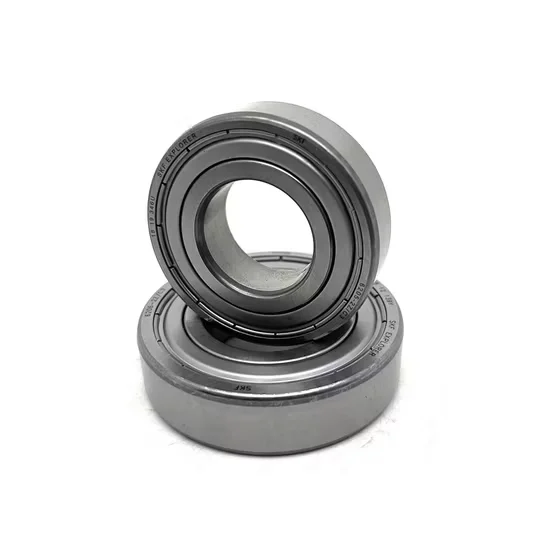 01 Deep Groove Ball Bearings SKF 6204 6205 6206 Deep Groove Ball Bearing Spare Parts View model details
 02 Deep Groove Ball Bearings Original SKF Deep Groove Ball Bearing 6000 6001 6308 6309 6204 6205 6206 for Auto Parts View model details
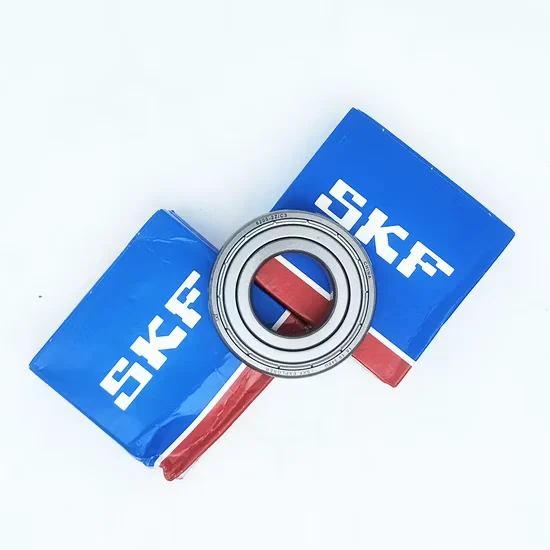 03 Agricultural Machinery Bearings X&S 80607kt 6301-2RS 6205-2Z 6206-2Z Deep Groove Ball Bearing View model details
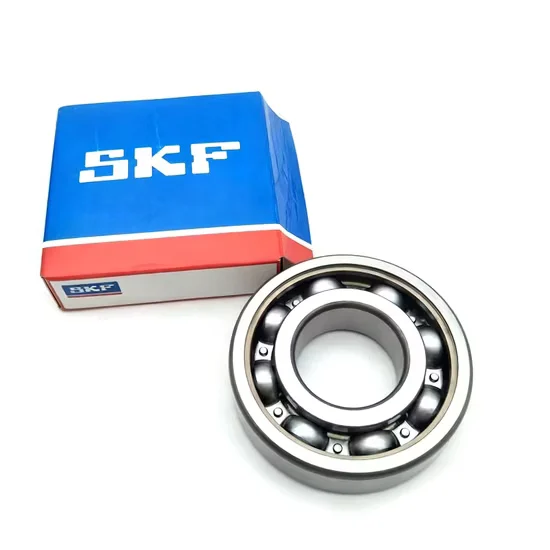 04 Deep Groove Ball Bearings SKF 6205 6206 ZZ C3 Deep Groove Ball Bearing for Automobile Industry View model details
Applications
Where these SKF bearings are used
Keep reading
Related SKF bearing selection guides
More practical notes on SKF designations, precision items and project bearing lists from Project Purchasing Company.
 Procurement & Trade FAQs · · 7 min read Ball Bearing Supplier to Latin America: Genuine SKF, FAG, NSK Wholesale Sourcing genuine ball bearings for Latin America demands strict customs compliance to avoid costly port delays. Master precise HS codes and Certificates of Origin… Read the guide
 Procurement & Trade FAQs · · 8 min read Genuine Ball Bearing Supply to Southeast Asia Wholesale Master Ball Bearing Supply to Southeast Asia by prioritizing customs compliance and verified authenticity over marginal price differences. Learn how mixed-brand consolidation, accurate HS… Read the guide
 Procurement & Trade FAQs · · 7 min read Genuine Ball Bearings for Africa & Middle East Wholesale Supplier Secure genuine ball bearing supply to Africa and Middle East with strict customs compliance and authentic mixed-brand consolidation. Master SONCAP clearance, optimize container loading,… Read the guide

Request a quote
Send your SKF list. Get one itemized written quote.
Project Purchasing Company supplies SKF ball, roller, precision and housed bearing units to distributors, repair workshops and project buyers worldwide. Standard and precision items are priced line by line, with accessories kept on the same quote.