
Private Label OEM Bearings for SKF Defense Application Grade
Most buyers assume "same model number" means "same performance." It does not.
An OEM alternative bearing matching SKF defense-grade specs depends entirely on seal architecture, grease compatibility, and ISO documentation traceability—not merely dimensional interchange. Without verifying these three pillars, private label OEM bearings will fail prematurely in harsh environments, regardless of how closely the model number appears to match.
I was commissioning kiln托轮 bearings at a cement plant in Lagos years ago. The client held an SKF catalog, pointed at a 22320, and said "I want exactly this." We shipped what looked like a perfect private label OEM bearings replacement. Three months later, the cage shattered. When we tore it open, the grease had been choked solid by kiln dust. The client had no idea that defense-grade labyrinth seals and standard rubber contact seals were entirely different worlds. That field failure rewired how I evaluate every OEM bearing interchange request. I now start every conversation with one question: what does your actual operating environment look like?
Let me walk you through how to actually verify whether private label OEM bearings can legitimately stand in for SKF defense application grade components.
What Does "SKF Defense Application Grade" Actually Mean for OEM Alternatives?
Defense-grade is not a single parameter. It is a system-level combination of seal integrity, lubricant retention, and material traceability.
When procurement teams search for "OEM bearing SKF alternative," they often picture a simple dimension-for-dimension swap. The reality is far more layered. SKF’s defense-oriented bearing lines are engineered around a triad: contamination exclusion, thermal stability of the lubricant charge, and auditable material provenance.
Take the seal suffix alone. A standard 2RS1 contact seal works beautifully in clean indoor environments. But throw it into a cement kiln or a desert solar tracker, and that rubber lip becomes a dust trap rather than a dust barrier. Defense-grade applications typically call for labyrinth seals or hybrid configurations where the sealing geometry physically prevents particulate ingress without relying on lip contact that degrades under thermal cycling.
The grease fill matters equally. Defense-spec bearings carry a precisely metered charge of high-temperature grease, often polyurea or lithium complex thickened, selected to resist oxidation and channeling over extended relubrication intervals. A private label OEM bearings supplier who simply "fills with generic EP2 grease" is silently shortening your service life by an order of magnitude.
Then there is documentation. Defense-grade procurement demands material heat numbers, forging certificates, and third-party dimension reports. Without these, you cannot prove the bearing steel meets the inclusion cleanliness standards that govern fatigue life.
How to Verify OEM Bearings Match Defense-Grade Specs?
Request three documents before placing any order: ISO 9001 certificate, material traceability report, and seal structure drawing.
Verification is not about trusting a supplier’s word. It is about building a document chain that survives an auditor’s scrutiny. Here is the structured approach I use when evaluating any private label OEM bearings source.
First, confirm the manufacturer holds a current ISO 9001 certificate issued by an accredited body. This is the baseline. Without it, you have no systemic assurance that production processes are controlled.
Second, demand a material traceability report linking the bearing rings and rolling elements to specific heat lots. Defense-grade procurement in mining, military, or heavy industrial sectors routinely requires this. If a supplier says "our steel is good," ask for the mill certificate showing inclusion ratings and carbon content. Verifiable traceability separates serious manufacturers from workshop operations.
Third, obtain the seal structure drawing. A dimensional cross-reference table tells you the bearing fits the shaft. The seal drawing tells you whether it will survive the environment. Compare the labyrinth gap dimensions, the number of sealing lips, and the elastomer compound against your known contamination and temperature profile.
| Verification Element | Defense-Grade Supplier | Basic OEM Supplier | Unverified Source |
|---|---|---|---|
| ISO 9001 Certificate | Certified, accredited | Self-reported | Not provided |
| Material Traceability | Full batch-level | Sample-level | None |
| Seal Structure Drawing | Verifiable, dimensioned | Generic sketch | Not provided |
| Cross-Reference Table | Complete with clearance | Partial | Handwritten |
| Third-Party Inspection | Available upon request | Occasionally | Never |
A Middle East mining operator once showed me a batch of spherical roller bearings for a conveyor drive. The model numbers matched perfectly. But when I asked for the seal drawing, the supplier sent a single-page brochure with no dimensions. That was the end of the conversation.
Which Seal Type Fits Your Harsh Environment?
Dusty environments demand labyrinth seals. High-temperature scenarios require fluoroelastomer. Clean indoor duty is where standard 2RS1 contact seals belong.
Choosing the wrong seal is the single most common reason private label OEM bearings underperform against their branded counterparts. The seal is not an afterthought. It is the primary defense against contamination-induced fatigue.
Let me break this down by environment type, based on field observations across multiple continents.
Cement kiln托轮 and similar high-dust, high-temperature applications: Labyrinth seals are non-negotiable. The non-contact geometry allows thermal expansion without lip degradation, while the cascading gap path traps coarse particulate before it reaches the rolling zone. In one West African cement plant, switching from contact seals to labyrinth-configured private label OEM bearings extended service life from roughly one quarter to over a full year. The bearing steel was identical. The seal made the difference.
Desert solar tracker and outdoor gearbox applications: Temperature cycling is the enemy. Standard nitrile rubber hardens and cracks under sustained UV and thermal oscillation. Fluoroelastomer seals maintain elasticity across a far wider temperature band. A solar farm operator in the Gulf region learned this the hard way when a full order of standard-sealed bearings required replacement within months due to grease desiccation and sand ingress.
General industrial indoor applications: Here, 2RS1 contact seals are perfectly adequate and cost-effective. The rubber lip maintains a tight barrier against ambient dust and moisture, and the operating temperature stays within nitrile limits.
| Environment | Recommended Seal | Elastomer Material | Contamination Resistance |
|---|---|---|---|
| Heavy dust, high temperature | Labyrinth / Hybrid | Fluoroelastomer | Robust |
| Outdoor, thermal cycling | Contact seal, high-temp | Fluoroelastomer | Resistant |
| Clean indoor, moderate load | 2RS1 contact | Nitrile (NBR) | Standard |
| Washdown, food grade | Sealed + corrosion spec | Fluoroelastomer | Resistant |
The critical insight: do not let a supplier substitute a contact seal for a labyrinth seal just because the outer dimensions match. The performance gap in contaminated environments is enormous.
What Documentation Should You Request Before Ordering?
A complete documentation chain includes: certificate of conformity, material test report, cross-reference table, and third-party inspection report.
Documentation is not paperwork for paperwork’s sake. It is your only leverage when a bearing fails prematurely and you need to determine whether the root cause was application error or manufacturing defect.
Here is the documentation package I insist on for any private label OEM bearings order destined for critical duty.
Certificate of Conformity (CoC): This states that the batch conforms to the specified drawing and standard. It should reference the purchase order number, the bearing model, quantity, and the applicable ISO standard. Without a CoC, you have no formal basis for a claim.
Material Test Report (MTR): This traces the bearing rings and rolling elements back to the steel heat lot. It should include chemical composition, hardness values, and ideally, inclusion cleanliness ratings per ISO 683-17 or ASTM A295.
Cross-Reference Table: This is where many suppliers fall short. A proper cross-reference does not just list "equivalent" model numbers. It confirms dimensional equivalence, internal clearance class, cage type, and seal configuration against the original brand specification. If a supplier hands you a one-line statement saying "22320 = our model X," that is not a cross-reference. That is a guess.
Third-Party Inspection Report: For defense-grade or safety-critical applications, an independent inspection by a recognized body adds a layer of objectivity. The report should cover dimensional accuracy, rotational precision, and visual surface quality.
A European wind farm operator once shared a painful lesson with me. They procured a large batch of yaw bearings from a new private label OEM bearings source based on price alone. No MTR was requested. When several bearings showed early spalling, the operator could not determine whether the steel was substandard or the heat treatment was flawed. The supplier had vanished. The cost of the crane mobilization and downtime dwarfed the original purchase price savings many times over.
How to Avoid Field Failures with Private Label Bearings?
Application matching must override price orientation. Establish a supplier technical audit mechanism before committing to volume orders.
The graveyard of industrial maintenance is filled with bearings that "should have worked." The model number matched. The price was right. But the seal was wrong, the grease was generic, and the documentation was missing.
Here is the practical framework I follow to prevent field failures when sourcing private label OEM bearings.
Step one: define the environment before defining the bearing. Write down the contamination level, temperature range, load profile, and relubrication access. This becomes your specification baseline.
Step two: map the specification to seal, grease, and clearance. Do not start with the model number. Start with the operating conditions. A C3 clearance bearing in a high-temperature application is not optional. It is mandatory.
Step three: audit the supplier’s technical capability, not just their price list. Ask for the seal drawing. Ask for the grease data sheet. Ask for the steel mill certificate. A supplier who hesitates or deflects is telling you something important.
Step four: run a trial batch under monitored conditions. Install instrumented bearings or schedule frequent inspection intervals. Compare the thermal signature and vibration profile against your baseline. Early detection of anomalous behavior saves catastrophic failure downstream.
Step five: build a feedback loop. Record every installation, every inspection, every failure. Over time, this data becomes your most valuable asset in distinguishing reliable private label OEM bearings sources from risky ones.
A South American mining operation learned this systematically. After an initial batch of conveyor bearings failed prematurely due to inadequate seal protection against iron ore dust, they instituted a technical audit protocol. Every new supplier had to submit seal drawings, grease specs, and material certificates before being considered. The failure rate dropped noticeably, and the total cost of ownership fell despite slightly higher unit prices.
Conclusion
Private label OEM bearings can match SKF defense application grade performance, but only when seal architecture, lubricant compatibility, and documentation traceability are verified systematically. Dimensional interchange is the starting point, not the finish line. The difference between a bearing that lasts and one that fails lies in the details that do not appear on a model number chart. Define your environment, demand your documents, and audit your supplier’s technical depth before you commit to volume.
Products in this article
SKF bearings mentioned above
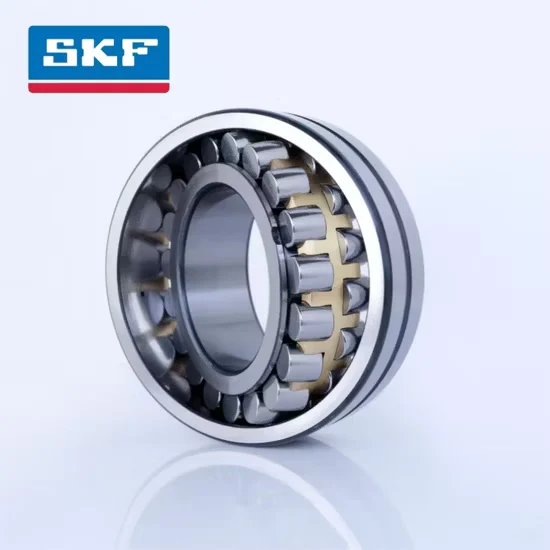 01 Mining and Vibrating Screen Bearings SKF 22320 E-K/C4 Spherical Roller Bearing Genuine Supplier View model details
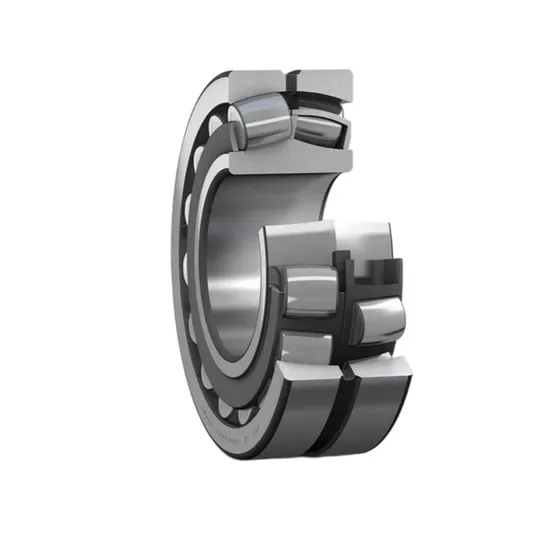 02 Car Bearing 22320E Spherical Roller Bearing Wholesale Supplier View model details
 03 Spherical Roller Bearing 22320EK Spherical Roller Bearing 73mm Width for Heavy-Duty Industrial Applications View model details
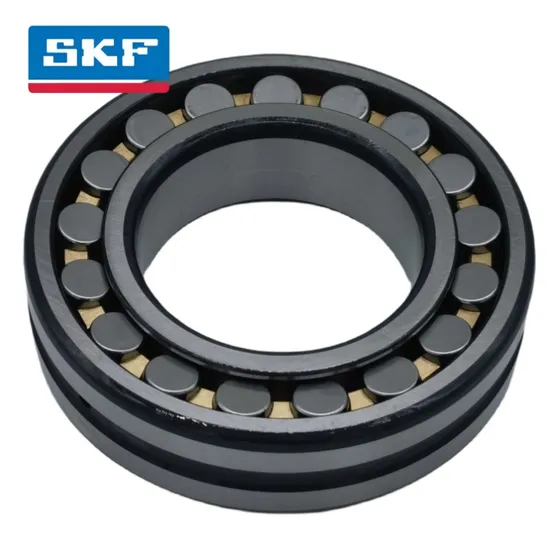 04 Spherical Roller Bearing High Precision SKF Spherical Roller Bearing 22320 E-K/C4 for Conveyor Systems Chrome Steel Gcr15 View model details
Applications
Where these SKF bearings are used
Keep reading
Related SKF bearing selection guides
More practical notes on SKF designations, precision items and project bearing lists from Project Purchasing Company.
 Buying Guide · · 6 min read SKF Ball Bearings Quote: Wholesale Supplier for Bulk & MRO Orders Request a Quote for SKF Ball Bearings that reveals true landed costs beyond unit price. Avoid hidden logistics and customs fees by integrating freight,… Read the guide
 Buying Guide · · 7 min read Spot Fake SKF Ball Bearings: Neutral Buyer Checks & Wholesale Supplier Spotting Fake SKF Ball Bearings requires inspecting physical components, not just packaging. Genuine units feature deep stamped markings and consistent weight, while counterfeits use… Read the guide Buying Guide · · 7 min read SKF Ball Bearing Prices: Wholesale Supplier for Bulk Orders SKF ball bearing prices vary by series and channel, making lowest quotes a risky choice for bulk orders. Genuine units ensure traceability and lower… Read the guide

Request a quote
Send your SKF list. Get one itemized written quote.
Project Purchasing Company supplies SKF ball, roller, precision and housed bearing units to distributors, repair workshops and project buyers worldwide. Standard and precision items are priced line by line, with accessories kept on the same quote.