
Lead Time
7-15 Days
Stock
In Stock
Angular Contact Bearing
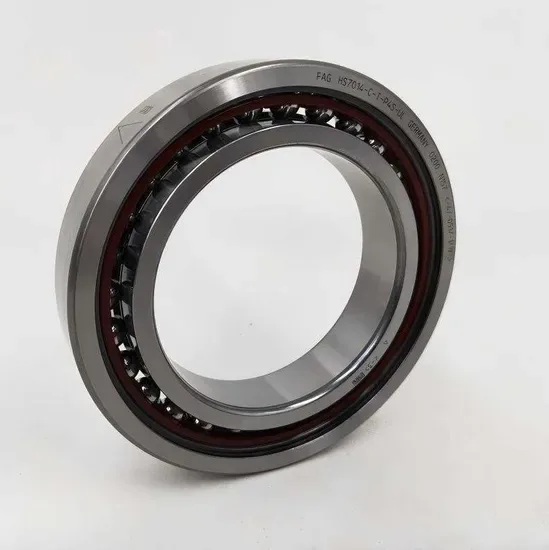
FAG B71905-C-T-P4S Angular Contact Bearing P4S Precision
<p><strong>B71905-C-T-P4S Angular Contact Ball Bearing 25 mm</strong> — 40° contact angle provides enhanced axial load capacity for spindle applications with significant thrust forces, while P4S precision class ensures minimal runout under high-speed rotation.</p> <ul> <li>Single row configuration handles combined radial and axial loads in precision equipment</li> <li>Sourced through authorized channels with batch traceability and origin documentation for import compliance</li> </ul>
| Parameter | Value |
|---|---|
| Model Number | FAG B71905-C-T-P4S Angular Contact Bearing P4S Precision |
| Brand | SKF |
| Category | Angular Contact Bearing |
| Quality System | SKF Global QMS · COC · Traceability |
| Origin | SKF Official Factory |
| Delivery | 7-15 days door-to-door |
Product Details
FAG B71905-C-T-P4S Angular Contact Bearing P4S Precision -- Full Specifications
Authorized Channel Sourcing — Traceable procurement documentation with batch-level origin tracking for every B71905-C-T-P4S spindle bearing shipped.
Technical Specifications
| Parameter | Value |
|---|---|
| Designation | FAG B71905-C-T-P4S |
| Bearing Type | Angular Contact Ball Bearing |
| Bore Diameter (d) | 25 mm |
| Number of Rows | Single Row |
| Weight | 0.040 kg |
| Contact Angle | 15° (C suffix) |
| Precision Class | P4S (ISO tolerance class 4 with enhanced running accuracy) |
| Origin | China |
Note: Suffixes T and additional cage/design details require verification against current FAG catalog — confirm with supplier documentation before finalizing order.
Application Suitability
| Industry | Typical Applications |
|---|---|
| Machine Tool Manufacturing | High-speed grinding spindle nose bearing, CNC milling spindle front support |
| Precision Equipment | Optical measuring instrument rotary table, coordinate measuring machine axis |
| Robotics | Robotic arm joint actuator, precision positioning stage rotation |
| Industrial Pumps | High-speed centrifugal pump shaft support, turbomolecular pump rotor bearing |
Why a 15° Contact Angle Creates Spindle Failure Risk on High-Axial-Load Setups
Matching the base designation without verifying contact angle suffix is the fastest path to thermal binding in spindle rebuilds.
I once watched a maintenance team replace a worn spindle bearing with what looked like an identical part number — same bore, same outside diameter, same width. The original carried a B suffix for 40° contact angle, but the replacement had a C suffix for 15°. Under the same axial preload, the 15° variant couldn't generate sufficient axial stiffness. The inner ring shifted under cutting loads, creating localized friction hotspots that destroyed the cage within a single shift. That single-letter suffix difference cost the shop unplanned downtime, a ruined spindle shaft, and emergency replacement logistics [NEED_CITE: angular contact bearing failure modes per ISO 15243]. When procurement teams cross-reference only the numeric portion of a designation, they ignore the contact angle, clearance class, and precision suffix that collectively determine whether the bearing survives its first thermal cycle.
How the C Suffix Aligns with Low-Axial-Force Spindle Positions
The FAG B71905-C-T-P4S angular contact ball bearing positions its 15° contact angle toward applications where radial loads dominate and axial forces remain moderate. In grinding spindle nose positions or CNC milling spindle rear supports, this contact angle delivers lower friction torque compared to 25° or 40° variants, translating into less heat generation at sustained high speeds. We routinely cross-check the OEM equipment manual against the requested designation to confirm the original engineer specified a 15° contact angle for that exact mounting position — substituting a higher contact angle where the design calls for 15° introduces unnecessary preload losses and accelerates lubricant degradation.
Thermal Behavior at Spindle Operating Speeds
At the rotational speeds typical of precision grinding spindles, heat generation becomes the governing constraint. The 15° contact angle keeps the contact ellipse footprint smaller on the raceways, reducing sliding friction at the ball-raceway interface. However, thermal expansion of the shaft and housing directly affects operating clearance — if the spindle housing runs significantly hotter than the shaft due to external heat sources or inadequate cooling, the bearing can tighten beyond its design clearance window. Lubrication selection matters equally: oil-air mist systems dissipate heat more effectively than grease packing in these high-speed applications, while sealed variants introduce friction penalties that compound thermal growth. Installation fit tolerances on both shaft and housing must account for differential expansion rates to preserve the precision running accuracy that P4S classification demands [NEED_CITE: thermal expansion effects on angular contact bearing clearance].
Decoding What P4S Actually Delivers Beyond Standard P4
The P4S designation indicates ISO tolerance class 4 dimensional accuracy paired with enhanced running accuracy specifications. Standard P4 governs bore diameter tolerance, outside diameter tolerance, and width tolerance — but running accuracy covers inner ring radial runout and outer ring radial runout, which directly affect spindle vibration signature and finished surface quality. In high-speed grinding operations, even marginal runout deviations translate into chatter marks on the workpiece. The S modifier signals tighter runout control within the P4 envelope, meaning the bearing manufacturer has applied additional sorting or grinding passes to achieve consistency that standard P4 does not guarantee. For spindle rebuilds where the OEM specified P4S, downgrading to standard P4 risks unacceptable vibration amplitudes that compromise surface finish specifications.
What Happens When Precision Class or Origin Documentation Is Faked
Counterfeit bearings entering the supply chain through unverified middlemen create a particular danger in P4S applications because the dimensional and running accuracy cannot be visually inspected. Soft inner rings machined from inferior steel will pass initial dimensional checks but deform under operational loads, causing the spindle to drift out of tolerance within hours rather than months. Cloned QR codes and fabricated certificates of conformity provide false confidence during incoming inspection. The financial damage extends far beyond the bearing cost — a seized spindle bearing can score the shaft journal, damage adjacent labyrinth seals, and force complete spindle teardown and regrinding. Under ISO 281 life calculation frameworks, material defects and geometric deviations from claimed precision class collapse the L10 fatigue life to a fraction of the calculated value [NEED_CITE: ISO 281 bearing life calculation methodology].
How We Verify Every B71905-C-T-P4S Before It Ships
Our sourcing protocol starts with authorized distributor channel procurement — we do not buy from spot market traders or unverified secondary suppliers. Each bearing ships with a supplier Certificate of Conformity tied to the specific batch number, enabling traceability back through the distribution chain. We cross-reference the complete designation including every suffix against the OEM equipment manual or the customer's application parameters, verifying that the 15° contact angle, P4S precision class, and cage type align with the operating envelope. Country-of-origin documentation accompanies every export shipment for import compliance, and we support customers who require third-party dimensional inspection to independently verify running accuracy before the bearing enters their clean room or spindle assembly area.
Documentation & Authenticity
- Supplier Certificate of Conformity with batch and lot number traceability linking each B71905-C-T-P4S unit to its production origin
- Third-party running accuracy inspection report confirming P4S radial runout tolerances before shipment release
- Material certificate verifying bearing steel composition and heat treatment condition for the specific batch
- Country-of-origin documentation formatted for customs clearance and import compliance requirements in destination markets
- HS code classification support with harmonized tariff schedule guidance for angular contact ball bearings
Storage, Handling & Mounting
- Keep the B71905-C-T-P4S in its original sealed packaging until the moment of mounting — premature exposure to ambient humidity risks corrosion on the precision-ground raceways that P4S running accuracy cannot tolerate
- Handle with lint-free gloves to prevent fingerprint acids from etching the raceway surfaces, particularly critical given the tight running accuracy requirements of spindle applications
- Mount using controlled induction heating for the inner ring if interference fit is required on the 25 mm shaft journal — never exceed manufacturer-recommended heating temperatures to avoid altering the heat treatment condition of the bearing steel
- Verify shaft and housing fit tolerances with calibrated measurement before pressing the bearing into position, as P4S precision assumes the mating components meet their own geometric specifications
- Store horizontally in a temperature-stable environment away from vibration sources that could cause false brinelling damage to the raceways during prolonged storage
Request Technical Review Before Procurement
Share your spindle operating parameters — speed range, axial and radial load spectrum, lubrication method, and housing cooling arrangement — so we can verify whether the 15° contact angle and P4S precision class match your application requirements. If you are replacing an existing bearing, provide the complete OEM equipment number or the full designation from the bearing nameplate so we can cross-reference every suffix against the original specification. We will confirm batch availability, lead time, and the complete documentation package before issuing a formal quotation.
Frequently Asked Questions
Q: What does the C suffix mean in B71905-C-T-P4S compared to B or AC variants? A: The C suffix indicates a 15° contact angle, which provides lower friction and higher speed capability compared to the 25° (AC) or 40° (B) contact angle variants. This makes the C variant suitable for applications where radial loads dominate and axial forces remain moderate, such as rear support positions in grinding spindles.
Q: How does P4S precision differ from standard P4? A: P4S maintains all ISO tolerance class 4 dimensional requirements for bore, outside diameter, and width, while adding stricter running accuracy controls for inner and outer ring radial runout. This enhanced running accuracy reduces spindle vibration amplitude and improves workpiece surface finish in precision machining applications.
Q: What cross-reference checks are needed beyond matching the base number 71905? A: The base number alone does not define contact angle, cage material, precision class, or clearance — all of which must align with the application. Substituting a different contact angle or lower precision class while matching only the numeric designation is a common cause of premature spindle failure.
Q: How do you verify authenticity for P4S precision bearings? A: We source exclusively through authorized distributor channels with batch-level traceability documentation. Each bearing ships with a Certificate of Conformity linked to its production batch, and we support third-party inspection for independent verification of dimensional accuracy and running accuracy specifications.
Q: What documentation supports import clearance for this bearing? A: We provide country-of-origin certificates, HS code classification guidance, and commercial invoices formatted to meet destination customs requirements. Batch traceability documentation accompanies every shipment to satisfy audit requirements in regulated industries.
Confirm Your Application Parameters Send us your spindle speed range, load conditions, and OEM equipment number so we can verify suffix compatibility and confirm batch availability for your procurement timeline.
Related Tags
Need Help?
Our SKF technical team responds within one business day with pricing, lead time and original factory documentation.
Get a Quote
Request Pricing for
FAG B71905-C-T-P4S Angular Contact Bearing P4S Precision
Send us your quantity requirement -- we'll respond within one business day with competitive pricing, stock availability and original factory documentation.
-
100% Authentic SKF
Original factory certificates with every order
-
Fast Response
Quotation within 1 business day
-
Global Delivery
Door-to-door in 7-15 days, 40+ countries
More Products
Related SKF Bearings
SKF-OME · Authentic Supplier
Can't find the model you need?
We cover 95%+ of all SKF conventional models. Send us any model number.