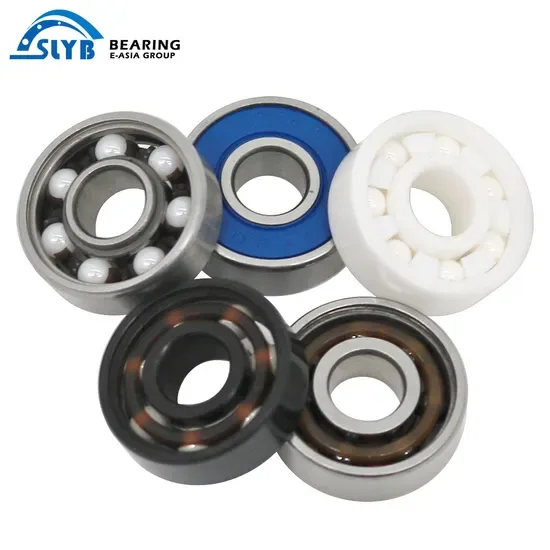
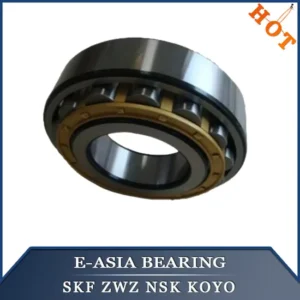
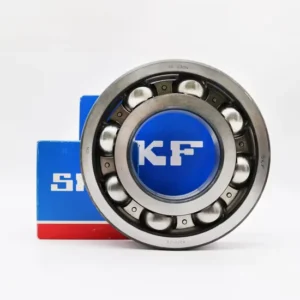
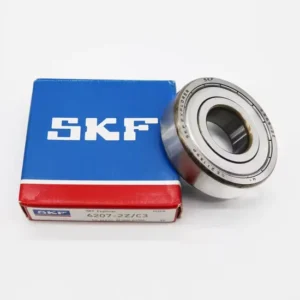
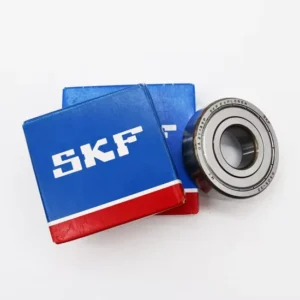
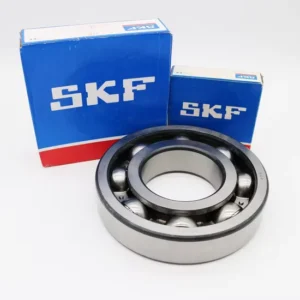
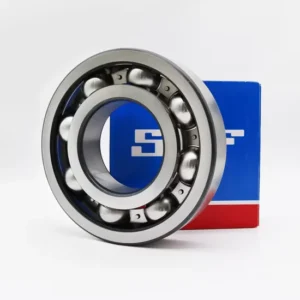
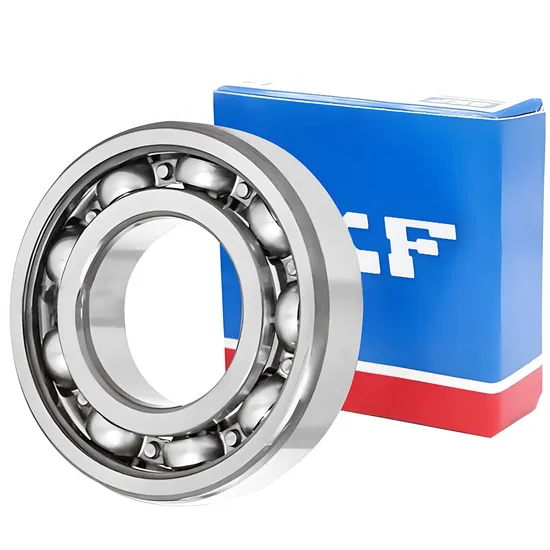
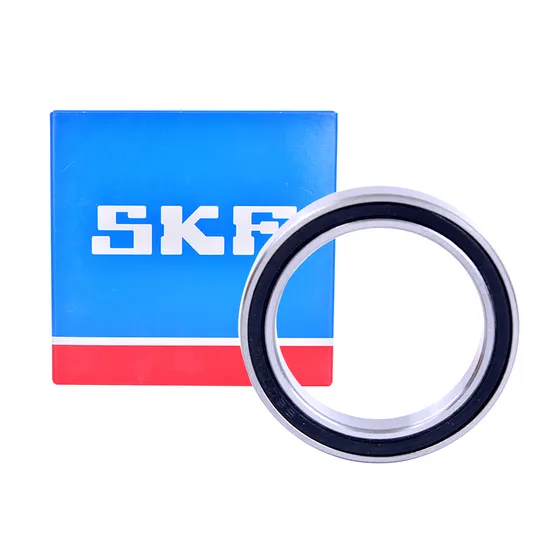
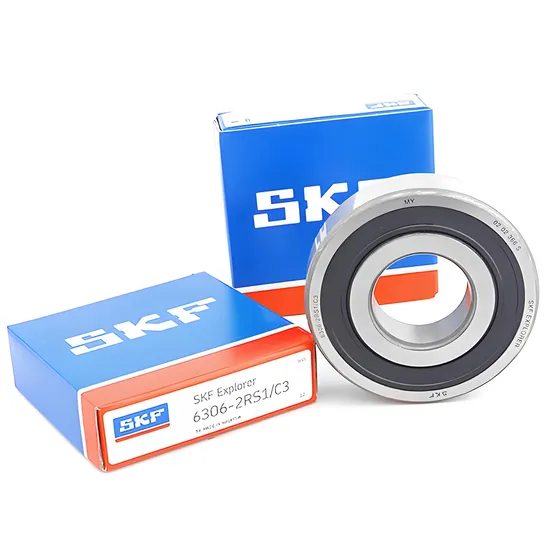
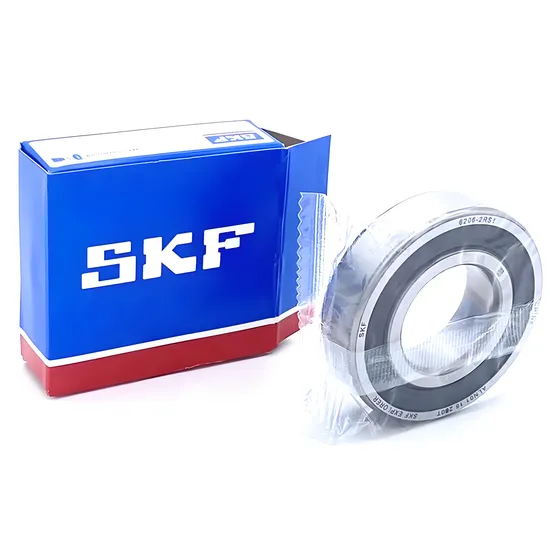
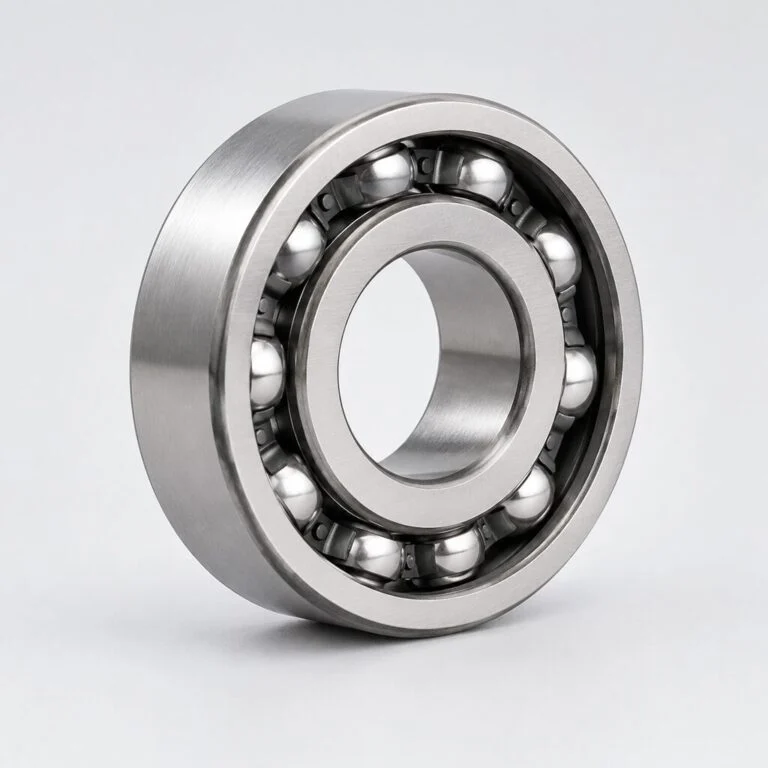
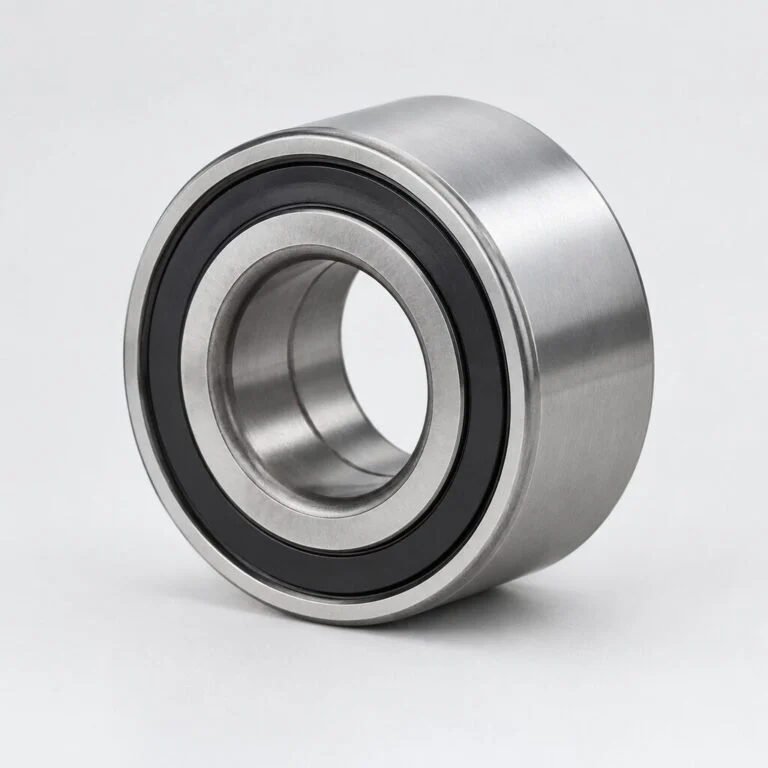
Listed data for this SKF designation; confirm the execution and dimensions against your drawing or application before ordering.
Official App QR Verification — Every FAG 6002-2RS deep groove ball bearing shipment includes scannable traceability codes linked directly to the manufacturer's authentication database.
Technical Specifications
| Parameter | Value |
| Designation | FAG 6002-2RS 6202-2RS 6302-2RS 6003-2RS 6203-2RS 6303- |
| Bearing Type | Deep Groove Ball Bearing |
| Material | Chrome Steel |
| Precision Class | P5 |
| Vibration & Noise Level | Z1V1, Z2V2, Z3V3 |
| Clearance Class | C3 |
| Cage Material | Steel, Nylon, Brass |
| Seal or Shield Type | 2RS |
| Certification | ISO9001, TS16949, ISO9006, QS9000, VDA6.1 |
| Origin | China, Japan, Sweden |
Note: The 2RS suffix designation is unverified and requires manufacturer catalog confirmation.
Application Suitability
| Industry | Typical Applications |
| Automotive | Auto clutch release mechanisms, transmission input shafts |
| Industrial Manufacturing | Machine tool spindle supports, electrical instrumentation |
| Power Transmission | Gearbox intermediate shafts, conveyor drive pulleys |
Why Thermal Expansion Destroys Clutch Bearings Before Fatigue Does
Selecting the right FAG 6002-2RS deep groove ball bearing involves more than just matching basic dimensions; ignoring thermal dynamics inevitably leads to catastrophic seizing in demanding environments.
Clearance selection dictates survival when friction heat outpaces ambient cooling.
During my failure analysis years in Riyadh, I investigated numerous machine tool spindles and automotive clutches where standard clearance bearings simply locked up under load. The intense desert heat combined with operational friction caused inner ring expansion, eliminating internal clearance entirely and generating massive radial preload. Upgrading to P5 precision with C3 internal clearance prevented this thermal binding, proving that dimensional tolerance alone cannot compensate for poor thermal management strategies. Engineers must evaluate the complete thermal profile of the assembly to avoid these destructive failure modes.

Matching Precision Tolerances to High-Speed Spindle Demands
Machine tool spindles and automotive clutch release mechanisms demand exceptional rotational accuracy to prevent harmful vibration transfer to the workpiece or drivetrain. The P5 precision class of this deep groove ball bearing ensures minimal radial runout and strict dimensional tolerances, which are absolutely critical for maintaining surface finish quality in high-speed machining operations. Our global sourcing network secures these specific tolerance grades directly from verified production facilities, ensuring that the exact precision required for your demanding application is consistently met. We strictly avoid commercial-grade substitutions that might compromise the geometric integrity of the spindle assembly, guaranteeing reliable performance across extended production runs.
Managing Friction, Contamination, and Lubrication Starvation
Clutch environments subject bearings to severe axial loads during engagement, combined with high rotational speeds and significant localized heat generation. In such aggressive conditions, lubrication breakdown accelerates wear, while external contaminants like abrasive clutch dust can easily infiltrate the raceway if sealing is inadequate. Selecting appropriate sealing mechanisms and cage materials becomes vital to retain the initial grease fill and exclude microscopic debris from the rolling contact zone. Proper initial lubrication and effective sealing directly influence the operational lifespan, preventing premature spalling, raceway degradation, and catastrophic structural failure under continuous cyclic loading.
Decoding Clearance, Cage Materials, and Vibration Grades
Internal clearance is paramount for operational stability; the C3 designation provides greater-than-normal internal play, accommodating the thermal expansion of the shaft and housing during high-speed operation without inducing destructive preload. Cage material selection offers distinct operational advantages: steel cages provide high mechanical strength for heavy loads, nylon cages reduce weight and operating noise, while brass cages excel in high-temperature or high-vibration environments where polymers might fail. Furthermore, the Z1V1, Z2V2, and Z3V3 vibration and noise classifications allow engineers to specify the exact acoustic and dynamic smoothness required. This ensures that the FAG 6002-2RS deep groove ball bearing operates quietly and smoothly in sensitive instrumentation or precision machine tools, preventing harmonic resonance that could degrade machining accuracy.
The Financial Impact of Premature Seizing and Vibration
Installing a standard clearance bearing in a high-heat clutch application inevitably leads to thermal seizure, causing unplanned downtime and severe collateral damage to the surrounding transmission housing. Similarly, utilizing a lower precision grade in a machine tool spindle introduces unacceptable vibration levels, ruining expensive workpiece surface finishes and accelerating cutting tool wear. These cascading failures frequently void equipment warranties and escalate maintenance costs far beyond the initial component savings. This reality highlights the absolute necessity of strict adherence to ISO 281 life calculation standards and proper application engineering when specifying critical replacement parts for heavy-duty industrial machinery.
Securing Authentic P5 Components in a Market Flooded with Counterfeits
Sourcing genuine P5 precision bearings requires rigorous supply chain validation, as counterfeiters frequently relabel standard P0 bearings with higher precision markings to deceive buyers. We verify every unit through official brand authentication channels and provide complete batch traceability documentation. Our extensive spot inventory covers thousands of part numbers, allowing us to fulfill urgent MRO requirements with mixed-brand consolidation shipments without delaying your production schedule. Furthermore, our technical team provides in-depth cross-reference consultation to ensure the selected cage material and clearance perfectly match your specific operating parameters, entirely eliminating guesswork from your critical procurement process.
Documentation & Authenticity
- Original manufacturer batch traceability documents linking each bearing to its specific production run.
- Official app QR verification codes printed on packaging for immediate field authentication.
- Dimensional and running accuracy inspection reports confirming P5 tolerance compliance before dispatch.
- Material test certificates verifying chrome steel metallurgical composition and hardness standards.
- Certificate of Conformity detailing compliance with ISO9001 and TS16949 quality management systems.
Storage, Handling & Mounting
- Store the C3 clearance bearings in their original sealed packaging to prevent humidity ingress before installation.
- Use clean, lint-free gloves when handling P5 precision raceways to avoid corrosive sweat contamination.
- Maintain ambient storage temperatures away from direct sunlight to preserve the factory-applied rust preventive coating.
- Employ induction heaters for inner ring mounting, strictly avoiding open flames that could alter the chrome steel metallurgy.
- Keep sealed variants unopened until the exact moment of assembly to retain the original factory lubrication fill.
Providing the Right Data for Technical Validation
To ensure optimal selection and accurate L10 life verification, please share your specific radial and axial load profiles, operating speeds, and anticipated temperature ranges for the application. If you are replacing an existing component, providing the original equipment manufacturer part number allows our engineering team to perform a precise cross-reference check against our extensive database. Detailing the exact installation space constraints and environmental exposure enables us to recommend the most suitable cage material and sealing configuration, ensuring the selected bearing delivers maximum reliability and performance in your specific operational context.
Frequently Asked Questions
Q: How can I verify the authenticity of these bearings using official traceability tools?
A: Every genuine unit features a unique QR code on the packaging that links directly to the manufacturer's official verification application. Scanning this code confirms the production batch, origin, and specification details, ensuring you receive authentic P5 precision components rather than relabeled counterfeits. This digital traceability is essential for maintaining warranty compliance in critical automotive and machine tool applications.
Q: What is the difference between standard clearance and C3, and why is C3 chosen for auto clutches?
A: Standard clearance is designed for normal operating temperatures, whereas C3 provides greater internal play. In auto clutches, friction generates significant heat, causing the shaft and inner ring to expand. The C3 clearance accommodates this thermal expansion, preventing the bearing from seizing under load and ensuring smooth disengagement cycles without catastrophic binding or premature raceway fatigue.
Q: How do I choose between steel, nylon, and brass cages for machine tool spindle applications?
A: Steel cages offer high mechanical strength for heavy-load scenarios, while nylon cages reduce weight, lower operating noise, and minimize friction. Brass cages are preferred for high-speed spindles experiencing severe vibration or elevated temperatures where polymer cages might degrade. Selecting the correct cage material ensures the spindle maintains its P5 precision and surface finish quality over extended operational periods.
Q: What do the Z1V1, Z2V2, and Z3V3 precision levels mean for vibration and noise control?
A: These designations classify the vibration and acoustic emission limits, with Z3V3 representing the strictest tolerances. For sensitive electrical instrumentation or high-speed machine tools, specifying Z3V3 ensures minimal vibration transfer, protecting delicate machining operations and reducing audible noise. Lower grades like Z1V1 are typically sufficient for general power transmission where acoustic performance is less critical.
Q: How do you handle cross-reference equivalents when the original part number is obsolete?
A: Our engineering team utilizes comprehensive manufacturer databases to identify dimensionally and functionally equivalent alternatives across premium global brands. By analyzing the exact load ratings, precision class, and internal clearance of your original specification, we can recommend a suitable replacement that maintains the required performance standards without compromising the integrity of your machine tool or automotive assembly.