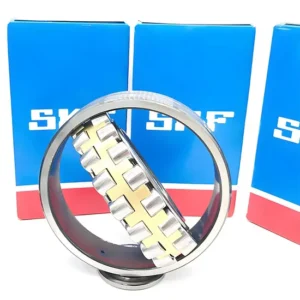
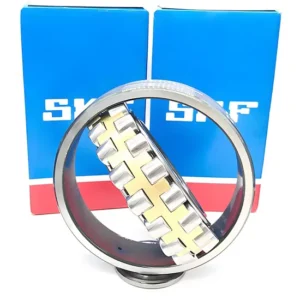
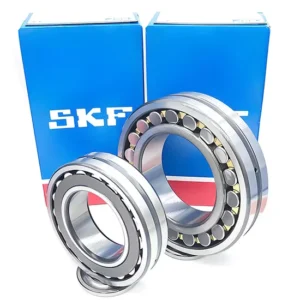
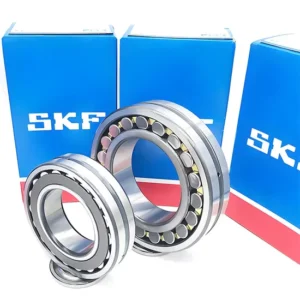
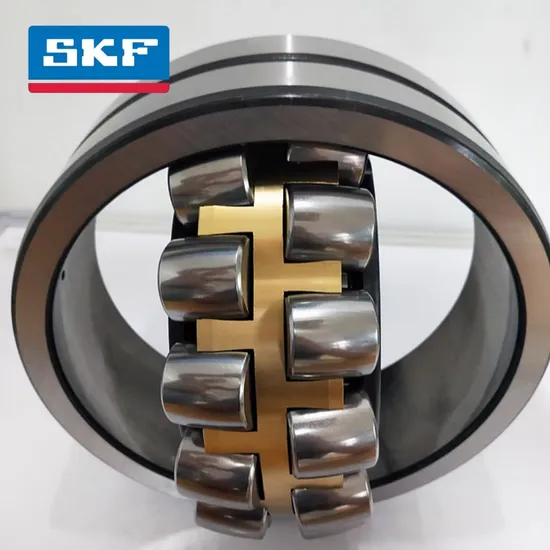
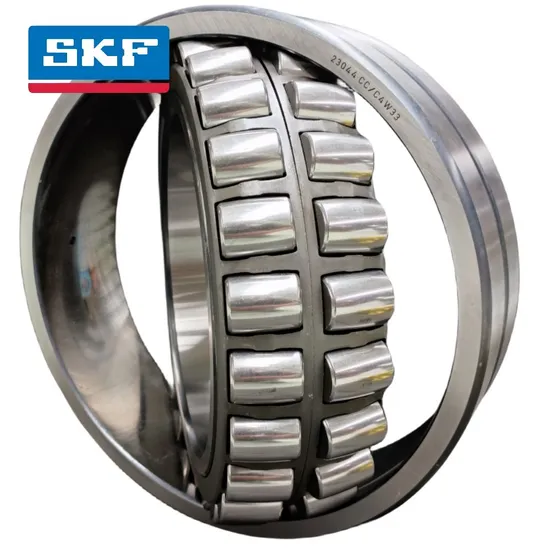
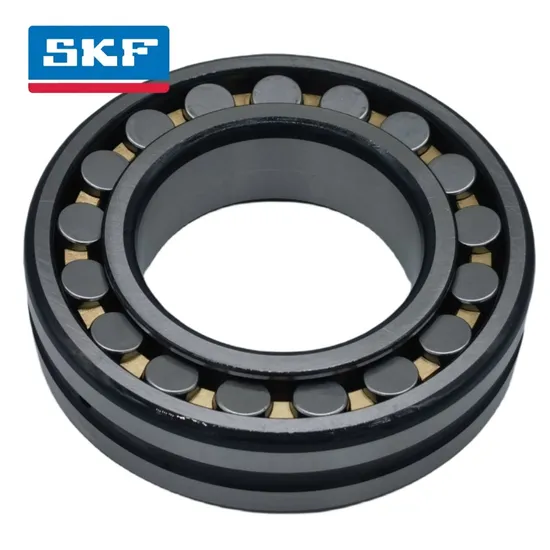
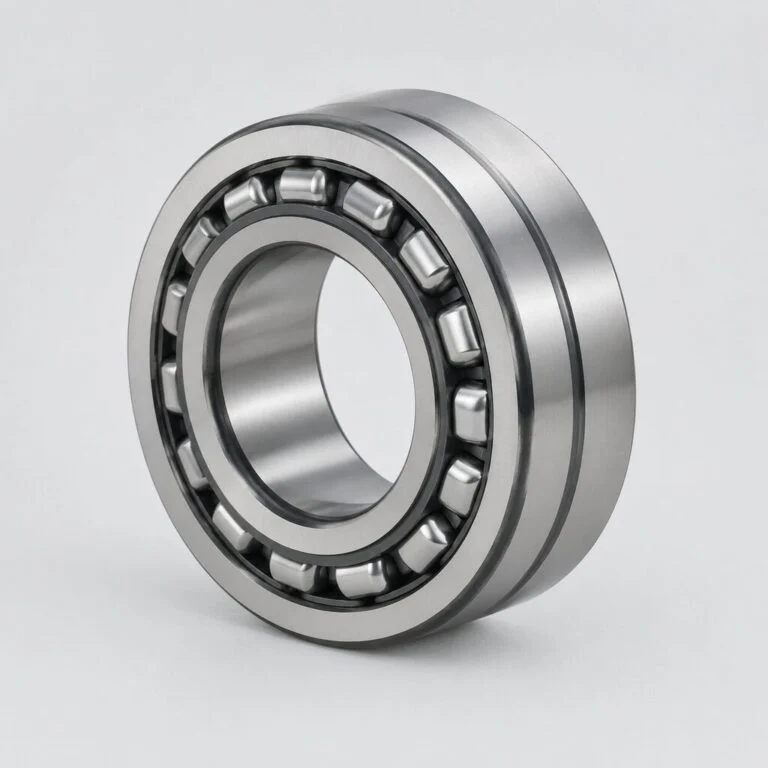
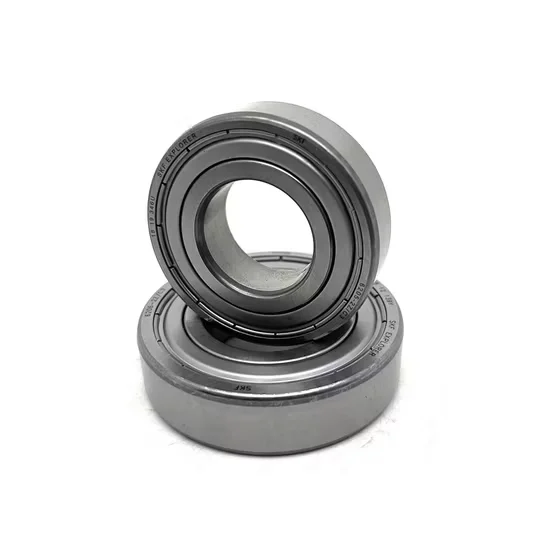
Listed data for this SKF designation; confirm the execution and dimensions against your drawing or application before ordering.
Unified Multi-Brand Sourcing — Consolidate your SKF 22214 22215 22216 spherical roller bearing orders alongside other premium makes in a single mixed-container shipment, eliminating multi-vendor coordination headaches.
Technical Specifications
| Parameter | Value |
| Designation | SKF 22214 22215 22216 |
| Product Type | Spherical Roller Bearing |
| Number of Rows | Double |
| Material | Bearing Steel |
| Load Direction | Radial |
| Separated | Unseparated |
| Precision Class | P0, P6, P5, P4, P2 |
| Clearance Class | C0, C3, C4 |
| Origin | Sweden |
| HS Code | 8482300000 |
Application Suitability
| Industry | Typical Applications |
| Mining & Quarrying | Vibrating screen exciter mechanisms, primary jaw crusher eccentric shafts |
| Metallurgy | Steel mill continuous caster roll guides, rolling mill gearbox pinions |
| Pulp & Paper | Paper machine dryer cylinder felt rolls, press section suction rolls |
Why Open Flames Destroy the SKF 22214 22215 22216 spherical roller bearing Before Installation
Direct torch heating irreversibly alters the metallurgical structure, causing premature spalling under heavy radial loads.
During my field service years at Chilean copper mines, I witnessed maintenance crews using open flames to force-fit heavy bearings onto shafts. The localized overheating completely ruined the hardened microstructure of the rings. Within months, the raceways exhibited severe spalling, leading to catastrophic unplanned downtime. Proper induction heating and strict adherence to mounting protocols are non-negotiable for these heavy-duty components. Ignoring these thermal limits guarantees rapid mechanical failure.

Matching Double-Row Geometry to Extreme Radial Loads
The double-row configuration inherently provides exceptional radial load capacity while accommodating moderate axial loads in both directions. When sourcing the SKF 22214 22215 22216 spherical roller bearing for vibrating screens or crushers, the self-aligning capability compensates for shaft deflections and housing misalignments. Our engineering team cross-references your specific equipment requirements to ensure the selected internal geometry matches the operational shock loads, preventing edge stressing on the rollers and maximizing service life in demanding environments.
Navigating Vibration, Shock, and Thermal Expansion
Heavy machinery environments subject components to intense vibration and fluctuating temperatures. In vibrating screens, the high-frequency oscillations demand precise internal clearance to prevent roller skidding and cage wear. Furthermore, frictional heat generated during continuous operation causes the inner ring to expand more than the outer ring. Selecting the appropriate clearance class is critical to maintain optimal operating internal clearance once the system reaches thermal equilibrium, preventing destructive preload conditions during continuous heavy-duty operation.
Decoding Clearance and Precision for Heavy-Duty Performance
These standard basic designations lack additional suffixes, indicating an open, unsealed configuration optimized for oil or grease lubrication in housings with external sealing. The available C3 and C4 clearance classes are specifically engineered to accommodate the thermal expansion and tight interference fits typical in crusher and mill applications. While P0 precision suffices for general heavy machinery, specifying P6 or P5 reduces vibration and noise in high-speed paper machine applications, ensuring smoother cylinder rotation and significantly better paper surface finish.
The Hidden Financial Drain of Incorrect Clearance Selection
Choosing a standard C0 clearance for an application requiring C3 often results in zero or negative operating clearance once the shaft expands under load. This preloads the rollers excessively, generating immense frictional heat and accelerating lubricant degradation. Such misconfigurations inevitably lead to premature smearing, cage failure, and eventual bearing seizure. Aligning the internal clearance with the actual thermal and mechanical environment is essential to avoid these costly operational disruptions and maintain continuous production schedules.
Securing Authentic Heavy-Duty Components
Procuring genuine components requires more than just matching the part number; it demands verifying the exact internal geometry and clearance. Many suppliers mistakenly supply C0 clearance when C3 is explicitly required for vibrating equipment, leading to rapid field failures. We maintain massive spot inventory of these specific heavy-duty models and provide complete factory batch traceability. Our technical team actively verifies the cross-reference alignment for precision and internal design before dispatch, ensuring you receive exactly what your machinery demands.
Documentation & Authenticity
- Certificate of Conformity validating the Swedish origin and genuine manufacturing pedigree.
- Original factory batch traceability documents linking the specific units to their production run.
- Official app QR code verification for instant authenticity checks upon delivery.
- Material inspection reports confirming the metallurgical grade of the bearing steel rings and rollers.
- Dimensional and running accuracy inspection reports verifying the selected P-class tolerances before shipment.
Storage, Handling & Mounting
- Store the unsealed units in their original moisture-barrier packaging until mounting to prevent humidity ingress on the exposed raceways.
- Utilize controlled induction heaters for mounting; never apply open flames, which destroy the hardened microstructure of the bearing steel.
- Apply clean lint-free gloves when handling the open bearing rows to prevent skin acids from initiating surface corrosion.
- Follow strict drive-in distance calculations for tapered shaft adapters to achieve the precise residual internal clearance required for C3 or C4 classes.
- Ensure external housing seals are fully functional before operation, as the standard open design relies entirely on the housing for contamination exclusion.
Engineering Review & Inquiry Preparation
To facilitate accurate technical verification, please provide your specific radial and axial load profiles, operating speeds, and expected thermal gradients. Supplying the original OEM equipment number allows our team to perform precise cross-reference checks and confirm the optimal clearance class. This data enables us to calculate the theoretical L10 life and recommend the most suitable internal geometry for your exact application, ensuring long-term reliability and minimized maintenance interventions.
Frequently Asked Questions
Q: How do C3 and C4 clearances differ for these specific models?
A: C3 provides greater internal clearance than standard C0, accommodating moderate thermal expansion and interference fits. C4 offers even larger clearance, specifically designed for extreme temperatures or heavy vibration environments like vibrating screens, ensuring the operating clearance remains positive under severe thermal and mechanical loads.
Q: What is the best way to verify the authenticity of the received units?
A: Upon delivery, scan the official QR code printed on the packaging using the manufacturer's designated mobile application. Additionally, cross-check the physical batch numbers engraved on the bearing rings against the provided Certificate of Conformity and factory traceability documents to ensure complete pedigree verification.
Q: Can these open bearings be used in highly contaminated mining environments?
A: Yes, but because they lack integrated seals, they must be installed in housings equipped with robust external sealing systems, such as labyrinth or taconite seals. This external protection is critical to prevent abrasive mining dust from entering the roller paths and degrading the lubricant.
Q: How should we handle cross-referencing when replacing older equipment bearings?
A: Provide the existing part number and the OEM machinery model to our engineering team. We will verify the dimensional equivalence and, more importantly, validate the internal clearance and precision class to ensure the replacement matches the actual operational demands rather than just the basic envelope dimensions.