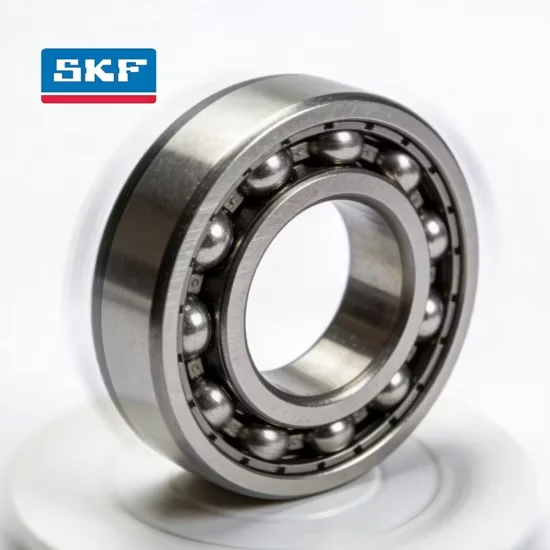
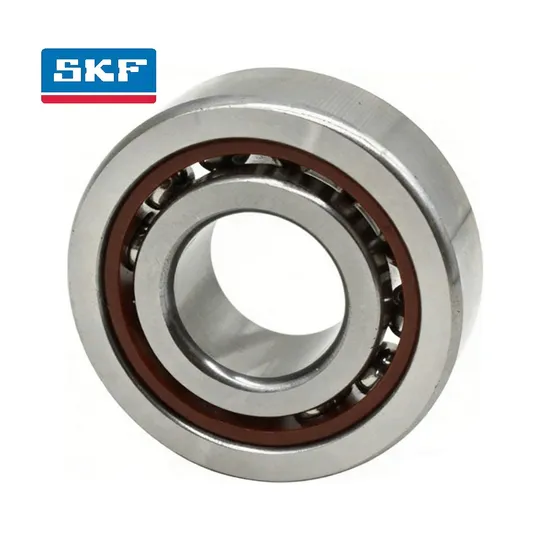
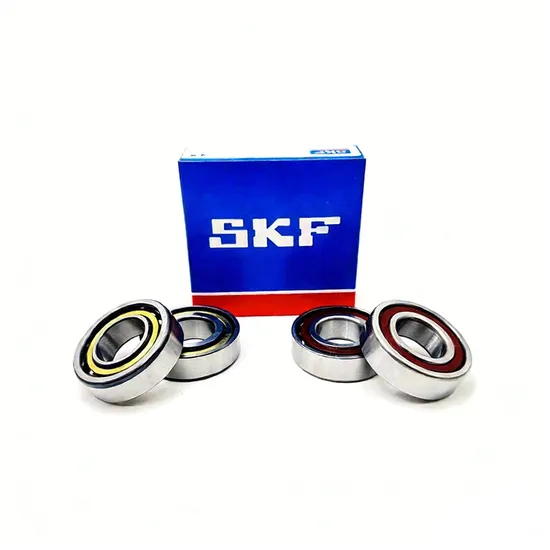
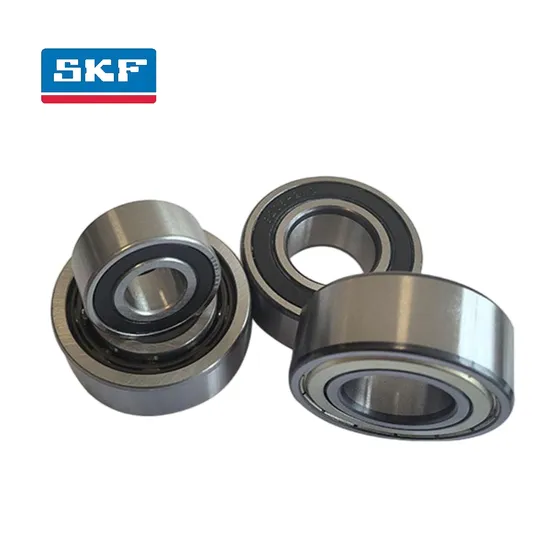
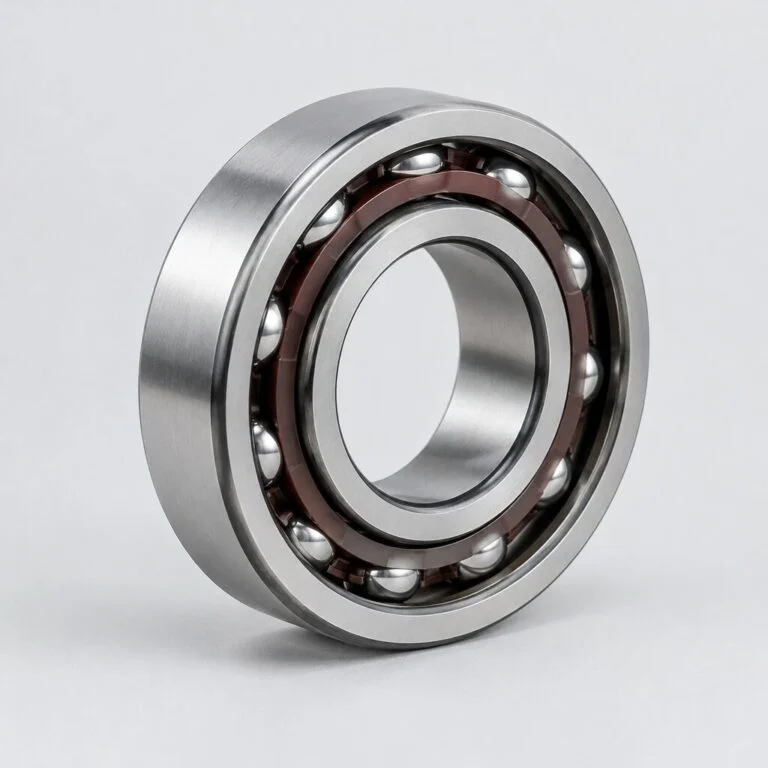
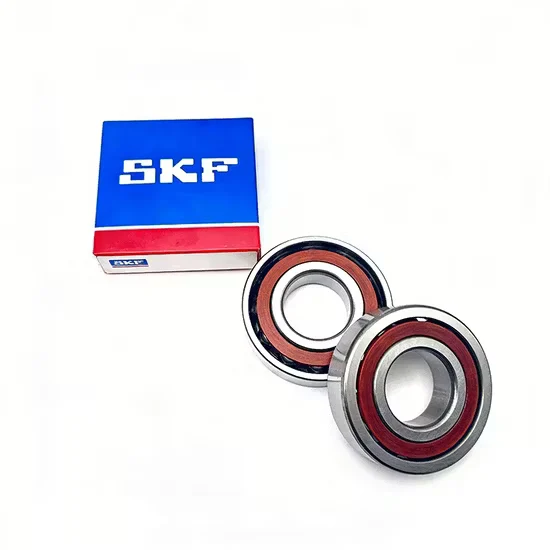
Listed data for this SKF designation; confirm the execution and dimensions against your drawing or application before ordering.
Authenticity via QR scan — Every SKF 3305-a double row angular contact ball bearing ships with verifiable factory batch codes accessible through the official manufacturer app.
Technical Specifications
| Parameter | Value |
| Designation | SKF 3305-a |
| Bearing Type | Double Row Angular Contact Ball Bearing |
| Contact Angle | 30° |
| Aligning | Non-Aligning Bearing |
| Separated | Separated |
| Rows Number | Double |
| Load Direction | Radial Bearing |
| Material | Bearing Steel |
| Precision Rating | P0, P2, P4, P5, P6 |
| Type | Ball |
| Structure | Angular Contact |
| Cage | Steel Cage, Copper Cage, Nylon Cage |
| Lubrication | Oil, Grease |
| Origin | Jiangsu China |
Note: The "-a" suffix is currently unverified and requires official manufacturer catalog confirmation for exact internal design variants.
Application Suitability
| Industry | Typical Applications |
| Automotive | High-speed transmission shafts, steering column mechanisms |
| General Machinery | Conveyor drive pulleys, industrial fan impellers |
| Machine Tools | Spindle orientation gears, feed drive shafts |
Thermal Seizure in Automotive Gearboxes Often Traces Back to the SKF 3305-a Double Row Angular Contact Ball Bearing Suffix
Mismatched internal geometries silently convert high-speed rotational energy into destructive friction heat.
Having analyzed countless seized gearboxes at international trade shows, I frequently see procurement teams focus on the base model number while treating suffix variations as minor formatting differences. In high-speed automotive machinery, ignoring these design modifiers leads to incorrect contact angles, causing rapid overheating and catastrophic seizure. When replacement parts are sourced without verifying these critical suffixes, the entire drivetrain suffers from accelerated fatigue. Maintenance engineers often misdiagnose these failures as lubrication breakdowns, overlooking the fundamental geometric incompatibility installed during the last rebuild.

Aligning the SKF 3305-a Double Row Angular Contact Ball Bearing with Drivetrain Demands
Modern automotive and general machinery drivetrains demand components that handle combined loads without compromising rotational smoothness. The SKF 3305-a double row angular contact ball bearing accommodates these complex force vectors through its dual-row architecture, effectively managing both radial weight and axial thrust. Our engineering team cross-references your specific load profiles to ensure the selected configuration matches the operational envelope. By analyzing the exact force distribution within your gearboxes, we prevent the localized stress concentrations that typically lead to premature raceway spalling and cage fracture.
Navigating Thermal and Lubrication Extremes in Continuous Operation
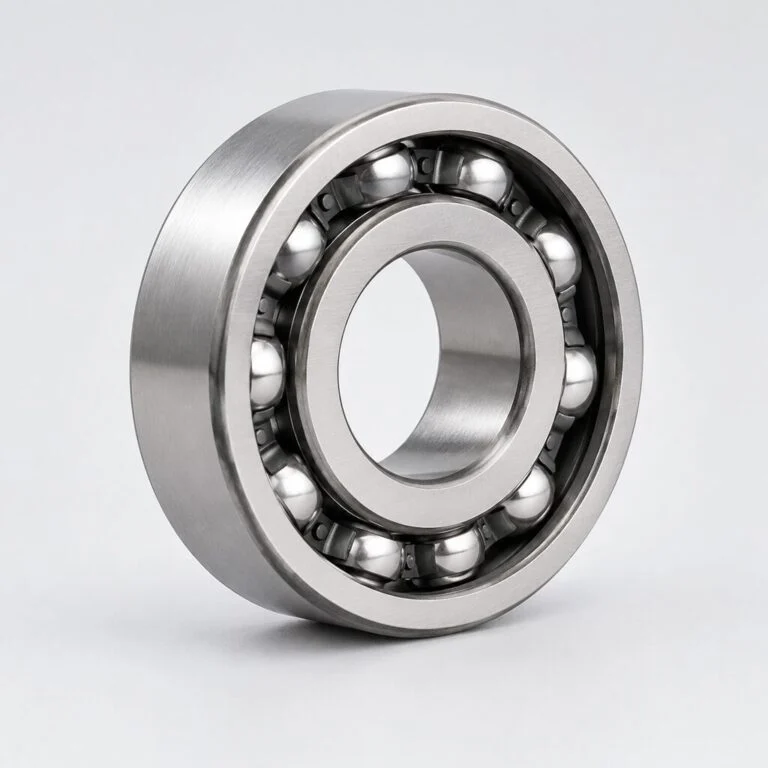
High-speed shafts generate substantial thermal expansion, which directly impacts internal clearance and lubricant film thickness. When radial and axial loads fluctuate rapidly, the chosen cage material and lubrication method must prevent metal-to-metal contact under extreme pressure. Inadequate grease selection or improper oil flow rates accelerate cage wear, especially when ambient temperatures elevate the operating baseline beyond standard limits. Furthermore, the absence of integrated seals in open designs requires strict external contamination control to protect the highly polished raceways from abrasive particulate ingress.
Decoding the 30-Degree Contact Angle and Cage Material Options
The 30° contact angle provides an optimized balance for absorbing combined radial and axial forces typical in automotive gearboxes and precision equipment. Buyers can specify steel, copper, or nylon cage variants depending on the specific vibration and speed requirements of the machinery. Steel cages offer structural rigidity for heavy shock loads, maintaining their integrity even under severe mechanical stress. Nylon cages reduce friction and operate quietly at higher speeds, minimizing the overall energy loss within the assembly. Copper cages excel in dissipating heat and resisting chemical degradation from certain synthetic lubricants used in harsh industrial environments. Selecting the correct precision class, ranging from P0 to P6, ensures the running accuracy aligns with the tight tolerances required for high-speed spindles and steering mechanisms.
The Financial Drain of Premature Drivetrain Replacements
Specifying an incompatible bearing variant forces maintenance teams into unplanned downtime and costly emergency replacements. A single seized component in a critical automotive assembly line can halt production, leading to massive revenue losses and voided equipment warranties. According to failure analysis frameworks, geometric mismatches and improper precision class selections are primary drivers of premature fatigue and surface distress. The hidden costs extend far beyond the price of the replacement part, encompassing the labor hours required for teardown, the collateral damage to adjacent shafts and housings, and the expedited shipping fees for emergency spares.
Securing Traceable Components for Mixed-Brand MRO Projects
Sourcing genuine components for mixed-brand consolidation orders often introduces traceability risks, which we eliminate by providing complete batch documentation for every SKF 3305-a double row angular contact ball bearing. Our massive spot inventory covers thousands of standard and special part numbers, preventing project delays caused by typical multi-week lead times from direct channels. We offer flexible minimum order quantities, accommodating both single-unit emergency spares for urgent breakdowns and full container shipments for scheduled overhauls. Our technical team provides cross-brand equivalent model consultation to verify replacements when original part numbers are obsolete or discontinued. Furthermore, we conduct rigorous dimensional inspections to confirm the selected precision class and contact angle before dispatch, ensuring absolute compatibility with your machinery.
Documentation & Authenticity
- Certificate of Conformity verifying the exact P-class precision rating for your specific machinery tolerance.
- Original factory batch traceability records linking the 30° contact angle variant to its production date.
- Dimensional and running accuracy inspection reports confirming P4 or P6 tolerances prior to shipment.
- Material certification validating the bearing steel composition and heat treatment hardness standards.
- Official manufacturer QR verification codes attached to the packaging for immediate authenticity checks.
Storage, Handling & Mounting
- Store the separated bearing components in original packaging to prevent moisture ingress and corrosion on the steel cages.
- Maintain strict climate control to avoid thermal distortion of the nylon cage variants before installation.
- Use clean, lint-free gloves when handling the 30° contact angle raceways to prevent microscopic surface contamination.
- Apply induction heating for inner ring mounting to preserve the precise P-class running accuracy without mechanical force.
- Verify the correct oil or grease lubrication type matches the specific cage material before final assembly.
Engineering Data Required for Accurate Technical Review
To ensure optimal performance and longevity, please share your specific radial and axial load profiles, operating speeds, and thermal conditions. Providing the exact OEM equipment model numbers allows our engineers to perform precise cross-reference verification and calculate the expected L10 fatigue life under your exact operating parameters. Detailing the installation space constraints helps us recommend the most suitable cage material and lubrication setup for your application. Additionally, specifying the ambient environment, including exposure to dust or moisture, enables us to advise on the necessary external sealing arrangements to protect the open bearing design.
Frequently Asked Questions
Q: What does the suffix indicate on this specific bearing model?
A: While base models define the primary dimensions, suffixes dictate internal geometric modifications. In high-speed automotive applications, ignoring such design modifiers can lead to incorrect contact angles and rapid thermal seizure. Therefore, verifying the exact meaning of this specific suffix through the official manufacturer catalog is mandatory to ensure it matches your machinery's internal clearance and load requirements.
Q: How should I choose between steel, copper, and nylon cages?
A: The selection depends heavily on your operational environment. Steel cages provide maximum structural rigidity for heavy shock loads, while nylon cages reduce friction and operate quietly at elevated speeds. Copper cages are ideal for applications requiring superior heat dissipation or exposure to aggressive synthetic lubricants. We evaluate your specific speed and vibration profiles to recommend the optimal material.
Q: What are the practical differences between P0 and P6 precision classes?
A: Standard P0 class is suitable for general machinery where tight tolerances are not critical. In contrast, P6 and higher precision classes are essential for automotive transmissions and machine tool spindles, ensuring minimal vibration and precise rotational accuracy. Selecting the appropriate class prevents premature wear and maintains the operational integrity of high-speed equipment.
Q: How can I verify the authenticity of the delivered components?
A: Every genuine component ships with verifiable factory batch codes and a Certificate of Conformity. You can scan the official manufacturer QR codes on the packaging using their dedicated app to confirm the production origin. Additionally, we provide independent dimensional inspection reports that validate the physical specifications against the declared precision class before the items leave our facility.
Q: What lubrication strategy is recommended for a 30-degree contact angle setup?
A: The optimal strategy depends on the rotational speed and thermal load. High-speed automotive applications typically require oil lubrication to effectively dissipate heat and maintain a stable film thickness. Conversely, general machinery operating at moderate speeds often benefits from grease lubrication for simplified maintenance. We analyze your specific operating parameters to recommend the correct lubricant type and replenishment interval.