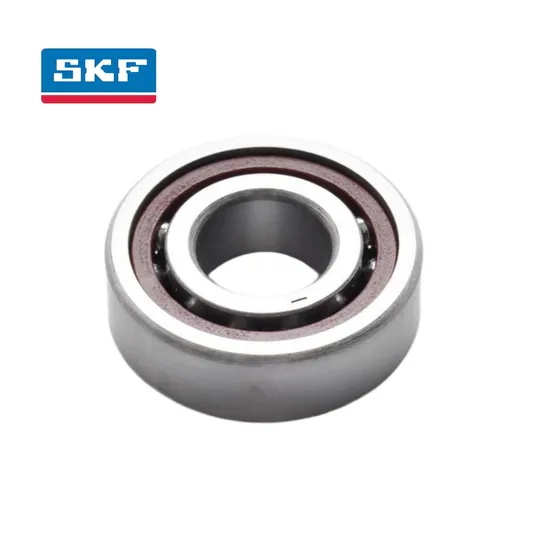
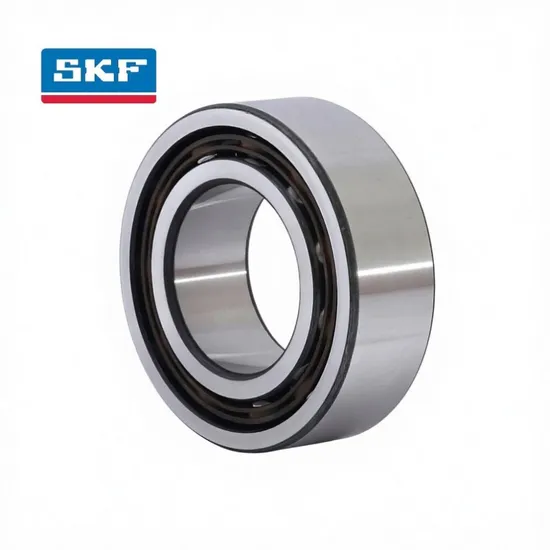
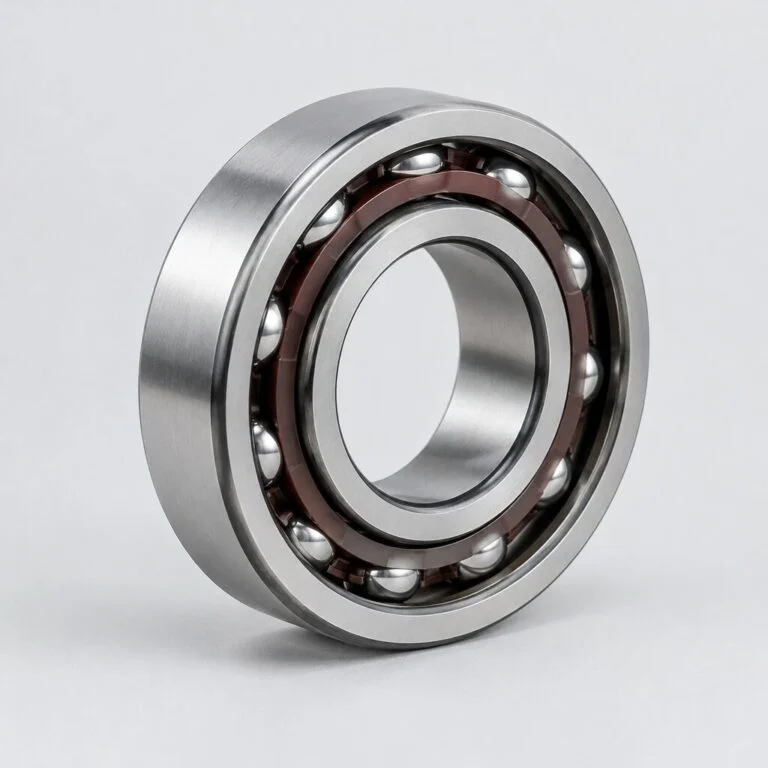
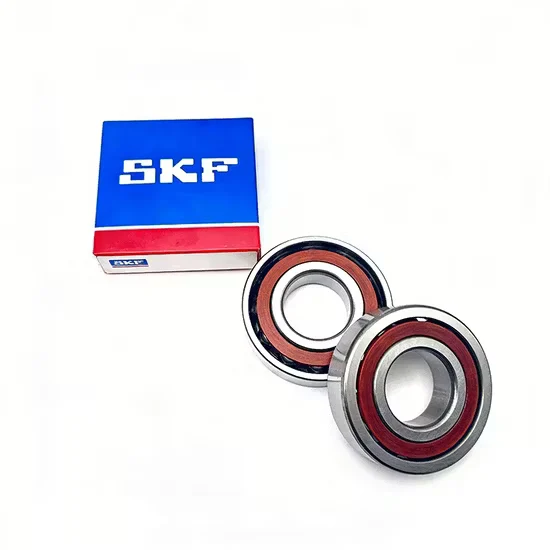
Listed data for this SKF designation; confirm the execution and dimensions against your drawing or application before ordering.
Authenticity Via QR Scan — Every SKF 3308-a Tn9 double row angular contact ball bearing we supply includes a verifiable QR code linking directly to the manufacturer's official authentication app.
Technical Specifications
| Parameter | Value |
| Designation | SKF 3308-a Tn9 |
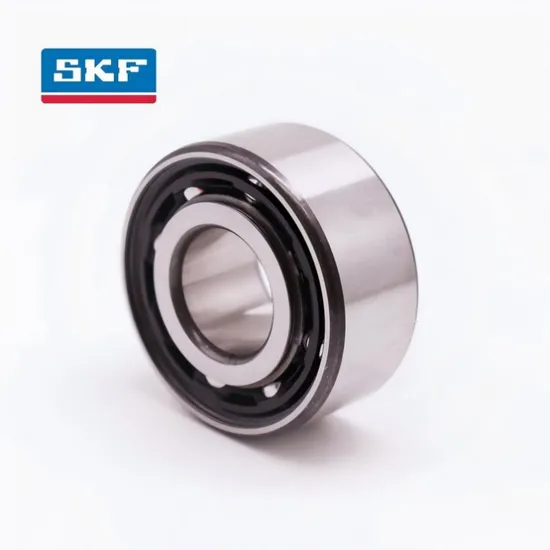
| Bearing Type | Double Row Angular Contact Ball Bearing |
| Contact Angle | 30° |
| Aligning | Non-Aligning Bearing |
| Number of Rows | Double |
| Material | Bearing Steel |
| Precision Class | P0, P2, P4, P5, P6 options |
| Cage Material | Nylon Cage (TN9), Steel Cage, Copper Cage options |
| Lubrication | Oil or Grease |
| Origin | China |
Note: The "-a" suffix remains unverified in standard public catalogs and requires manufacturer catalog confirmation prior to final order.
Application Suitability
| Industry | Typical Applications |
| Machine Tool Manufacturing | High-speed spindle assemblies and rotary tables |
| Precision Equipment | Robotics joint actuators and indexing mechanisms |
| General Manufacturing | High-speed pumps and compressor rotors |
Why Cage Material Dictates the Survival of Your SKF 3308-a Tn9 Double Row Angular Contact Ball Bearing
Swapping a polyamide cage for a standard steel alternative under high-vibration conditions guarantees premature structural failure.
I once traced a completely seized spindle in a heavy-duty textile printing machine back to a seemingly minor procurement substitution. The original engineering design specifically mandated a glass fiber reinforced polyamide cage to dampen operational vibration, but a standard pressed steel cage was installed instead to cut costs. The resulting high-frequency resonance shattered the steel cage, locking the main shaft entirely and destroying the housing. When sourcing a SKF 3308-a Tn9 double row angular contact ball bearing, ignoring the specific cage suffix turns a precision component into a critical mechanical liability. Procurement teams often overlook these subtle design variations, leading to catastrophic downtime that far exceeds the initial savings.

Matching the 30° Contact Angle to Combined Load Profiles
The 30° contact angle inherent in this SKF 3308-a Tn9 double row angular contact ball bearing optimizes the distribution of both radial and axial forces across the raceways. In high-speed pump and compressor applications, this specific geometry prevents internal skidding when axial thrust fluctuates during startup and shutdown cycles. The double row arrangement further enhances the rigidity of the shaft system, resisting tilting moments that would otherwise accelerate uneven wear. Our sourcing network ensures that the exact internal geometry matches your operational demands, avoiding the premature fatigue caused by mismatched contact angles in complex mixed-load environments.
Managing Thermal Expansion and Lubrication Starvation
High-speed machinery generates significant friction heat, which directly impacts internal clearance and lubricant viscosity within the bearing envelope. If the operating temperature rises excessively, standard grease can degrade rapidly, leading to metal-to-metal contact and severe surface scoring. Selecting the correct initial clearance class is critical, as it accommodates the differential thermal expansion between the steel shaft and the housing during continuous operation. Furthermore, ensuring the lubrication interval perfectly matches the rotational speed prevents starvation, a primary driver of microscopic surface fatigue and eventual spalling. Proper oil or grease selection must also account for the specific sealing arrangement to prevent contaminant ingress without introducing excessive friction.
Decoding the TN9 Polyamide Cage and Precision Class Interaction
The TN9 suffix denotes a glass fiber reinforced polyamide cage, which is substantially lighter than machined brass or pressed steel alternatives. This reduced mass lowers centrifugal forces on the rolling elements at high rotational speeds, minimizing friction and heat generation. Polyamide cages also offer superior damping characteristics, absorbing micro-vibrations that would otherwise accelerate raceway fatigue. While steel or copper cages are available as options for extreme temperature environments, the TN9 design remains the optimal choice for standard high-speed machinery where vibration control is paramount. Coupled with this, selecting the appropriate precision class—from standard P0 up to ultra-precision P2 or P4—dictates the running accuracy and noise levels. Higher precision grades ensure minimal radial runout, which is absolutely essential for maintaining the tight tolerances required in machine tool spindles and robotics actuators.
The Cascading Impact of Incorrect Clearance and Precision Selection
Installing a bearing with inadequate internal clearance in a high-speed spindle leads to* under load. This over-pressurization generates extreme friction heat, rapidly degrading the lubricant and causing catastrophic raceway spalling long before the calculated L10 life is reached. Such unplanned downtime not only halts production but often damages adjacent precision components, multiplying the repair costs exponentially. Aligning the clearance class and precision grade with the actual thermal and dynamic profile of the application is essential to avoid these compounding mechanical failures. Ignoring these parameters voids any reliability guarantees and turns a predictable maintenance schedule into a series of emergency breakdowns.
Securing Exact Suffix Matches for Critical Machinery
Procuring the correct bearing goes far beyond matching the basic outer dimensions; the cage, clearance, and precision suffixes dictate operational survival. We cross-verify every TN9 polyamide cage designation against your specific vibration and speed parameters to prevent the exact type of catastrophic cage failure I have investigated in the field. Our flexible consolidation shipping allows you to mix single-unit emergency spares with bulk project orders, ensuring your maintenance inventory is always precisely aligned with your machinery's actual requirements. Furthermore, we provide comprehensive cross-reference consultation, ensuring that if an exact replacement is unavailable, any alternative proposed maintains the identical internal geometry and load-carrying capacity required by your specific equipment.
Documentation & Authenticity
- Official QR code labels for instant verification of the SKF 3308-a Tn9 double row angular contact ball bearing via the manufacturer's app.
- Original batch traceability certificates confirming the exact production date and facility for the TN9 cage variant.
- Dimensional and running accuracy inspection reports validating the selected precision class before dispatch.
- Material test certificates verifying the glass fiber reinforcement content in the polyamide cage structure.
Storage, Handling & Mounting
- Retain the original vapor-phase inhibitor packaging until the exact moment of mounting to protect the bearing steel raceways from ambient humidity.
- Use clean, lint-free gloves when handling the open bearing to prevent microscopic skin oils from contaminating the TN9 polyamide cage.
- Apply induction heating strictly controlled below the thermal limit of the polyamide cage material during interference fit mounting.
- Verify the 30° contact angle orientation marks before pressing the inner ring to ensure correct axial load alignment.
Engineering Data Required for Technical Verification
To ensure the selected precision class and internal clearance perfectly match your application, please provide the exact radial and axial load profiles along with the maximum operating speed and ambient temperature. Sharing the original equipment manufacturer's part number or the specific machinery model allows our engineering team to perform a comprehensive cross-reference check. This technical validation guarantees that the internal geometry, cage material, and lubrication specifications will withstand your specific operational stresses without premature degradation.
Frequently Asked Questions
Q: How can I verify the authenticity of the SKF 3308-a Tn9 double row angular contact ball bearing upon delivery?
A: Every genuine unit features a unique QR code on the packaging. By scanning this code with the manufacturer's official mobile application, you can instantly verify the product's origin, batch number, and authenticity, ensuring it has not been diverted or counterfeited before it reaches your facility.
Q: What does the unverified "-a" suffix indicate compared to the standard design?
A: The "-a" suffix is currently unverified in standard public catalogs and requires direct confirmation from the manufacturer's technical department. It may denote a specific internal geometry variation or a specialized factory fill, so we always cross-check this exact designation with the original equipment specifications before finalizing the order.
Q: How do I choose between the TN9 nylon cage and steel or copper alternatives?
A: The TN9 glass fiber reinforced polyamide cage is ideal for high-speed applications requiring vibration damping and low friction. Steel or copper cages are selected as options when operating temperatures exceed the thermal limits of polyamide, or when the environment contains aggressive chemicals that could degrade the nylon matrix over time.
Q: What cross-reference considerations apply when replacing an existing angular contact bearing?
A: When replacing an existing unit, you must match not only the basic dimensions but also the exact contact angle, internal clearance, and cage material. Substituting a standard steel cage for a TN9 polyamide design in a high-vibration spindle, for example, will drastically alter the resonance frequency and lead to rapid structural failure.