

Lead Time
7-15 Days
Stock
In Stock
Angular Contact Bearing
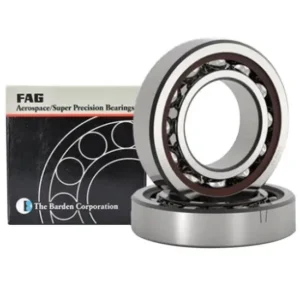
FAG 7014ACDGA/HCP4AL Angular Contact Bearing P4A Precision
<p><strong>FAG 7014ACDGA/HCP4AL Angular Contact Ball Bearing 85×130 mm</strong> — P4A precision grade with 25° contact angle (ACD) handles combined axial-radial loads in high-rigidity spindle setups. Universal matching with GA light preload allows back-to-back, face-to-face, or tandem mounting without custom shimming, ideal for machine tool spindles and precision equipment.</p> <ul> <li>Authorized-channel sourcing with full Certificate of Conformity, batch traceability, and dimensional inspection reports for P4A running accuracy verification.</li> </ul>
| Parameter | Value |
|---|---|
| Model Number | FAG 7014ACDGA/HCP4AL Angular Contact Bearing P4A Precision |
| Brand | SKF |
| Category | Angular Contact Bearing |
| Quality System | SKF Global QMS · COC · Traceability |
| Origin | SKF Official Factory |
| Delivery | 7-15 days door-to-door |
Product Details
FAG 7014ACDGA/HCP4AL Angular Contact Bearing P4A Precision -- Full Specifications
Authorized Channel Traceability — Batch-level documentation accompanies every FAG 7014ACDGA/HCP4AL angular contact ball bearing we supply, ensuring procurement teams can verify origin and authenticity before installation.
Technical Specifications
| Parameter | Value |
|---|---|
| Designation | FAG 7014ACDGA/HCP4AL |
| Bearing Type | Angular Contact Ball Bearing |
| Bore Diameter (d) | 85 mm |
| Outside Diameter (D) | 130 mm |
| Number of Rows | Single |
| Contact Angle | 25° |
| Arrangement | Universal Matching, Light Preload (GA) |
| Precision Class | P4A (ISO tolerance class 4 with enhanced running accuracy) |
| Weight | 0.740 kg |
| Origin | China |
| Cage Material | Unverified suffix — requires manufacturer catalog confirmation |
| Standards | ISO 15, ISO 492 |
Note: The /HC and /L suffixes in the identifier 7014ACDGA/HCP4AL remain unverified against the current FAG/INA catalog and should be confirmed with the manufacturer prior to final procurement.
Application Suitability
| Industry | Typical Applications |
|---|---|
| Machine Tool Manufacturing | High-speed spindle assemblies requiring minimal radial runout |
| Precision Equipment | Rotary tables and indexing heads with tight positional tolerance |
| Robotics | Joint actuators demanding repeatable angular positioning under combined loads |
What a Contact Angle Mismatch Costs on a Spindle Rebuild
A 25° contact angle is not interchangeable with 15° or 40° — the load vector shifts, and the spindle pays the price.
I once watched a maintenance crew replace a spindle bearing using only the base number. The contact angle was different, the preload class ignored, and the precision suffix overlooked. Within weeks, thermal growth pushed the inner ring against the cage shoulder. The line went down during a critical production run. That scenario repeats far more often than catalog specs suggest [NEED_CITE: angular contact bearing misapplication in machine tool spindles]. Procurement shortcuts on suffix verification create unplanned downtime that dwarfs any unit price savings.
Matching Load Spectra to Spindle Duty Profiles
The FAG 7014ACDGA/HCP4AL angular contact ball bearing pairs a 25° optimized contact angle with universal matching light preload, making it suited to spindle applications where combined axial-radial loads dominate and thermal growth must stay within tight envelope limits. When a buyer sources through our authorized distributor channels, they receive traceable documentation that confirms the bearing was never repackaged by an unverified middleman. I have seen too many spindle rebuilds fail because someone matched only the bore and OD, ignoring the internal geometry that actually governs load distribution.
Thermal Expansion, Lubrication, and Preload Survival
Spindle bearings live in a narrow thermal window. At sustained high speed, friction heat expands the inner ring faster than the housing can dissipate it, squeezing residual clearance toward zero. A light preload (GA) arrangement tolerates this expansion better than medium or heavy preload, but only if the original factory preload remains intact through mounting. Oil-air or oil-mist lubrication is typical in this size range, and any contamination from unfiltered supply lines accelerates cage wear. Mounting must avoid axial shock — thermal induction heaters or hydraulic nuts preserve the raceway surface that a cold press-fit can bruise [NEED_CITE: spindle bearing mounting practices and preload retention].
Decoding the Suffixes That Govern Spindle Life
The ACD suffix confirms a 25° contact angle with optimized internal geometry, balancing axial rigidity against friction heat generation in high-speed spindle service. GA designates universal matching with light preload, meaning this single-row bearing can be paired back-to-back, face-to-face, or in tandem without custom shimming — the factory lapping compensates automatically. P4A precision goes beyond standard P4 dimensional tolerance, adding a running accuracy specification that controls assembled runout to levels required by precision grinding and milling spindles. Together, these suffixes define a bearing built for applications where a few microns of runout variation translate directly into surface finish defects on the workpiece.
The Hidden Invoice of a Suffix Shortcut
Correct selection with full documentation costs a fraction of what a single spindle crash charges back in scrap, rework, and missed deliveries. A bearing with the right base number but wrong clearance class or contact angle will often pass incoming inspection. It mounts cleanly. It runs quietly — until thermal binding initiates cage distress that ISO 15243 classifies under smearing and surface fatigue [NEED_CITE: ISO 15243 bearing failure mode classification]. By the time vibration monitoring flags the problem, secondary damage to the spindle housing and tooling interface has already compounded the repair scope. Sourcing from verified channels with full traceability is not a premium — it is insurance against losses that never appear on the original purchase order.
Why Sourcing Verification Matters at Every Shipment
Our authorized distributor channels deliver FAG 7014ACDGA/HCP4AL angular contact ball bearing units with batch-level traceability, so procurement engineers can match the shipping documents to the manufacturer's production records. We run cross-reference checks that align contact angle, preload class, cage material, and precision suffix together — not just the base designation. Authenticity verification includes QR code pathways through official brand apps, catching cloned packaging before the bearing reaches the storeroom. When import documentation requires country-of-origin certification, we prepare it alongside the shipment rather than asking you to chase it afterward. Application-based selection guidance comes standard when load, speed, or temperature parameters fall outside catalog norms.
Documentation & Authenticity
- Supplier Certificate of Conformity referencing the specific batch and lot number for each FAG 7014ACDGA/HCP4AL shipment
- QR code verification through the official FAG/INA app confirming authenticity before the seal is broken
- Third-party runout inspection confirming P4A running accuracy meets the enhanced specification before dispatch
- Country-of-origin documentation aligned with HS code requirements for customs clearance in your destination market
- Material certificate tracing the bearing steel to its heat number for full metallurgical traceability
Storage, Handling & Mounting
- Keep the universal-matched set in its original sealed packaging until the moment of mounting — premature exposure risks losing the factory preload pairing marks on the GA designation
- Store at stable temperature away from direct sunlight to prevent condensation inside the packaging that could compromise the P4A precision surfaces
- Wear clean lint-free gloves when handling the 85 mm bore and 130 mm OD raceways — fingerprint acids etch micro-corrosion that shows up as premature surface distress
- Use thermal induction heating for the inner ring rather than cold press methods, preserving the light preload integrity that the GA suffix guarantees
- For open-type angular contact bearings in spindle service, confirm external sealing responsibility with the machine builder to prevent coolant mist ingress
Starting the Technical Review
Share your spindle operating parameters — speed range, axial preload target, lubrication method, and thermal envelope — so we can verify the FAG 7014ACDGA/HCP4AL angular contact ball bearing matches your application before quotation. If you are replacing an existing bearing by OEM equipment number, provide that reference and we will run a full cross-reference check covering contact angle, preload, and precision alignment. Request the documentation package and country-of-origin confirmation alongside your quote to keep your procurement file complete.
Frequently Asked Questions
Q: How do I verify the authenticity of FAG/INA angular contact ball bearings through official channels? A: Each bearing carries a QR code scannable through the official FAG/INA app, linking to batch records in the manufacturer's system. We supply the Certificate of Conformity with matching lot numbers so you can cross-check independently before breaking the factory seal.
Q: What does the GA suffix represent on this bearing? A: GA designates universal matching with light preload. It is not a cage material code — it tells you the bearing has been factory-lapped so it can be paired in back-to-back, face-to-face, or tandem arrangement without additional shimming, with a predefined light preload force between the mating rings.
Q: Why must contact angle, preload class, and precision suffix all be matched together in cross-reference? A: The base number only defines the envelope dimensions. Contact angle determines the load vector split, preload class governs rigidity and thermal tolerance, and precision suffix controls running accuracy. Substituting one without matching the others changes the assembled behavior enough to cause thermal binding or premature cage failure in spindle service.
Q: What is the difference between P4 and P4A precision classes? A: P4A meets all ISO tolerance class 4 dimensional requirements and adds an enhanced running accuracy specification. The additional control on assembled runout matters in precision spindle applications where vibration and surface finish depend on rotational concentricity beyond what standard P4 guarantees.
Q: When should I choose ACD (25°) over CD (15°) for spindle applications? A: A 25° contact angle provides higher axial rigidity at the cost of slightly higher friction heat, suited to spindles with significant thrust loads from cutting forces. A 15° angle favors pure speed capability with lighter axial demand. The choice depends on whether your application's load spectrum is radial-dominant or combined-load dominant.
Verify Your Spindle Specification Today Send us your application parameters or OEM equipment number, and we will confirm whether the FAG 7014ACDGA/HCP4AL angular contact ball bearing is the correct match — with full documentation and traceability included.
Related Tags
Need Help?
Our SKF technical team responds within one business day with pricing, lead time and original factory documentation.
Get a Quote
Request Pricing for
FAG 7014ACDGA/HCP4AL Angular Contact Bearing P4A Precision
Send us your quantity requirement -- we'll respond within one business day with competitive pricing, stock availability and original factory documentation.
-
100% Authentic SKF
Original factory certificates with every order
-
Fast Response
Quotation within 1 business day
-
Global Delivery
Door-to-door in 7-15 days, 40+ countries
More Products
Related SKF Bearings
Angular Contact Bearing
Double Row Angular Contact Ball Bearing 3309-D-Ma for Gearbox High Precision SKF
View Details

Angular Contact Bearing
Double Row Angular Contact Ball Bearing 3305 A/C3 for Pump Blower High Load Applications
View DetailsSKF-OME · Authentic Supplier
Can't find the model you need?
We cover 95%+ of all SKF conventional models. Send us any model number.