
Lead Time
7-15 Days
Stock
In Stock
Angular Contact Bearing
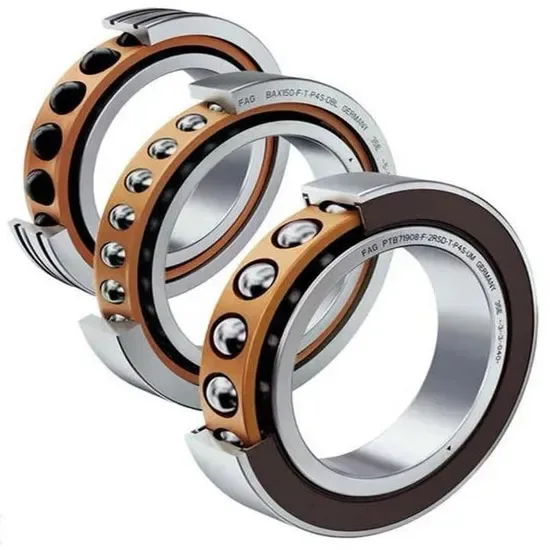
FAG HCB7024-C-2RSD-T-P4S-UL Angular Contact Ball Bearing P4 120x180mm
<p><strong>HCB7024-C-2RSD-T-P4S-UL Angular Contact Ball Bearing 120×180 mm P4</strong> — engineered with a <strong>15° contact angle</strong> for reduced friction heat in high-speed spindle operations. The 2RSD contact seals on both sides provide reliable contamination protection in coolant-exposed or dusty environments, while P4S precision class ensures tight dimensional accuracy for minimal runout. Sourced through authorized distributor channels with full batch traceability and Certificate of Conformity documentation for import compliance.</p>
| Parameter | Value |
|---|---|
| Model Number | FAG HCB7024-C-2RSD-T-P4S-UL Angular Contact Ball Bearing P4 120x180mm |
| Brand | SKF |
| Category | Angular Contact Bearing |
| Quality System | SKF Global QMS · COC · Traceability |
| Origin | SKF Official Factory |
| Delivery | 7-15 days door-to-door |
Product Details
FAG HCB7024-C-2RSD-T-P4S-UL Angular Contact Ball Bearing P4 120x180mm -- Full Specifications
Authorized Channel Sourcing — Every FAG HCB7024-C-2RSD-T-P4S-UL angular contact ball bearing we ship traces back through verified distributor networks with full batch documentation.
Technical Specifications
| Parameter | Value |
|---|---|
| Designation | FAG/INA HCB7024-C-2RSD-T-P4S-UL |
| Bearing Type | Angular Contact Ball Bearing |
| Bore Diameter (d) | 120 mm |
| Outside Diameter (D) | 180 mm |
| Number of Rows | Single |
| Contact Angle | 15° |
| Precision Class | P4 (ISO 492) |
| Seal or Shield Type | Contact seal on both sides (2RSD) |
| Bore Type | Cylindrical |
| Aligning | Non-Aligning |
| Separated | Unseparated |
| Origin | China |
| Weight | 1.734 kg |
| Customization | Available |
Suffixes HCB, T, and UL require confirmation against the manufacturer's current catalog for complete technical interpretation.
Application Suitability
| Industry | Typical Applications |
|---|---|
| Industrial machinery | CNC machining center main spindles |
| Precision equipment | High-speed grinding wheel heads |
| Robotics | Joint actuator shafts requiring low runout |
| Material handling | Precision conveyor drive shafts |
What Contact Angle Gets Wrong on High-Speed Spindles
Matching the base number is only the start. A 15° contact angle on the FAG HCB7024-C-2RSD-T-P4S-UL angular contact ball bearing handles predominantly radial loads with lower friction heat than higher-angle variants — but swap it for a 25° or 40° equivalent without checking preload class, and the spindle runs hot within days.
I remember a CNC shop in Jeddah that fitted angular contacts matched only on bore and OD. The preload pairing was ignored, and the ceramic balls couldn't save the spindle from thermal binding. That failure traced directly to suffix misalignment. On this scale, a mismatch in contact angle or precision class translates into unplanned downtime, scrap parts, and warranty disputes. [NEED_CITE: spindle bearing failure modes from preload mismatch]
Spindle Load Profiles and Bearing Response
Machine tool spindles demand bearings that manage combined radial and light axial loads at sustained high speeds. The FAG HCB7024-C-2RSD-T-P4S-UL angular contact ball bearing addresses this with a 15° contact angle that keeps friction heat manageable while maintaining adequate axial stiffness. The double contact seal retains factory lubrication and blocks coolant mist ingress — a frequent contamination vector on machining centers where flood coolant runs for hours. Shops running high-speed milling or grinding cycles benefit from this sealed configuration because relubrication intervals are eliminated and the risk of coolant-washed grease is removed.
Speed, Thermal Drift, and Seal Friction Trade-offs
Operating at elevated speeds generates internal heat that affects dimensional stability. With P4 precision per ISO 492, this bearing delivers tighter dimensional and running accuracy than standard grades, which matters when spindle thermal growth must stay within micrometer-level tolerances. The 2RSD contact seals introduce slightly more friction torque than shields or open designs — a necessary trade when the environment exposes the spindle nose to particulate or fluid contamination. Oil-air or oil-mist lubrication systems paired with sealed bearings require careful pressure management to avoid seal lip damage. [NEED_CITE: sealed bearing friction torque vs open designs at high speed]
Breaking Down the Specification Stack
The 15° contact angle produces less internal heat under radial-dominant loading, making it suitable for the front bearing position on many milling spindles where radial cutting forces dominate. P4 precision tightens bore, OD, and running accuracy tolerances to a level appropriate for precision spindle service where vibration and surface finish are unacceptable at lower grades. The double contact seal (2RSD) keeps contamination out on both sides, which extends service intervals in environments where airborne particulate or coolant splash are constant. The single-row unseparated construction means the bearing must be paired with a mating unit to handle bidirectional axial loads — typically in a back-to-back or face-to-face arrangement depending on the spindle's rigidity requirements.
The Downtime Cost of Overlooked Suffixes
Fitting a bearing with the right bore and OD but wrong precision or seal type rarely fails immediately. The damage accumulates. A P5 bearing installed where P4 was specified introduces runout that degrades surface finish over weeks, leading to scrap batches before anyone traces the root cause. Sealed bearings installed in open spindle housings that expected relubrication can overheat from excess grease. Counterfeit angular contacts with soft inner rings pass visual inspection but spall under load within months. These failures fall under ISO 15243 classifications — subsurface fatigue, surface distress, or thermal damage — and each one costs multiples of the bearing's purchase price in lost production. [NEED_CITE: ISO 15243 rolling bearing damage classification categories]
How Verification Works on the Ground
We source the FAG HCB7024-C-2RSD-T-P4S-UL angular contact ball bearing through authorized distributor channels, not grey-market brokers. Every shipment carries batch and lot traceability back to the distributor's procurement record. Our cross-reference database checks clearance, cage material, and precision suffixes when you need to substitute across SKF, NSK, NTN, or TIMKEN — not just the base number. Before dispatch, we confirm dimensional accuracy against the declared P4 class and provide origin documentation so your import paperwork clears customs without delays. Shops that have received cloned QR codes from unverified sellers can verify authenticity through the brand's official app verification pathway using the traceability code on each bearing's packaging.
Documentation & Authenticity
- Supplier Certificate of Conformity listing batch number matched to the distributor's authorized procurement record
- Dimensional inspection report confirming bore, OD, and runout within P4 tolerance per ISO 492
- Material certificate documenting ring and rolling element composition for traceability
- Country-of-origin documentation and HS code classification for customs clearance
- QR code verification pathway using the brand's official authentication app for anti-counterfeit confirmation
Storage, Handling & Mounting
- Keep the 2RSD sealed bearing in original packaging until mounting; premature opening allows particulate to settle on the seal lip and compromise contamination protection
- Store at stable temperature away from direct sunlight to prevent degradation of the contact seal elastomer material over time
- Use clean, lint-free gloves when handling; fingerprints on the P4 precision bore surface can initiate corrosion under the seal
- Mount using induction heating for the inner ring at controlled temperature — excessive heat damages the 2RSD contact seal and alters the factory-set internal geometry
- For paired installations, mark the angular position of each bearing before mounting to maintain the intended preload arrangement
Request a Technical Review Before You Commit
Send us your spindle operating parameters — speed range, load spectrum, lubrication method, and ambient conditions — so we can confirm whether this sealed P4 configuration matches your application or if an open design with external oil-air lubrication performs better. If you're replacing an existing bearing, share the OEM equipment number or the full designation from the old bearing label so we can cross-reference against our database and flag any clearance or precision mismatches. We'll return a quotation with confirmed batch availability, lead time, and the complete documentation package.
Frequently Asked Questions
Q: When cross-referencing the HCB7024 across brands, what beyond the base number must align? A: Contact angle, precision class, seal type, and preload designation all must match. A bearing with the same bore and OD but a different contact angle or open design instead of 2RSD seals will behave differently under spindle loading, even if the base number appears interchangeable.
Q: What distinguishes P4 from P5 and P4A precision classes under ISO 492? A: P4 delivers tighter tolerances on bore, OD, width, and running accuracy than P5, which reduces vibration and improves surface finish in precision spindle service. P4A is a specialized variant with even tighter running accuracy requirements beyond standard P4 limits.
Q: What do the suffixes C, 2RSD, and P4S indicate on this bearing? A: C designates a 15° contact angle. 2RSD indicates contact-type seals on both sides for contamination protection. P4S refers to ISO tolerance class P4 with an additional specification suffix that varies by manufacturer — the HCB, T, and UL suffixes require confirmation against the current manufacturer catalog.
Q: Should I choose contact seals (2RS) or shields (2Z) for a high-speed spindle? A: Contact seals offer superior contamination protection but generate more friction heat than shields. For spindles exposed to coolant mist or particulate, 2RSD is typically the correct choice. Clean, oil-air lubricated environments with external sealing may benefit from the lower friction of shields or open designs.
Q: How do I verify the authenticity of FAG/INA bearings before installation? A: Check the QR code or traceability label on the packaging using the brand's official authentication app. Confirm the batch number matches the Certificate of Conformity and distributor documentation. Counterfeit bearings often have cloned QR codes that redirect to fake verification pages.
Secure Your Spindle Supply with Verified Precision Bearings Submit your application parameters or OEM reference number to receive a technical match review and quotation for the FAG HCB7024-C-2RSD-T-P4S-UL angular contact ball bearing with full traceability documentation.
Related Tags
Need Help?
Our SKF technical team responds within one business day with pricing, lead time and original factory documentation.
Get a Quote
Request Pricing for
FAG HCB7024-C-2RSD-T-P4S-UL Angular Contact Ball Bearing P4 120x180mm
Send us your quantity requirement -- we'll respond within one business day with competitive pricing, stock availability and original factory documentation.
-
100% Authentic SKF
Original factory certificates with every order
-
Fast Response
Quotation within 1 business day
-
Global Delivery
Door-to-door in 7-15 days, 40+ countries
More Products
Related SKF Bearings
Angular Contact Bearing
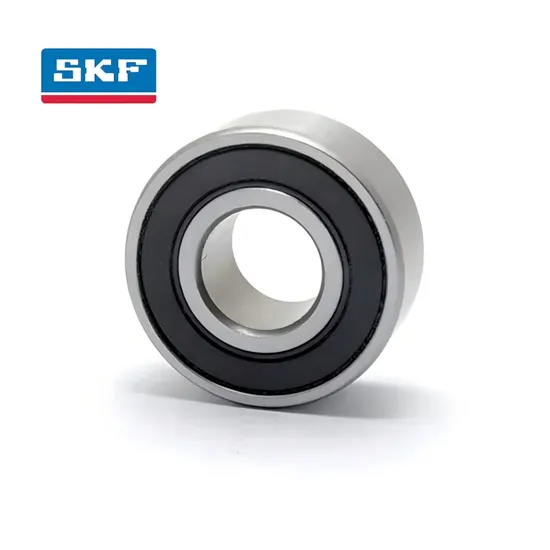
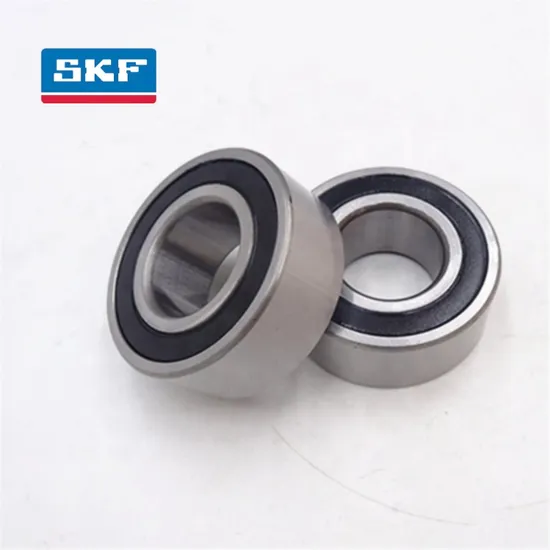
Double Row Angular Contact Ball Bearing 3203A-2RS1 Tn9/C3 Mt33 for Motor Pump Assembly
View Details
SKF-OME · Authentic Supplier
Can't find the model you need?
We cover 95%+ of all SKF conventional models. Send us any model number.