

Angular Contact Bearing
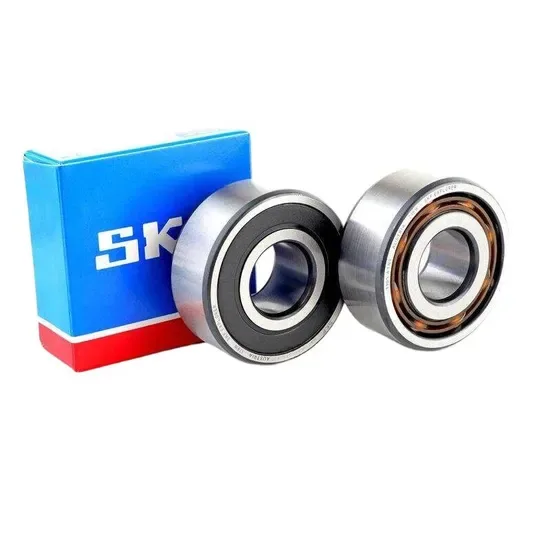
100% Genuine SKF · Original Factory Certificate
Lead Time
7-15 Days
Stock
In Stock
Angular Contact Bearing
SKF 7008 CE/HCP4ADGB Angular Contact Ball Bearing P4 Precision
<p><strong>SKF 7008 CE/HCP4ADGB</strong> angular contact ball bearing, 40 mm bore, P4 precision class, single row configuration. The CE suffix confirms a <strong>15° contact angle</strong>, optimized for reduced friction heat under predominantly radial loads in high-speed spindle applications. P4 tolerance ensures tight dimensional and running accuracy for precision machining environments. Sourced through authorized channels with batch-traceable Certificate of Conformity and QR verification support via official SKF apps.</p>
| Parameter | Value |
|---|---|
| Model Number | SKF 7008 CE/HCP4ADGB Angular Contact Ball Bearing P4 Precision |
| Brand | SKF |
| Category | Angular Contact Bearing |
| Quality System | SKF Global QMS · COC · Traceability |
| Origin | SKF Official Factory |
| Delivery | 7-15 days door-to-door |
Authentic SKF
COC Included
40+ Countries
Fast Delivery
Product Details
SKF 7008 CE/HCP4ADGB Angular Contact Ball Bearing P4 Precision -- Full Specifications
Authorized Channel Procurement — every batch of this bearing ships with traceable distributor documentation tied to its production lot.
Technical Specifications
| Parameter | Value |
|---|---|
| Designation | SKF 7008 CE/HCP4ADGB |
| Bearing Type | Angular Contact Ball Bearing |
| Bore Diameter (d) | 40 mm |
| Outside Diameter (D) | 68 mm |
| Width (B) | 15 mm |
| Weight | 0.100 kg |
| Number of Rows | Single Row |
| Precision Class | P4 (ISO 492 tolerance class 4) |
| Contact Angle | 15° |
| Arrangement | Universal pairing capable (DGB) |
| Bore Type | Cylindrical |
| Origin | China |
Note: The HCP4A suffix component remains unverified against the current SKF catalog and should be confirmed with manufacturer documentation before final specification.
Application Suitability
| Industry | Typical Applications |
|---|---|
| Machine Tool Manufacturing | CNC machining center spindle nose / high-frequency milling spindle |
| Robotics | Precision joint actuators requiring tight radial runout control |
| Industrial Pump Manufacturing | High-speed centrifugal pump shaft support |
| Precision Equipment | Optical positioning tables / coordinate measuring machine rotary stages |
What Makes the SKF 7008 CE/HCP4ADGB Angular Contact Ball Bearing Vulnerable to Sourcing Errors
A single suffix mismatch on a spindle bearing can turn a P4-precision component into a thermal failure point within days of commissioning.
We once traced a batch of premature spindle failures back to a procurement decision that looked correct on paper — the base designation matched, the bore and OD were right, and the supplier claimed P4 precision. What nobody checked was whether the contact angle and preload grouping aligned with the spindle manufacturer's specification. The replacement bearings ran hot, chatter marks appeared on aerospace-grade aluminum housings, and the machine operator took the blame. [NEED_CITE: spindle bearing failure modes linked to preload mismatch in high-speed applications]
Counterfeit angular contact bearings have become harder to spot. Cloned QR codes now redirect to convincing replica verification pages, and soft inner rings pass visual inspection but deform under sustained radial load at speed. For maintenance engineers replacing spindle bearings by OEM equipment number, the risk is not just getting a fake — it is getting a genuine-looking bearing with the wrong internal geometry for the thermal profile of the application.
Matching the 15° Contact Angle to Spindle Load Profiles
The SKF 7008 CE/HCP4ADGB angular contact ball bearing uses a 15° contact angle, which generates lower friction heat compared to 25° variants when the load spectrum is predominantly radial. In CNC spindle applications where axial thrust comes primarily from tool engagement rather than constant preload, this geometry keeps the thermal equilibrium point lower, preserving the preload balance that P4 running accuracy depends on. We cross-check every matched set against the spindle builder's load diagram before confirming the arrangement — a step most spot-buy suppliers skip.
Thermal Expansion, Cage Behavior, and the P4 Boundary
At sustained speeds approaching the reference limit, even small differences in cage material response to heat alter the ball guidance characteristics. A polyamide cage runs quieter at moderate speed but softens if lubrication intervals slip; a machined brass cage tolerates higher thermal loads but adds rotational mass. The operating environment — whether the spindle uses oil-air mist, oil jet, or grease-for-life lubrication — dictates which cage material sustains P4 running accuracy over the L10 life window. [NEED_CITE: angular contact bearing cage material selection for high-speed spindle thermal management]
Temperature also shifts the effective internal clearance. A bearing installed with standard clearance in a spindle that reaches equilibrium at elevated temperature may see the clearance close entirely, converting the bearing into a preloaded condition the designer did not intend. The DGB arrangement suffix on this designation addresses universal pairing, meaning matched sets must maintain their factory preload grouping through mounting — any handling error between unboxing and installation compromises the grouping tolerance.
Reading the Suffix Stack: CE, HCP4A, and DGB
The CE suffix confirms a 15° contact angle with an optimized internal geometry designed for high-speed operation, paired with a lightweight cage suited to reduced friction at elevated rotational frequencies. The P4 precision class within the HCP4A designation places this bearing at ISO tolerance class 4, where both dimensional and running accuracy must fall within tighter bands than P5 or P6 grades — critical for spindle nose positions where radial runout directly transfers to workpiece surface finish.
The DGB suffix indicates a universal pairing arrangement with a medium preload class (GB). Medium preload suits spindle applications where rigidity must resist cutting forces without generating excessive internal heat at speed. When two or more bearings in this arrangement are mounted back-to-back or face-to-face, the GB preload group ensures the combined set behaves as the spindle designer calculated — provided the pairing marks are respected during installation. [NEED_CITE: bearing preload grouping and its effect on spindle dynamic stiffness]
The Hidden Cost of Overlooking the Arrangement Suffix
A procurement team that matches the base number but ignores the DGB preload grouping may receive a bearing with light preload (GA) or heavy preload (GC). Light preload reduces rigidity under cutting loads, causing chatter and poor surface finish. Heavy preload increases friction heat, accelerating cage wear and grease degradation. Neither failure mode shows up at installation — they emerge weeks later as unplanned downtime, scrapped workpieces, and warranty disputes. ISO 15243 classifies these as application-related failures, which means the bearing manufacturer's warranty does not cover them. [NEED_CITE: ISO 15243 bearing failure classification for preload-related damage]
Sourcing from unverified channels compounds the risk. A counterfeit bearing with the correct suffix laser-etched on the ring but incorrect internal geometry will pass incoming inspection yet fail under sustained operation. The cost of one spindle rebuild — including housing inspection, shaft regrinding, and lost production time — dwarfs the price difference between verified and unverified sourcing.
How Our Sourcing Process Protects the Specification
Every SKF 7008 CE/HCP4ADGB angular contact ball bearing we supply comes through authorized distributor channels with batch-level traceability documentation. We verify the suffix stack against the application parameters you share with us — load, speed, temperature, and mounting envelope — before confirming the quotation. Our cross-reference database matches clearance, cage material, and precision class together, not just the base designation, so substitution across the six brands we cover maintains functional equivalence.
We provide origin identification documentation for import clearance, material certificates tied to the production lot, and QR code verification pathways through SKF's official app so you can confirm authenticity on receipt. For regional resellers, we support distributor network qualification with the documentation package your end customers require.
Documentation & Authenticity
- Supplier Certificate of Conformity (COC) referencing the specific production batch of each bearing set
- Third-party runout inspection confirming P4 running accuracy before shipment, not just dimensional spot checks
- QR code verification pathway via SKF official app for on-receipt authenticity confirmation
- Material certificate tied to the lot number, documenting the steel grade and heat treatment condition
- Country-of-origin documentation package prepared for customs clearance at your destination port
- Dimensional inspection report covering bore, OD, width, and radial runout against ISO 492 class 4 tolerances
Storage, Handling & Mounting
- Keep the DGB matched set sealed in original packaging until the moment of mounting — early opening risks contaminating the raceways and losing the factory pairing alignment marks
- Store this P4-precision bearing in a temperature-stable environment; thermal cycling in an uncontrolled warehouse can alter the residual clearance state before installation
- Handle with clean, lint-free gloves to prevent fingerprint corrosion on the 40 mm bore and 68 mm OD raceway surfaces, which is critical for maintaining P4 surface finish
- For spindle nose installation, use controlled induction heating rather than press fitting to avoid brinelling the raceways; the single-row angular contact design transmits axial force directly to the ball-raceway contact points
- Respect the GB preload grouping marks during assembly — mounting the bearings in the wrong orientation relative to the pairing marks destroys the medium preload calibration
- Confirm shaft and housing tolerances match the bearing manufacturer's recommendations for P4-class fits; loose fits introduce micro-movement that degrades running accuracy within hours
Request a Technical Quotation
Share your spindle application parameters — speed range, load spectrum, lubrication method, and operating temperature — so we can verify whether the CE contact angle and DGB preload grouping match your OEM specification. If you are replacing bearings by equipment number, provide the OEM reference and we will cross-check the full suffix stack against our interchange database. We can then confirm batch availability, lead time, and the documentation package that ships with your order.
Frequently Asked Questions
Q: How can I verify the authenticity of a SKF 7008 CE/HCP4ADGB bearing after delivery? A: Scan the QR code on the packaging using SKF's official verification app, which connects to the manufacturer's traceability database. Cross-reference the batch number on the bearing ring against the Certificate of Conformity supplied with your shipment. We provide the complete verification pathway with every order so you can confirm authenticity independently.
Q: What does the DGB suffix mean for preload and pairing? A: DGB indicates a universal pairing arrangement with medium preload (GB class). Universal pairing means the bearings can be mounted back-to-back, face-to-face, or in tandem depending on the spindle design. The medium preload provides a balance between rigidity under cutting loads and thermal management at sustained high speed.
Q: Can I substitute this bearing with an equivalent from NSK, FAG, or another brand? A: Yes, but the substitution must match not only the base dimensions (40 mm bore, 68 mm OD, 15 mm width) but also the 15° contact angle, P4 precision class, and GB preload grouping. Our cross-reference database aligns all three parameters across the six brands we cover to ensure functional equivalence.
Q: Why does the contact angle matter if the base number is the same? A: The 15° contact angle in the CE suffix generates lower friction heat under predominantly radial loads compared to 25° variants. Installing a 25° bearing where 15° was specified increases internal heat, shifts the thermal equilibrium, and can close the internal clearance prematurely — leading to accelerated wear in spindle applications.
Q: What documentation ships with the bearing for import and verification purposes? A: Each order includes a Certificate of Conformity with batch traceability, material certificates, dimensional inspection data, country-of-origin documentation, and HS code information for customs clearance. We prepare the full documentation package based on your destination country's import requirements.
Secure Your SKF 7008 CE/HCP4ADGB Angular Contact Ball Bearing with Full Traceability Send your application parameters or OEM equipment number for technical verification and a quotation with confirmed lead time. Contact our engineering team through authorized distributor channels for complete documentation support.
Related Tags
Need Help?
Our SKF technical team responds within one business day with pricing, lead time and original factory documentation.
Get a Quote
Request Pricing for
SKF 7008 CE/HCP4ADGB Angular Contact Ball Bearing P4 Precision
Send us your quantity requirement -- we'll respond within one business day with competitive pricing, stock availability and original factory documentation.
-
100% Authentic SKF
Original factory certificates with every order
-
Fast Response
Quotation within 1 business day
-
Global Delivery
Door-to-door in 7-15 days, 40+ countries
More Products
Related SKF Bearings
Angular Contact Bearing
Double Row Angular Contact Ball Bearing 3206A-2Z/C3 for Auto Gearbox with Steel Cage
View Details
Angular Contact Bearing
Double Row Angular Contact Ball Bearing 3310 A-2Z/C3 MT33 for Auto Industrial Use
View DetailsSKF-OME · Authentic Supplier
Can't find the model you need?
We cover 95%+ of all SKF conventional models. Send us any model number.