
Lead Time
7-15 Days
Stock
In Stock
Angular Contact Bearing
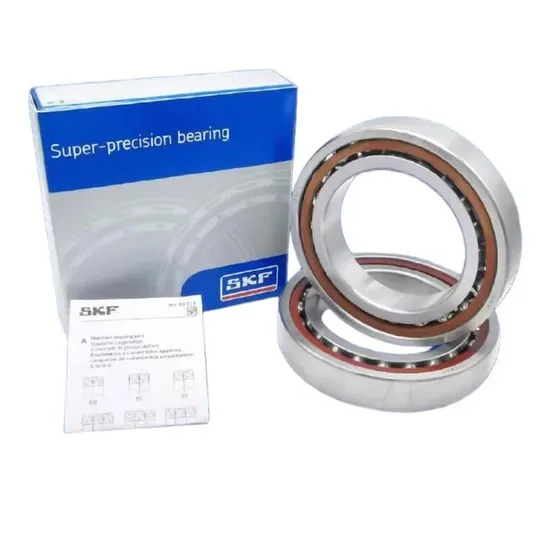
SKF 7016 FE/HCP4ALDT Angular Contact Ball Bearing P4
<p><strong>SKF 7016 FE/HCP4ALDT Angular Contact Ball Bearing 80×125 mm</strong> — Single row angular contact design supports combined radial and axial loads at high speeds.</p> <ul> <li>P4 precision class ensures tight dimensional and running accuracy for machine tool spindles and precision equipment</li> <li>Sourced through authorized distributor channels with batch traceability and Certificate of Conformity documentation for every shipment</li> </ul>
| Parameter | Value |
|---|---|
| Model Number | SKF 7016 FE/HCP4ALDT Angular Contact Ball Bearing P4 |
| Brand | SKF |
| Category | Angular Contact Bearing |
| Quality System | SKF Global QMS · COC · Traceability |
| Origin | SKF Official Factory |
| Delivery | 7-15 days door-to-door |
Product Details
SKF 7016 FE/HCP4ALDT Angular Contact Ball Bearing P4 -- Full Specifications
Authorized Channel Procurement — Every SKF 7016 FE/HCP4ALDT angular contact ball bearing we supply ships with batch-level traceability linked to authorized distributor documentation.
Technical Specifications
| Parameter | Value |
|---|---|
| Designation | SKF 7016 FE/HCP4ALDT |
| Bearing Type | Angular Contact Ball Bearing |
| Bore Diameter (d) | 80 mm |
| Outside Diameter (D) | 125 mm |
| Number of Rows | Single Row |
| Precision Class | P4 (ISO 492) |
| Origin | China |
Note: Suffixes FE, HCP4A, and LDT in this designation require confirmation against the current manufacturer catalog before final application approval.
Application Suitability
| Industry | Typical Applications |
|---|---|
| Industrial Machinery | Machine tool main spindle front support |
| Precision Equipment | Coordinate measuring machine rotary table |
| High-Speed Pumps | Impeller shaft axial locating position |
Why a Suffix Misread on the 7016 FE/HCP4ALDT Can Shut Down a Spindle Line
A single letter difference in the suffix string determines whether the cage survives the first thermal cycle.
I once watched a sample review catch a polyamide cage substitution on a 7210 angular contact bound for a German spindle builder running 18,000 RPM. The base number matched perfectly; the cage code did not. In high-speed spindle applications, that kind of oversight produces softening, cage deformation, and catastrophic failure within weeks — not months. When procurement teams cross-reference the SKF 7016 FE/HCP4ALDT by digits alone, they risk repeating the same pattern: matching bore and OD while overlooking the suffix chain that governs contact angle, cage material, and arrangement. The result is thermal binding, premature raceway spalling, and unplanned downtime that dwarfs the bearing's purchase price [NEED_CITE: rolling bearing failure mode classification per ISO 15243].
Matching Spindle Loads to the SKF 7016 FE/HCP4ALDT Configuration
Machine tool spindles impose combined radial and axial loads that shift constantly as cutting tools engage and retract. The SKF 7016 FE/HCP4ALDT is positioned to handle directional axial forces while maintaining radial rigidity across the speed envelope. Its single-row angular contact geometry channels axial load through one shoulder, making it essential to pair or preload correctly during installation. We regularly cross-check application envelopes — bore fit, housing tolerance, thermal growth at operating speed — so the bearing selection aligns with the actual duty cycle rather than a catalog approximation. That cross-reference discipline is how we keep maintenance teams from repeating the same swap-and-fail loop.
Thermal Expansion and Lubrication at High Spindle Speeds
At elevated rotational speeds, heat generation at the contact ellipse between balls and raceway becomes the governing constraint. Thermal expansion reduces internal clearance, and if the bearing was selected with standard clearance where a C3 was required, the result is preload escalation and runaway temperature. Oil-air or oil-mist lubrication systems are typical for this class of spindle bearing, providing both cooling and film thickness control. Contact seal variants introduce friction heat that compounds the problem, which is why open arrangements with external sealing are standard in precision spindle housings. Mounting practice matters equally: induction heating of the inner ring must be controlled to avoid exceeding tempering temperature, and dimensional stability depends on respecting the manufacturer's heating limits [NEED_CITE: bearing mounting temperature limits for precision angular contact types].
Decoding the Specifications That Matter
The P4 precision class referenced in this designation aligns with ISO 492 class 4 tolerances, which governs both dimensional accuracy and running accuracy for the bore, outer diameter, and raceway runout. In spindle applications, tight running accuracy translates directly to lower vibration amplitude at the cutting tool tip, improving surface finish on machined parts. Single-row angular contact bearings generate axial load capacity from their contact angle, and that angle must match the spindle designer's stiffness and speed tradeoff — a steeper angle raises axial rigidity but increases friction heat. Arrangement suffixes like DT indicate tandem pairing, where two bearings share axial load in the same direction, useful when a single bearing's thrust capacity falls short. Cage material selection governs the upper speed boundary: machined brass cages tolerate higher vibration and temperature than polyamide alternatives, while polyamide cages offer lower weight and reduced inertia at moderate speeds.
The Downtime Cost of a Shortcut Selection
A spindle running production parts does not fail gracefully. When a mismatched bearing seizes or loses preload, the cascade includes damaged shaft journals, scrapped housings, ruined tooling, and lost production shifts. ISO 281 provides the framework for calculating rated bearing life, but that calculation assumes correct selection, proper lubrication, and uncontaminated operating conditions. Deviate on any axis — wrong clearance, substituted cage, counterfeit steel with soft inner rings — and the L10 calculation becomes meaningless. We have seen procurement savings of a few hundred dollars erased by a single shift of unplanned downtime [NEED_CITE: unplanned downtime cost versus bearing procurement savings in precision machining].
What Traceability Looks Like at the Order Level
Every bearing we source passes through authorized distributor channels, and the documentation follows the physical product. For the SKF 7016 FE/HCP4ALDT, that means a Certificate of Conformity tied to a specific batch and lot, material certificates traceable to the steel heat number, and dimensional inspection data confirming the precision class. Our cross-reference database checks not just the base number but clearance, cage code, and arrangement suffix — so a replacement matches the original on every parameter that affects field performance. Country-of-origin documentation supports import compliance, and QR code verification through official brand apps provides an additional authenticity checkpoint before the bearing reaches the machine.
Documentation & Authenticity
- Supplier Certificate of Conformity with batch and lot traceability tied to the SKF 7016 FE/HCP4ALDT shipment
- Material certificate confirming bearing steel grade and heat treatment compliance for the inner and outer rings
- Third-party dimensional and runout inspection confirming P4 class running accuracy before dispatch
- Country-of-origin documentation supporting customs clearance and import filing requirements
- QR code verification pathway accessible through the manufacturer's official authentication application
Storage, Handling & Mounting
- Retain factory packaging on the matched set until installation; premature exposure risks contamination of the open raceways on this single-row angular contact bearing
- Store in a climate-controlled environment where humidity remains stable to protect the precision-ground raceway surfaces from corrosion
- Use clean lint-free gloves when handling the 80 mm bore and 125 mm OD surfaces to prevent fingerprint-induced micro-corrosion on P4 class components
- For induction heating during inner ring mounting, monitor temperature closely to preserve the dimensional stability of the precision-class steel
- Confirm axial positioning and preload setting per the spindle manufacturer's specification before locking the bearing arrangement in place
Requesting a Quotation and Technical Review
Submit your application parameters — load profile, speed range, operating temperature, and housing fit tolerances — so we can confirm that the SKF 7016 FE/HCP4ALDT suffix configuration matches your spindle requirements. If you are replacing an existing bearing, provide the OEM equipment number or the full designation from the nameplate for cross-reference verification. We can supply the complete documentation package including origin certificates and inspection reports with your inquiry response. Batch availability and lead time will be confirmed once the exact suffix string is validated against current production schedules.
Frequently Asked Questions
Q: How do I confirm the SKF 7016 FE/HCP4ALDT is genuine before installation? A: Verify the bearing through the manufacturer's official QR code application, cross-check the batch number against the Certificate of Conformity, and inspect the laser marking on the inner ring for consistency with authorized production formats. We supply traceability documentation with every shipment.
Q: What does P4 precision class mean for angular contact ball bearings? A: P4 aligns with ISO 492 class 4, specifying tighter dimensional and running accuracy than P5 or P6 grades. This reduces vibration amplitude and positional error in precision spindle applications where surface finish and dimensional repeatability are critical.
Q: Why do cross-reference errors cause field failures even when the base number matches? A: Base numbers define only bore, OD, and width. Clearance, cage material, contact angle, and arrangement suffixes determine whether the bearing survives the actual thermal and load conditions. A mismatch on any of these parameters can cause thermal binding, cage failure, or premature spalling.
Q: What arrangement and preload should I specify for a spindle application? A: The arrangement depends on load direction, required stiffness, and thermal behavior. Tandem, back-to-back, and face-to-face pairings each serve different spindle configurations. Share your OEM equipment number or load data so we can verify the correct arrangement suffix and preload class.
Q: Are the FE, HCP4A, and LDT suffixes confirmed for this designation? A: These suffixes appear on the product documentation but require confirmation against the current manufacturer catalog before final application approval. We verify the complete suffix string during the technical review stage of every inquiry.
Secure Your Spindle Bearing With Verified Documentation Share your application parameters or OEM equipment number to begin the technical review and confirm suffix availability for your next maintenance window.
Related Tags
Need Help?
Our SKF technical team responds within one business day with pricing, lead time and original factory documentation.
Get a Quote
Request Pricing for
SKF 7016 FE/HCP4ALDT Angular Contact Ball Bearing P4
Send us your quantity requirement -- we'll respond within one business day with competitive pricing, stock availability and original factory documentation.
-
100% Authentic SKF
Original factory certificates with every order
-
Fast Response
Quotation within 1 business day
-
Global Delivery
Door-to-door in 7-15 days, 40+ countries
More Products
Related SKF Bearings


Angular Contact Bearing
Double Row Angular Contact Ball Bearing 3307 A-2Z/C3 MT33 for Gearbox High Precision
View DetailsSKF-OME · Authentic Supplier
Can't find the model you need?
We cover 95%+ of all SKF conventional models. Send us any model number.