
SKF Dimensional Tolerance Standards for OEM Custom Bearings Wholesale Supplier
Most buyers think "SKF tolerance" means a proprietary brand secret. In reality, it is nothing more than ISO 492 written on paper — and confusing dimensional tolerance with clearance class is the single biggest reason OEM orders get rejected at destination ports.
SKF bearing dimensional tolerance follows ISO 492, the international standard for radial rolling bearings. Tolerance classes — Normal, P6, P5, P4, P2 — define the permissible deviation of bore, outside diameter, and width. Clearance classes — C2, C0, C3, C4, C5 — are governed by a separate standard, ISO 5753. Mixing them up during specification leads to assembly interference, premature failure, or full-container customs rejection.
I still remember a batch of 6205 deep groove ball bearings we shipped to a distributor in Dubai years ago. They pulled out SKF’s technical drawing and measured every piece against the bore and width tolerances listed there. Our production team had followed the domestic standard, and the inner ring width drifted outside the ISO 492 band by a fraction that sounded negligible on paper. The entire container was held at Jebel Ali, re-inspected, and eventually returned. That shipment taught me one thing permanently: when a buyer says "SKF standard," they are not being polite — they are pointing at ISO 492 tolerance bands, and P6 versus Normal is the difference between a smooth press-fit and a seized housing. From that day forward, my first question on any SKF-equivalent order has been: do you need dimensional tolerance, clearance class, or both?
Let me walk you through how these standards actually work on the shop floor, how to select the right class for your application, what documentation proves compliance, and how to prevent the kind of customs nightmare I described above.
What Is SKF Dimensional Tolerance Standard?
SKF dimensional tolerance is not a proprietary specification — it is a direct adoption of ISO 492, the international standard governing geometrical and dimensional accuracy of radial rolling bearings.
When buyers reference "SKF tolerance," they are referring to the tolerance classes defined under ISO 492: Normal (also called P0 in some regional notations), P6, P5, P4, and P2, progressing from general-purpose to ultra-precision. Each class sets the allowable deviation for key dimensions — inner diameter (d), outer diameter (D), and width (B) — as well as geometrical parameters such as radial runout of inner and outer rings, face runout, and width variation.
The confusion arises because SKF, as a manufacturer, publishes these tolerance values in its own catalog tables. Buyers see "SKF P6" and assume it is an SKF-internal grade. It is not. SKF simply manufactures to the ISO 492 P6 band, just as NSK, FAG, NTN, and TIMKEN do. The numbers are identical across brands because they all trace back to the same ISO clause.
Here is where the second trap snaps shut. Many buyers conflate dimensional tolerance with internal clearance. They specify "P6 tolerance" when they actually mean "C3 clearance," or vice versa. Dimensional tolerance (ISO 492) controls how close the bearing’s physical dimensions are to nominal. Internal clearance (ISO 5753-1) controls the free movement between rolling elements and raceways before mounting. These are two entirely different parameters governed by two entirely different standards. A bearing can be Normal tolerance with C3 clearance, or P5 tolerance with C0 clearance — the combinations are independent.
A European industrial motor OEM once sent us a specification sheet that read "P6 clearance." There is no such thing. P6 is a dimensional tolerance class. C3 is a clearance class. The engineer had merged the two concepts. We clarified, re-quoted with the correct P6 tolerance and C0 clearance, and avoided a production-line disaster where the bearings would have been too tight in the housing.
How to Choose the Right Tolerance Class (Normal vs P6 vs P5)?
Match the tolerance class to the rotational speed, load precision, and vibration sensitivity of your application — not to a generic "higher is better" instinct.
Selecting the correct SKF bearing dimensional tolerance class requires understanding what each class actually controls and where the performance gap becomes meaningful in real operating conditions.
Step 1: Identify the application’s precision demand. General-purpose applications — agricultural machinery, basic conveyor idlers, simple gearboxes — typically operate perfectly within Normal class tolerance. The dimensional deviations allowed under Normal class are sufficient for moderate speeds and non-critical alignment.
Step 2: Evaluate speed and vibration thresholds. When rotational speed increases, or when the driven equipment demands low vibration — such as industrial electric motors, pump shafts, or fan assemblies — P6 class becomes the baseline. P6 narrows the tolerance band on bore, OD, and width, reducing the likelihood of uneven load distribution and harmonic vibration at higher RPM.
Step 3: Assess whether P5 or tighter is justified. P5 and P4 classes are reserved for machine tool spindles, high-precision measuring equipment, and aerospace-grade actuators. The manufacturing cost increases substantially at these levels, and the tolerance bands are so narrow that housing and shaft machining must also be upgraded to match — otherwise the bearing’s precision is wasted.
Step 4: Cross-reference with clearance class. Once you have locked the dimensional tolerance, pair it with the correct internal clearance. A P6 tolerance bearing with C3 clearance behaves very differently from a P6 tolerance bearing with C0 clearance under thermal expansion conditions. The clearance must accommodate the interference fit created by the tolerance class and the operating temperature.
Step 5: Confirm with the end-user’s drawing before production. Never assume. Always request the exact ISO 492 tolerance class and ISO 5753-1 clearance class in writing. A Middle East steel mill once ordered a batch of spherical roller bearings for a continuous caster roll. The purchase order said "SKF equivalent." We produced to Normal tolerance and C3 clearance. The mill’s maintenance team rejected the shipment because their engineering drawing specified P6 and C4. The verbal "SKF equivalent" meant nothing without the written ISO class callout.
| Parameter | Normal Class | P6 Class | P5 Class |
|---|---|---|---|
| Bore deviation band | Standard | Noticeably narrower | Substantially narrower |
| OD deviation band | Standard | Noticeably narrower | Substantially narrower |
| Width variation | Standard | Controlled | Strictly controlled |
| Typical application | General machinery | Motors, pumps | Machine tools, precision equipment |
| Housing/shaft machining requirement | Standard | Enhanced | Ultra-precise |
What Documents Prove Tolerance Compliance?
Request ISO-certified inspection reports and a Certificate of Conformity from your supplier — these are the only documents that satisfy customs authorities and end-user quality auditors.
When SKF bearing dimensional tolerance is specified in a purchase contract, the buyer has the right — and often the legal obligation — to verify that the delivered goods match the stated ISO class. This verification does not happen through verbal assurance or a stamped invoice. It requires documented, traceable evidence.
The inspection report is the core document. It must list the actual measured values of bore diameter, outside diameter, width, and relevant runout parameters for the sampled pieces, compared against the tolerance band of the declared ISO 492 class. The report should reference the measurement equipment used, its calibration status, and the sampling method.
The Certificate of Conformity (COC) is the companion document. It formally declares that the batch conforms to the specified ISO 492 tolerance class and ISO 5753-1 clearance class. For buyers in regulated industries — automotive, energy, defense — the COC is often a mandatory customs clearance document. Without it, the shipment may be held at the port of entry pending further inspection.
The supplier’s ISO 9001 certificate provides the quality system backbone. It does not prove that a specific batch meets P6 tolerance, but it demonstrates that the manufacturer operates under a documented quality management system with controlled measurement processes, calibrated instruments, and traceable records. Customs authorities in multiple regions routinely request this certificate as part of the import documentation package.
An automotive parts distributor in South America once faced a customs hold on a full container of deep groove ball bearings. The destination country’s import regulations required an ISO tolerance compliance report for all precision mechanical components. The supplier had shipped the goods with only a commercial invoice and packing list. It took weeks to arrange the missing inspection documentation, during which the container accumulated storage fees at the port. Once the proper ISO-certified report and COC were submitted, clearance was granted within days.
When you place an order, specify in the purchase contract that the shipment must include: a batch-specific dimensional inspection report referencing ISO 492, a COC declaring compliance with the stated tolerance and clearance classes, and a copy of the manufacturer’s valid ISO 9001 certificate. Our factory prepares this documentation package as standard procedure for every outbound shipment, because we have learned that paperwork is not optional — it is the difference between a delivered order and a detained container.
How to Avoid Customs Rejection Due to Tolerance Issues?
Confirm the exact ISO 492 tolerance class and ISO 5753-1 clearance class in writing before production begins — and ensure your supplier can provide verifiable inspection documentation for the declared classes.
Customs rejection due to tolerance non-compliance is almost never a surprise. It is the predictable outcome of a specification gap that was left unaddressed during the ordering phase. Preventing it requires a disciplined, step-by-step verification process.
First, eliminate verbal specifications. "SKF quality," "high precision," and "tight tolerance" are not specification terms. They are marketing phrases. The only language that survives a customs inspection is the ISO class designation: P6, P5, C3, C4, and so on. If the buyer’s engineering team cannot provide the exact ISO 492 class and ISO 5753-1 class in the purchase order, the order should not proceed to production until they do.
Second, confirm the supplier’s measurement capability. Not all bearing manufacturers have the instrumentation to verify P5 or P4 tolerance bands reliably. If your order requires P5 dimensional tolerance, ask the supplier what measurement equipment they use for bore and OD verification, and whether that equipment is calibrated to traceable standards. A supplier who cannot answer this question should not be producing P5 bearings.
Third, request a pre-shipment sample inspection. Before the full batch is packed, ask for a sample report showing actual measured values against the declared tolerance band. This is not a sign of distrust — it is standard practice in industrial procurement. It allows both parties to catch any deviation before the container is sealed.
Fourth, align the tolerance class with the application’s actual need. Ordering P5 when Normal would suffice wastes money. Ordering Normal when P6 is required risks assembly failure and customs rejection. The correct class is the one that matches the application’s speed, load, vibration, and thermal conditions — not the highest class available.
Fifth, build documentation into the contract. As discussed in the previous section, the inspection report, COC, and ISO 9001 certificate must be contractual deliverables, not afterthoughts. Include them in the purchase order terms. A Central Asian mining equipment importer learned this the hard way when a shipment of tapered roller bearings was held at the border because the supplier could not produce a tolerance compliance report on short notice. The delay cost the end-user weeks of equipment downtime.
Conclusion
SKF bearing dimensional tolerance is ISO 492 — nothing more, nothing less — and treating it as such from the very first inquiry prevents the majority of tolerance-related disputes, assembly failures, and customs rejections. Distinguishing dimensional tolerance from clearance class, selecting the correct ISO 492 class for the application, and securing verifiable inspection documentation before shipment are the three non-negotiable steps that separate a smooth delivery from a port-side nightmare.
Products in this article
SKF bearings mentioned above
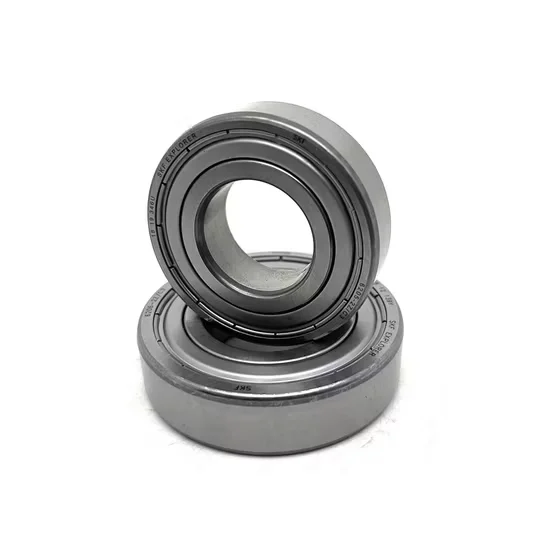 01 Deep Groove Ball Bearings SKF 6204 6205 6206 Deep Groove Ball Bearing Spare Parts View model details
 02 Deep Groove Ball Bearings Original SKF Deep Groove Ball Bearing 6000 6001 6308 6309 6204 6205 6206 for Auto Parts View model details
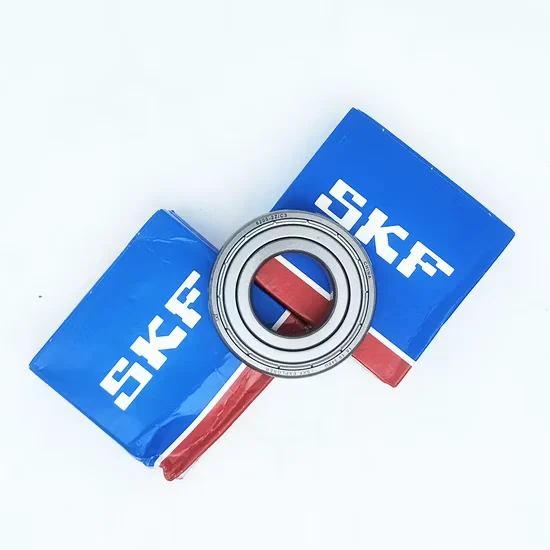 03 Agricultural Machinery Bearings X&S 80607kt 6301-2RS 6205-2Z 6206-2Z Deep Groove Ball Bearing View model details
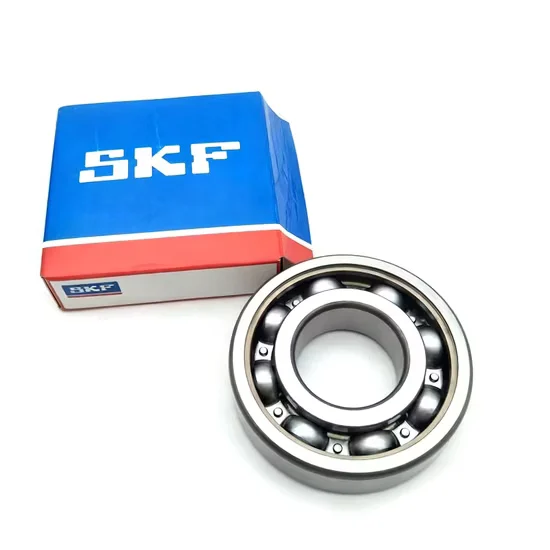 04 Deep Groove Ball Bearings SKF 6205 6206 ZZ C3 Deep Groove Ball Bearing for Automobile Industry View model details
Applications
Where these SKF bearings are used
Keep reading
Related SKF bearing selection guides
More practical notes on SKF designations, precision items and project bearing lists from Project Purchasing Company.
 Technical Resources · · 6 min read Ball Bearing Weight Table: Wholesale Supplier for Bulk Orders A precise ball bearing weight table is essential for calculating freight costs and avoiding port overweight penalties. Distinguish between net and gross weight to… Read the guide
 Technical Resources · · 7 min read Motor Bearing Lookup by Power | Genuine Wholesale Supplier Stop relying on motor bearing lookup by power alone to avoid premature failures from shock loads and heat. Calculate real dynamic requirements and match… Read the guide Technical Resources · · 7 min read Ball Bearing Load Rating Reference Table: Wholesale Supplier Master the Ball Bearing Load Rating Reference Table to prevent premature failures caused by misinterpreting dynamic and static limits. Learn to calculate equivalent loads… Read the guide

Request a quote
Send your SKF list. Get one itemized written quote.
Project Purchasing Company supplies SKF ball, roller, precision and housed bearing units to distributors, repair workshops and project buyers worldwide. Standard and precision items are priced line by line, with accessories kept on the same quote.