
SKF-Grade OEM Bearing Factory Direct: Cost Structure
The price gap between a generic OEM and an SKF-grade OEM bearing is never just a brand premium—it is a structural reflection of steel purity, heat treatment discipline, grinding precision, and certification overhead.
The real cost structure of SKF-grade OEM bearings is built on four hard-cost pillars: high-cleanliness bearing steel, controlled heat treatment cycles, micron-level grinding consistency, and ISO-compliant documentation systems. When a factory-direct quotation undercuts the market by a suspicious margin, it is almost always one or more of these pillars that has been quietly removed.
When I first started visiting industrial zones in Riyadh and Dubai, I kept hearing the same complaint from local distributors: "Your SKF-grade OEM bearing factory direct quote is higher than the other Chinese supplier." I used to feel defensive. Then I visited a Middle East steel mill that had just replaced a full batch of deep groove ball bearings—again. The previous supplier had quoted twenty percent below market. The bearings failed inside the conveyor rollers within a single production season. The mill’s maintenance manager showed me the cross-section of a failed raceway: visible non-metallic inclusions, uneven hardness bands, and clearance drift that no amount of lubrication could compensate for. That was the day I stopped comparing unit prices and started comparing cost structures.
Let me walk you through what actually sits inside a genuine SKF-grade quotation, and why each line item is non-negotiable for serious industrial buyers.
What Really Makes Up the Cost of SKF-Grade OEM Bearings?
A credible SKF-grade OEM bearing factory direct cost structure is composed of four inseparable layers: raw material grade, thermal processing, precision grinding, and compliance documentation.
Many buyers assume that OEM pricing is simply the branded price minus marketing overhead. The reality is more technical. The cost gap between a standard OEM and an SKF-grade OEM bearing factory direct product lies in how each manufacturer handles the invisible variables—variables that only reveal themselves after thousands of hours in the field.
| Cost Component | Standard OEM | SKF-Grade OEM |
|---|---|---|
| Steel Purity | Commercial-grade GCr15 | High-cleanliness vacuum-degassed bearing steel |
| Heat Treatment | Batch furnace, basic carbon control | Controlled atmosphere with monitored case depth |
| Grinding Precision | P0 tolerance class | P6 to P5 tolerance class consistency |
| Documentation | Self-reported inspection | ISO 9001 traceable batch records |
| Clearance Consistency | Uncontrolled | Tight C3 grouping per ISO 15 |
The table above is not a marketing exercise. It is what I see when I open a failed bearing in a customer’s workshop and compare it side by side with a properly manufactured unit.
A distributor in Lagos once showed me two batches of 6205 bearings he had sourced from two different factories. The visual difference was zero. The weight difference was negligible. But under a microscope, the raceway surface of the cheaper batch showed chatter marks and inconsistent waviness—classic signs of grinding wheels that had not been dressed at the correct intervals. That is not a material cost issue. That is a process discipline cost issue, and it is embedded in every SKF-grade OEM bearing factory direct quotation from a responsible manufacturer.
How Does Steel Quality Impact Bearing Life and Total Cost?
The single largest variable in bearing fatigue life is the cleanliness of the steel—specifically, the density and size of non-metallic inclusions.
Bearing steel is not a commodity. Yes, the base grade is often GCr15 or its international equivalents, but the refinement process separates an SKF-grade OEM bearing factory direct product from a generic one. Vacuum degassing, electroslag remelting, and controlled inclusion morphology are not optional upgrades—they are the foundation of predictable fatigue life.
I recall a mining operation in Central Africa that procured a large batch of spherical roller bearings for its crusher line. The initial purchase price was attractive. Within a single dry season, the bearings began showing spalling on the inner ring raceways. Metallurgical analysis later revealed elongated oxide inclusion clusters acting as subsurface crack initiation sites. The replacement cycle had shortened dramatically, and the total cost of ownership—factoring in downtime, labor, and lost production—dwarfed the initial savings.
When you evaluate an SKF-grade OEM bearing factory direct quotation, ask specifically about:
- Steel melting route (vacuum degassed vs. air melted)
- Inclusion rating per relevant standards
- Hardness uniformity across the ring cross-section
These are not academic questions. They are the difference between a bearing that runs for its designed service interval and one that becomes a recurring maintenance event.
Why Precision Grinding Is Non-Negotiable for Industrial Applications?
Grinding precision determines internal clearance consistency, which in dictation determines whether a bearing survives its first thermal cycle or fails before lubrication even stabilizes.
Most buyers focus on dimensional tolerance when they hear "precision." But in industrial applications—particularly high-temperature or high-speed environments—it is the geometric accuracy of the raceway groove and the consistency of internal clearance that matter most. An SKF-grade OEM bearing factory direct product will hold clearance within a narrow band of the nominal C3 or C4 value, batch after batch.
A European MRO buyer once sent me a set of failed deep groove ball bearings from a conveyor fan application. The bearings had been in service for less than half the expected interval. The root cause was not load, not contamination, not lubrication. It was clearance drift. The grinding process at the original supplier had allowed excessive geometric variation in the inner ring groove radius, which caused the assembled clearance to shift unpredictably under thermal expansion. The result was premature contact stress and early fatigue.
Precision grinding is where machine tool condition, wheel dressing discipline, and in-process measurement converge. It is also where cost is most easily—and most dangerously—compressed by cutting corners on wheel maintenance or skipping intermediate inspections.
| Precision Factor | Impact on Bearing Performance |
|---|---|
| Raceway roundness | Vibration and noise under rotation |
| Groove radius consistency | Internal clearance stability |
| Surface roughness | Lubricant film formation and friction |
| Shoulder perpendicularity | Load distribution across rolling elements |
When I review an SKF-grade OEM bearing factory direct quotation with a buyer, I always ask whether the supplier can provide grinding process records—not just final inspection data. The answer tells me everything about their cost discipline.
What Documentation Should You Demand from an OEM Bearing Supplier?
ISO 9001 certification, material test reports, and dimensional inspection records are the minimum documentation baseline for any SKF-grade OEM bearing factory direct procurement.
Paperwork is often dismissed as administrative overhead. In reality, it is the only verifiable evidence that the cost structure you are paying for actually exists. A supplier who cannot produce batch-level traceability is a supplier who has no incentive to maintain process discipline.
For industrial buyers and distributors operating in regulated environments, the documentation package should include:
- ISO 9001 certificate with valid scope covering bearing manufacturing
- Material certificates referencing the steel heat number and inclusion ratings
- Dimensional inspection reports per ISO 15 and ISO 492 for the specific batch
- Heat treatment records showing temperature profiles and hardness test results
- Final inspection reports including clearance measurement and vibration data
I once supported a Latin American MRO buyer who was replacing SKF 6205 bearings on a series of industrial motors. The end customer required full traceability documentation before approving the alternative supplier. Our ISO 9001 certification, complete batch-level material reports, and dimensional inspection records passed their audit without a single non-conformance finding. That documentation was not an afterthought—it was the reason the order moved forward.
Documentation is also your protection against counterfeit or mixed-origin products. An SKF-grade OEM bearing factory direct supplier with proper traceability will never hesitate to show you the paper trail. If they do, walk away.
How to Evaluate Factory-Direct Pricing Without Sacrificing Quality?
The correct way to evaluate an SKF-grade OEM bearing factory direct quotation is to request a transparent cost breakdown matched to your specific application conditions—not to compare unit prices in isolation.
Price comparison without technical context is the most expensive habit in industrial procurement. Two quotations for a 6305 deep groove ball bearing can look identical on the surface and deliver completely different outcomes in the field. The difference is never visible in a spreadsheet. It is visible in the steel, the grinding, the heat treatment, and the paperwork.
When I work with distributors and MRO buyers to evaluate quotations, I guide them through a structured review:
- Confirm the steel grade and melting route specified by each supplier
- Request heat treatment parameters and hardness test data
- Compare tolerance class and clearance grouping
- Verify documentation completeness and traceability depth
- Cross-reference the quoted model against the actual application load, speed, and temperature
This process takes time. But it prevents the far more expensive process of field failure analysis and emergency replacement.
A distributor in the Gulf region once asked me why our SKF-grade OEM bearing factory direct pricing was higher than a competitor’s for the same 22320 spherical roller bearing. I laid out the cost structure side by side: our vacuum-degassed steel, our controlled heat treatment with documented hardness uniformity, our P6 grinding consistency, and our full ISO 9001 traceability package. The competitor’s quotation, I explained, was likely built on air-melted steel, batch furnace heat treatment with wider hardness bands, P0 grinding, and self-reported inspection. The unit price was lower. The total cost of ownership would not be.
Conclusion
The cost structure of an SKF-grade OEM bearing factory direct product is not a mystery—it is a transparent reflection of material integrity, process discipline, and compliance infrastructure.
Every line item in a credible quotation corresponds to a measurable technical outcome in the field. Buyers who evaluate quotations on the basis of these underlying factors, rather than unit price alone, consistently achieve lower total cost of ownership and stronger supply chain reliability. The bearings that look cheapest on paper are rarely the ones that perform cheapest in practice.
Products in this article
SKF bearings mentioned above
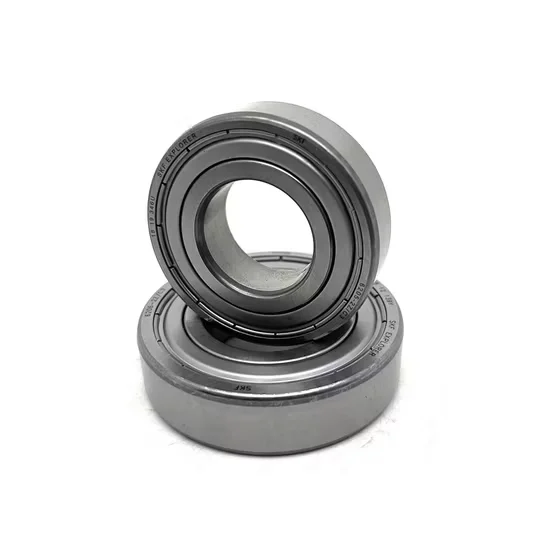 01 Deep Groove Ball Bearings SKF 6204 6205 6206 Deep Groove Ball Bearing Spare Parts View model details
 02 Deep Groove Ball Bearings Original SKF Deep Groove Ball Bearing 6000 6001 6308 6309 6204 6205 6206 for Auto Parts View model details
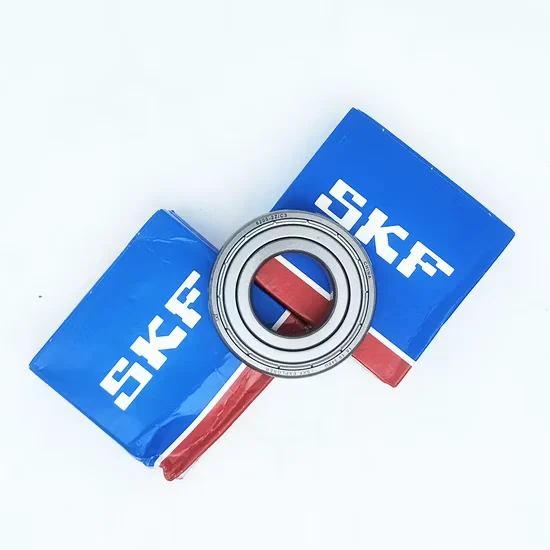 03 Agricultural Machinery Bearings X&S 80607kt 6301-2RS 6205-2Z 6206-2Z Deep Groove Ball Bearing View model details
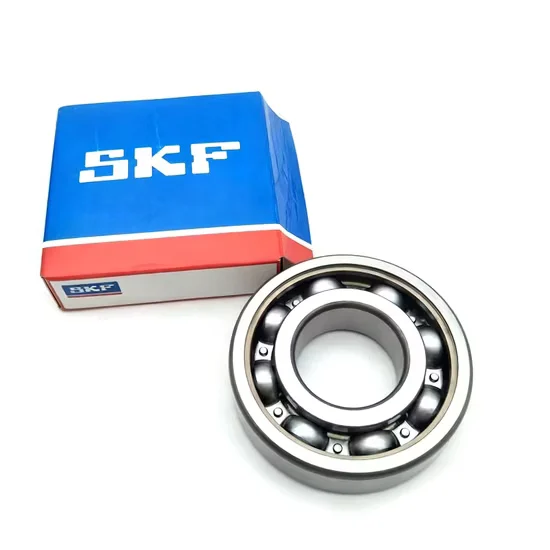 04 Deep Groove Ball Bearings SKF 6205 6206 ZZ C3 Deep Groove Ball Bearing for Automobile Industry View model details
Applications
Where these SKF bearings are used
Keep reading
Related SKF bearing selection guides
More practical notes on SKF designations, precision items and project bearing lists from Project Purchasing Company.
 Buying Guide · · 6 min read SKF Ball Bearings Quote: Wholesale Supplier for Bulk & MRO Orders Request a Quote for SKF Ball Bearings that reveals true landed costs beyond unit price. Avoid hidden logistics and customs fees by integrating freight,… Read the guide Buying Guide · · 7 min read Spot Fake SKF Ball Bearings: Neutral Buyer Checks & Wholesale Supplier Spotting Fake SKF Ball Bearings requires inspecting physical components, not just packaging. Genuine units feature deep stamped markings and consistent weight, while counterfeits use… Read the guide Buying Guide · · 7 min read SKF Ball Bearing Prices: Wholesale Supplier for Bulk Orders SKF ball bearing prices vary by series and channel, making lowest quotes a risky choice for bulk orders. Genuine units ensure traceability and lower… Read the guide

Request a quote
Send your SKF list. Get one itemized written quote.
Project Purchasing Company supplies SKF ball, roller, precision and housed bearing units to distributors, repair workshops and project buyers worldwide. Standard and precision items are priced line by line, with accessories kept on the same quote.