
Custom OEM Bearing Prototype-to-Production Handoff Standards | Wholesale Supplier
A passing sample does not guarantee a passing batch. The gap between prototype approval and mass production is where the majority of OEM bearing disputes originate — not from bad samples, but from undocumented specifications.
The handoff from prototype to mass production must be governed by a written protocol that freezes drawing revisions, locks critical tolerances contractually, requires first-article sign-off with CMM verification, and confirms packaging specs before a single production run begins. Without this discipline, even a perfect sample becomes a lottery ticket for the first container.
I still remember a deal I closed at Hannover Messe years ago — angular contact bearings for an industrial buyer in Northern Europe. The sample sailed through three-coordinate inspection, everyone shook hands, and I flew home thinking the order was secure. Weeks later, the first full container arrived at Hamburg and got rejected outright. The cage pocket depth had never been locked in writing. Internal clearance drifted beyond acceptable limits. The drawing had gone through two revision cycles that were never formally communicated. The buyer’s QC measured a deviation that, while seemingly minor, rendered the entire shipment unusable for their application. The rework cost was several times the original order value. That container taught me something no brochure ever will: industrial buyers do not fear slow samples — they fear the undocumented window between sample approval and mass production. Ever since that trip, I carry a handoff checklist everywhere I go, whether I am visiting Chicago or Las Vegas for trade shows. It covers four things — drawing version freeze, tolerance lock, first-article inspection sign-off, and packaging confirmation — and every item is documented in black and white before production starts.
Let me walk you through what a disciplined OEM bearing prototype to production handoff actually looks like, stage by stage.
Why Do Most OEM Bearing Disputes Happen After Sample Approval?
Most disputes are not caused by defective samples — they are caused by the undocumented drift between prototype parameters and mass production parameters. The sample is made in a controlled, small-batch environment where engineers personally oversee every operation. Mass production runs on automated lines with different tooling, different operators, and different inspection rhythms. If the transition is not governed by a written protocol, parameters shift silently.
Consider a case from a distributor in the Middle East who ordered OEM angular contact bearings. The sample passed every test. The first mass production batch arrived with cage material that did not match the sample specification. The substitution was never formally communicated. The cage material difference led to a noticeable reduction in service life under the high-temperature conditions of their regional market. The claim cycle stretched across months, and the relationship was severely damaged.
Here is what typically goes wrong when the handoff is not managed:
- Drawing revisions made during prototyping are not formally frozen before production begins, so the factory and the buyer are working from different versions.
- Critical tolerances — internal clearance, raceway roundness, cage pocket depth — are verified on the sample but never contractually locked for production batches.
- Material certificates from the sample stage are not cross-referenced against production batch material certs.
- Packaging specifications are assumed rather than confirmed, leading to transit damage or labeling mismatches at destination ports.
The uncomfortable truth is that an ISO certificate covers the management system — it does not freeze a specific drawing version for a specific purchase order. Many buyers assume that a certified factory will automatically maintain consistency from sample to batch. In reality, the certification ensures process discipline, but it is the buyer’s responsibility to demand written confirmation of every critical parameter before the production run starts.
What Must Be Locked in Writing Before Mass Production Starts?
Four categories of specifications must be contractually frozen before any production run begins: drawing revision, critical tolerances, material traceability, and packaging standards. This is not optional documentation — it is the foundation of the OEM bearing prototype to production handoff.
Drawing Revision Freeze. Every revision made during the prototyping phase must be consolidated into a single, final-issue drawing. Both parties sign and date this document. Any subsequent change requires a formal revision notice with a new version number. I have seen orders delayed by weeks because a buyer’s engineering team issued a modification during prototyping, the factory implemented it on the sample, but the production floor was still running to the original drawing. Version control is not paperwork — it is risk prevention.
Critical Tolerance Lock. Standard ISO tolerance classes (P0, P6, P5, P4, P2) define the general precision grade, but OEM orders often require specific parameters beyond the standard — internal clearance bands, cage pocket depth ranges, seal groove dimensions, chamfer widths. These must be listed explicitly in a supplementary specification sheet and signed by both parties. For example, if the application demands a specific internal clearance range tighter than the standard C3 group, that range must be written into the contract, not just discussed verbally.
Material Traceability. The material grade used for the sample — including ring material, rolling element material, cage material, and seal compound — must be documented with mill certificates. The production batch must be accompanied by matching material certificates that can be cross-referenced to the sample documentation. A cage material substitution, even if technically acceptable, can alter performance characteristics in ways that only become apparent after installation.
Packaging Specification Confirmation. Packaging is often treated as an afterthought, yet it is a frequent source of disputes. Rust preventive oil type, VCI paper specification, inner box dimensions, outer carton markings, palletizing pattern, and labeling format must all be confirmed in writing before production. A Latin American MRO buyer once received a custom sealed bearing order where the packaging markings did not match their warehouse scanning system. The bearings were physically fine, but the relabeling effort at destination added significant cost and delayed deployment across their service network.
| Handoff Element | Documentation Required | Verification Level |
|---|---|---|
| Drawing Revision | Signed final-issue drawing with version number | Full batch-level |
| Critical Tolerances | Supplementary spec sheet with signed tolerance bands | Full batch-level |
| Material Certificates | Mill certs for rings, rolling elements, cage, seals | Verifiable per batch |
| Packaging Specs | Written packaging instruction sheet with markings | Confirmed pre-shipment |
How Should First Article Inspection Be Conducted for Bearing Batches?
First Article Inspection (FAI) is the single most important quality gate between prototype approval and full mass production — it verifies that the production line, not just the sample bench, can hold the required specifications. FAI must be performed on parts taken from the actual production run, using the actual production tooling, before the batch is released for packaging and shipment.
The FAI process for OEM bearing prototype to production handoff follows a structured sequence:
Step 1: Sampling from the Production Line. The first articles must be pulled from the production run itself — not from the sample bench, not from a pre-production trial. Typically, a statistically meaningful number of units are selected from the beginning, middle, and end of the production run to capture any process drift.
Step 2: Dimensional Verification via CMM. Every critical dimension listed in the frozen drawing — outside diameter, bore diameter, width, raceway groove curvature, cage pocket depth, chamfer dimensions — is measured using a three-coordinate measuring machine. The CMM report is generated with actual measured values, not pass/fail stamps. This report becomes part of the permanent quality record for the order.
Step 3: Material Certificate Cross-Check. The material certificates for the production batch are compared against the sample-stage documentation. Ring material, rolling element material, cage material, and seal compound must all match. Any deviation, even in secondary materials, must be flagged and approved before the batch proceeds.
Step 4: Functional Testing. Depending on the application requirements, functional tests may include rotational torque measurement, noise and vibration testing, internal clearance verification under simulated operating conditions, and seal integrity checks. These tests confirm that the bearing performs as expected, not just that its dimensions are within tolerance.
Step 5: Pre-Shipment Sample Retention. A sealed set of first-article samples is retained by both the factory and the buyer. These serve as physical reference points if any dispute arises during receiving inspection at destination. I have seen cases where the retained sample set resolved a disagreement within hours — the physical evidence was undeniable.
A European industrial buyer once received a batch of deep groove ball bearings where the FAI report showed all dimensions within tolerance, but the rotational noise values were noticeably higher than the sample. Because the FAI had included vibration testing, the issue was caught before shipment. The factory traced the problem to a grinding wheel batch that had degraded performance. The wheel was replaced, the affected units were reworked, and the buyer received a compliant batch — all without a single container crossing an ocean.
What Documentation Should Buyers Demand at Each Handoff Stage?
A complete documentation package is the buyer’s strongest protection against batch inconsistency — it transforms verbal assumptions into auditable records. At each stage of the OEM bearing prototype to production handoff, specific documents must be generated, reviewed, and archived.
Stage 1: Prototype / Sample Approval. The documentation package includes the original drawing with revision history, the sample inspection report (preferably CMM-based), material certificates for all components, and a signed sample approval form. This stage establishes the baseline — what was agreed, what was measured, and what was accepted.
Stage 2: Pre-Production Confirmation. Before the production run begins, the factory issues a pre-production confirmation package containing the frozen drawing (with final version number), the supplementary tolerance specification sheet, the confirmed material source documentation, and the approved packaging instruction sheet. The buyer reviews and signs this package. Any discrepancy between the pre-production documents and the sample-stage documents must be resolved before production starts.
Stage 3: First Article Inspection. The FAI package includes the CMM dimensional report for the production batch, the production batch material certificates, functional test reports (if applicable), and photographic evidence of the production setup and first articles. This package is submitted to the buyer for review and approval before the batch proceeds to packaging.
Stage 4: Pre-Shipment. The final documentation package includes the packing list, commercial invoice, certificate of origin, full set of quality certificates, and a copy of the FAI report. For buyers who require third-party inspection, the factory coordinates with the designated inspection agency and provides all necessary access and documentation.
As an ISO 9001 certified full-category bearing factory, we execute this standardized handoff protocol on every OEM order. Each order receives a complete documentation trail — from frozen drawing to CMM report to FAI sign-off to packaging confirmation — ensuring that the transition from sample to mass production is seamless, auditable, and dispute-resistant. Our quality documentation package is prepared in parallel with production, so the buyer never has to wait for paperwork after the goods are ready.
How to Build a Repeatable Handoff Checklist for Future Orders?
A repeatable handoff checklist transforms the OEM bearing prototype to production handoff from a one-time negotiation into a standardized, scalable process that protects every future order. The checklist should be developed collaboratively between the buyer’s engineering and procurement teams and the factory’s quality and production teams, and it should be treated as a living document that is refined with each order cycle.
The four-step protocol I follow on every OEM order is straightforward but non-negotiable:
Step 1: Version Lock. Confirm the final drawing revision. Both parties sign and date. All prior revisions are archived and explicitly superseded. No verbal changes are accepted after this point — every modification goes through a formal revision notice.
Step 2: Tolerance Freeze. List every critical parameter that goes beyond the standard ISO tolerance class. Internal clearance bands, cage pocket depth ranges, seal groove dimensions, surface finish requirements — all are documented in a supplementary specification sheet and signed by both parties.
Step 3: FAI Sign. Conduct first article inspection on production-run parts. Generate CMM report, cross-check material certificates, perform functional tests if required. Both parties sign the FAI report before the batch is released for packaging.
Step 4: Packaging Confirm. Confirm packaging specifications in writing — rust preventive, VCI paper, inner box, outer carton markings, palletizing pattern, labeling format. Verify that the first packaged units match the confirmed specification before the full batch is packed.
This protocol works because it removes ambiguity at every stage. The buyer knows exactly what to expect. The factory knows exactly what to produce. And if a dispute arises, both parties have a clear, written record to reference.
I have applied this checklist on orders ranging from standard deep groove ball bearings to custom sealed bearings for agricultural equipment, from tapered roller bearings for heavy-duty conveyors to angular contact bearings for precision industrial spindles. The process scales because it is based on documentation discipline, not on heroic individual efforts.
Conclusion
The prototype-to-production gap is the single largest source of OEM bearing disputes — and it is entirely preventable with a disciplined, written handoff protocol. Freezing drawing revisions, locking critical tolerances, conducting CMM-based first article inspection, and confirming packaging specifications in writing before production begins will protect buyers from costly batch rejections, regardless of order size or complexity. The OEM bearing prototype to production handoff is not about trusting the factory — it is about building a system where trust is verified at every stage.
Products in this article
SKF bearings mentioned above
 01 Clutch Release Bearings LM501349/LM501310 501349/10 Double Row Roller Bearing OEM View model details
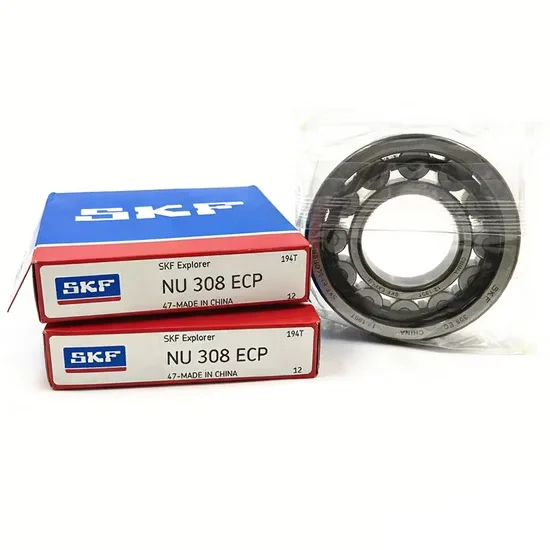 02 Cylindrical Roller Bearings SKF NU308ECP Cylindrical Roller Bearing for Gearbox Reducer OEM View model details
 03 Deep Groove Ball Bearings Genuine SKF Deep Groove Ball Bearings 6201-6206 OEM ODM Supply View model details
 04 Tapered Roller Bearing SKF 32218 Conical Roller Bearing 90x160x42.5mm for Wind Power & Automotive OEM Applications View model details
Applications
Where these SKF bearings are used
Keep reading
Related SKF bearing selection guides
More practical notes on SKF designations, precision items and project bearing lists from Project Purchasing Company.
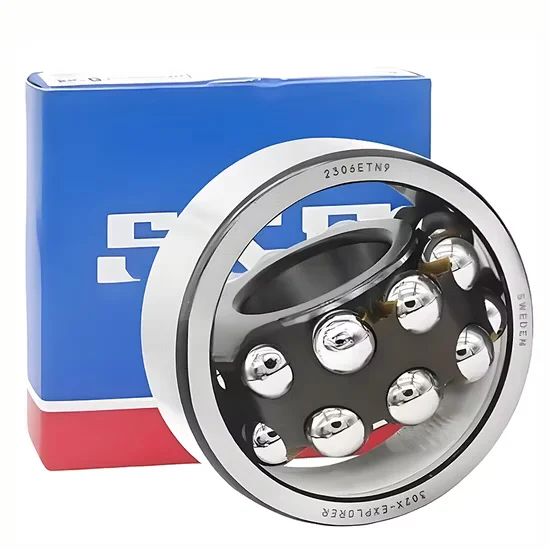 Procurement & Trade FAQs · · 7 min read Ball Bearing Supplier to Latin America: Genuine SKF, FAG, NSK Wholesale Sourcing genuine ball bearings for Latin America demands strict customs compliance to avoid costly port delays. Master precise HS codes and Certificates of Origin… Read the guide
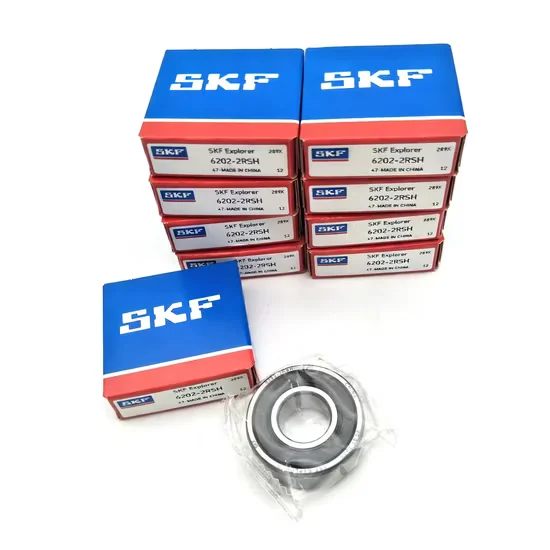 Procurement & Trade FAQs · · 8 min read Genuine Ball Bearing Supply to Southeast Asia Wholesale Master Ball Bearing Supply to Southeast Asia by prioritizing customs compliance and verified authenticity over marginal price differences. Learn how mixed-brand consolidation, accurate HS… Read the guide
 Procurement & Trade FAQs · · 7 min read Genuine Ball Bearings for Africa & Middle East Wholesale Supplier Secure genuine ball bearing supply to Africa and Middle East with strict customs compliance and authentic mixed-brand consolidation. Master SONCAP clearance, optimize container loading,… Read the guide

Request a quote
Send your SKF list. Get one itemized written quote.
Project Purchasing Company supplies SKF ball, roller, precision and housed bearing units to distributors, repair workshops and project buyers worldwide. Standard and precision items are priced line by line, with accessories kept on the same quote.