
Custom OEM Bearings for Backhoe Loader Manufacturing | ISO 9001 Supplier
Most backhoe loader bearing failures have nothing to do with overload—they start with seal failure letting contamination in.
Backhoe loader bearings require custom OEM solutions matched to specific operating conditions involving dust, shock loads, and misalignment, rather than off-the-shelf standard parts. Procurement engineers and equipment manufacturers need reliable bearing suppliers capable of custom specifications, ISO documentation, and application-specific selection for heavy-duty construction equipment.
I still remember walking through a backhoe loader assembly plant in Ho Chi Minh City a few years back. The engineering team had specified standard deep groove ball bearings for their pivot joints—catalog numbers, off-the-shelf availability, competitive pricing. Everything looked right on paper. Three months after field deployment, warranty claims started flooding in. Bearings were seizing, seals were disintegrating, and the root cause traced back to fine laterite dust penetrating standard contact seals under high-vibration conditions. That single batch cost the OEM several times what they would have spent on properly specified custom OEM bearings for backhoe loader applications.
The lesson was clear: construction equipment demands bearing solutions designed around actual field conditions, not catalog convenience.
This article walks through what makes backhoe loader bearing applications unique, how to select the right bearing type for each position, why custom specifications consistently outperform standard catalog parts, what documentation OEM buyers should require, and how to verify bearing authenticity before placing bulk orders.
What Makes Backhoe Loader Bearing Applications Unique?
Backhoe loaders operate in some of the most punishing bearing environments in heavy equipment—combining fine abrasive dust, severe shock loads, and persistent misalignment that standard bearing designs simply cannot handle.
Unlike industrial motors or conveyor systems where bearings run under relatively stable conditions, backhoe loader bearings face a triple threat. First, contamination exposure is constant and extreme. These machines work in quarries, construction sites, and agricultural fields where fine particulate matter—silica dust, laterite soil, cement powder—finds every gap in seal designs.
Second, shock loading is inherent to the application. The loader bucket impacts material during digging, the backhoe hammer delivers repeated impact forces, and the machine transitions between travel and work modes dozens of times per hour. Bearings in pivot joints and boom connections absorb these shock loads directly, requiring designs that resist brinelling and fatigue spalling under dynamic conditions.
Third, misalignment is unavoidable. Structural deflection under load, thermal expansion during continuous operation, and manufacturing tolerances in housing bores all contribute to angular misalignment at bearing positions. Standard rigid bearing designs cannot accommodate this misalignment, leading to edge loading, accelerated wear, and premature failure.
I worked with a Southeast Asian backhoe loader OEM that faced exactly this combination. Their standard bearing specification worked in controlled testing but failed catastrophically in field conditions. The standard contact seals could not exclude fine dust particles smaller than the seal lip gap. The standard internal clearance caused excessive preload when bearings heated up during continuous operation. And the rigid bearing design could not accommodate the structural deflection present in their boom assembly.
The solution required rethinking the entire bearing specification—not just swapping part numbers, but redesigning seals, clearances, and bearing types to match actual operating conditions. This is what custom OEM bearings for backhoe loader manufacturing demands: application engineering, not just part substitution.
How to Select the Right Bearing Type for Each Backhoe Loader Position?
Different backhoe loader positions require fundamentally different bearing types—self-aligning designs for pivot joints, high radial capacity for boom cylinders, and specific clearance specifications for swing circles.
Bearing selection for backhoe loaders cannot follow a one-size-fits-all approach. Each position has distinct load characteristics, speed requirements, and environmental exposures that dictate the appropriate bearing type.
Pivot Joints and Articulation Points: These positions experience heavy radial loads combined with significant misalignment from structural deflection and pin wear. Self-aligning roller bearings are the standard choice here because their spherical outer ring raceway accommodates angular misalignment while maintaining load capacity.
I recall a case where an MRO buyer was replacing worn bearings in loader boom cylinders. The original specification called for cylindrical roller bearings—high radial capacity but zero misalignment tolerance. Application analysis revealed that structural deflection in the boom assembly created persistent angular misalignment. Switching to self-aligning roller bearings eliminated edge loading and extended service life substantially.
Boom Cylinders and Main Structural Connections: These positions carry the highest radial loads in the machine, particularly during digging and lifting operations. Cylindrical roller bearings or tapered roller bearings provide the necessary load capacity. The choice between them depends on whether axial load capacity is also required—tapered roller bearings handle combined radial and axial loads, while cylindrical roller bearings focus on pure radial capacity.
Swing Circles and Rotation Bearings: The swing circle bearing allows the backhoe assembly to rotate relative to the chassis. This position requires bearings with specific internal clearance to accommodate thermal expansion during continuous operation while maintaining rotational accuracy. Deep groove ball bearings or four-point contact ball bearings are typical choices, but clearance selection becomes critical.
Wheel Hubs and Travel Drives: These positions combine radial load, axial load from vehicle weight and cornering forces, and exposure to road contamination. Tapered roller bearings are standard here because they handle combined loading efficiently and can be preloaded to eliminate play.
The key insight is that bearing type selection must follow load analysis and misalignment assessment—not catalog availability. A distributor once requested cross-reference from major brand numbers for backhoe loader pivot joints. We provided dimensional verification and material grade confirmation, but also recommended switching from the originally specified bearing type to a self-aligning design after reviewing their actual misalignment conditions. The custom OEM bearings for backhoe loader specification we developed addressed the root cause, not just the symptom.
Why Custom Specifications Outperform Standard Catalog Bearings?
Custom specifications for backhoe loader bearings—tailored seals, clearances, and materials matched to actual operating conditions—extend service life significantly compared to standard catalog parts.
Standard catalog bearings are designed for general industrial applications with moderate conditions. They work well in clean environments with stable loads and temperatures. But backhoe loaders operate in none of those conditions.
Seal Design: Standard contact seals provide good contamination exclusion in clean environments but fail in fine dust conditions. The seal lip geometry cannot exclude particles smaller than the lip gap, and the contact pressure causes friction heating that degrades the seal material over time. Custom labyrinth seals or hybrid seal designs—combining labyrinth geometry with low-friction contact elements—provide superior contamination exclusion without the friction penalty.
I worked with a Southeast Asian backhoe loader OEM facing early bearing failure due to standard seals failing in high-dust environments. The solution involved custom labyrinth seals with optimized gap geometry and C3 clearance adjustment to accommodate thermal expansion. Field testing showed failure rates dropped noticeably compared to the standard seal design.
Internal Clearance: Standard C0 clearance seems safe for most applications, but backhoe loader bearings often operate at elevated temperatures due to continuous duty cycles and friction heating. When bearings heat up, internal clearance decreases due to differential thermal expansion between inner ring, outer ring, and rolling elements. If clearance reaches zero, the bearing becomes preloaded, causing excessive friction, heating, and rapid failure.
Custom specifications for backhoe loader bearings often require C3 or C4 clearance to maintain adequate operating clearance at elevated temperatures. The exact clearance depends on operating temperature range, fit conditions, and load characteristics. This is not something you can determine from a catalog—you need application analysis.
Material and Heat Treatment: Standard through-hardened bearing steel works well for most applications, but backhoe loader bearings in high-shock positions may benefit from case-hardened designs. Case hardening provides a hard, wear-resistant surface with a tough, ductile core that resists shock loading and prevents catastrophic failure under overload conditions.
A higher precision grade like P5 or P4 might seem like an obvious upgrade, but for construction equipment applications, P0 or P6 precision is often sufficient and more cost-effective. The additional precision does not translate to meaningful performance gains in applications dominated by contamination and shock loading rather than high-speed precision requirements.
Custom OEM bearings for backhoe loader manufacturing means specifying the right combination of seal design, clearance, and material for each position—not defaulting to catalog standards that were never designed for these conditions.
What Documentation Should OEM Buyers Require from Bearing Suppliers?
OEM buyers should require ISO 9001 certification, material test reports, dimensional inspection records, and cross-reference verification to ensure quality consistency and product authenticity.
Documentation is not just paperwork—it is the evidence that bearings meet specifications and the traceability that protects against counterfeit risk. In an industry where bearing failures can cause equipment downtime costing several times the bearing price, documentation becomes a critical quality control tool.
ISO 9001 Certification: This is the baseline requirement. ISO 9001 certification demonstrates that the bearing manufacturer has implemented a quality management system covering design, production, inspection, and traceability.
But certification alone is not enough. Buyers should verify that the certification covers the specific bearing types and sizes being procured, and that it is current and issued by an accredited certification body.
Material Test Reports: These reports verify that bearing components are manufactured from specified materials with correct chemical composition and mechanical properties. For backhoe loader bearings, material verification is particularly important because shock loading and contamination resistance depend on material quality and heat treatment.
Material test reports should include chemical composition analysis, hardness testing results, and microstructure examination for critical applications. Our factory provides complete material test reports as standard documentation, ensuring that every batch of custom OEM bearings for backhoe loader applications meets specified material requirements.
Dimensional Inspection Records: These records verify that bearing dimensions conform to specified tolerances. For backhoe loader bearings, dimensional accuracy affects fit conditions, internal clearance, and ultimately bearing performance and service life.
Dimensional inspection records should cover critical dimensions including bore diameter, outside diameter, width, and ring thickness. Statistical process control data demonstrating manufacturing consistency adds additional confidence.
Cross-Reference Verification: When replacing bearings from other manufacturers or when providing equivalent specifications, cross-reference documentation verifies dimensional and performance equivalence. This is particularly important for OEM buyers sourcing alternative suppliers or for MRO buyers replacing bearings in existing equipment.
Cross-reference verification should include dimensional comparison, load rating comparison, and clearance specification comparison. Our factory provides complete cross-reference support across all major brands, with dimensional verification and material grade confirmation for every cross-reference request.
A distributor requesting cross-reference from major brand numbers for backhoe loader pivot joints received not just part number equivalents but complete dimensional verification and material grade confirmation. This documentation allowed them to verify equivalence before placing orders, eliminating the risk of receiving underspecified bearings.
How to Verify Bearing Authenticity and Quality Before Bulk Orders?
Request sample testing, third-party inspection, and standard quality files to avoid counterfeit risks and verify that bearings meet specifications before committing to bulk orders.
Counterfeit bearings represent a serious risk in the global bearing market. Counterfeit products may look identical to genuine bearings but use inferior materials, skip critical heat treatment processes, or fail to meet dimensional tolerances. In backhoe loader applications where bearings face severe operating conditions, counterfeit bearings can fail catastrophically, causing equipment damage and safety hazards.
Sample Testing: Before placing bulk orders, request sample bearings for testing. Sample testing should include dimensional verification, hardness testing, and if possible, performance testing under simulated operating conditions.
Dimensional verification confirms that samples meet specified tolerances. Hardness testing verifies that heat treatment processes were performed correctly. Performance testing under simulated conditions provides confidence that bearings will perform as expected in actual applications.
For backhoe loader bearings, sample testing is particularly important because custom specifications—seal design, clearance, material—must be verified before committing to production. Our factory provides sample bearings for testing before bulk orders, with complete dimensional and hardness verification included.
Third-Party Inspection: For large orders or critical applications, third-party inspection provides independent verification of bearing quality. Third-party inspectors can verify dimensional accuracy, material quality, and packaging integrity before shipment.
Third-party inspection is particularly valuable when sourcing from new suppliers or when ordering custom OEM bearings for backhoe loader applications with non-standard specifications. The inspection report provides objective evidence that bearings meet requirements.
Standard Quality Files: Request complete quality documentation including material test reports, dimensional inspection records, and heat treatment certificates. These files provide traceability from raw material to finished bearing and verify that manufacturing processes were performed correctly.
Standard quality files should be provided with every shipment, not just for sample orders. Consistent quality documentation demonstrates that the manufacturer maintains quality control across all production, not just for samples.
Our factory provides standard quality documentation with every order, including material test reports, dimensional inspection records, and heat treatment certificates. This documentation package ensures that OEM buyers receive verifiable evidence of bearing quality and can maintain complete traceability for their equipment.
A Middle East equipment manufacturer learned the importance of verification the hard way. They sourced bearings from a new supplier without requesting samples or quality documentation. The bearings looked correct but failed prematurely in field service. Investigation revealed that the bearings used inferior material and skipped critical heat treatment processes—a classic counterfeit scenario. The equipment downtime and warranty claims cost several times what proper verification would have cost.
The lesson: verification is not optional. Sample testing, third-party inspection, and standard quality files are essential tools for protecting against counterfeit risk and ensuring bearing quality.
Conclusion
Backhoe loader bearing applications demand custom solutions designed around actual field conditions, not catalog convenience. Contamination exclusion, shock load resistance, and misalignment accommodation require tailored seal designs, clearance specifications, and bearing type selection matched to each position. ISO documentation, material verification, and cross-reference support ensure quality consistency and protect against counterfeit risk. Custom OEM bearings for backhoe loader manufacturing means application engineering, not just part substitution.
Products in this article
SKF bearings mentioned above
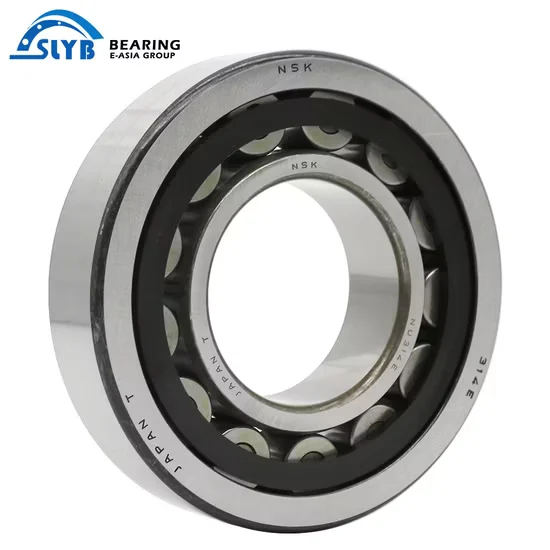 01 Clutch Release Bearings LM501349/LM501310 501349/10 Double Row Roller Bearing OEM View model details
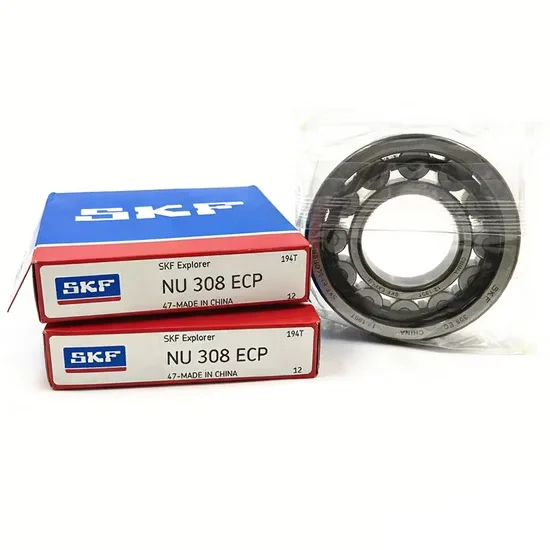 02 Cylindrical Roller Bearings SKF NU308ECP Cylindrical Roller Bearing for Gearbox Reducer OEM View model details
 03 Deep Groove Ball Bearings Genuine SKF Deep Groove Ball Bearings 6201-6206 OEM ODM Supply View model details
 04 Tapered Roller Bearing SKF 32218 Conical Roller Bearing 90x160x42.5mm for Wind Power & Automotive OEM Applications View model details
Applications
Where these SKF bearings are used
Keep reading
Related SKF bearing selection guides
More practical notes on SKF designations, precision items and project bearing lists from Project Purchasing Company.
 Applications & Industries · · 7 min read Ball Bearings for Model Engines: Wholesale Supplier & Bulk Orders Standard industrial bearings fail in model engines due to incorrect clearances and cage materials. Ball Bearings in Model Engines require specific tight tolerances, machined… Read the guide Applications & Industries · · 7 min read Ball Bearings for Garden Tillers: Genuine Wholesale Supplier Genuine Ball Bearings in Garden Tillers prevent costly field failures caused by mud ingress and shock loads. Discover critical selection criteria for sealing and… Read the guide Applications & Industries · · 7 min read Ball Bearings for Pressure Washers Wholesale Supplier Stop premature pump failures by prioritizing seal integrity over basic dimensions for Ball Bearings in Pressure Washers. Learn why high-temperature contact seals and synthetic… Read the guide

Request a quote
Send your SKF list. Get one itemized written quote.
Project Purchasing Company supplies SKF ball, roller, precision and housed bearing units to distributors, repair workshops and project buyers worldwide. Standard and precision items are priced line by line, with accessories kept on the same quote.