
OEM Bearing Contamination Class Standards for OE Assembly Halls
Most bearing failures blamed on product quality actually originate from particle contamination in the assembly hall.
OE assembly halls must control solid particle contamination to ISO 4406 cleanliness codes before bearing installation, because airborne and surface-borne particulates directly embed into raceways, alter clearance, and destroy lubricant films—causing premature fatigue, noise, and field returns.
I still remember the batch of 22320 self-aligning roller bearings we shipped to a cement plant near Jeddah. They called us within months claiming the bearings had failed. When I got the returned units sectioned and examined under microscopy, the raceways were packed with fine silica dust. Their assembly area was open-air, no positive pressure, no cleanliness protocol—bearings were unpacked and pressed straight onto shafts in a sandstorm environment. The particles had not come from our factory; they had been pressed into the raceway during installation. That case reshaped how I approach OEM bearing contamination class standards for OE assembly halls. Every shipment now goes out with a clear conversation about the receiving environment.
Let me walk you through what the codes actually mean, how to build a contamination-controlled assembly process, and what happens when these standards are ignored.
What Are the Key ISO Contamination Class Codes for Bearings?
ISO 4406 defines fluid and surface-borne particle contamination using a multi-digit code system, where each digit represents the logarithmic count of particles above a specific size threshold per milliliter.
The current version—ISO 4406:2021—uses a three-code format. The first code corresponds to particle counts above 4 micrometers, the second above 6 micrometers, and the third above 14 micrometers. A lower code number means fewer particles and therefore a cleaner environment or fluid. For OE assembly halls handling bearings, the relevant benchmark is typically the air and surface cleanliness that keeps particulate ingress below the threshold where particles can penetrate the elastohydrodynamic lubricant film.
Here is how the cleanliness tiers map to typical assembly environments:
| Cleanliness Tier | Typical Environment | Particle Control Status | Bearing Risk Level |
|---|---|---|---|
| ISO Code 14/12/9 or cleaner | Dedicated cleanroom assembly | Controlled with HE filtration and positive pressure | Negligible contamination risk |
| ISO Code 18/16/13 | Enclosed climate-controlled workshop | Standard filtration, periodic monitoring | Moderate risk if procedures lapse |
| ISO Code 21/18/15 or worse | Open workshop, no filtration | Uncontrolled airborne particulates | High risk of raceway embedment |
The critical insight most procurement teams miss: bearing contamination class standards for OE assembly halls are not just about the oil or grease inside the bearing. They are about the ambient air, the workbench surfaces, the pressing tools, and even the packaging material used during unpacking. A bearing sealed at the factory to a high cleanliness grade can be degraded to a failure-prone state within minutes on a dirty assembly floor.
For motor assembly applications, the acceptable threshold is typically tighter than for heavy machinery, because bearing noise sensitivity amplifies the effect of even sub-micron particle embedment. I have seen entire production batches of industrial motors flagged for noise exceedance—not because the bearings were defective, but because the assembly hall had no particulate zoning.
How to Control Particle Contamination During Bearing Installation?
A full contamination control protocol for bearing installation must cover four stages: incoming inspection, storage, unpacking, and pressing—each with defined cleanliness gates.
Here is the step-by-step methodology I recommend for OE assembly halls:
-
Incoming Cleanliness Verification — Request ISO 4406 cleanliness test reports from the bearing supplier for each batch. Perform spot-check extraction tests on incoming units using gravimetric and microscopic particle counting.
-
Storage in Controlled Environment — Store bearings in a dedicated area with temperature and humidity control, sealed packaging intact until the point of installation. Avoid floor-level storage; use shelving at least above ground-level dust zones.
-
Unpacking in a Zoned Clean Area — Open bearing packaging only inside the designated assembly zone, never in receiving docks or transit corridors. Use lint-free gloves. The unpacking station should have localized laminar airflow or at minimum be inside a positively pressurized room.
-
Surface and Tool Cleaning Before Pressing — Wipe down shafts, housings, and pressing tooling with solvent and lint-free wipes immediately before assembly. Verify shaft surface roughness and geometric tolerance, as rough surfaces trap and release particles during pressing.
-
Immediate Sealing or Lubrication After Pressing — Once the bearing is seated, apply the final lubricant or seal the housing without delay. Any exposed interval between pressing and sealing is a contamination window.
I once visited a mining conveyor manufacturer in northern China where the assembly hall had no separation between grinding operations and bearing pressing. Coal dust and metal fines from adjacent workstations drifted freely onto open bearings. The result was frequent jamming complaints from end users in underground mines. After they partitioned the bearing assembly into a sealed, filtered room and introduced a pre-pressing wipe-down protocol, field complaints dropped noticeably.
What Happens When Assembly Halls Ignore Cleanliness Standards?
Ignoring bearing contamination class standards for OE assembly halls leads to a predictable cascade: particle embedment, lubricant film breakdown, accelerated wear, noise escalation, and ultimately field failure—often misdiagnosed as a bearing quality defect.
Let me share three real cases from different industries, all with the same root cause:
Case 1 — Cement Plant, Middle East: Self-aligning roller bearings installed on fan shafts in an open-air maintenance bay. Fine sand particles entered the raceway during pressing. Within a short service period, the bearings developed severe spalling. The plant blamed the bearing supplier. Metallographic analysis showed the spall origins were all at particle dent sites on the raceway—classic contamination fatigue.
Case 2 — Electric Motor Assembly, Southeast Asia: A motor manufacturer had no cleanliness grading in their assembly hall. After bearing installation, a significant portion of motors failed noise testing on the end-of-line. The bearings were returned to us for warranty claim. Microscopic inspection revealed distributed micro-dents on both inner and outer raceways—consistent with airborne particulate ingress during assembly, not a manufacturing defect.
Case 3 — Mining Conveyor, Central Asia: High-dust environment with no enclosure around the bearing assembly station. Lubricant applied to bearings before installation became contaminated with coal fines. The mixed contaminant slurry caused bearing stiffening and eventual seizure during commissioning. The conveyor downtime cost the operator a mid-six-figure sum in lost production.
In every one of these cases, the bearing had left the factory in clean condition. The contamination was introduced during the assembly process. The lesson is unambiguous: bearing contamination class standards for OE assembly halls are not optional quality paperwork—they are the single most impactful variable in installed bearing life.
How to Verify Supplier Bearing Cleanliness Before Installation?
Procurement teams must require ISO 4406 cleanliness test reports as a mandatory delivery document and perform incoming batch-level extraction verification before releasing bearings to the assembly floor.
Here is the verification workflow I follow with buyers:
-
Specify Cleanliness Grade at Order Placement — State the required ISO 4406 cleanliness code in the purchase order, matched to the assembly hall environment. For cleanroom assembly, specify the tighter code tier; for standard workshop conditions, specify the moderate tier.
-
Require Batch-Level Test Reports — The supplier must provide a cleanliness test certificate for each production batch, showing particle count by size range per ISO 4406 methodology. This is non-negotiable for any OE application.
-
Conduct Incoming Spot Checks — Upon receipt, select sample units from the batch and perform independent extraction testing. Compare results against the supplier’s certificate and your specified grade. Any deviation triggers a hold and investigation.
-
Document and Trace — Maintain cleanliness records linked to batch numbers, installation dates, and equipment serial numbers. This traceability is essential for any future warranty discussion or field failure investigation.
At our factory, every batch of bearings shipped for OE assembly applications is tested for cleanliness before dispatch, and the ISO 4406 report is included in the delivery documentation. We can also adjust the cleanliness grade based on the customer’s assembly environment specification—so if your hall operates at a particular cleanliness tier, we match the bearing出厂 cleanliness to that tier, eliminating the mismatch that causes so many field problems.
Conclusion
Bearing contamination class standards for OE assembly halls are the foundation of installed bearing reliability, not an afterthought. Contamination control must span the entire chain—from supplier cleanliness certification through incoming inspection, controlled storage, clean unpacking, and disciplined pressing procedures. When assembly halls ignore these standards, even the highest-quality bearings will fail prematurely, and the root cause will always trace back to particles introduced during installation. Specify the correct ISO 4406 cleanliness grade, verify it with every batch, and build your assembly process around contamination prevention.
Products in this article
SKF bearings mentioned above
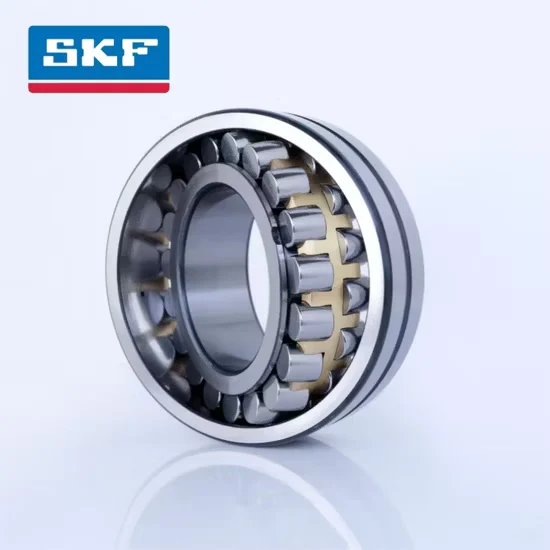 01 Mining and Vibrating Screen Bearings SKF 22320 E-K/C4 Spherical Roller Bearing Genuine Supplier View model details
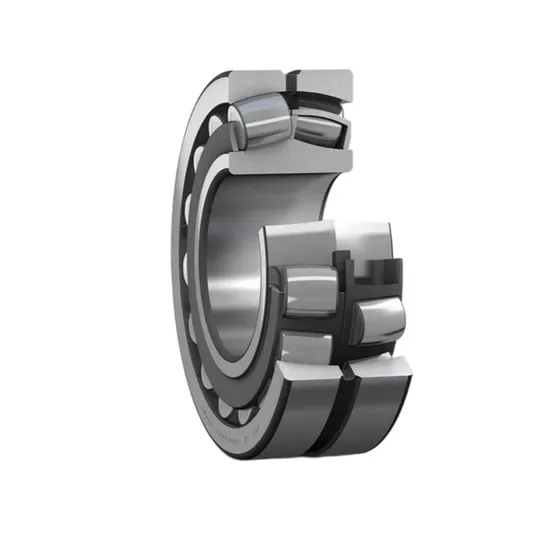 02 Car Bearing 22320E Spherical Roller Bearing Wholesale Supplier View model details
 03 Spherical Roller Bearing 22320EK Spherical Roller Bearing 73mm Width for Heavy-Duty Industrial Applications View model details
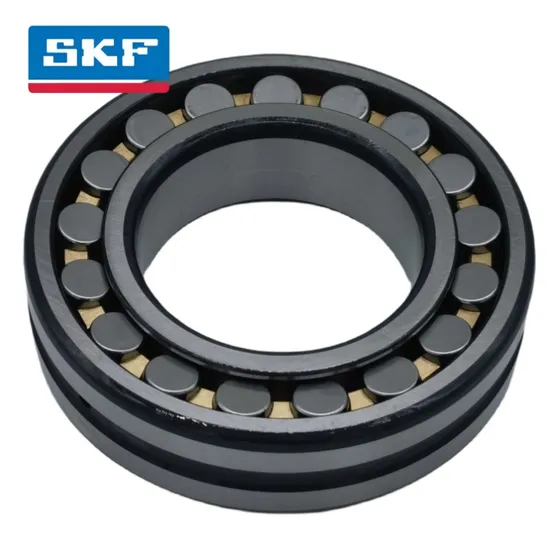 04 Spherical Roller Bearing High Precision SKF Spherical Roller Bearing 22320 E-K/C4 for Conveyor Systems Chrome Steel Gcr15 View model details
Applications
Where these SKF bearings are used
Keep reading
Related SKF bearing selection guides
More practical notes on SKF designations, precision items and project bearing lists from Project Purchasing Company.
 Installation & Maintenance · · 7 min read Ball Bearing Maintenance Checklist for Workshops: Genuine SKF/NSK Wholesale Supplier Stop premature failures with our Ball Bearing Maintenance Checklist, addressing contamination and improper installation rather than product quality. Learn essential pre-installation checks, proper mounting… Read the guide
 Installation & Maintenance · · 9 min read Ball Bearing Life in Variable Speed Drives: Wholesale Supplier Standard L10 life calculations fail in variable speed drives due to electrical erosion and thermal degradation. Extend ball bearing life in variable speed drives… Read the guide
 Installation & Maintenance · · 7 min read Corroded Ball Bearings Prevention Wet Sites: Wholesale Supplier Prevent corroded ball bearings in wet sites by prioritizing internal grease fill and contact seal integrity over superficial oiling. Upgrade to double-lip rubber seals,… Read the guide

Request a quote
Send your SKF list. Get one itemized written quote.
Project Purchasing Company supplies SKF ball, roller, precision and housed bearing units to distributors, repair workshops and project buyers worldwide. Standard and precision items are priced line by line, with accessories kept on the same quote.